You have probably seen “Kegel exercises” recommended in every article about pelvic health. Magazines, postpartum guides, PCOS wellness posts, fertility blogs: they all say the same thing. Strengthen your pelvic floor. Squeeze and hold.
If you have vaginismus, that advice is pointing you in the wrong direction.
Vaginismus is not caused by a weak pelvic floor. It is caused by a pelvic floor that contracts involuntarily when penetration is attempted. The muscles are already doing too much. Teaching them to contract more firmly and for longer is the opposite of what helps.
Reverse Kegels, also called pelvic floor down-training, address the actual problem. This post explains the science, the technique, and how to make it part of a structured treatment plan.
Why Standard Kegels Work Against Vaginismus
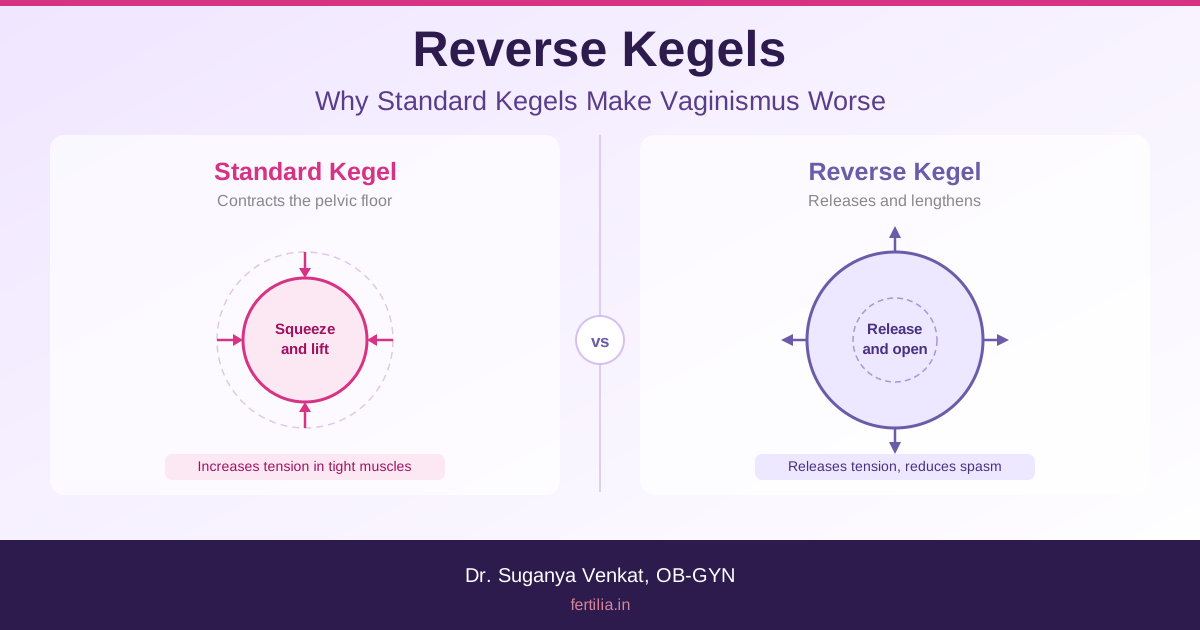
A standard Kegel asks you to voluntarily squeeze and lift the pelvic floor muscles, the same movement you would use to stop urine mid-stream. This contracts the levator ani, pubococcygeus, and surrounding muscles. Done consistently, it builds strength and tone in a weakened or underactive pelvic floor.
Vaginismus works differently. In vaginismus, the pelvic floor does not contract because it is being asked to. It contracts reflexively, involuntarily, at the moment penetration is attempted or even anticipated. The muscles involved are the bulbocavernosus and puborectalis at the vaginal opening, and they respond to a perceived threat signal before the conscious mind can intervene.
Pelvic floor physiotherapy literature describes this presentation as hypertonicity: the muscles are living at an elevated resting tension. Reissing et al. (2004, Arch Sex Behav, PMID 14739686) documented hypertonic pelvic floor muscles in women with vaginismus and noted that this profile is distinct from the low-tone presentations for which Kegels are designed. Adding voluntary contractions on top of a pelvic floor that already holds excess tension increases the very problem that treatment needs to resolve.
The clinical evidence makes this distinction clearly. Pelvic floor physiotherapy (PFPT), which focuses on releasing and lengthening the muscles rather than strengthening them, achieves an 85% treatment success rate in vaginismus (Zulfikaroglu et al. 2026, PMID 41148166). The therapeutic target is relaxation, not power.
What Are Reverse Kegels?
A reverse Kegel is the deliberate lengthening and releasing of the pelvic floor muscles: the opposite direction from a standard Kegel.
The sensation is harder to describe because most women have been taught to associate pelvic floor work only with squeezing. Here are three ways to locate the reverse Kegel movement:
The exhale drop. Breathe in deeply so your belly rises (not your chest). As you exhale slowly, notice a subtle dropping and expanding sensation at your pelvic floor. That outward, downward movement on the exhale is the beginning of a reverse Kegel.
The widen-the-sit-bones sensation. Sit on a firm chair. Without moving your legs, imagine your sitting bones gently moving apart. The floor between them lengthens. This is the lateral expansion component of the reverse Kegel.
The gentle bearing-down. Think of how the pelvic floor moves at the start of passing gas: a soft, controlled release downward. This is not straining or pushing hard. It is a deliberate, gentle opening.
A reverse Kegel is not the same as a Valsalva manoeuvre, which is the forced downward pressure used when lifting heavy weights. That creates high intra-abdominal pressure and is not what down-training involves. The reverse Kegel is gentle, breath-led, and conscious.
How to Do Reverse Kegels: Step by Step
Start by lying on your back with knees bent and feet flat on the floor. A yoga mat or a firm mattress works well for learning the movement.
Step 1: Build the diaphragmatic breathing base. Place one hand on your belly and one on your chest. Breathe in slowly through your nose for four counts. Watch your belly hand rise; your chest hand should stay relatively still. Diaphragmatic breathing naturally coordinates with pelvic floor movement: as the diaphragm descends on the inhale, the pelvic floor also descends and expands gently.
Step 2: Notice the inhale drop. On your next inhale, simply observe the pelvic floor moving downward with the breath. Do not force it. Just allow the awareness to develop.
Step 3: Add the active exhale release. On your exhale (slow, through the nose or gently pursed lips), encourage that drop to continue slightly further. The exhale is when the reverse Kegel work happens. Imagine the pelvic floor opening on the out-breath.
Step 4: Ten breath cycles, daily. Ten slow coordinated breaths takes about three minutes. This is your starting dose. Over several weeks, you will build enough body awareness to do a reverse Kegel while sitting, standing, or in other positions. That transferability is what makes it useful during dilator therapy, gynaecological examinations, and penetration attempts.
Four Down-Training Exercises to Support Reverse Kegels
Reverse Kegels are one tool in a broader down-training approach. Positions and movements that passively lengthen the pelvic floor can help build the awareness needed to make the active reverse Kegel more effective. All of these are doable at home, on a yoga mat, without any equipment.
1. Child’s pose (Balasana). Kneel on a mat, sit your hips back toward your heels, and fold your chest toward the floor with arms extended forward or resting alongside your body. The weight and position of the hips in this posture gently opens the inner thighs and lengthens the pelvic floor passively. Hold for two to three minutes, breathing into your belly. If sitting fully on your heels is difficult, place a folded blanket between your thighs and calves. This is one of the most effective passive down-training positions.
2. Happy baby pose. Lie on your back, draw both knees toward your chest, then open them to the sides and hold the outer edges of your feet (or your shins if the feet are out of reach). The inner thighs and groin open, which releases the adductor muscles that run alongside the pelvic floor. Hold for one to two minutes with slow, steady breathing.
3. Deep squat (Malasana). Stand with feet hip-width apart and toes pointing outward at a comfortable angle. Lower into a deep squat, bringing your elbows to the insides of your knees and pressing them gently apart. The deep squat position naturally elongates the levator ani. If heels do not reach the floor, place a folded towel or a small book under them. Hold for 30 to 60 seconds. Many women in India are familiar with this position from daily activities such as washing or cooking, so it may already feel natural.
4. Supine butterfly. Lie on your back and bring the soles of your feet together, letting both knees fall out to the sides. This gentle hip opener allows gravity to work on the pelvic floor over three to five minutes. Adding diaphragmatic breathing in this position creates a combined effect: the position opens the hips passively while the breath coordinates the pelvic floor release actively.
A workable daily routine: five minutes of belly breathing with reverse Kegels, five minutes in child’s pose, three minutes in happy baby, two minutes of body scanning where you consciously release tension from your jaw down through your shoulders, belly, and pelvic floor. This takes 15 minutes and is most effective done at the same time each day.
If you are working through the 12-week dilator protocol, do your down-training exercises for five to ten minutes before each session. The breath awareness and released muscle tone you develop here carry directly into how you approach the dilator work. The full protocol is detailed in the vaginismus home exercise guide.
If you have been trying Kegels for vaginismus and feel like you are making no progress, or if you are unsure whether what you are experiencing is vaginismus or another pelvic floor issue, I would like to hear from you directly. A brief WhatsApp conversation can clarify your specific presentation and help you decide whether self-directed practice is the right starting point or whether you need a clinical assessment first.
📘 Want the full picture in one place? Download Dr. Suganya’s free 39-page Navigating Vaginismus: Information, Support, and Recovery. The treatment-ladder section explains where reverse Kegels fit alongside dilator therapy, pelvic floor physiotherapy, and CBT. Get the guide →
Prefer Instagram? Comment PAINLESS on any @fertilia.health post and we’ll DM you the guide directly.
When Standard Kegels Are the Right Treatment
Standard Kegels are genuinely effective for specific, well-defined conditions. They are appropriate for:
- Stress urinary incontinence after vaginal delivery, where the levator ani has been stretched or injured
- Bladder leaks with coughing, sneezing, or physical activity
- Documented pelvic floor hypotonia (low resting tone), confirmed on physiotherapy assessment
- Mild pelvic organ prolapse as one element of a broader management plan
- Recovery after certain prolapse or continence procedures
Many postpartum women genuinely need Kegels because vaginal delivery reduces pelvic floor strength in ways that create leakage and prolapse risk. In that setting, Kegels are the right prescription.
The distinguishing factor is the baseline tone of the muscles. A hypertonic pelvic floor needs down-training. A hypotonic pelvic floor needs strengthening. If you have had multiple vaginal deliveries and now experience both painful penetration and bladder leaks, you may have a mixed presentation where parts of the floor are hypertonic and others are hypotonic. A pelvic floor physiotherapist can map this precisely.
If your gynaecologist recommended Kegels for a specific condition such as bladder control or prolapse, that recommendation may be completely appropriate for that condition. Reverse Kegels address the hypertonicity that drives vaginismus. The two types of exercises serve different problems. If you are unsure which applies to you, that is a good question to bring back to your doctor, or to raise in a WhatsApp consultation.
Integrating Reverse Kegels into Your Vaginismus Treatment Plan
Reverse Kegels work best as part of a structured approach rather than as a standalone exercise. In the multimodal vaginismus treatment framework, pelvic floor down-training is one layer working alongside education about the condition, dilator therapy, and psychosexual support where relevant.
In practice, the integration looks like this:
- Daily reverse Kegel and down-training practice, ideally in the morning as a consistent routine
- Before each dilator session: five minutes of belly breathing and child’s pose to arrive with a released, aware pelvic floor
- During dilator use: use the exhale-and-release rhythm to time each movement. Inhale to allow the floor to rise naturally, then exhale and release before any inward progression. Never push during an inhale
- Body awareness woven through the day: noticing and consciously releasing pelvic floor tension when it appears during sitting, during stressful moments, or in any context where you notice you are bracing
The 12-week dilator protocol integrates breathing and release cues at each stage. The vaginismus overview guide covers the full treatment framework, including treatment tiers and when to add pelvic floor physiotherapy.
For the postpartum context where vaginismus sometimes develops after delivery, the distinction between scar tissue tightness, oestrogen-driven vaginal changes, and pelvic floor hypertonicity is important. The painful sex after delivery guide covers how these are assessed and treated differently.
When to Bring in a Pelvic Floor Physiotherapist
Self-directed reverse Kegel and down-training practice is a reasonable starting point. But there are situations where a pelvic floor physiotherapist (PFPT) adds substantial value:
- Four weeks of daily practice with no perceptible change in resting tension or dilator progress
- Inability to locate the pelvic floor release sensation even with guided instructions
- Pain during down-training exercises, not only during penetration
- Grade 3 or Grade 4 vaginismus (on the Lamont grading scale) where manual therapy and internal techniques are needed alongside self-practice
- Postpartum presentations where hypertonicity and hypotonia coexist in different muscle groups
The evidence for combined physiotherapy and dilator approaches is strong. Zulfikaroglu et al. (2026, PMID 41148166) reported 85% success with PFPT as part of a multimodal programme. Maseroli et al. (2018, PMID 30446469) reported 79% success with the full multimodal approach. Self-practice reaches Grade 1-2 presentations well. Grade 3-4 benefits considerably from professional guidance alongside the home work.
Your OB-GYN, or a referral from your gynaecologist, can help you access a pelvic floor physiotherapist in your city. If you are not sure your current doctor treats vaginismus confidently, our guide on how to choose a vaginismus doctor in India covers what to ask before you commit. Fertility considerations, particularly if you are trying to conceive, are addressed in the vaginismus and fertility guide which also discusses how treatment timelines interact with TTC planning.
Frequently Asked Questions
What is the difference between Kegels and reverse Kegels?
A standard Kegel contracts the pelvic floor: you squeeze and lift the muscles, then release, which builds tone and strength. A reverse Kegel does the opposite: you lengthen and open the pelvic floor, letting the muscles drop and soften on the exhale instead of gripping. The distinction matters for vaginismus because the problem is too much resting tension, not weakness. Standard Kegels add load to muscles that are already over-contracted and can make penetration harder; reverse Kegels teach those same muscles to release, which is what allows a dilator or penetration to pass without the protective spasm. In short: Kegels close, reverse Kegels open, and vaginismus needs the opening.
How do you do a reverse Kegel?
Sit or lie comfortably with one hand on your belly. Breathe in slowly through your nose so your belly rises; the diaphragm pushes down and the pelvic floor lengthens slightly. As you exhale, do not squeeze; instead, allow the pelvic floor to keep softening downward, as if gently opening rather than closing. Hold the released position for two to three seconds, then breathe again. Five to ten cycles, twice a day, is enough to start. The fuller technique with body-mapping cues is in the section above; a pelvic floor physiotherapist can confirm you are isolating the correct muscles if the sensation does not become clearer within two to three weeks.
How do I know if I am doing reverse Kegels correctly?
The clearest indicator is breath coordination: if your belly rises on the inhale and you notice a subtle dropping or expanding sensation at the pelvic floor, the movement is happening. Many women describe the correct release sensation as warmth, softening, or a small opening. If you cannot identify any sensation after two to three weeks of daily practice, even two sessions with a pelvic floor physiotherapist can help you locate the movement before you continue independently.
How long before reverse Kegels improve vaginismus?
Most women notice a change in body awareness within two to three weeks: they begin to notice resting tension in the pelvic floor that they had not been conscious of before, and they start to release it. Functional improvement in dilator tolerance and reduced anticipatory anxiety typically follows within four to eight weeks. Grade 1-2 vaginismus with consistent daily down-training often shows meaningful progress within the first three months. Grade 3-4 presentations generally need combined physiotherapy input alongside home practice.
Can I do reverse Kegels during a dilator session?
Yes, and this is recommended. Before inserting any dilator, spend five minutes in belly breathing with active reverse Kegel exhales. During insertion, coordinate the movement with the exhale: inhale first, allow the floor to rise slightly, then exhale and release before moving the dilator inward. The approach should never happen on an inhale. The 12-week dilator protocol integrates these breathing cues at each stage.
My doctor told me to do Kegels. Should I stop?
Speak with your doctor before changing anything they prescribed. If the Kegel recommendation was for a specific condition such as postpartum incontinence or prolapse, those exercises may still be appropriate for that issue. If you believe the recommendation was specifically for painful penetration and you have a hypertonic presentation, that is worth raising with your doctor. Many gynaecologists who work with vaginismus do incorporate down-training in their recommendations. The terminology around pelvic floor exercises is not always consistent, so clarifying what type of exercise your doctor meant, and for which specific condition, is a reasonable conversation to have.
What is the difference between home practice and seeing a pelvic floor physiotherapist?
Home practice alone is genuinely effective for many women, particularly those with Grade 1-2 presentations. What it cannot replicate is the precision of a clinical assessment or the effect of hands-on treatment. Pelvic floor physiotherapists can perform manual assessment (including internal examination where appropriate and consented to) to map which specific muscles are hypertonic, confirm that you are performing reverse Kegels correctly, and apply manual therapy techniques including trigger point release. Grade 3-4 vaginismus consistently does better with professional guidance integrated into the home programme.
I have been doing child’s pose and belly breathing for a month with no change. What next?
This is the signal to move from self-directed practice to professional input. A pelvic floor physiotherapist can identify which specific muscle groups are not releasing (it is often a subset of the floor, not the entire structure) and whether trigger points or scar tissue are present. Additionally, review whether anticipatory anxiety is playing a significant role, since fear of penetration can create tension before any physical contact occurs. That component benefits from a psychosexual layer of support alongside the physical work. The dyspareunia and vaginismus differential guide also covers how clinical presentations are distinguished and what assessment involves.
Can I do these exercises during my period?
Yes. Reverse Kegels, belly breathing, child’s pose, happy baby, and the deep squat are all safe during menstruation. Some women notice that pelvic floor tension increases around their period, particularly with dysmenorrhoea (period cramps), because pain causes involuntary bracing. Down-training in this context can actually reduce secondary spasm. Avoid the deep squat if it is uncomfortable during very heavy flow; the other positions work well on any cycle day.
The core idea is straightforward: vaginismus is a problem of excess tension, not insufficient strength. The exercises that help are the ones that teach the pelvic floor to release, not the ones that ask it to contract harder.
If you are working through vaginismus and want to talk through where you are, including whether to continue self-directed practice or bring in a physiotherapist, I am available on WhatsApp. A short, direct conversation with no pressure can help you clarify the next step.
If you would like the down-training, breathing, and dilation work guided rather than self-directed, Fertilia’s online Vaginismus Recovery Program builds them into one structured 12-week plan with a pelvic floor specialist. If cost is part of your decision, what vaginismus treatment costs in India breaks down each step of care.