You take the test, see the second line, and within two days you have a list of things you must do, must avoid, must eat, must not eat. Some of it comes from your mother and grandmother, some from your sister-in-law’s WhatsApp groups, some from a Google search that turned into ten more questions, and some from a friend who has been pregnant before.
Most of these lists mix three things: real medical evidence, traditional precautions that may or may not apply, and pure misinformation. As an OB-GYN, I see women anxious about the wrong things and unaware of the right ones almost every week.
This guide gives you the clinically grounded list. What to do, what to avoid, what is exaggerated, and what most family lists miss. It is written for Indian women, with the food, climate, and family-context realities of pregnancy in India.
What this post covers
- The handful of do’s that actually move the needle on a healthy pregnancy
- The don’ts with strong evidence (alcohol, tobacco, raw foods, certain medications)
For more on this, read our guide on Healthy Pregnancy.
- Indian-context items: papaya, pineapple, ajwain, fasting, oil massage, henna
- Movement, work, travel, dental care, and intimacy
- Red-flag symptoms that need a same-day call
- Frequently asked questions
The five things to actually do (evidence-backed)
If you do nothing else from this article, do these five.
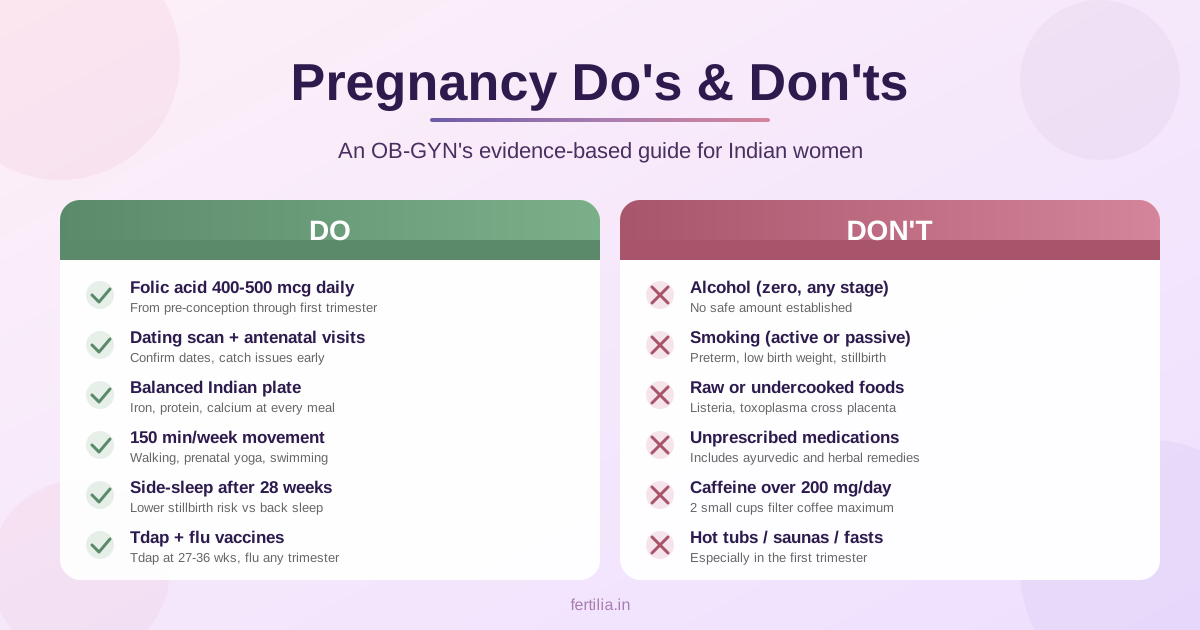
1. Take 400 to 500 mcg of folic acid daily, starting before conception if possible.
Folic acid prevents most neural tube defects. The MRC Vitamin Study (Lancet, 1991) and Czeizel and Dudas (NEJM, 1992) established that 400 to 800 mcg per day, started at least one month before conception and continued through the first trimester, reduces NTDs by about 70 percent. Indian guidelines (ICMR-NIN 2020, FOGSI) recommend 400 to 500 mcg daily for routine pregnancies, and 4 to 5 mg daily if you have a previous NTD pregnancy, are on antiepileptics, or have been told you have an MTHFR variant. For more on which form to take, read our folate vs folic acid guide.
2. Book your first scan and antenatal visit.
A dating scan between 7 and 10 weeks confirms the pregnancy is in the uterus, dates it correctly, and detects multiple pregnancies. Routine antenatal care (every 4 weeks until 28 weeks, every 2 weeks until 36 weeks, then weekly) catches gestational diabetes, hypertension, anaemia, and growth concerns early enough to manage them.
3. Eat a balanced Indian plate at every meal.
Half the plate is vegetables and dal, a quarter is whole-grain (ragi, jowar, bajra, brown rice, atta), a quarter is protein (dal, paneer, dahi, eggs, fish, chicken). Add a glass of milk or chaas, and a serving of fresh fruit. Iron foods (palak, methi, rajma, til, anaar) and calcium foods (dahi, ragi, milk, paneer, til) at most meals. The full layout is in our pregnancy diet chart and iron-rich foods guide.
4. Move your body, in a way that suits your trimester.
ACOG (Committee Opinion 804, 2020) recommends at least 150 minutes per week of moderate-intensity activity in an uncomplicated pregnancy. Walking, swimming, prenatal yoga, modified strength training, and stationary cycling are all safe. Tobias et al. (Diabetes Care, 2011) showed a 31 percent lower gestational diabetes risk in active pregnant women. Barakat and colleagues (BJSM, 2016) showed shorter active labour with regular activity and no preterm birth risk. The exercise side is laid out trimester by trimester in our pregnancy exercises guide and pregnancy yoga guide.
5. Sleep on your side, ideally the left, after about 28 weeks.
A 2019 individual participant data meta-analysis (Cronin et al., EClinicalMedicine) found that going-to-sleep position on the back in the third trimester was associated with a higher stillbirth risk. The mechanism is uterine compression of the inferior vena cava. Side sleeping (either side) is fine. A pillow behind your back to stop you rolling flat is enough.
The non-negotiable don’ts (strong evidence)
These are the items where the evidence is settled, not debatable.
Zero alcohol. No safe amount has been established at any stage of pregnancy. The CDC, the Royal College of Obstetricians and Gynaecologists, and the WHO all recommend complete abstinence. Fetal alcohol spectrum disorders are the single most preventable cause of intellectual disability worldwide.
No smoking, and avoid passive smoke. Smoking raises the risk of preterm birth, low birth weight, placental abruption, and stillbirth (US Surgeon General Report, 2014). If anyone in your home smokes, ask them to do it outside.
No raw or undercooked animal foods. Cook eggs until both white and yolk are firm, fish and meat until they are no longer pink at the centre. Listeria and toxoplasma cross the placenta. Avoid sushi made with raw fish, runny scrambled eggs, kachi-kacchi pasanda, mayonnaise made with raw egg, and unpasteurised cheese (most artisanal Indian paneer made at home from raw milk falls in this category unless the milk has been boiled).
No unpasteurised dairy or untreated water. Buy only pasteurised milk, or boil it before use. Drink filtered or boiled water, including for brushing teeth when travelling.
No medications, ayurvedic preparations, or supplements without OB-GYN clearance. This includes painkillers (ibuprofen, diclofenac), some antibiotics (tetracycline, doxycycline), several skin-care prescriptions (isotretinoin, high-dose retinoids), and many ayurvedic and herbal remedies that contain phytoestrogens or uterotonic herbs. Paracetamol at standard doses is the safest first-line painkiller. If you were on a chronic medication before pregnancy (thyroid, antiepileptic, antidepressant, blood pressure), do not stop it on your own. Tell your OB-GYN at your first visit and they will guide the safe form and dose.
Limit caffeine to under 200 mg a day. That is roughly two small cups of filter coffee, or three cups of tea. Higher intake has been associated with miscarriage and growth restriction (Chen et al., BMC Medicine 2014).
Avoid X-rays unless your doctor has weighed risk versus benefit. Routine dental X-rays are usually fine with abdominal shielding; CT scans of the abdomen are avoided unless there is a clear medical indication. Always tell every doctor (dentist, orthopaedic, physician) that you are pregnant before any imaging.
Indian-context list: what is exaggerated and what is real
This is where most family lists go wrong. The same names get repeated across generations, and the original reason often does not apply to the form you are eating.
| Topic | What family says | What the evidence shows |
|---|---|---|
| Papaya | “Avoid in all forms” | Ripe papaya in normal portions is safe and a good source of folate, vitamin C, and fibre. Raw (unripe, green) papaya contains higher latex (chymopapain) and is best avoided in pregnancy (Adebiyi et al., 2002). The blanket “no papaya” mostly reflects the raw form. |
| Pineapple | “Causes miscarriage” | Bromelain in pineapple is uterotonic only at very high doses, far above what eating fresh pineapple provides. Normal portions of ripe pineapple are safe. |
| Ajwain water and jeera water | “Heating, avoid” | Both are safe in moderate amounts (one cup a day) and traditionally help with bloating and nausea. See our ajwain water guide and jeera water guide. |
| Haldi doodh | “Heating, will harm baby” | Culinary haldi (1 to 1.5 g per cup) is safe and anti-inflammatory. The caution applies only to high-dose curcumin supplements. Full breakdown in our haldi doodh guide. |
| Saffron (kesar) | “Will make the baby fair” | A few strands in milk are safe. The fairness claim is cosmetic folklore with no evidence. |
| Coconut water | “Best to drink” | True. One to two glasses a day are safe and well-tolerated. See coconut water in pregnancy. |
| Dates | “Eat 6 daily for easy delivery” | Dates have benefits, but the evidence is for late pregnancy (from week 36) for cervical readiness, not all pregnancy long. See dates in pregnancy. |
| Sex during pregnancy | “Will harm the baby” | Safe in uncomplicated pregnancies right through to labour. Avoid only if your OB-GYN has flagged placenta previa, threatened miscarriage, premature labour signs, or a low-lying placenta. |
| Hair oil and head massage | “Avoid in pregnancy” | Safe. Scalp massage is fine. Avoid only herbal oils with strong essential oils (clary sage, rosemary, juniper) unless the brand specifically says pregnancy-safe. |
| Henna (mehendi) on hands and feet | “Causes problems” | Pure natural henna is safe. Avoid black henna because it contains paraphenylenediamine (PPD) which causes contact dermatitis. |
| Hot oil massage on the abdomen | “Helps with growth” | Avoid deep abdominal massage in the second and third trimesters; gentle external application is fine. |
| Hot tubs, saunas, very hot bath | “Relaxing, do them” | Avoid in the first trimester. Core body temperature above 39 degrees C in early pregnancy has been linked to NTDs (Moretti et al., Epidemiology 2005). Warm water at body temperature is fine. |
| Fasting (Karva Chauth, Navratri, Ramadan) | “It is tradition” | A whole-day fast in pregnancy is not advisable, especially in the second and third trimesters. If you wish to keep a tradition, modify it to phaldhar or a partial fast and discuss with your OB-GYN (Bouga and Lean, BMJ Nutrition 2018, on Ramadan in pregnancy). |
| Travel | “Stay at home” | Generally safe up to about 36 weeks for uncomplicated pregnancies. International airlines often require a fitness-to-fly letter after 28 weeks. Move and hydrate every hour on long journeys to lower clot risk. |
| Vaccines | “Avoid all” | The opposite is true for two: tetanus-diphtheria-pertussis (Tdap) at 27 to 36 weeks protects the newborn from whooping cough, and the inactivated influenza vaccine is safe in any trimester. Live vaccines (MMR, varicella) are not given in pregnancy. |
A simple do/don’t framework for each trimester
The non-negotiables stay the same throughout. Some additions depend on the trimester.
First trimester (0 to 12 weeks). Do: start folic acid, book the dating scan, eat small frequent meals if you have nausea, rest more. Don’t: heavy lifting, hot tubs, alcohol, smoking, unprescribed medications. If you have severe nausea or vomiting, see our morning sickness guide and call your OB-GYN if you cannot keep fluids down.
Second trimester (13 to 27 weeks). Do: book the anomaly scan around 18 to 22 weeks, glucose challenge test (OGTT) at 24 to 28 weeks, start prenatal yoga or walking if you have not. Don’t: skip iron and calcium supplements (most Indian women need both, see our iron-rich foods guide). Avoid sleeping flat on your back from around 20 weeks onwards.
Third trimester (28 weeks to delivery). Do: track fetal movements every day from 28 weeks, take the Tdap vaccine between 27 and 36 weeks, prepare your hospital bag from 36 weeks, learn the signs of labour. Don’t: travel without checking with your OB-GYN, take long flights past 36 weeks, ignore reduced fetal movement (this is a same-day call).
💬 Have a question your family list keeps disagreeing on?
WhatsApp Dr. Suganya for a clear, personalised answer based on your medical history and stage of pregnancy.
Daily life: work, dental, intimacy, and self-care
Working in pregnancy. Most jobs are safe to continue with reasonable modifications. Sit-stand alternation, hydration, frequent washroom access, and avoiding heavy lifting (above 10 kg) or long hours on your feet in the third trimester are sensible. If you work in healthcare, lab, agriculture, or industrial settings, ask about specific exposures (radiation, solvents, heavy metals).
Dental care. Routine cleaning and fillings are not just safe, they are encouraged. Pregnancy gingivitis is common, and untreated gum disease is associated with preterm birth (Ide and Papapanou, J Periodontol 2013). Avoid major dental procedures and elective imaging in the first trimester if possible.
Intimacy and sex. Safe in an uncomplicated pregnancy throughout. Reasons to abstain or modify (placenta previa, threatened miscarriage, history of preterm labour, ruptured membranes) are decided by your OB-GYN. Comfort positions change in the third trimester; side-lying is usually most comfortable.
Hair colour and salon services. Manicures, pedicures, threading, waxing, and haircuts are all safe. For hair colour, avoid full bleaching during the first trimester. Ammonia-free or organic colour from the second trimester onwards is acceptable for most women.
Pets. Cat owners need to know about toxoplasmosis. If you must clean a litter box, wear gloves and wash hands after. If possible, ask someone else to do it for nine months. Dogs and other pets pose no specific pregnancy risk.
Red flags: when to call your OB-GYN today
This is a list every pregnant woman should keep handy. None of these are reasons to panic, but they are reasons to call.
Same-day or emergency call:
- Vaginal bleeding (any amount, any colour)
- Severe abdominal or pelvic pain
- Severe headache that is new for you, especially with vision changes (light flashes, blurred vision)
- Sudden swelling of the face, hands, or feet
- Persistent vomiting where you cannot keep water down
- Fever above 38 degrees C (100.4 F) lasting more than a few hours
- Burning urination with fever, lower back pain, or visible blood in urine
- A sudden gush or steady leak of fluid from the vagina (could be ruptured membranes)
- Reduced or absent fetal movement after 28 weeks (do a kick count: lie down, count 10 movements; if it takes more than two hours, call)
Within 24 to 48 hours:
- Persistent headaches that paracetamol does not relieve
- Rib-cage or upper-right abdominal pain
- Sudden weight gain (more than 1 kg in a week)
- Calf pain or swelling on one side (could be a clot)
- Severe heartburn (see our pregnancy heartburn guide)
When in doubt, call. A wasted phone call is much better than a missed sign.
Frequently asked questions
Can I eat papaya during pregnancy?
Ripe (yellow-orange) papaya in normal portions (a small bowl) is safe and a good source of folate, vitamin C, and fibre. Raw (green, unripe) papaya contains more latex (chymopapain) and is traditionally avoided in pregnancy. The “no papaya at all” rule mostly comes from confusion between the two forms. Stick to ripe papaya, in moderation, and you are fine.
Is it safe to drink coffee during pregnancy?
Yes, in moderation. ACOG and the Royal College of Obstetricians and Gynaecologists agree on a limit of less than 200 mg of caffeine per day, which is about two small cups of filter coffee or three cups of tea. Above this, the data show a small increase in miscarriage and growth restriction risk. Decaf, herbal teas (avoid licorice), milk, and chaas are good alternatives.
Can I exercise if I was not active before pregnancy?
Yes. Start with 10 to 15 minutes of walking per day and build to 30 minutes most days of the week. Add prenatal yoga twice a week. Avoid high-impact, contact, and supine exercises (lying flat on the back) after 16 to 20 weeks. The goal is consistency, not intensity. ACOG explicitly clears beginners to start activity in pregnancy.
Can I travel by flight in the second trimester?
Most airlines allow travel up to 32 to 36 weeks of pregnancy. The second trimester (14 to 27 weeks) is generally the most comfortable time. Carry your prenatal records, walk every hour on flights longer than four hours, wear compression stockings if you have varicose veins or a clot history, and stay well hydrated. Always check the airline policy and your OB-GYN’s clearance for trimester-specific advice.
Is fasting (Navratri, Ramadan, Karva Chauth) safe?
A full-day fast is not advisable in pregnancy, especially in the second and third trimesters when energy needs are highest. If a religious observance matters to you, modify it: phaldhar (fruit and milk) instead of complete restriction, breaking the fast every few hours, or a symbolic short fast. Discuss your specific situation with your OB-GYN; they can guide a safe version that respects your practice.
Can I take ayurvedic or homeopathic medicines during pregnancy?
Not without telling your OB-GYN. Many ayurvedic preparations contain phytoestrogens, uterotonic herbs, or heavy metal contamination. Even “natural” does not mean “safe in pregnancy.” Show every preparation, including those given by family elders, to your OB-GYN before starting them. The same applies to homeopathic remedies, despite their dilution.
What painkiller can I take if I have a headache?
Paracetamol (acetaminophen) at standard doses (500 mg up to 3 g a day, total) is the safest first-line painkiller in pregnancy. Avoid ibuprofen, diclofenac, and aspirin (except low-dose 75 mg if specifically prescribed by your doctor). If headaches are severe, frequent, or come with vision changes, call your OB-GYN; this could be a sign of high blood pressure rather than a regular headache.
💬 Want a do/don’t list specific to your pregnancy?
Every pregnancy is different. WhatsApp Dr. Suganya for a personalised plan based on your trimester, history, and any medical conditions you are managing.
Her Pregnancy Care program turns these do’s and don’ts into a plan built around your specific trimester.