It usually catches new mothers by surprise.
You make it through the first three months. The baby has started to find a rhythm. Your stitches have healed, the lochia has stopped, and the bone-deep fatigue has eased a little. You stand in the shower one morning and feel a clump of hair come away in your hand. The next day, the same. By the end of the week, your pillow looks like someone shed a small pet on it, and the floor of the bathroom has a thin layer of hair every time you brush.
It is jarring. Your hair did not do this during pregnancy. Why now, when you finally have a moment to breathe?
What you are noticing is almost certainly postpartum telogen effluvium. It is the most common cause of hair shedding in new mothers, and in most cases it resolves on its own. But because the shedding can feel dramatic, and because there are a few other causes that should be ruled out, it is worth understanding what is happening and what you can actually do.
This post covers:
- Why postpartum hair shedding happens at the biological level
- The typical timeline: when it starts, when it peaks, when it stops
- How to tell normal postpartum shedding apart from something that needs investigation
- Iron deficiency, thyroid changes, and other causes worth checking
- Indian foods that support hair recovery without unnecessary supplements
- What you should not do during this period
- A 7-question FAQ covering breastfeeding, minoxidil, hair oils, and more
Why Postpartum Hair Shedding Happens
To understand postpartum hair loss, you have to understand what your hair was doing during pregnancy.
At any given time, each hair follicle on your scalp is in one of three phases. The growing phase is called anagen. The transitioning phase is called catagen. The resting and shedding phase is called telogen. In a non-pregnant adult, about 85 to 90% of follicles are in anagen and roughly 10 to 15% are in telogen at any moment. Each day, the follicles in telogen release their hair shaft, and you shed about 50 to 100 hairs without noticing.
During pregnancy, elevated oestrogen and progesterone hold a much larger proportion of your follicles in the anagen phase. Hairs that would normally have entered telogen and shed are instead held in place. This is why pregnancy hair often feels thicker and shinier in the second and third trimesters. You are not growing new hair, you are just losing far less than usual.
After delivery, oestrogen and progesterone drop sharply within 24 to 48 hours, returning to pre-pregnancy levels over the following weeks. The follicles that were artificially held in anagen now shift simultaneously into telogen. Telogen lasts about 2 to 4 months. That is why the shedding does not start immediately. It usually begins around 2 to 4 months after delivery, when those synchronised follicles complete their telogen phase and release their hairs together.
This synchronised shedding is called telogen effluvium. The postpartum version was first described in detail in dermatology literature decades ago and is one of the best-characterised forms of telogen effluvium (Headington, Archives of Dermatology, 1993, PMID 8434286). The mechanism has since been confirmed by trichoscopy and hair-cycle studies in pregnant and postpartum women (Piérard-Franchimont and Piérard, BioMed Research International, 2013).
The hairs you are losing in months three and four are not new losses. They are the hairs that should have shed during pregnancy but were postponed. Your follicles are not damaged. They are catching up.
The Typical Timeline
Postpartum hair shedding follows a fairly predictable pattern.
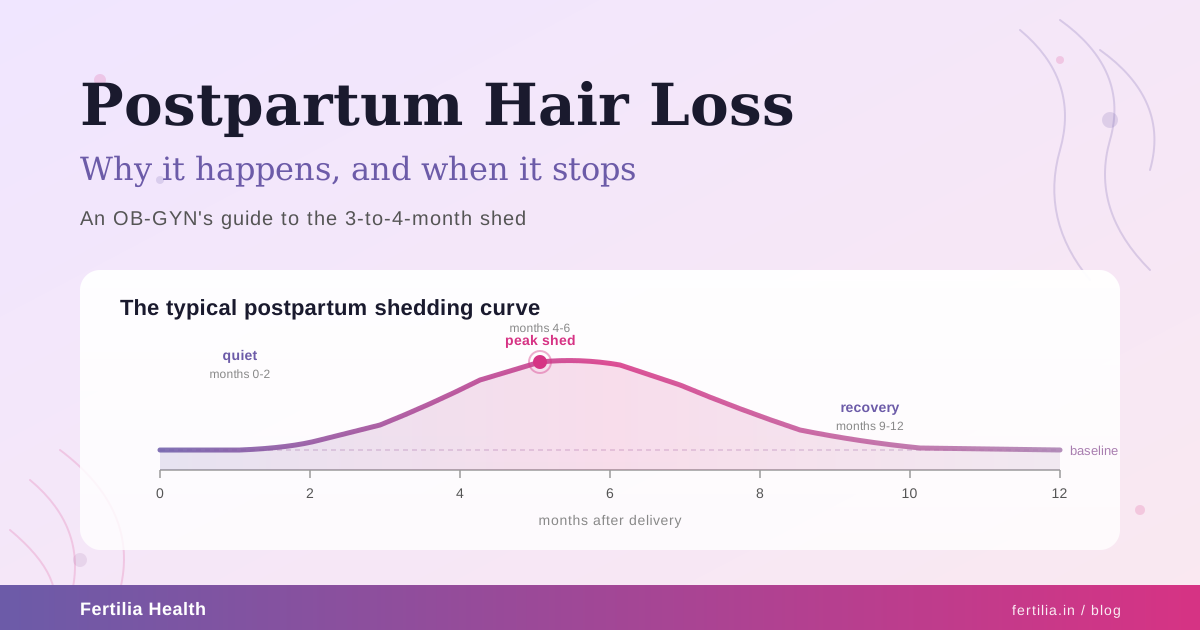
Months 0 to 2: Most women notice no significant change in hair shedding. Hair may still feel pregnancy-thick.
Months 2 to 4: Shedding begins. The first signs are usually more hair than usual on your pillow, in the shower drain, or wrapped around your hairbrush. Many women describe finding hair on the baby’s clothes or in the cot.
Months 4 to 6: Peak shedding. This is when it feels most alarming. Daily hair loss can rise from the usual 50 to 100 hairs to 200 to 400 hairs. The hairline near the temples and the area along the parting often look thinner. Some women see short regrowth strands sticking up around the hairline, which can be reassuring (it means new hair is already coming in).
Months 6 to 9: Shedding slows. New hairs that entered anagen weeks ago are now visibly growing in. Hair density gradually improves.
Months 9 to 12: Most women find their hair has returned close to its pre-pregnancy baseline. The hairline is filling in and the parting looks less wide.
Beyond 12 months: A small group of women continue to experience thinning beyond the first year. This is when it is worth investigating other causes, because uncomplicated postpartum telogen effluvium should resolve by then.
This pattern matters because of one specific reassurance: at the peak of shedding, when the floor looks alarming and the hairline at the temples looks visibly thinner, you are not at the start of a long-term problem. You are at the midpoint of a process that almost always reverses on its own.
If you are reading this in the middle of the heavy-shedding window and feeling anxious about it, you are not alone, and you are not losing your hair permanently. Send a quick message on WhatsApp if you want a quick check on whether your shedding is in the normal range or if testing is warranted.
When It Is Worth Investigating Further
Most postpartum hair shedding is uncomplicated telogen effluvium and resolves with time. But there are situations where the picture suggests something more, and these are worth knowing.
1. Iron deficiency anaemia
Iron stores are commonly depleted in pregnancy and the postpartum period. NFHS-5 data from 2019 to 2021 found that 52.2% of Indian women aged 15 to 49 are anaemic. Among pregnant women, the figure rose to 52.2% as well, and many enter the postpartum period with already depleted iron stores that breastfeeding and ongoing blood loss can deepen further.
Iron deficiency, even at the level where haemoglobin is within range but ferritin is low, can prolong telogen effluvium and slow recovery. The clinical literature recommends checking serum ferritin in women with persistent or unusually heavy hair shedding (Rushton, Clinical and Experimental Dermatology, 2002, PMID 12190640; Olsen, Reed, Cattley, et al., Journal of the American Academy of Dermatology, 2010). A serum ferritin under about 30 to 40 ng/mL is worth correcting, even when haemoglobin is normal.
For the food side of this question, our guide to iron-rich foods in pregnancy carries over directly to the postpartum period.
2. Postpartum thyroiditis
Postpartum thyroiditis is an autoimmune thyroid inflammation that develops in the first year after delivery in a measurable minority of women. A quantitative review across multiple populations estimated the overall prevalence at around 8% (Nicholson, Robinson, Smallridge, et al., Thyroid, 2006, PMID 16839259). An Indian prospective study from the Kashmir Valley reported 7% of postpartum women developed thyroiditis on follow-up (Zargar, Shah, Masoodi, et al., Experimental and Clinical Endocrinology and Diabetes, 2002, PMID 12058340).
The condition typically follows one of three patterns: a hyperthyroid phase that resolves on its own, a hypothyroid phase that may need temporary treatment, or a biphasic pattern. Hair shedding can be a feature of either phase, especially when it is associated with fatigue, weight changes that do not match calorie intake, palpitations, or mood changes.
A full thyroid panel, ideally TSH, free T4, and anti-TPO antibodies, is reasonable if your hair shedding feels disproportionate, has not improved by 9 to 12 months, or comes with other symptoms.
3. Vitamin D deficiency
A review documented widespread vitamin D deficiency in Indian studies, including urban and rural populations (Ritu and Gupta, Nutrients, 2014, PMID 24566435). Those prevalence findings do not show that vitamin D deficiency caused your postpartum shedding or that supplementation will stop it. Ask your doctor whether testing is relevant to your symptoms and medical history. Our Vitamin D deficiency guide walks through testing and food sources in detail.
4. Female pattern hair loss revealed by the shedding
In a smaller subset of women, postpartum telogen effluvium does not just resolve, it unmasks an underlying female pattern hair loss that was beginning anyway. The clue is that the parting line at the centre of the scalp remains visibly wider after the year mark, rather than returning to baseline. If this is the case, the cause is not the pregnancy. The pregnancy hormonal shift simply made it apparent earlier. A dermatologist visit, sometimes with a scalp biopsy or trichoscopy, can confirm this and guide longer-term treatment.
5. Severe stress, illness, or sudden weight loss
Telogen effluvium can also be triggered by major physical or emotional stress. The early postpartum period contains plenty of both. Sleep deprivation, a complicated delivery, an extended NICU stay, or postpartum mental health changes can all extend or worsen telogen effluvium. The postpartum anxiety guide covers the emotional side of the recovery period, and supporting your sleep and mental health helps your hair more than any product on a shop shelf.
What Actually Supports Recovery
A few things genuinely help. Most of them have nothing to do with shampoo.
1. Protein at every meal
Hair shafts are largely keratin, a protein. New hair growth needs adequate dietary protein, and the Indian postpartum thali is often heavy on rice and ghee but light on the protein component. Add daal at every meal. Add an egg, paneer, dahi, or sprouts where you can. Almonds and walnuts, soaked overnight, are easy add-ons. Our guide to after delivery food for Indian mothers covers this in more detail with full meal patterns.
2. Iron-rich Indian foods
If your ferritin is low, food alone may not be enough to correct it fast, but it builds the floor. Ragi, palak, methi, chana, rajma, til, dates, and jaggery all add iron and pair well with vitamin C sources (amla, guava, lemon, tomato) to improve absorption. Tea and coffee with meals reduce iron absorption, so keep them between meals.
3. Adequate calories
Aggressive weight-loss diets in the postpartum period can prolong hair shedding. Your body interprets very low intake as a stress signal and pushes more follicles into telogen. This is not the time for fasting protocols or sharp cuts. Eat to satisfaction, rebuild slowly, and let your body decide the pace.
4. Sleep, in whatever form you can get
Easier to say than to do with a newborn, but the principle matters. Disrupted sleep raises cortisol and prolongs telogen effluvium. If a family member can do one feed at night or hold the baby for an hour while you sleep, take it. This is hair-friendly even if it does not feel like it.
5. Gentle hair care
Switch to a wide-toothed comb. Wash hair less aggressively. Avoid tight ponytails or braids that pull on the hairline. Skip chemical treatments, smoothing, and colour for the first 6 to 9 months when follicles are already vulnerable. Coconut or sesame oil massage 1 to 2 times a week is fine and traditional in India, but no oil can prevent the underlying shedding. It can help the hair you still have feel softer and break less.
If you want a full delivery-to-recovery food plan that includes hair-supportive nutrition, our postpartum diet guide is downloadable as a 2-week meal plan.
What You Should Not Do
A few things are tempting but not helpful, and a few are actively risky.
- Do not start minoxidil while breastfeeding. Topical minoxidil is generally avoided during breastfeeding because of insufficient safety data. It is more sensibly considered after weaning, and even then, postpartum telogen effluvium does not usually need it because the resolution is biological. Talk to your doctor before starting.
- Do not start finasteride or spironolactone postpartum without specific evaluation. These are androgen-blocking medications used in pattern hair loss, not in telogen effluvium. They have specific contraindications in women planning future pregnancies.
- Do not assume biotin supplements will help. High-dose biotin supplements are widely marketed for hair, but unless you have a documented biotin deficiency (rare), there is no clinical evidence they shorten postpartum telogen effluvium. Biotin can also interfere with several laboratory tests including thyroid and cardiac markers, which matters if you are also being investigated for postpartum thyroiditis.
- Do not panic-buy expensive scalp serums or PRP injections in the first six months. The shedding is biological, not a deficiency you can spend your way out of. Save the budget. If your hair has not recovered by the 12-month mark, that is when a dermatologist visit makes the most sense.
When to See a Doctor
A consultation is reasonable if any of these are true:
- Your shedding is severe (handfuls every day for weeks, visible bald patches)
- You have visible scalp patches, not just thinning (this can suggest alopecia areata, a separate condition)
- The shedding continues unchanged past 12 months
- You also have unexplained fatigue, palpitations, weight changes, neck swelling, or mood symptoms that point toward thyroid or anaemia
- The hair loss is asymmetric, painful, or accompanied by scalp inflammation
Testing typically starts with a full blood count and ferritin, a thyroid panel (TSH, free T4, and anti-TPO antibodies), and a 25(OH) vitamin D level. These three are the practical first round and they catch most of the secondary causes.
If your hair shedding is in the normal postpartum window but you would feel better with a quick check, message Dr. Suganya on WhatsApp and share what you are seeing. Most of the time the right answer is reassurance and a small set of food and sleep changes, not a long workup.
Frequently Asked Questions
When does postpartum hair loss usually start and stop?
Shedding usually begins 2 to 4 months after delivery, peaks between months 4 and 6, and gradually returns to normal by 9 to 12 months in most women. Some take a little longer, but if active shedding is still heavy past 12 months it is worth checking ferritin and thyroid function.
Will my hair grow back to the way it was before pregnancy?
For most women, yes. Postpartum telogen effluvium is a reversible synchronisation of the hair cycle, not damage to follicles. The texture, density, and hairline usually return close to pre-pregnancy baseline by the end of the first year. A small group of women find their hair never quite returns to the pregnancy thickness, but the comparison there is unfair because pregnancy hair is artificially full.
Does breastfeeding make hair loss worse?
Breastfeeding itself does not significantly worsen telogen effluvium. The shedding is driven by the postpartum hormonal shift, not by lactation. Studies that have compared breastfeeding to non-breastfeeding women have found small differences in hair-cycle dynamics but not dramatic ones. Breastfeeding does, however, increase your nutritional requirements, so iron, calcium, and protein intake matter more in this period.
Is it normal to lose hair in clumps?
Seeing visibly more hair on the pillow, brush, and shower drain at months 3 to 5 is normal, and it can feel like clumps. The total daily count rarely exceeds 300 to 400. If you are losing genuinely large quantities, see actual bald patches, or feel scalp tenderness, that warrants a clinical exam.
Should I take a hair-growth supplement?
Most over-the-counter hair-growth supplements have weak or no evidence in postpartum telogen effluvium specifically. If a blood test shows you are low in iron, vitamin D, or vitamin B12, correcting that specific deficiency is more useful than a generic multivitamin marketed for hair. Continuing your prenatal vitamin into the first 6 months of breastfeeding is reasonable.
Are coconut oil and amla oil helpful?
Oil massage will not prevent or shorten postpartum telogen effluvium because the shedding is happening at the follicle level, not at the hair shaft. What oils can do is reduce mechanical breakage and friction in the hair you still have, and a weekly oil massage can be relaxing in the postpartum period, which has its own value. Use what you enjoy, but treat it as comfort and surface care, not as treatment.
When should I worry that this is not normal postpartum hair loss?
The main red flags are: heavy shedding still present at 12 months, visible bald patches, a parting line that stays visibly wider than pre-pregnancy after the year mark, scalp pain or inflammation, or new symptoms (palpitations, neck swelling, unexplained fatigue, mood changes) that point toward thyroid or other endocrine issues. Any of these is a reason to book a clinic visit.
You Are Not Losing Your Hair
If you take one thing from this post, take this: postpartum hair shedding at month 3 to 5 is the body finishing a cycle that pregnancy paused. It is not damage, it is not deficiency, and in the great majority of women it resolves without treatment.
The work in front of you is feeding yourself well, sleeping when you can, and keeping an eye out for the small number of secondary causes that benefit from a simple blood test. The hair will come back.
If you would like a personal review of your postpartum recovery, including hair shedding, energy levels, mood, and feeding, message Dr. Suganya on WhatsApp. For a complete postpartum nutrition and recovery plan, download the Postpartum Diet Guide. Her Postpartum Recovery program supports the whole of recovery, hair shedding included.