Ask most Indian women what dal they made last week and there is a fair chance it was masoor. It is the dal that needs no planning, no overnight soak, and no special effort. You open the packet, rinse it twice, and it is ready to cook. Twenty minutes later, dinner is on the table.
That convenience matters more than it sounds. In a busy household where lunch is packed before 8 AM and dinner happens after 9 PM, a dal that demands no soaking and no long cooking time is the one that actually gets made. And masoor dal, whether the familiar split orange variety or the whole brown version, happens to be one of the better lentils nutritionally.
This guide covers what masoor dal contains, the difference between its three forms, how much to eat at different life stages, how to cook it quickly, and five Indian recipes that go beyond the everyday tadka.
For more on this, read our guide on Moong Dal.
What Is Masoor Dal? The Three Forms
Masoor is the lentil known across most of India, but it comes in three distinct forms that behave differently in the kitchen.
Sabut masoor (whole masoor / kali masoor): The whole lentil with its brown or greenish outer skin intact. It holds its shape after cooking, has a slightly earthy flavour, and contains more fibre than the split version because the skin is retained. It can be soaked for 2 hours to reduce cooking time, but it also cooks without soaking.
Chilka masoor (split with skin): The lentil split in half but with the skin on. A less common form, found in specialty stores. It cooks faster than sabut masoor and retains some of the skin’s fibre.
Masoor dal (split, dehusked): The form most Indian households use daily. The outer skin is removed, leaving the familiar orange or pink-red split lentil. It cooks the fastest of the three (15-20 minutes without any soaking), has a mild flavour that pairs well with most spices, and dissolves into a smooth consistency ideal for tadka, soups, and khichdi.
Regional Names for Masoor Dal
| Language | Name |
|---|---|
| Hindi | Masoor dal (split), Sabut masoor / Kali masoor (whole) |
| Tamil | Mysoor paruppu |
| Telugu | Misur pappu, Misar pappu |
| Kannada | Masur bele |
| Bengali | Musur dal, Mushur dal |
| Marathi / Gujarati | Masoor dal |
| Punjabi | Massar, Massar dal |
Masoor Dal Nutrition Data (ICMR-NIN 2017)
The figures below come from the Indian Council of Medical Research, National Institute of Nutrition (ICMR-NIN) 2017 Nutritive Value of Indian Foods, which provides comprehensive data for Indian food preparations.
Per 100g Raw
| Nutrient | Sabut Masoor (whole) | Masoor Dal (split, dehusked) |
|---|---|---|
| Energy | 343 kcal | 340 kcal |
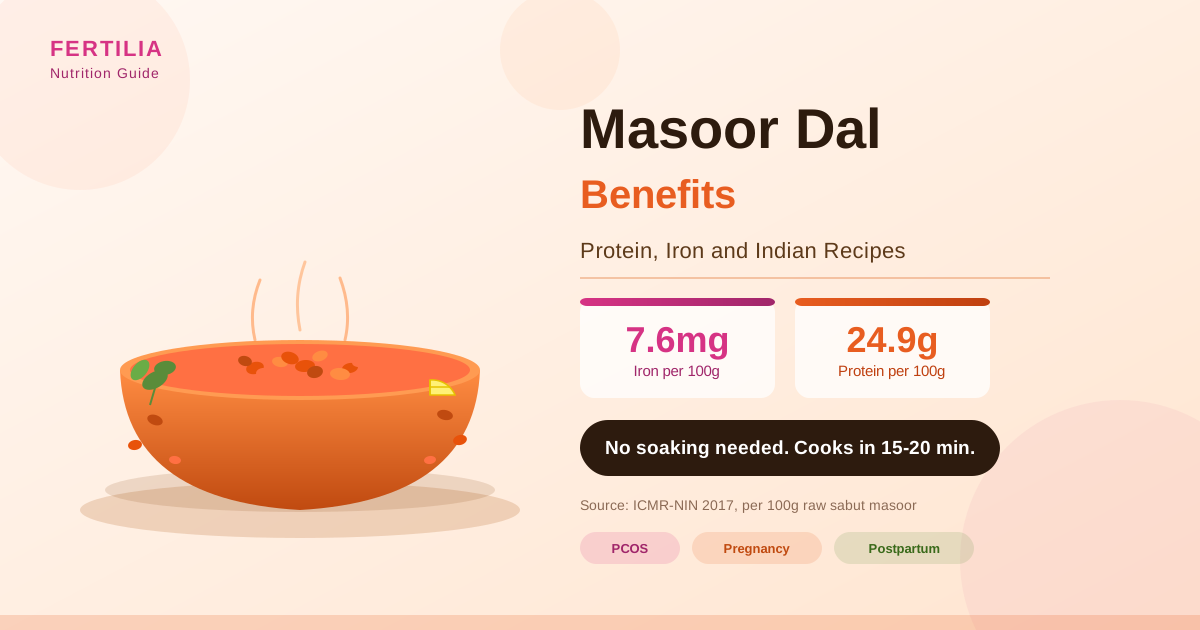
| Protein | 24.9g | 22.4g |
| Fat | 1.5g | 0.8g |
| Carbohydrates | 59.6g | 64.0g |
| Iron | 7.6mg | 7.6mg |
| Calcium | 65mg | 40mg |
| Phosphorus | 327mg | 298mg |
Iron context: 7.6mg iron per 100g raw is substantial for a plant-based food. The ICMR-NIN 2020 recommended daily allowance for iron is 21mg/day for adult women and 27-35mg/day in pregnancy. A single katori of cooked masoor dal contributes meaningfully to this daily target.
Per serving (1 katori / 80g dry before cooking = approximately 200g cooked):
| Nutrient | Approx. per katori (80g dry) |
|---|---|
| Energy | 272 kcal |
| Protein | 18-20g |
| Iron | 6.1mg |
| Calcium | 32-52mg (depending on form) |
Whole vs Split: Which One to Use When?
| Feature | Sabut Masoor (whole) | Masoor Dal (split) |
|---|---|---|
| Soaking needed | Optional (2h soak speeds it up) | Not needed |
| Cooking time (pressure cooker) | 3-4 whistles | 2 whistles |
| Cooking time (stovetop) | 35-40 minutes | 15-20 minutes |
| Texture after cooking | Holds shape, slightly firm | Soft, dissolves easily |
| Fibre | Higher (skin intact) | Moderate |
| Calcium | 65mg per 100g | 40mg per 100g |
| Best uses | Salads, whole dal curry, soups where texture matters | Tadka dal, khichdi, soups, pulao |
| Flavour | Earthy, more complex | Mild, versatile |
For most everyday cooking, split masoor dal is the practical choice. Use sabut masoor when you want texture in a salad or a hearty whole-dal curry.
The No-Soak Advantage
Masoor dal (split) is one of the few dals that needs no soaking at all. This sets it apart from rajma (8 hours), kala chana (8 hours), chana dal (4-6 hours), and even toor dal (which benefits from a 30-minute soak).
For more on this, read our guide on Kala Chana Benefits. For split masoor dal, the process is straightforward:
- Rinse 2-3 times until water runs clear
- Add to pressure cooker with 2.5 cups water per 1 cup dal
- Two whistles on medium heat: done
- For stovetop: simmer covered for 15-20 minutes, stirring occasionally
Gas-reduction tip: Unlike rajma or chana, masoor dal does not typically cause gas. It is one of the gentler dals for the digestive system, making it suitable from the first week postpartum or early pregnancy when the stomach is already under pressure.
Pairing tip: Serve cooked masoor dal with a squeeze of fresh lemon or alongside tomato-based vegetables. Vitamin C-rich accompaniments help your body make the most of the iron in masoor dal.
Want a personalised meal plan with Indian foods?
Manisha and the Fertilia team can build a customised nutrition guide based on your health goals, food preferences, and life stage, including as part of Dr. Suganya's 90-day PCOS Symptom Reversal program.
Message on WhatsAppLife-Stage Portions Guide
The portions below are for cooked masoor dal (one katori = approximately 150-180ml, roughly 200g cooked).
| Life Stage | Suggested Portions | Notes |
|---|---|---|
| General women | 1 katori, 3-4 times per week | Rotate with other dals for variety |
| PCOS | 1 katori, 3-5 times per week | Pair with roti or brown rice for a complete meal. See the PCOS diet guide for a full-day sample plan |
| Pregnancy: First trimester | 1 katori, 3-4 times per week | Gentle on the stomach; good for nausea-prone weeks |
| Pregnancy: Second and third trimester | 1-1.5 katori, 4-5 times per week | Iron needs rise in T2-T3; masoor dal fits well into the daily iron-rich food rotation |
| Postpartum: Week 1 | 1 katori, well-cooked soft, daily | Among the gentlest dals for post-delivery recovery; see the postpartum food guide |
| Postpartum: Week 2 onwards | 1-1.5 katori, daily or near-daily | Can be used as the base for most dal-based postpartum recipes |
| Breastfeeding | 1-1.5 katori, daily | Good protein and iron source; pair with ghee and rice for a full meal |
5 Indian Recipes Using Masoor Dal
1. Masoor Dal Tadka
Serves: 3-4 | Time: 25 minutes | No soak needed
Ingredients:
- 1 cup split masoor dal (orange/red), rinsed
- 2.5 cups water
- 1 medium tomato, chopped
- 1 small onion, finely chopped
- 2 cloves garlic, minced
- 1 tsp cumin seeds (jeera)
- 1/2 tsp turmeric powder (haldi)
- 1/2 tsp red chilli powder
- 1 tsp coriander powder
- 1 tbsp ghee or oil
- Salt to taste
- Fresh coriander leaves and lemon wedge to serve
Method:
- Pressure cook rinsed masoor dal with water and haldi for 2 whistles. Let pressure release naturally.
- In a kadai, heat ghee. Add jeera and let it splutter.
- Add onion and cook until golden. Add garlic and cook 1 minute.
- Add tomato and cook until soft and mushy, about 5 minutes.
- Add red chilli powder and coriander powder. Stir for 30 seconds.
- Pour the cooked dal into the tadka. Mix well, adjust salt.
- Simmer together for 3-4 minutes. Finish with fresh coriander and a squeeze of lemon.
Serve with roti, chapati, or steamed rice.
2. Masoor Dal Khichdi
Serves: 2-3 | Time: 30 minutes | One-pot comfort meal
Ingredients:
- 1/2 cup split masoor dal, rinsed
- 1/2 cup rice, rinsed
- 1 small carrot, diced
- 1 small potato, diced
- 1/4 tsp haldi
- 1 tsp jeera
- 1/2 tsp ginger, grated
- 1 tbsp ghee
- 3 cups water
- Salt to taste
Method:
- Heat ghee in a pressure cooker. Add jeera; let it splutter.
- Add ginger and cook 30 seconds.
- Add vegetables and stir for 1 minute.
- Add rinsed dal and rice, haldi, salt, and water.
- Pressure cook for 3-4 whistles. Let pressure release naturally.
- Open and stir; the khichdi should be porridge-like.
- Adjust salt. Serve warm with a side of dahi or pickle.
This khichdi is particularly easy to digest, making it a good option in the first trimester or the first week postpartum.
3. Masoor Dal Pulao
Serves: 3-4 | Time: 35 minutes | One-pot meal
Ingredients:
- 1/2 cup split masoor dal, rinsed
- 1 cup basmati rice, soaked 20 minutes and drained
- 1 medium onion, thinly sliced
- 1 medium tomato, chopped
- 1 tsp cumin seeds
- 1 bay leaf
- 1/4 tsp haldi
- 1/2 tsp garam masala
- 1 tbsp ghee or oil
- 2 cups water
- Salt to taste
- Mint leaves for garnish
Method:
- Heat ghee in a wide pan. Add cumin seeds and bay leaf.
- Add onion and cook until lightly golden, about 7 minutes.
- Add tomato and cook until soft.
- Add haldi, garam masala, salt. Stir well.
- Add drained rice and rinsed masoor dal. Mix gently.
- Add water, bring to a boil, then cover and cook on low heat for 15-18 minutes.
- Let it rest covered for 5 minutes. Fluff gently with a fork. Garnish with mint.
Serve with raita and a simple salad.
4. Masoor Dal Soup
Serves: 2 | Time: 25 minutes | Light and nourishing
Ingredients:
- 1/2 cup split masoor dal, rinsed
- 1 medium tomato, chopped
- 1/2 onion, chopped
- 1 clove garlic
- 1/4 tsp haldi
- 1/4 tsp jeera powder
- 2 cups water or light vegetable stock
- Salt to taste
- 1 tsp ghee
- Fresh lemon juice to finish
Method:
- In a saucepan, combine masoor dal, tomato, onion, garlic, haldi, and water.
- Bring to a boil, then simmer for 18-20 minutes until dal is very soft.
- Blend smooth or leave slightly chunky based on preference.
- Return to heat. Add jeera powder and salt. Simmer 2 minutes.
- Finish with ghee and a generous squeeze of lemon.
This soup is light, easy to digest, and works well for early pregnancy nausea, post-delivery recovery, or any day when a full meal feels like too much.
5. Sprouted Masoor Salad
Serves: 2 | Time: 10 minutes active, 36 hours sprouting | Raw and crunchy
Sprouting sabut masoor (whole):
- Rinse 1/2 cup whole masoor dal. Soak in plenty of water for 8-10 hours.
- Drain, rinse, and transfer to a colander or sprouting jar covered with a cloth.
- Rinse and drain twice daily. In 24-36 hours (faster in warm weather), small white sprouts appear.
- Use once sprouted; store in the fridge for up to 3 days.
For the salad:
- 1 cup sprouted masoor
- 1/2 cucumber, finely diced
- 1 small tomato, diced
- 1/4 onion, finely chopped
- 1 tsp chaat masala
- 1 tsp lemon juice
- Salt to taste
- Fresh coriander
Method: Steam sprouted masoor for 5 minutes if you prefer it softer (recommended in pregnancy). Toss with all other ingredients. Serve immediately.
Pregnancy note: Always steam or briefly boil sprouts during pregnancy. Raw sprouts carry a small risk of bacterial contamination. A 5-minute steam makes them fully safe without reducing their nutrition significantly.
Buying and Storage Guide
What to Look for When Buying
| Type | What to Look For | What to Avoid |
|---|---|---|
| Split masoor dal | Bright orange or salmon-pink colour, uniform in size, no visible stones or debris | Dull brownish colour (may indicate age or poor storage), musty smell |
| Sabut masoor (whole) | Dark brown to greenish-brown outer skin, firm, no broken lentils | Shrivelled or spotted lentils, powdery residue (may indicate pesticide residue) |
| Packaged vs loose | Either fine; packaged gives a purchase date; loose from a busy shop with high turnover is also good | Avoid loose dal from shops with low footfall (sits long) |
Storage
| Storage Method | Duration |
|---|---|
| Airtight container at room temperature | 12 months for both split and whole |
| After opening a packet | Transfer to an airtight container immediately; use within 6-8 months |
| Cooked masoor dal | Refrigerate in a covered container; use within 2 days |
| Cooked masoor dal, frozen | Up to 2 months; reheat well before eating |
A note on worms: Masoor dal is less prone to weevils than some other grains, but in humid weather, add a dried bay leaf or a few dried red chillies to the storage container as a natural deterrent.
How Masoor Dal Compares to Other Dals
If you rotate dals through the week (a good habit for nutritional variety), here is a quick comparison:
| Dal | Protein (per 100g raw) | Iron (per 100g raw) | Calcium (per 100g raw) | Soaking Required |
|---|---|---|---|---|
| Masoor dal (split) | 22.4g | 7.6mg | 40mg | No |
| Toor dal | 22.3g | 2.7mg | 73mg | Optional 30 min |
| Moong dal | 24.5g | 8.5mg | 75mg | No |
| Rajma (kidney beans) | 22.9g | 5.1mg | 60mg | Yes, 8 hours |
| Chana dal | 22.5g | 4.6mg | 56mg | Yes, 4-6 hours |
Source: ICMR-NIN 2017
Masoor dal’s iron content (7.6mg) is among the highest of commonly used Indian dals. The no-soak advantage makes it more practical on busy days than rajma or chana dal.
For more on including a variety of dals in your diet, see our guides on toor dal nutrition and recipes and rajma benefits and portions.
For a broader look at high-iron Indian foods, the iron-rich foods for pregnancy guide covers the full picture. If you are looking for high-fibre options across dal and vegetable categories, the high-fibre Indian foods guide is a useful reference.
Women focused on fertility nutrition can find masoor dal featured in the Indian fertility foods list alongside other iron-rich plant proteins.
Looking for a personalised nutrition plan?
Whether you are managing PCOS, preparing for pregnancy, or recovering postpartum, our nutritionists can create an Indian food plan that works for your specific situation.
Message on WhatsAppAlso explore: Iron-Calcium Rich Foods Resource
Frequently Asked Questions
Is masoor dal good in pregnancy?
Yes. Masoor dal is a good source of protein, iron, and calcium, all of which are important during pregnancy. The split variety cooks quickly and is gentle on the stomach, making it practical from the first trimester onwards. Serve it with a squeeze of lemon or alongside tomato-based vegetables. For a complete picture of iron needs in pregnancy, see the iron-rich foods guide.
Can I eat masoor dal with PCOS?
Yes. Masoor dal is a protein-rich, plant-based food that fits well into a PCOS-supportive Indian diet. One katori 3-5 times per week, as part of a balanced meal with a grain and a vegetable, is a sensible amount. See the PCOS diet guide for a full-day meal plan that includes masoor dal.
Does masoor dal need soaking?
Split masoor dal does not need soaking. It cooks in 15-20 minutes on the stovetop or with 2 whistles in a pressure cooker. Whole sabut masoor can be soaked for 2 hours to reduce cooking time to about 25 minutes, but it also cooks without soaking in 35-40 minutes.
Is masoor dal good for weight management?
Masoor dal is a high-protein, moderate-calorie food. One katori cooked provides approximately 18-20g protein, which keeps you full for longer compared to rice or roti alone. It fits well into a balanced Indian meal pattern when paired with a vegetable and a small portion of grain.
What is the difference between masoor dal and toor dal?
Both are common Indian dals, but they differ in several ways. Masoor dal (split) needs no soaking and cooks in 15-20 minutes, while toor dal benefits from a short soak. Masoor dal has higher iron (7.6mg vs 2.7mg per 100g) but toor dal has more calcium (73mg vs 40mg). In terms of flavour, masoor dal is milder and slightly sweeter; toor dal has a more robust, earthy taste used as the base for sambar. Both are nutritious; rotating them gives you a wider range of minerals.
Can I eat masoor dal after delivery (postpartum)?
Yes. Masoor dal is among the gentler dals for post-delivery recovery. It is easy to digest, does not cause gas (unlike rajma or whole chana in large amounts), and cooks to a soft consistency suitable from Week 1. The postpartum food guide covers a full food rotation for the first six weeks, with masoor dal khichdi and masoor soup fitting in naturally from Day 1.
How do I make masoor dal sprouts, and are they safe in pregnancy?
To sprout whole masoor (sabut masoor), soak for 8-10 hours, drain, and keep in a covered colander, rinsing twice daily. Sprouts appear in 24-36 hours. During pregnancy, always steam sprouts for 5 minutes before eating. Raw sprouts can carry bacteria (Salmonella, E. coli) that are harmful during pregnancy. Steamed sprouted masoor is safe, nutritious, and works well in salads or as a dry sabzi.