Ask any mother in South India what is simmering on her afternoon stove, and the answer is almost always sambar. The base of that sambar, the ingredient that gives it body and protein, is toor dal. Known by a dozen names across India and eaten in some form in nearly every regional cuisine, toor dal is possibly the most consistently consumed dal in the country. Yet for all its familiarity, most people have never paused to look at what is actually inside it.
For more on this, read our guide on Masoor Dal Benefits. This guide covers the full nutritional picture of toor dal, including ICMR-NIN 2017 data, a regional names table, a quick comparison with other common dals, five practical recipes, daily portions for different life stages, and a buying and storage guide. At Fertilia, everyday dals like this one anchor the meal plans our nutrition team puts together for women across India.
What Is Toor Dal? Regional Names Across India
Toor dal comes from the pigeon pea plant (Cajanus cajan), one of the oldest cultivated legumes in India. It is sold most commonly as a split, hulled, golden-yellow dal, though the whole dried pea is also eaten in some regions. If you have ever made sambar, rasam, or dal tadka, you have already been cooking with it.
Here is what it is called across India:
| Language | Name | Script |
|---|---|---|
| Hindi / Urdu | Toor dal, Arhar dal | तूर दाल, अरहर दाल |
| Tamil | Tuvaram paruppu | துவரம் பருப்பு |
| Telugu | Kandi pappu | కంది పప్పు |
| Kannada | Togari bele | ತೊಗರಿ ಬೇಳೆ |
| Malayalam | Tuvara parippu | തുവര പരിപ്പ് |
| Marathi | Tur dal | तूर डाळ |
| Gujarati | Tuver dal | તુવેર દાળ |
| Bengali | Arhar dal | অড়হড় ডাল |
Whatever name it goes by in your kitchen, the nutritional content is the same.
Toor Dal Nutrition: ICMR-NIN 2017 Data
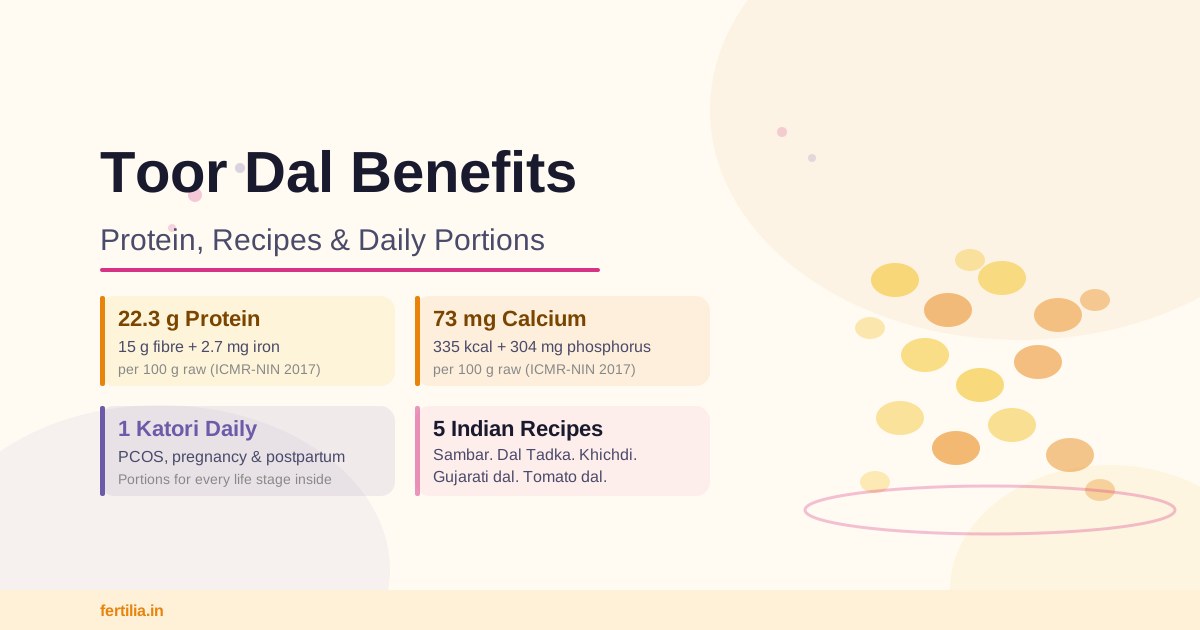
The figures below come from the ICMR-NIN 2017 Indian Food Composition Tables for raw toor dal (split, hulled) per 100g:
| Nutrient | Per 100g raw |
|---|---|
| Energy | 335 kcal |
| Protein | 22.3 g |
| Fat | 1.7 g |
| Carbohydrates | 57.6 g |
| Dietary Fibre | 15.0 g |
| Calcium | 73 mg |
| Iron | 2.7 mg |
| Phosphorus | 304 mg |
What these numbers mean in practice:
Protein at 22.3g per 100g raw puts toor dal firmly alongside moong dal (24g) and urad dal (25g) as one of India’s strongest plant protein sources. For a dal eaten daily in most Indian homes, this is a genuinely useful contribution to total daily protein.
Fibre at 15g per 100g raw is one of the reasons a dal-rice meal keeps you fuller for longer compared to plain white rice. The cooked dal retains much of this fibre, though the weight increases significantly on cooking.
Iron at 2.7mg per 100g is non-heme iron, which the body absorbs more readily when eaten alongside a source of vitamin C. Tomato-based sambar, rasam, and the fresh squeeze of lemon you add to dal tadka all serve this purpose naturally. For a detailed guide to iron-rich Indian foods during pregnancy, see our iron-rich foods guide.
How Toor Dal Compares to Other Common Dals
| Dal | Protein (per 100g raw) | Iron | Calcium | Dietary Fibre |
|---|---|---|---|---|
| Urad dal (whole black) | 25.1 g | 9.1 mg | 154 mg | 18.3 g |
| Masoor dal (red lentil) | 25.1 g | 7.6 mg | 51 mg | 11.7 g |
| Moong dal (yellow split) | 24.0 g | 7.3 mg | 138 mg | 13.7 g |
| Toor dal (split hulled) | 22.3 g | 2.7 mg | 73 mg | 15.0 g |
| Chana dal | 20.0 g | 5.3 mg | 56 mg | 11.4 g |
(Source: ICMR-NIN 2017)
Toor dal sits in the mid-range for iron and calcium, but its fibre content is strong and its cooking qualities are unmatched for certain preparations. Urad dal has higher iron and calcium but a heavier texture. Moong is the lightest and most digestible. Toor dal’s place in the middle makes it the everyday, all-purpose dal.
For urad dal’s specific nutritional profile and its South Indian postpartum traditions, see our urad dal guide. For moong dal’s easy digestibility, see our moong dal guide.
Daily Portions by Life Stage
A standard Indian katori holds about 150ml. For cooked dal, this translates to roughly 100g of cooked product, which comes from about 30-35g of raw dal.
For Women Managing PCOS
One katori of cooked toor dal once daily works well as part of a PCOS-friendly routine. Dal-rice or dal-roti meals provide protein and fibre together, making them practical midday or evening meals. For a complete PCOS-focused food guide with meal ideas, see our PCOS diet chart.
Speak to Dr. Suganya about your PCOS nutrition plan on WhatsApp
During Pregnancy
First trimester: One katori cooked dal once or twice daily. Sambar with idli, dal with roti, or dal khichdi all work well. Appetite can be unpredictable in the first trimester, so smaller, frequent portions are better than waiting for one large meal.
Second trimester: One to 1.5 katori once or twice daily. Appetite usually returns more steadily and dal-based meals are easy to prepare and digest.
Third trimester: One to 1.5 katori per meal. Sambar rice or khichdi are especially gentle in the final weeks when the stomach has less room due to the baby’s position.
Postpartum
Week 1-2: Three-quarters of a katori of well-cooked, very soft dal. In the first days after delivery, texture matters as much as quantity. Dal should be cooked until completely soft, almost mashing when stirred into rice. Keep tempering light in the first week: a small amount of ghee with jeera is enough. Plain rasam made with toor dal water is a traditional choice for these earliest days across South Indian homes.
Week 3 onwards: One to 1.5 katori of regular sambar, dal tadka, or khichdi. By this point, the digestive system has settled and full portions are appropriate.
For a complete guide to eating after delivery, see our post-delivery food guide for Indian mothers. Toor dal features in our postpartum diet resource as well.
General Health
One to two katori per day as part of regular meals. Most Indian women eating a traditional diet already consume this amount. Knowing it is genuinely adequate is reassuring.
5 Toor Dal Recipes
1. Classic Sambar (South Indian)
A South Indian home staple. Made well, sambar is one of the most nutritionally complete single dishes in the Indian kitchen.
Ingredients (serves 3-4): 1/2 cup toor dal, 2 drumstick pieces (murungakkai), 1 small tomato, 1/4 cup tamarind water (diluted from a lemon-sized ball), 1.5 tsp sambar powder, 1/4 tsp turmeric, salt to taste. For tempering: 1 tsp mustard seeds, 2 dried red chillies, 8-10 curry leaves, a pinch of hing, 1 tsp oil or ghee.
Method: Pressure cook toor dal with turmeric and 1.5 cups water for 3-4 whistles until very soft. In a pan, heat oil, add mustard seeds. Once they splutter, add dried chilli, curry leaves, and hing. Add tomato and cook 3-4 minutes. Add tamarind water and drumstick pieces. Simmer 8-10 minutes until drumstick softens. Add sambar powder, salt, and cooked mashed dal. Add water to reach your preferred consistency and simmer 5 more minutes.
Postpartum adjustment: Skip the tamarind for the first 10 days. Use just tomato and a little extra water for a gentler sambar.
2. Dal Tadka (North Indian)
The everyday dal of most North Indian kitchens, and a perfect dal-roti combination.
Ingredients (serves 3-4): 1 cup toor dal, 2 medium tomatoes (chopped), 1 medium onion (sliced), 1 tsp ginger-garlic paste, 1/4 tsp turmeric, 1/2 tsp red chilli powder, 1 tsp jeera, a pinch of hing, 1 tbsp ghee or oil, fresh coriander, salt.
Method: Pressure cook toor dal with turmeric for 3 whistles. In a pan, heat ghee, add jeera and hing. Add onion and cook until golden brown, 8-10 minutes. Add ginger-garlic paste and cook 2 minutes. Add tomatoes and chilli powder, cook until oil separates, about 8 minutes. Add cooked dal, season with salt, and simmer 5-7 minutes. Finish with fresh coriander.
Portions: 1 katori dal with 2 medium rotis.
3. Gujarati Toor Dal (Sweet and Sour)
This version is distinct from the standard tadka dal: a balance of sweet, sour, and mildly spiced that makes it memorable as a standalone dish.
Ingredients (serves 2-3): 3/4 cup toor dal, 1 medium tomato, 1 tsp kokum (or 1 tbsp tamarind water), 1 tsp jaggery (grated), 1/2 tsp mustard seeds, 6-8 curry leaves, 1/2 tsp grated ginger, 1 green chilli (slit), 1/4 tsp turmeric, 1/4 tsp dhania-jeera powder, 1 tsp ghee, salt.
Method: Pressure cook dal until very soft. In a pan, heat ghee, splutter mustard seeds, add curry leaves, ginger, and green chilli. Add tomato and cook 3-4 minutes. Add cooked dal, kokum or tamarind water, jaggery, turmeric, dhania-jeera powder, and salt. Stir well, add a little water to adjust consistency, and simmer 8-10 minutes until the sweet-sour flavour melds.
Portions: 1 katori with 2 phulkas or alongside rice. This version travels well and holds its flavour for several hours.
4. Toor Dal Khichdi
Simple, one-pot, and suitable from postpartum Week 2 through daily life.
Ingredients (serves 2): 1/2 cup toor dal, 1/2 cup rice, 1 small carrot (cubed small), 1/4 cup fresh green peas, 1/4 tsp turmeric, salt, 1 tsp ghee, 1/2 tsp jeera, a pinch of hing.
Method: Wash and soak dal and rice together for 20-25 minutes. Heat ghee in a pressure cooker, add jeera and hing. Add carrot and peas, sauté 2 minutes. Add soaked dal and rice, turmeric, salt, and 3 cups water. Pressure cook for 3-4 whistles until completely soft. Let pressure release naturally. Serve warm, optionally with a small spoon of ghee on top.
Note: This khichdi is the go-to postpartum Week 2-3 meal: soft, easy to digest, and ready in 30 minutes with minimal effort.
5. Quick Tomato Dal (Everyday Version)
For those evenings when there is no energy to cook but dinner still needs to happen.
Ingredients (serves 2-3): 1 cup toor dal, 3 ripe tomatoes, 1-2 green chillies, 1/4 tsp turmeric, 1/2 tsp mustard seeds, 6-8 curry leaves, 1/2 tsp jeera, 1 tsp oil, salt.
Method: Pressure cook toor dal with tomatoes, green chillies, and turmeric for 3-4 whistles until very soft. Mash gently with the back of a ladle. In a small pan, heat oil, add mustard seeds. Once they pop, add curry leaves and jeera. Pour the tempering over the dal. Season with salt and serve.
Time: Under 25 minutes from start to table.
Buying and Storage Guide
What to Look For in the Shop
Toor dal is sold in two main forms in Indian markets:
Raw (unpolished) toor dal: Natural golden-yellow, slightly matte surface, no visible sheen or shine. This is the better everyday choice. It has good fibre retention and has not been treated with any coating. It cooks to a softer, silkier consistency.
Oily (polished) toor dal: Shiny surface, sometimes slightly tacky to the touch. This dal has been coated with castor oil or mineral oil to extend shelf life and improve appearance. It is safe to eat after thorough washing but requires 3-4 rinses before cooking. For daily home cooking, raw unpolished dal is the preferred option.
Signs of good quality:
- Uniform golden-yellow colour (some natural variation is fine)
- No dustiness or white powder at the bottom of the bag or container
- No musty, stale, or rancid smell
- Clean, intact split lentils with no dark spots or visible discolouration
Storage
Keep toor dal in an airtight container in a cool, dry place away from direct sunlight. Under typical Indian home conditions, it stores well for up to 6 months. In a properly cool pantry, quality holds for up to a year.
Cooked dal: Refrigerate in a covered container and use within 2 days. Sambar lasts slightly longer (2-3 days refrigerated) because of the tamarind’s natural preserving quality.
Quick tip: If you notice your toor dal is taking unusually long to soften even after pressure cooking, it has likely been stored for too long. Old dal loses its ability to cook soft and should be replaced.
Frequently Asked Questions
Q1. How much toor dal should I eat in a day? For most adult women, one to two katori of cooked toor dal per day is practical and adequate. One katori at lunch and one at dinner, in different preparations (sambar at one meal and dal tadka at another, for example) is a natural way to meet this without any deliberate effort. There is no rigid upper limit from a food standpoint, though eating a wide variety of dals and legumes gives better overall nutrition than relying on any single one.
Q2. Is toor dal good for women managing PCOS? Yes. Toor dal provides protein and fibre, both of which support satiety and steady energy across the day, which is useful for women managing PCOS. It fits naturally into most Indian PCOS-friendly meal plans. For the full picture of what to eat and avoid, see our PCOS diet chart.
Q3. Can I eat toor dal during pregnancy? Yes, toor dal is safe and beneficial throughout pregnancy. The protein and iron are useful across all three trimesters. Start with what your appetite allows and build up portions as the second trimester brings more consistent hunger. Our iron-rich foods guide for pregnancy covers how to pair iron sources for better absorption.
Q4. Is toor dal good after delivery? Yes, from the very first week. In the first few days, plain dal or dal-water (the thin liquid from pressure-cooked dal) is gentle and nourishing. By Week 2, khichdi and simple dal with rice are standard recovery meals across India. For a full guide to post-delivery eating, see our after delivery food guide for Indian mothers.
Q5. What is the difference between toor dal and moong dal? Both are widely eaten Indian dals, but they differ in digestibility and in the dishes they are suited for. Moong dal (especially yellow split moong) is the most easily digestible and is often the first dal given to new mothers and babies in the early postpartum days. Toor dal is heartier, has higher fibre, and is the natural base for sambar and rasam. For a detailed moong dal guide, see our moong dal benefits post.
Q6. How do I reduce gas from toor dal? A few practical steps make a real difference. Soak toor dal for 20-30 minutes before cooking and discard the soaking water. Add a pinch of hing (asafoetida) in the tempering. Cook the dal until it is completely soft. Starting with smaller portions and increasing gradually also helps the digestive system adjust, especially if you are not used to eating pulses regularly.
Q7. Is oily toor dal safe to use? Yes. The oil coating (usually food-grade castor oil) is safe for consumption. Rinse the dal thoroughly, 3-4 times with water, before cooking. If you have the option, raw unpolished dal is a simpler choice for everyday cooking since it does not need the extra washing.
Whether it is the sambar that starts your morning alongside idli, the dal tadka that sits beside your afternoon roti, or the gentle khichdi that gets you through a tired evening, toor dal is likely already part of your day. What this guide adds is the reassurance that the simplest, most familiar bowl in your kitchen is doing a great deal of quiet nutritional work.
For personalised guidance on meal planning across the stages of your health journey, reach out to Dr. Suganya’s team on WhatsApp. Whether you are managing PCOS, navigating pregnancy, or recovering after delivery, the team is here to help. For PCOS, a steady, low-GI source of protein like toor dal is the kind of everyday bowl Dr. Suganya’s 90-day PCOS Symptom Reversal program is built around.