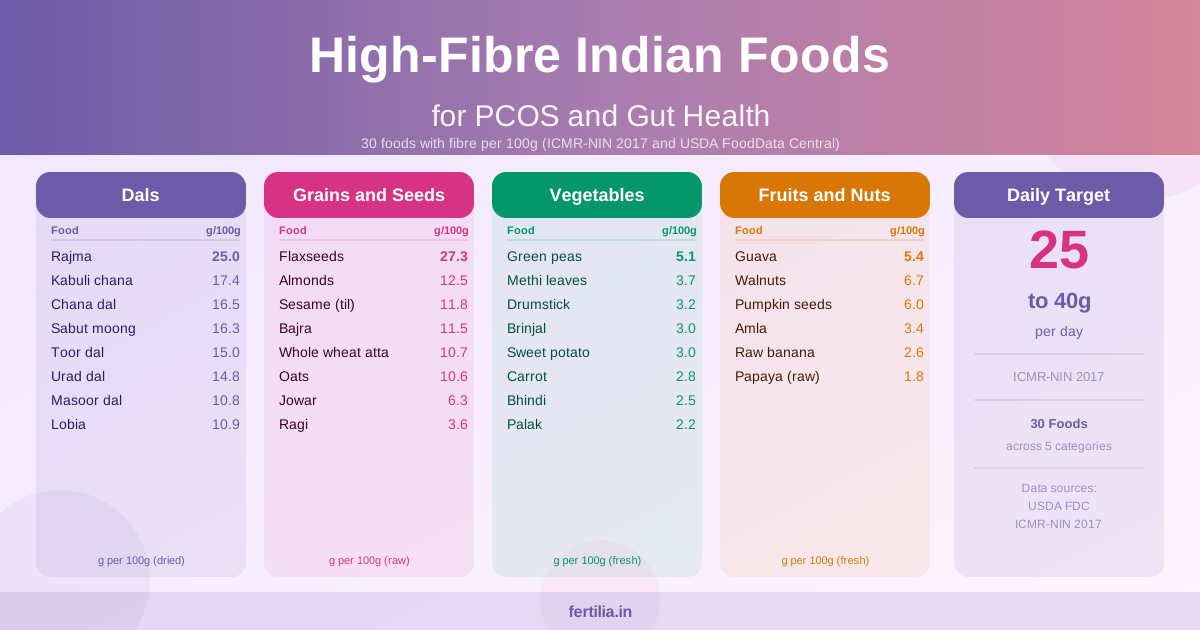
Every Indian kitchen already has the ingredients for a high-fibre diet. Rajma, dals, ragi, jowar, bhindi, guava: these everyday foods contain far more fibre than many women realise. The challenge is not finding these foods. It is knowing which ones deliver the most, how much to eat at each life stage, and how to combine them across the day.
This guide gives you a 30-food list organised by category, with fibre values per 100g from ICMR-NIN 2017 and USDA FoodData Central, a daily fibre target, a sample high-fibre thali, and two easy recipes.
For how high-fibre foods support PCOS specifically, read our complete guide to insulin resistance and PCOS for the clinical science behind this.
How Much Fibre Do You Need Per Day?
ICMR-NIN 2017 recommends 25 to 40g of dietary fibre per day for adult women. Most Indian women currently get only 10 to 15g daily, mainly because refined grains and polished white rice have replaced whole millets, and dals are eaten in smaller portions than they should be.
The practical daily target is 25 to 30g. This is achievable with two or three dal servings, one or two millet or whole-grain rotis, two servings of vegetables, and a fruit, all without adding anything unfamiliar to your plate.
30 High-Fibre Indian Foods: The Complete List
All fibre values are total dietary fibre (TDF) per 100g of raw or dried food unless noted.
Category 1: Dals and Legumes
Dals are the most reliable fibre source in an Indian diet. Unlike vegetables, which lose some fibre when cooked, well-cooked dals still deliver a substantial portion of their fibre content.
| Food | Indian Name(s) | Fibre (g/100g) | Source |
|---|---|---|---|
| Rajma (red kidney beans, dried) | Rajma | 25.0 | USDA FDC ID 174271 |
| Kabuli chana (chickpeas, dried) | Chole, safed chana | 17.4 | USDA FDC ID 173757 |
| Moong (whole green gram, dried) | Sabut moong | 16.3 | USDA FDC ID 175237 |
| Chana dal (Bengal gram, split) | Chana dal | 16.5 | ICMR-NIN 2017 |
| Toor dal (pigeon pea, split) | Toor dal, arhar | 15.0 | ICMR-NIN 2017 |
| Urad dal (black gram, split) | Urad dal, udad | 14.8 | ICMR-NIN 2017 |
| Masoor dal (red lentil, split) | Masoor, mysore dal | 10.8 | USDA FDC ID 172420 |
| Lobia (black-eyed peas, dried) | Lobia, chawli | 10.9 | USDA FDC ID 175221 |
One cup of cooked rajma curry (from 50g dry) provides approximately 12.5g of fibre. That is half the minimum daily target from a single dish.
Category 2: Millets, Grains, and Seeds
Millets are the original high-fibre grain of the Indian subcontinent. Switching from white rice or maida to any of these options meaningfully increases your daily fibre intake.
| Food | Indian Name(s) | Fibre (g/100g) | Source |
|---|---|---|---|
| Flaxseeds (alsi) | Alsi (Hindi), Ali vidhai (Tamil), Aviselu (Telugu), Agase (Kannada) | 27.3 | USDA FDC ID 169414 |
| Sesame seeds (white til) | Til (Hindi), Ellu (Tamil/Telugu/Kannada) | 11.8 | USDA FDC ID 12023 |
| Bajra (pearl millet) | Bajra, Kambu (Tamil), Sajjalu (Telugu), Sajje (Kannada) | 11.5 | USDA FDC ID 168875 |
| Whole wheat atta | Gehun atta | 10.7 | USDA FDC ID 168898 |
| Rolled oats | Jai (Hindi) | 10.6 | USDA FDC ID 169705 |
| Jowar (sorghum) | Jowar (Hindi), Cholam (Tamil), Jonna (Telugu), Jola (Kannada) | 6.3 | ICMR-NIN 2017 |
| Ragi (finger millet) | Ragi (Hindi/Kannada), Kelvaragu (Tamil), Ragulu (Telugu) | 3.6 | ICMR-NIN 2017 |
Flaxseeds (27.3g/100g) and sesame seeds (11.8g/100g) are the most concentrated fibre sources in this category. A tablespoon of flaxseeds (10g) adds 2.7g of fibre to any porridge, roti, or chutney without changing the taste significantly.
For a detailed look at ragi in your daily diet, read Ragi Benefits for Women: PCOS, Pregnancy and Bone Health. For jowar recipes and portions, see Jowar Roti Benefits for Women: Nutrition, Recipes and Portions.
Category 3: Vegetables
Fresh vegetables add a different type of fibre that complements the fibre from dals and grains. Aim for at least two servings of vegetables per day.
| Food | Indian Name(s) | Fibre (g/100g) | Source |
|---|---|---|---|
| Green peas (fresh) | Matar (Hindi), Pattani (Tamil), Batani (Telugu) | 5.1 | USDA FDC ID 170419 |
| Methi leaves (fenugreek) | Methi (Hindi), Vendhayam keerai (Tamil), Menthi koora (Telugu) | 3.7 | USDA FDC |
| Drumstick pods | Murungai (Tamil), Munagakaya (Telugu), Sahjan (Hindi) | 3.2 | ICMR-NIN 2017 |
| Brinjal (eggplant) | Baigan (Hindi), Kathirikkai (Tamil), Vankaya (Telugu) | 3.0 | USDA FDC |
| Sweet potato | Shakarkandi (Hindi), Sakkaravalli kizhangu (Tamil) | 3.0 | USDA FDC |
| Carrot | Gajar (Hindi), Carrot (Tamil/Telugu) | 2.8 | USDA FDC ID 170393 |
| Bhindi (okra) | Bhindi (Hindi), Vendakkai (Tamil), Bendakaya (Telugu) | 2.5 | USDA FDC ID 169260 |
| Palak (spinach) | Palak (Hindi), Pasalai keerai (Tamil), Palakura (Telugu) | 2.2 | USDA FDC |
Green peas stand out as the highest-fibre vegetable on this list at 5.1g/100g. Add a small handful to dal, rice, or sabzi to boost fibre without extra cooking time.
For a broader guide to anti-inflammatory vegetables in your daily thali, read Anti-Inflammatory Indian Foods: A Daily Thali Guide.
Category 4: Fruits
Fruits eaten with the skin on provide the most fibre. Guava and amla are particularly high-fibre options available year-round across India.
| Food | Indian Name(s) | Fibre (g/100g) | Source |
|---|---|---|---|
| Guava | Amrood (Hindi), Peru (Tamil), Jama (Telugu) | 5.4 | USDA FDC ID 173044 |
| Amla (Indian gooseberry) | Amla (Hindi), Nellikai (Tamil), Usirikaya (Telugu) | 3.4 | ICMR-NIN 2017 |
| Raw banana | Kachha kela (Hindi), Vazhakkai (Tamil), Arati pandu (Telugu) | 2.6 | USDA FDC |
| Papaya (raw, fresh) | Papita (Hindi), Papali (Tamil), Boppai (Telugu) | 1.8 | USDA FDC ID 169926 |
One medium guava (approximately 100g) eaten with its skin provides 5.4g of fibre. That makes it one of the most effective high-fibre snacks available in India, and it is far less expensive than most imported seeds or supplements.
Category 5: Nuts and Seeds (Daily Portions)
A small daily serving of seeds or nuts boosts fibre without requiring an extra meal.
| Food | Indian Name(s) | Fibre (g/100g) | Source |
|---|---|---|---|
| Pumpkin seeds | Kaddu ke beej (Hindi), Parangikai vidhai (Tamil) | 6.0 | USDA FDC ID 170554 |
| Almonds | Badam | 12.5 | USDA FDC ID 170567 |
| Walnuts | Akhrot | 6.7 | USDA FDC ID 170187 |
10 almonds (approximately 12g) provide about 1.5g of fibre, making them a useful between-meal snack alongside a high-fibre fruit.
For more detail on individual seeds, read Flaxseeds for Women: PCOS, Pregnancy and Postpartum.
Want a personalised high-fibre meal plan tailored to your PCOS or gut health goals? Dr. Suganya and the Fertilia nutrition team work with women across all life stages.
Chat with Dr. Suganya on WhatsApp: +91 99402 70499
Sample High-Fibre Indian Day
This sample plan uses only everyday Indian foods from the list above. No exotic ingredients required.
Breakfast: High-Fibre Ragi Oats Porridge (Recipe 1 below) with 1 cup buttermilk (chaas) Fibre from this meal: approximately 8 to 9g
Mid-morning snack: 1 medium guava (with skin) + 10 almonds Fibre from this snack: approximately 6 to 7g
Lunch: Rajma Jowar Power Thali (Recipe 2 below) Fibre from this meal: approximately 18 to 20g
Evening snack: Handful of roasted pumpkin seeds (20g) Fibre from this snack: approximately 1.2g
Dinner: Moong dal khichdi (1.5 cups cooked, from 50g dry moong) with 1 small bhindi sabzi (100g) Fibre from this meal: approximately 5 to 7g
Day total: approximately 38 to 43g of dietary fibre. This meets and exceeds the ICMR-NIN upper recommendation of 40g, using foods from the standard Indian kitchen.
For more PCOS-specific meal planning, see the PCOS/PCOD Diet Chart: Indian Meal Plan and PCOS Weight Loss Diet: Indian Meal Plan That Works.
You can also download the free PCOS Diet Guide from Fertilia’s PCOS resources page for a printable food list and weekly planner.
Recipe 1: High-Fibre Ragi Oats Porridge
A warm, quick breakfast that provides around 8g of fibre per serving. Takes 10 minutes.
Ingredients (1 serving):
- 3 tablespoons rolled oats (30g)
- 2 tablespoons ragi flour (20g)
- 1 teaspoon flaxseeds (5g), lightly roasted
- 1 cup water or toned milk
- 1 teaspoon jaggery, or to taste
- 1 pinch cardamom powder
- 1 teaspoon ghee (optional)
Method:
- Whisk ragi flour with 3 tablespoons of cold water to make a smooth paste. This prevents lumps when added to hot liquid.
- Bring 1 cup water or milk to a gentle boil in a heavy-bottomed pan.
- Stir in the oats and reduce heat to low. Cook for 3 to 4 minutes, stirring occasionally, until the oats soften.
- Add the ragi paste and stir continuously for 2 to 3 minutes until the porridge thickens to your preferred consistency.
- Add jaggery and cardamom. Stir well to combine.
- Pour into a bowl, top with roasted flaxseeds, and finish with a small drizzle of ghee if using.
Approximate fibre per serving: Oats (30g): 3.2g, ragi flour (20g): 0.7g, flaxseeds (5g): 1.4g. Total: approximately 5.3g from ingredients alone, approximately 7 to 8g including all components.
Suitable for: PCOS, pregnancy, postpartum, and general daily use.
Recipe 2: Rajma Jowar Power Thali
A satisfying lunch thali that delivers approximately 18 to 20g of fibre per serving. Rajma is the fibre anchor here. The jowar rotis and bhindi sabzi add both fibre and variety.
Ingredients (1 serving):
For the rajma curry:
- 50g dried rajma, soaked in water overnight
- 1 small onion, finely chopped
- 1 medium tomato, chopped
- 1 teaspoon jeera
- 1/2 teaspoon haldi
- 1 teaspoon coriander powder
- Red chilli to taste
- Salt to taste
- 1 teaspoon ghee or neutral oil
For the jowar rotis (2 rotis):
- 60g jowar flour (cholam maavu)
- Warm water as needed
- Pinch of salt
For the bhindi sabzi:
- 100g bhindi, washed, dried completely, and sliced into rounds
- 1/2 teaspoon jeera
- 1/4 teaspoon haldi
- Salt and chilli to taste
- 1 teaspoon oil
Method:
Rajma curry (total time: 35 to 40 minutes):
- Drain soaked rajma and pressure cook with fresh water for 4 to 5 whistles until completely soft. Reserve the cooking liquid.
- Heat ghee in a pan over medium heat. Add jeera and let it splutter for 30 seconds.
- Add onion and cook, stirring, until golden brown (about 5 minutes).
- Add tomatoes and cook until they break down into a paste (about 4 minutes).
- Add haldi, coriander powder, chilli, and salt. Stir for 1 minute until fragrant.
- Add the cooked rajma along with its cooking liquid. Simmer for 8 to 10 minutes, stirring occasionally, until the gravy thickens slightly.
Jowar rotis:
- Combine jowar flour and salt in a bowl. Add warm water gradually, mixing until a soft, pliable dough forms. Jowar dough is softer than wheat dough and does not contain gluten, so handle it gently.
- Divide into 2 equal balls. Place each ball between two sheets of plastic wrap or on a damp cloth and press or roll into a round roti, approximately 6 inches in diameter.
- Cook on a hot tawa over medium heat for 2 to 3 minutes per side until light brown spots appear.
Bhindi sabzi:
- Bhindi must be completely dry before cutting. Wet bhindi turns sticky and clumps during cooking. Pat dry with a clean cloth after washing.
- Heat oil in a wide pan over medium-high heat. Add jeera and let it splutter.
- Spread bhindi in a single layer. Cook without stirring for 4 to 5 minutes until the undersides brown slightly.
- Stir, add haldi, salt, and chilli. Cook for another 3 to 4 minutes until just tender and slightly crisp.
Serve the rajma curry alongside the jowar rotis and bhindi sabzi.
Approximate fibre per serving: Rajma (50g dry): 12.5g, jowar flour (60g): 3.8g, bhindi (100g): 2.5g. Total: approximately 18.8g.
Preparation time: 35 to 40 minutes (20 minutes if rajma is pre-soaked and pre-cooked the day before).
Ready to start building a high-fibre routine that works for your life stage? A short consultation with Dr. Suganya can help you identify exactly which foods and portions suit your current goals, whether that is managing PCOS, supporting a pregnancy, or recovering postpartum. When PCOS is the focus, the fibre-first meals in Dr. Suganya’s 90-day PCOS Symptom Reversal program put exactly these foods to work, week after week.
For more on this, read our guide on Low-GI Indian Foods. Chat with Dr. Suganya on WhatsApp: +91 99402 70499
Frequently Asked Questions
Which Indian food has the highest fibre? Among commonly eaten Indian foods, rajma (red kidney beans, dried) leads at 25.0g of total dietary fibre per 100g, followed closely by flaxseeds at 27.3g (though flaxseeds are used in small quantities). For everyday cooking portions, rajma and kabuli chana are the most practical high-fibre choices. A single cup of rajma curry made from 50g of dry beans delivers approximately 12.5g of fibre.
Which dal has the most fibre? Among common Indian dals, chana dal (16.5g/100g dry, ICMR-NIN 2017) and toor dal (15.0g) are near the top, with urad dal (14.8g) and masoor dal (10.8g) following. Whole sabut moong (16.3g, USDA FDC ID 175237) is slightly higher than chana dal if you include whole legumes in the comparison. All Indian dals are good fibre sources: the difference between them is less important than eating dal regularly every day.
How much fibre should I eat daily for PCOS? ICMR-NIN 2017 recommends 25 to 40g of dietary fibre per day for adult Indian women. A practical starting target for PCOS is 25 to 30g daily. The best Indian sources for PCOS management include rajma, kabuli chana, sabut moong, bajra, jowar, and flaxseeds. For the clinical reasoning behind why fibre matters for PCOS, read our insulin resistance and PCOS guide.
Is ragi or jowar better for fibre? Jowar (6.3g/100g, ICMR-NIN 2017) contains nearly twice the fibre of ragi (3.6g/100g). However, ragi is significantly higher in calcium (364mg/100g) than jowar. The two millets are not in competition. For postpartum recovery and bone health, ragi is the better choice. For overall fibre and satiety in PCOS management, jowar and bajra are stronger options. Ideally, use both across the week.
Can I get enough fibre without eating dals every day? It is possible but requires careful planning. Without dals, you would need to rely heavily on whole millets, seeds, green peas, and guava to meet the 25g target. For example: 2 jowar rotis (6.3g) + 1 tablespoon flaxseeds in porridge (2.7g) + 1 medium guava (5.4g) + 100g green peas in a sabzi (5.1g) + 100g bhindi (2.5g) gets you to about 22g, still short of 25g. In practice, dals are the easiest and most economical way to consistently reach the daily target. One cup of rajma or chana dal brings you halfway there in a single dish.
Are these high-fibre foods safe during pregnancy? Most foods on this list (dals, millets, most vegetables, fruits, and nuts) are part of a standard Indian pregnancy diet. For guidance on specific foods during each trimester, including which foods to limit or avoid, speak with your gynaecologist or read Dr. Suganya’s Iron-Rich Foods for Pregnancy guide on this site.
Does cooking reduce fibre in dals and vegetables? Yes, cooking does reduce fibre slightly because water absorption and heat soften cell walls and change some fibre fractions. As a practical rule, cooked dals retain approximately 80 to 90% of their raw fibre value. Most cooked vegetables retain 70 to 85%. The values in the table above are for raw and dried foods, which is the standard measure in nutritional databases. When estimating your daily total from cooked portions, applying a 15 to 20% reduction to dal values gives a reasonable estimate.