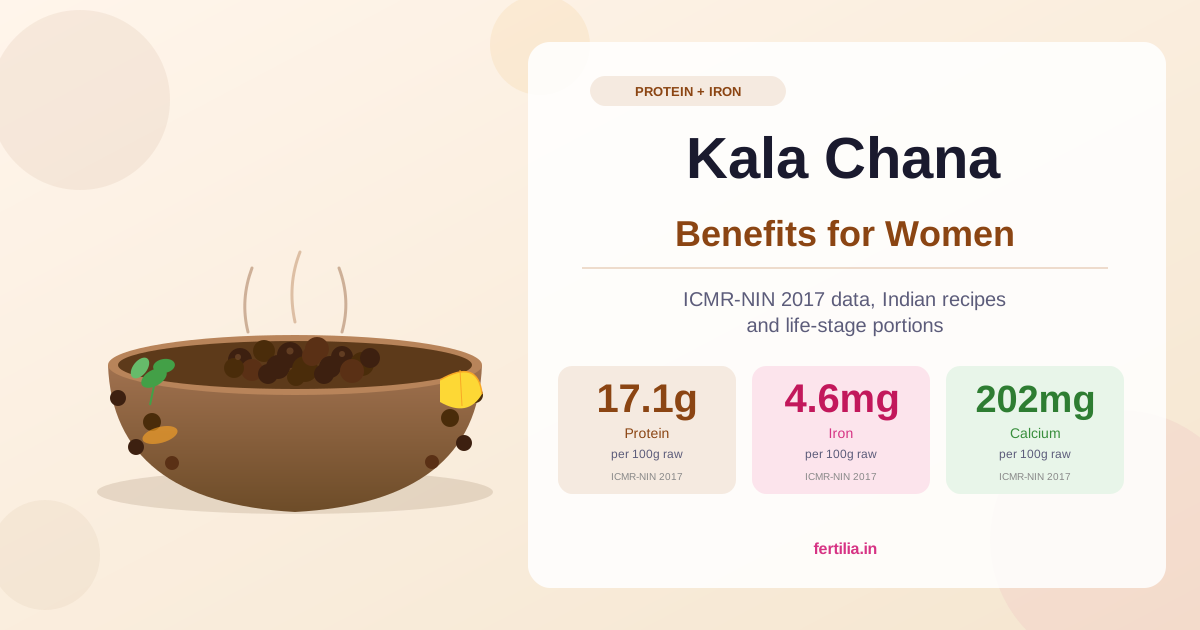
A katori of cooked kala chana gives about 6.8g of protein and 1.8mg of iron, from roughly 40g of dry chickpeas. It is a low-cost, slow-digesting legume that earns a place on a PCOS, pregnancy, or postpartum plate.
Kala chana is one of those foods that appears everywhere in Indian cooking without anyone making a fuss about it: temple sundal in the south, sookha chana with puri in the north, a quick sprouted chaat in the west. The same humble chickpea, cooked a dozen different ways across the subcontinent.
What kala chana has that many other legumes don’t is real texture: it holds its shape after cooking, absorbs spices deeply, and brings a pleasantly earthy flavour to both simple tempering and layered masala preparations. It does require overnight soaking, which means you need to plan a little further ahead than you would with quick-cook dals like masoor or moong. But that extra hour of soaking the night before is worth it.
This guide covers what kala chana contains nutritionally, how the three chickpea forms compare in your kitchen, what portions work at different life stages, how to soak and cook it well, and five Indian recipes that go beyond the everyday.
Kala Chana Nutrition (per 100g)
All figures below are for Bengal gram, whole (kala chana), per 100g raw dried chickpeas. Energy, protein, fat, carbohydrate, iron and calcium are from the NIN Nutritive Value of Indian Foods (Gopalan et al., revised 1989); the dietary-fibre figure is from IFCT 2017 (Bengal gram, whole, food code B002).
| Nutrient | Per 100g raw | Per 1 katori cooked (~100g) |
|---|---|---|
| Energy | 360 kcal | ~144 kcal |
| Protein | 17.1g | ~6.8g |
| Fat | 5.3g | ~2.1g |
| Carbohydrates | 60.9g | ~24.4g |
| Dietary fibre | ~25g | ~10g |
| Iron | 4.6mg | ~1.8mg |
| Calcium | 202mg | ~81mg |
The dietary-fibre figure is the total dietary fibre, the number relevant to gut health and steadier blood sugar. It is much higher than the older “crude fibre” measure some tables still print.
How to read the cooked column: 100g of dry kala chana yields approximately 250g of cooked chickpeas. One katori (100g) of cooked kala chana is made from roughly 40g dry, so the cooked values above reflect that 40g portion.
Iron absorption tip: Squeeze fresh lemon juice over cooked kala chana, or pair it with a tomato-based gravy. The vitamin C in lemon and tomatoes supports absorption of non-haem iron from plant sources. For more on iron-rich foods throughout pregnancy, see our complete iron-rich foods guide for pregnancy.
What a Katori of Kala Chana Gives You
A single katori of cooked kala chana (about 100g, from roughly 40g dry) is a genuinely useful everyday contribution rather than a supplement-sized dose:
- Protein (~6.8g): a plant protein that pairs well with rice or roti to round out the amino acids on the plate, which is why it earns a place in a PCOS or vegetarian breakfast.
- Iron (~1.8mg): a modest but real contribution of plant (non-haem) iron, useful through pregnancy and in the months of rebuilding stores after delivery.
- Fibre (~10g cooked): the dietary fibre that comes with the whole chickpea is what keeps you full for hours and helps steady the rise in blood sugar after a meal.
What sets kala chana apart from most other protein sources is the price. Gram for gram of protein, it is one of the cheapest options in an Indian kitchen, well below paneer or eggs, which is exactly why it earns a regular place in a budget-conscious weekly plan alongside moong, masoor, rajma and toor.
What Is Kala Chana? Three Forms in Indian Cooking
The name kala chana refers to whole brown or black Bengal gram, but the same plant produces three distinct kitchen ingredients that behave quite differently.
Kala chana (sabut, whole, brown/black): The whole dried chickpea with its dark outer skin intact. Sold at most kirana stores as “kala chana” or “brown chickpea,” it needs overnight soaking before cooking. Its robust flavour and firm bite make it ideal for sundal, dry masala dishes, and chaat. Because the seed coat is retained, it has the highest fibre content of the three forms.
Kabuli chana (safed chana, white chickpea): A lighter-coloured, larger variety of the same species. Used in standard North Indian chole/chana masala, hummus, and many chaat preparations. Its cream-coloured flesh is softer and creamier than kala chana, and the skin is noticeably thinner. Nutritionally very similar to kala chana, with slightly less fibre.
Chana dal (split Bengal gram): Kala chana hulled and split to reveal its bright yellow interior. It cooks faster than the whole form, has a milder taste, and is used for dals, cheelas, pakoras, and laddoos. Without its skin, it also has a more delicate texture when cooked.
Kala Chana Regional Names Across India
| Language | Name |
|---|---|
| Hindi | Kala chana, kaala chana |
| Tamil | Karuppu kondaikadalai |
| Telugu | Nalla senagalu |
| Kannada | Kaadu kadale |
| Malayalam | Karuppu kadala |
| Marathi | Kala harbhara |
| Punjabi | Kala chana |
Kala Chana vs Kabuli Chana vs Chana Dal
| Feature | Kala Chana (whole) | Kabuli Chana (white) | Chana Dal (split) |
|---|---|---|---|
| Appearance | Small, dark brown/black, rough skin | Large, cream/beige, smooth | Small, bright yellow, no skin |
| Flavour | Earthy, slightly nutty | Mild, creamy | Mild, slightly sweet |
| Texture cooked | Firm, holds its shape | Soft, somewhat creamy | Soft, breaks down easily |
| Soaking required | Yes (8h minimum) | Yes (8h minimum) | Optional (2h if soaked) |
| Stovetop cook time | 35-45 min (soaked) | 30-40 min (soaked) | 20-25 min (unsoaked ok) |
| Pressure cooker | 3-4 whistles | 3 whistles | 2-3 whistles |
| Effect on blood sugar | Slow, steady rise | Slow, steady rise | Slow, steady rise |
| Best uses | Sundal, sookha masala, chaat, sprouts | Chole, hummus, curries | Dal, cheela, vada, laddoo |
Kala chana and kabuli chana are close nutritional equals; the main practical differences are flavour, size, and the finished texture of the cooked dish. Chana dal is the split form and behaves almost like a different food in the kitchen, though it comes from the same chickpea.
For a guide that covers both kala chana and chana used as sprouts, see our mung and chana sprouts guide.
Life-Stage Portions
These are suggested weekly portions as part of a varied Indian diet. All portions are for cooked kala chana.
| Life Stage | Suggested Portion | Frequency | Notes |
|---|---|---|---|
| General health | 1 katori (100g) | 3-4 times per week | Pair with a vegetable and roti for a balanced plate |
| PCOS | 1 katori (100g) | 3-4 times per week | A useful slow-digesting protein source in the PCOS diet |
| Pregnancy (all trimesters) | 1 to 1.5 katori (100-150g) | 3-4 times per week | Soak well, discard the soaking water, cook until tender, and pair with a vitamin C source |
| Postpartum | 1 katori (100g), well cooked | A few times a week | Softer dals like moong are usually gentler in the very early days; most women find kala chana suits them again once digestion feels settled |
| GDM (gestational diabetes) | Discuss with your care team | As directed | Its slow effect on blood sugar may suit you; check your own glucose 1 to 2 hours after a katori and take that number to your care team, as responses vary |
For a complete week-by-week food plan for the postpartum period, see our after-delivery food guide for Indian mothers.
For a complete PCOS food framework with daily meal ideas, see our PCOS diet chart.
Looking for a personalised food plan for your PCOS, pregnancy, or postpartum stage?
WhatsApp Dr. Suganya at +91 99402 70499. She creates tailored weekly plans for women at every stage of their health journey and responds personally.
Soaking and Cooking Kala Chana
Overnight soaking (required)
- Measure dry kala chana into a large bowl. Remember it will expand to about 2.5 times its dry volume.
- Rinse twice in cold water.
- Cover with fresh cold water at a ratio of 1 cup kala chana to 3 cups water.
- Soak for 8-12 hours or overnight at room temperature. In summer, soak in the refrigerator to prevent fermentation.
- Drain and discard the soaking water. Rinse once more before cooking.
Why discard the soaking water? The soaking water draws out oligosaccharides from the seed coat. These are naturally present complex sugars that are responsible for gas and bloating. Discarding and rinsing again before cooking significantly reduces this. You lose a small amount of mineral content in the soaking water, but the trade-off in digestive comfort is worth it for most people.
Stovetop method
Add soaked, drained chickpeas to a pot with fresh water at a 1:2.5 ratio. Bring to a boil, then reduce to a medium simmer. Cook for 35-45 minutes. Test by pressing a chickpea between your thumb and forefinger: it should mash easily with gentle pressure and have no hard centre.
Pressure cooker method
Add soaked chickpeas and fresh water (1:2 ratio) to a pressure cooker. Cook on high for 3-4 whistles, then reduce to low for 10 minutes. Allow pressure to release naturally. Total time: about 25-30 minutes.
Reducing gas and bloating
- Add a generous pinch of hing (asafoetida) to the cooking water or tempering.
- Temper the finished dish with jeera (cumin seeds).
- Add a small piece of fresh ginger or a pinch of saunth (dry ginger powder) during cooking.
- Chew slowly. Rushing through a plate of kala chana is a reliable shortcut to discomfort.
- If you are eating kala chana regularly for the first time, or coming back to it after a break, start at half a katori and build up over two to three weeks. In our experience counselling women on adding legumes, half a katori is the portion most manage comfortably at first, and by the third week a full katori is usually easy.
In practice, the rotation that works for most households is kala chana on two or three mornings a week, with softer dals like moong or masoor on the others. And the one complaint we hear more than any other is bloating, which almost always traces back to the same two things: the overnight soak was skipped, or the soaking water went into the pot instead of down the drain.
5 Indian Recipes Using Kala Chana
1. Kala Chana Sundal (South Indian Temple Style)
Ingredients (serves 2): 1 cup kala chana (soaked overnight, cooked, and cooled) / 3 tbsp grated fresh coconut / 1 tsp mustard seeds / 1/2 tsp urad dal / 1 dried red chilli / 10 fresh curry leaves / 1 tsp coconut oil or neutral oil / salt to taste
Method: Heat oil in a kadai over medium heat. Add mustard seeds and wait for them to splutter. Add urad dal and cook until pale gold. Add the dried red chilli, broken in half, and the curry leaves. Toss in the cooked kala chana and season with salt. Stir well for 2 minutes over medium heat. Remove from heat and mix in the grated coconut. Serve warm or at room temperature.
Notes: This is the classic beach sundal and temple prasad version. The fresh coconut is added off heat so it stays moist. Best eaten the same day.
2. Kala Chana Chaat
Ingredients (serves 3-4): 1.5 cups kala chana (soaked, cooked, and cooled to room temperature) / 1 medium onion (finely chopped) / 1 medium tomato (finely chopped) / 1/2 cup boiled potato (diced small) / 2 tbsp fresh coriander leaves / juice of 1 lemon / 1/2 tsp chaat masala / 1/4 tsp red chilli powder / salt to taste / 2 tbsp tamarind chutney (optional, for tanginess)
Method: Combine all ingredients in a large bowl. Toss gently. Taste and adjust lemon, salt, and chaat masala to your preference. Serve immediately.
Notes: This is a complete snack: protein from kala chana, carbohydrates from potato, and raw vegetables together in one bowl. Eating it soon after mixing keeps the vegetables crisp.
3. Sookha Kala Chana Masala (Dry Chickpea Stir-Fry)
Ingredients (serves 3-4): 2 cups kala chana (soaked overnight, pressure cooked until tender) / 1 medium onion (sliced thin) / 2 medium tomatoes (chopped) / 1 tsp ginger-garlic paste / 1 tsp jeera (cumin) / 1/2 tsp haldi (turmeric) / 1 tsp dhania (coriander) powder / 1/2 tsp red chilli powder / 1/2 tsp amchur (dry mango powder) / 1 tbsp oil / salt to taste / fresh coriander to garnish
Method: Heat oil in a heavy kadai. Add jeera and let it sizzle. Add onion and cook on medium heat until golden, about 8 minutes. Add ginger-garlic paste and cook for 1 minute. Add tomatoes and all spice powders except amchur. Cook until tomatoes break down and oil begins to separate from the masala, about 5-7 minutes. Add the cooked kala chana and mix well. Add 1/4 cup water, cover, and let everything cook together on low heat for 5-7 minutes. Uncover, add amchur, and stir. Garnish with fresh coriander.
Serve with: Puri or bhatura for a classic pairing, or with roti and a simple raita.
4. Sprouted Kala Chana Salad
To sprout kala chana: Soak for 8 hours. Drain completely. Transfer to a clean muslin cloth or a jar covered with muslin. Leave in a warm, dark spot for 18-24 hours. Rinse once during this time. The sprout tails should be 1-1.5 cm long when ready.
For the salad (serves 2): 1.5 cups sprouted kala chana / 1 small cucumber (diced) / 1 medium tomato (diced) / 1/4 small onion (finely chopped) / juice of 1 lemon / 1/4 tsp roasted jeera powder / salt to taste / fresh coriander
Steam before eating: Steam the sprouts for 5 to 8 minutes and cool them completely before mixing with the raw vegetables. Home-sprouted legumes carry a small risk of bacterial contamination when eaten raw, so steaming is the safer default, and it matters most in pregnancy.
Method: Steam the sprouts and let them cool. Combine all ingredients and toss well. Taste and adjust seasoning. Serve soon after mixing so the vegetables stay crisp.
5. Ragi-Chana Laddoo
Ingredients (makes 15-18 small laddoos): 1 cup ragi flour / 1/2 cup roasted chana dal powder (or roasted kala chana ground coarse) / 1/3 cup jaggery (grated or powdered) / 3 tbsp ghee / 2 tbsp crushed aakhrot (walnuts) or badam (almonds) / 1/4 tsp cardamom powder
Method: Dry-roast ragi flour in a heavy pan on medium-low heat, stirring constantly, until the raw smell disappears and the flour turns a shade darker, about 5-7 minutes. Spread on a plate to cool completely. In the same pan, melt ghee over low heat. Add jaggery and stir until dissolved (do not overheat). Remove from heat and let the mixture cool until it is warm but not hot. Combine ragi, chana powder, cardamom, and crushed nuts. Pour in the warm jaggery-ghee and mix well. Shape into small laddoos while the mixture is still pliable. If it cools too much and crumbles, warm your hands and press firmly.
Store: In an airtight tin at room temperature for 10-12 days. Refrigerate in summer for up to 3 weeks.
Serves as: A nutritious snack for PCOS, a nourishing postpartum snack, or a pre-workout snack. For more ragi recipe ideas and life-stage portions, see our ragi benefits guide.
Buying and Storing Kala Chana
What to look for when buying
Choose whole, unbroken chickpeas with a uniformly dark brown or brownish-green colour. Avoid any package where the chickpeas look pale, mottled, or cracked, or where there is any sign of moisture inside the bag.
Age matters with dried legumes. Kala chana older than two years stays chewy and tough even after prolonged cooking. Buying from stores with reasonable turnover reduces this risk. Kala chana is sold loose at kirana stores or in 500g-1kg branded packets. Buy from a shop with good turnover, and on a packet, check the packing date rather than choosing by brand name.
Storage guide
| Form | Container | Storage Location | Duration |
|---|---|---|---|
| Raw dried kala chana | Airtight container or sealed bag | Cool, dry cupboard | Up to 12 months |
| Soaked (uncooked, in water) | Covered bowl | Refrigerator | 2-3 days (change water daily) |
| Cooked kala chana | Sealed container | Refrigerator | 3-4 days |
| Cooked kala chana | Portioned in freezer bags | Freezer | Up to 3 months |
Batch cooking tip: Cook a full 200-250g dry batch once or twice a week. Portion into 1-cup servings and refrigerate or freeze. Having cooked kala chana on hand means a quick sundal, chaat, or salad is always 10 minutes away.
Frequently Asked Questions
Is kala chana safe during pregnancy?
Yes. Kala chana is safe throughout pregnancy when properly soaked and fully cooked until tender. It provides iron, protein, and calcium across all three trimesters. Sprouted kala chana should be lightly steamed rather than eaten raw in pregnancy. For a complete guide to what to eat across all three trimesters, see our healthy pregnancy guide.
How much kala chana should I eat for PCOS?
One katori (100g) of cooked kala chana three to four times per week is a practical starting point for PCOS. It pairs well with vegetables and a small roti as a slow-digesting, filling meal. See our full PCOS diet chart for a complete daily food framework.
What is the difference between kala chana and kabuli chana?
Kala chana is the small, dark-coloured whole Bengal gram; kabuli chana is the larger, cream-coloured variety. Both come from the same species (Cicer arietinum). Kala chana has a stronger, earthier flavour and is used in sundal, dry masala, and chaat. Kabuli chana is used in standard chole, hummus, and creamy gravies. Nutritionally, they are close equivalents.
Does kala chana cause gas?
It can, especially if soaking is skipped or the soaking water is not discarded. The overnight soak, discarding the soaking water, and using hing and jeera in the tempering all reduce this significantly. Starting with smaller portions (1/2 katori) and building up over a few weeks also helps.
Can I eat kala chana every day?
Yes, in moderate portions. Rotating between different legumes each day, such as moong, masoor, rajma, toor dal, and kala chana, gives you a broader spread of nutrients. Our high-fibre Indian foods guide covers a variety of legumes and how to fit them into a daily routine.
Is kala chana good for postpartum recovery?
Kala chana is a useful source of iron, protein, and calcium for the postpartum period, and it suits most women again once digestion has settled after delivery. In the very early days, softer, easier-to-digest foods such as moong dal khichdi, ragi kanji, and toor dal usually work better. See our after-delivery food guide for a week-by-week plan.
How do I know when kala chana is fully cooked?
Press a cooked chickpea between your thumb and index finger. It should mash with gentle pressure and have no hard or grainy centre. Undercooked kala chana is tough to digest and tends to cause significantly more gas than well-cooked chickpeas.
How much protein is in kala chana per 100g?
Per 100g of raw dried kala chana, the NIN Nutritive Value of Indian Foods lists about 17.1g of protein. Once cooked, one katori (about 100g, made from roughly 40g dry) gives around 6.8g of protein, along with about 1.8mg of iron and 81mg of calcium. That makes kala chana one of the more protein- and iron-dense everyday legumes in an Indian kitchen.
How much iron is in kala chana (black chana)?
Raw kala chana contains about 4.6mg of iron per 100g (NIN, Nutritive Value of Indian Foods), broadly similar to kabuli (white) chana. A katori of cooked kala chana provides roughly 1.8mg. Because this is plant (non-haem) iron, squeezing lemon over the dish or pairing it with a tomato-based gravy helps your body absorb more of it.
Does roasted chana (chana chor) contain iron?
Yes. Roasting does not remove the iron, so roasted Bengal gram, whether plain bhuna chana or a chana chor / chana chur snack, keeps most of the iron of the whole chickpea (about 4.6mg per 100g for the dry gram). Plain roasted chana is a convenient, iron- and protein-rich snack; the heavily spiced, salted namkeen versions are best kept occasional because of the added salt.
Want to know exactly how much kala chana or other legumes to include in your week, based on your current health goal?
WhatsApp Dr. Suganya at +91 99402 70499 for a personalised nutrition plan. She works with women managing PCOS, preparing for pregnancy, and recovering after delivery. For PCOS, a low-GI, high-protein legume like kala chana is the kind of everyday food Dr. Suganya’s 90-day PCOS Symptom Reversal program builds your week around.