Jaggery is in every Indian kitchen. It sweetens the chai, goes into the payasam, and turns ragi into laddoos. The advice to use jaggery instead of sugar has been passed down through generations, endorsed by nutritionists, and repeated on every wellness page you will find online.
But what does jaggery actually contain? Is it genuinely better, or is it a better-tasting sugar doing the same job with better marketing? This post gives you the evidence-based answer, along with practical ways to include jaggery in your daily Indian cooking.
What Is Jaggery?
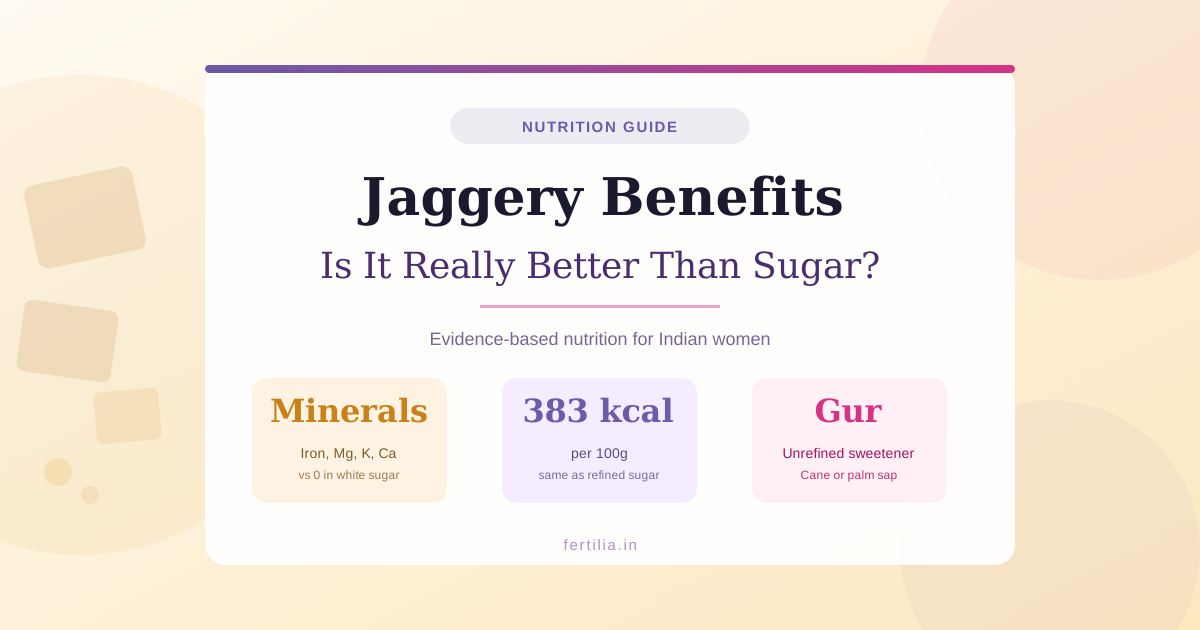
Jaggery is an unrefined sweetener made by evaporating and setting sugarcane juice or palm sap (from coconut palm, date palm, or toddy palm). Unlike refined white sugar, which is processed to remove all impurities, colour, and flavour, jaggery is processed only enough to concentrate the sugars and allow it to solidify. The result is a product that retains some of the minerals and compounds naturally present in the raw juice.
In India, jaggery goes by many names: gur in Hindi, vellam in Tamil, bellam in Telugu, and bella in Kannada. It is sold as solid blocks, balls, or liquid form (sometimes called cane syrup). Its flavour is deeper and more complex than white sugar, with a slight molasses note that varies by region, season, and the source of sugarcane or palm used.
Jaggery vs Refined Sugar: What the Numbers Show
The biggest nutritional difference between jaggery and refined white sugar is not the calories or the sugar content, which are nearly identical. It is the minerals.
Here is a comparison based on standard nutritional food composition data:
| Nutrient | Jaggery (per 100g) | Refined White Sugar (per 100g) |
|---|---|---|
| Calories | ~383 kcal | ~385 kcal |
| Total sugar (sucrose) | ~65 to 85% | ~99.9% |
| Iron | Several mg (varies by type) | Virtually 0 |
| Magnesium | ~70 to 90 mg | Virtually 0 |
| Potassium | ~1050 mg | ~2 mg |
| Calcium | ~40 to 100 mg | ~1 mg |
The calories are essentially the same. The total sugar content of jaggery is lower than refined sugar because it retains some water, residual fibre, and plant compounds from the raw juice, but it is still predominantly sucrose.
Where jaggery clearly wins is in its mineral content. Refined white sugar has been processed to near-pure sucrose, stripping away all minerals in the process. Jaggery retains these minerals because it is less processed.
A note on glycemic index claims: You will see different figures quoted for jaggery’s glycemic index. Some sources put it lower than white sugar, others show similar values. The variation comes from differences in processing methods, regional types of jaggery, and how different analyses measured it. What is more useful to focus on is this: both jaggery and refined sugar are concentrated sweeteners. The clear, well-established advantage of jaggery lies in its mineral content.
For how sweetener choices fit into a PCOS-supportive diet, the Insulin Resistance and PCOS guide covers the complete dietary approach.
What Do These Minerals Add Up To in Everyday Use?
One hundred grams is not how most people use jaggery. The realistic serving is one teaspoon (about 8 to 10 grams) in chai, or a small piece of 15 to 20 grams added to a recipe for four people.
At one teaspoon (approximately 8 grams):
- Iron: a modest but real contribution (plant-based iron from jaggery adds up across several servings through the day)
- Magnesium: approximately 6 to 7 mg
- Potassium: approximately 84 mg
- Calcium: approximately 4 to 8 mg
Per teaspoon, these are small numbers. But the mineral advantage compounds across a day of cooking. If three meals involve small amounts of sweetener and you consistently use jaggery rather than white sugar, those contributions add up over weeks and months.
One useful practice: plant-based iron in jaggery absorbs better alongside a Vitamin C source. A squeeze of lime in jaggery chai, or a small piece of amla with a jaggery sweet, helps your body take in more of what is already there.
For women who have low iron stores or are in high-demand phases such as postpartum recovery or during periods with heavy flow, jaggery alone will not close a significant gap. But as part of a diet that also includes leafy greens, dal, ragi, and sesame seeds, every source of iron contributes to the total.
For a full breakdown of ragi as a mineral-rich food that pairs naturally with jaggery in South Indian cooking, read Ragi Benefits: Why Every Indian Woman Should Eat It.
Jaggery for Women with PCOS
For women with PCOS who want to understand how sweetener choices fit into a PCOS-supportive diet, the Insulin Resistance and PCOS guide covers the complete dietary approach, including which foods and food habits matter most.
Types of Jaggery Available in India
Not all jaggery is the same. Here are the main types you will find in Indian markets and what makes each different.
Sugarcane Jaggery (Gur) The most common type, made from sugarcane juice. Widely available across India, typically sold in round blocks, flat discs, or powdered form. Colour ranges from golden yellow to deep brown depending on how long it was cooked. Darker jaggery generally indicates a more concentrated, less-refined product with a stronger flavour and slightly higher mineral content.
Palm Jaggery (Karuppati / Nolen Gur) Made from the sap of coconut palm, date palm, or toddy palm. In Tamil Nadu, it is known as karuppati (dark jaggery). In Bengal, date palm jaggery (nolen gur) is a seasonal delicacy used in sweets during winter. Palm jaggery tends to have a richer mineral profile than standard sugarcane jaggery and a more complex flavour. It is also less processed in most cases.
Liquid Jaggery (Cane Syrup) A thick, pourable form of jaggery used in certain South Indian dishes and chutneys. It has the same mineral composition as solid jaggery; the liquid form is simply easier to incorporate into recipes.
Organic vs Conventional Jaggery Organic jaggery is made without chemical inputs in sugarcane farming and without sulphur dioxide in processing, which some conventional jaggery uses for lighter colour and longer shelf life. Both types retain minerals. Organic jaggery is a cleaner product if you can access it; conventional is a reasonable everyday option.
Have questions about building a practical nutrition plan for PCOS, pregnancy, or postpartum recovery? The nutrition team at Fertilia Health can help. WhatsApp us at +91 99402 70499 to start the conversation.
How to Use Jaggery in Your Daily Indian Kitchen
Jaggery works in any cooking context where sugar would, with the added depth of its natural flavour. Here are practical everyday uses and preparations.
1. In Chai Replace your usual sugar with a small piece of jaggery melted directly into the chai as it simmers. Start with a little less than you would use of sugar, because jaggery’s flavour is more pronounced. Jaggery chai has a warming, slightly caramelised quality that many people prefer.
2. In Payasam and Kheer Traditional payasam recipes already call for jaggery, particularly rice payasam and moong dal payasam. The jaggery version has a deeper colour and flavour than the sugar version and is considered more traditional in many Tamil and Kerala households.
3. In Ragi Laddoos Dry-roast ragi flour in a little ghee until it smells nutty, mix in powdered jaggery, add cardamom, roll into balls. These keep for five to seven days in an airtight container and make a practical mid-morning snack, a postpartum energy food, or a school tiffin.
4. In Sakkarai Pongal Sweet pongal is traditionally made with jaggery, rice, moong dal, ghee, cardamom, and cashews. It is a South Indian festive food. The jaggery version is the traditional preparation and gives the dish its characteristic colour and depth.
5. In Peanut Chikki Melted jaggery with roasted peanuts, set and broken into pieces. A traditional Indian snack that combines peanut protein and healthy fats with jaggery as the binding sweetener. A small piece of peanut chikki is a reasonable afternoon option compared to most packaged snacks.
6. In Dal and Sambar A small piece of jaggery added to dal or sambar at the end of cooking rounds out the acidity from tamarind. Many traditional South Indian recipes include this step; it reduces sharpness without making the dish sweet.
7. In Murmura Laddoo Melted jaggery with puffed rice and a pinch of cardamom, pressed into balls while warm. Quick to make, portable, and a real-food alternative to packaged biscuits as an afternoon snack.
How Much Jaggery Is Reasonable Per Day?
Jaggery is still a sweetener. Its calorie content per gram is nearly identical to white sugar, and the sugar it contains is still predominantly sucrose.
A reasonable daily amount for most healthy women is two to three teaspoons (16 to 25 grams) spread across the day in cooking, tea, or snacks. At this level, the mineral contribution is modest but cumulative, and the total added sugar intake stays within a sensible range.
The practical answer to “how much jaggery?” is: roughly the same amount of sweetener you would use anyway, substituted with jaggery. The goal is to replace what you are already using, not to add extra sweetener on top.
For practical daily meal planning that includes Indian foods such as ragi, dal, and jaggery-based snacks, the PCOS Diet Chart: Full Indian Meal Plan and the PCOS-Friendly Indian Breakfast Ideas guide are both useful references.
FAQ
Is jaggery actually better than sugar? Yes, marginally. Both jaggery and refined white sugar are concentrated sweeteners made predominantly from sucrose, with nearly identical calorie counts. The difference is that jaggery retains trace minerals (iron, magnesium, potassium, calcium) from the original sugarcane or palm sap, while refined white sugar has been processed to remove these entirely. Jaggery is a better choice for the same quantity of sweetener because it delivers those minerals at no extra caloric cost. It is not, however, a health food in large quantities.
Can I eat jaggery if I have PCOS? Jaggery can be part of a balanced diet for women with PCOS. For guidance on how sweeteners and food choices fit into PCOS management, the Insulin Resistance and PCOS guide has a detailed breakdown.
Does jaggery help with iron levels? Jaggery contains iron, and this adds to dietary iron intake. At typical serving sizes of one to two teaspoons, the contribution is modest. For women with low iron stores, jaggery is one useful piece of a broader iron-supporting diet that also includes leafy greens, dal, ragi, and sesame. Plant-based iron absorbs better when consumed alongside a Vitamin C source: a squeeze of lime over your jaggery food or a small piece of amla alongside it helps.
Is dark jaggery better than light-coloured jaggery? Generally yes, from a mineral perspective. Darker jaggery (from longer cooking or less refinement) tends to have a higher mineral concentration. Very pale or golden jaggery has often been processed further, sometimes with chemicals to achieve the lighter colour. For everyday use, a medium-to-dark jaggery block from a reliable source is a good choice.
How do I store jaggery? Keep jaggery in an airtight container away from moisture and heat. In a dry Indian kitchen, solid jaggery keeps for several months. If it becomes soft or sticky, moisture in the environment is affecting it: move it to a sealed glass or steel container. Powdered jaggery should be refrigerated after opening.
Is palm jaggery (karuppati) better than sugarcane jaggery? Palm jaggery is generally considered to have a slightly richer mineral profile and a less processed composition than most commercially available sugarcane jaggery. Karuppati (Tamil Nadu) and nolen gur (Bengal) are traditional, less-processed forms that many nutritionists prefer when available. Good-quality sugarcane jaggery is a fine everyday option. Use what is available and affordable in your region.
Can I give jaggery to children? Jaggery is traditionally used in Indian children’s foods, including ragi laddoos, chikki, and puffed rice laddoos. At small amounts in age-appropriate foods, it is a reasonable sweetener for children over one year of age. For infants under one year, no sweeteners including jaggery should be added to food. For specific guidance on a child’s diet, a paediatrician or nutrition specialist is the right resource.
Jaggery has been in Indian kitchens for thousands of years because it works: it sweetens well, adds flavour depth, and contributes minerals that refined sugar cannot offer. The evidence confirms what traditional use already understood. The practical takeaway is simple: if you are going to use a sweetener, jaggery is a better choice than refined white sugar, for the same amount, in the same cooking contexts you already use.
Small swaps across your daily cooking add up. Jaggery in chai, jaggery in payasam, jaggery in ragi laddoos: none of these require any change in how you cook. They just require choosing jaggery at the store instead of sugar.
If you want personalised guidance on building a practical nutrition plan for PCOS management, pregnancy, or postpartum recovery, the Fertilia Health team is here to help.
Start a conversation on WhatsApp and we will work out a food plan that suits your specific situation.