In most South Indian homes, a new mother barely reaches the third day before someone in the family is stirring a pot of ragi kanji on the stove. Grandmothers make it without a recipe. Mothers-in-law insist it must be served warm. It arrives in flasks from neighbours’ kitchens.
This warm, slightly grainy, deeply comforting drink has been part of Indian postpartum tradition for generations. Yet many new mothers are not sure how to make it, how much to drink, or which version is right for the early days versus the weeks that follow.
This guide covers the nutritional facts from ICMR-NIN 2017, three recipe variants you can start making at home, daily portion guidance, and how ragi kanji fits into a broader postpartum eating plan.
What Is Ragi Kanji?
Ragi kanji (also written as ragi ganji) is a thin porridge made from finger millet (Eleusine coracana), cooked with water or diluted milk to a smooth, pourable consistency. The word “kanji” comes from the South Indian tradition of thin grain gruels used for easy digestion. Ragi kanji is the millet counterpart to rice kanji and has been made across South India for generations as a restorative postpartum drink.
Regional names across India:
| Region | Name |
|---|---|
| Tamil Nadu, Karnataka | Ragi kanji, ragi ganji |
| Andhra Pradesh, Telangana | Ragi ganji, ragi java |
| Maharashtra | Nachni pej |
| Rajasthan, Madhya Pradesh | Mandua kanji |
| Kerala | Finger millet kanji, ragi kanji |
| Hindi-speaking regions | Ragi ki kanji |
Both “ragi kanji” and “ragi ganji” refer to the same drink. The spelling varies by region but the preparation is essentially the same.
Ragi Kanji: Nutritional Facts (ICMR-NIN 2017)
The raw-grain means below are from the ICMR-NIN Indian Food Composition Tables 2017, ragi A010, Tables 1 and 5, printed pages 3 and 113-114. The 30g column is calculated from those means, assuming the whole grain is retained in flour. It excludes milk, jaggery, ghee and other additions, and is not an analysis of cooked kanji or sprouted powder. The carbs row means available carbohydrate, as labelled in IFCT, not carbohydrate including fibre.
| Nutrient | 100g raw | 30g estimate |
|---|---|---|
| Energy | 321 kcal | 96 kcal |
| Protein | 7.16 g | 2.15 g |
| Fat | 1.92 g | 0.58 g |
| Carbs | 66.82 g | 20.05 g |
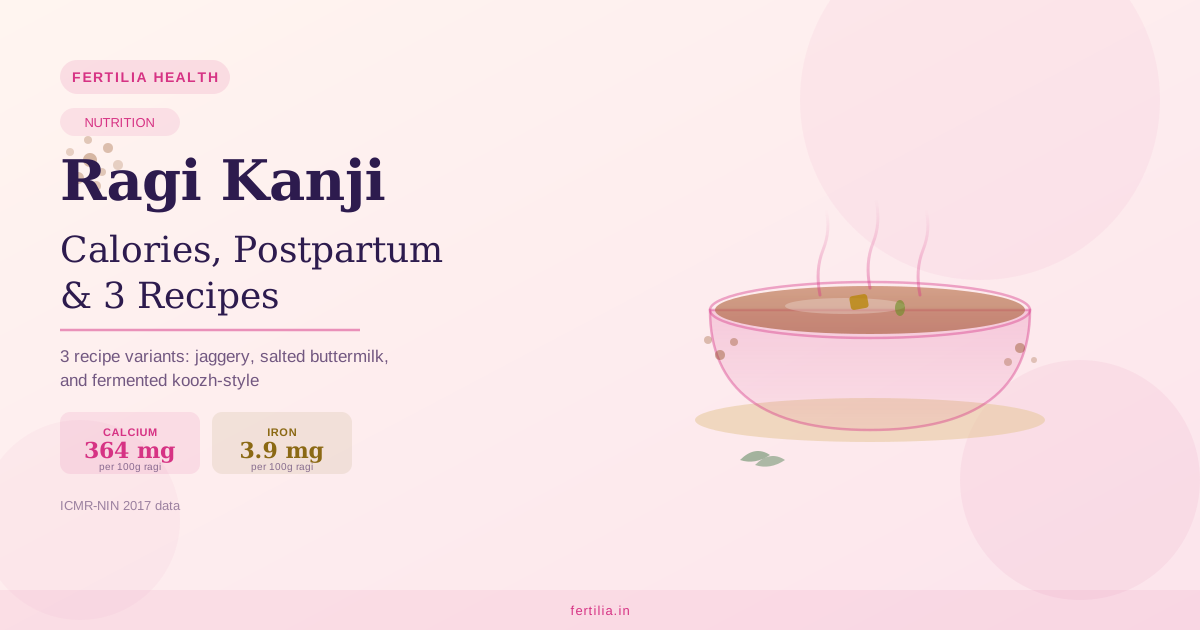
| Calcium | 364 mg | 109 mg |
| Iron | 4.62 mg | 1.39 mg |
| Phosphorus | 210 mg | 63 mg |
| Zinc | 2.53 mg | 0.76 mg |
IFCT reports energy as 1,342 kJ per 100g; the kcal figures use the book’s conversion of 1 kcal = 4.18 kJ. Values are rounded means, not exact measurements of every packet or recipe. The recipes below use 30g flour; that is a recipe quantity, not an IFCT standard serving. Spoonful size and cooked volume can vary, so use the flour weight when estimating nutrients.
ICMR-NIN recommends 1200 mg of calcium per day for lactating women. The calculated contribution from 30g whole-grain-equivalent flour is about 109 mg calcium before additions. It is not a measured cooked-serving value.
For a complete guide to ragi’s nutritional profile across PCOS, pregnancy, and breastfeeding contexts, read our full ragi benefits guide for women.
How to Make Ragi Kanji: 3 Variants
Variant 1: Classic Jaggery Ragi Kanji (Sweet)
The most common version across Tamil Nadu and Karnataka, made with jaggery and a pinch of cardamom.
Ingredients (1 serving):
- 2 heaped tablespoons (30g) ragi flour
- 250-300 ml water
- 1 tablespoon (15g) jaggery, grated or powdered
- 1/4 teaspoon cardamom powder (elaichi)
- A pinch of dry ginger powder (sukku/sonth), optional
Preparation:
- Mix ragi flour with 3-4 tablespoons of cold water. Stir until you have a smooth, lump-free paste with no dry bits.
- Bring 200 ml of water to a gentle boil in a small saucepan.
- Pour in the ragi paste while stirring continuously. The continuous stirring is what prevents lumps.
- Reduce the heat to low and cook for 8-10 minutes, stirring often, until the raw smell of ragi disappears and the mixture looks smooth.
- Remove from heat. Add jaggery and cardamom, stir until the jaggery fully dissolves.
- Add the remaining 50-100 ml of warm water to bring the kanji to a thin, pourable texture. Serve warm.
Note: Always add jaggery after removing from heat or in the last 30 seconds of cooking. Adding it too early can cause slight curdling in some batches.
Variant 2: Salted Buttermilk Ragi Kanji
A savoury version popular in Karnataka and parts of Tamil Nadu. The thin buttermilk adds a gentle tang and makes the kanji more filling.
Ingredients (1 serving):
- 2 heaped tablespoons (30g) ragi flour
- 200 ml water
- 4-5 tablespoons (60 ml) thin buttermilk (diluted dahi, 1 part dahi to 2 parts water)
- 1/4 teaspoon cumin seeds (jeera)
- 2-3 curry leaves
- Rock salt or sendha namak to taste
- 1 teaspoon ghee or cold-pressed coconut oil
Preparation:
- Mix ragi flour with cold water to a smooth paste, exactly as in Variant 1.
- Cook on low heat for 8-10 minutes with continuous stirring until fully cooked.
- Remove from heat and allow to cool for 3-4 minutes. The kanji should be warm but not scalding.
- Stir in the thin buttermilk. Adding buttermilk to very hot ragi can cause it to separate.
- In a small pan, heat the ghee or coconut oil, add cumin seeds and curry leaves, and let them splutter for 30 seconds.
- Pour this tempering over the kanji, add salt to taste, and serve.
Variant 3: Koozh-Style Fermented Ragi Kanji
Koozh (also called kali, ambali, or ragi java) is the traditional South Indian fermented version, where ragi is soaked overnight before cooking. This is an overnight preparation.
Ingredients (1 serving):
- 2 heaped tablespoons (30g) ragi flour
- 300 ml water, divided
- A pinch of rock salt
- 1 teaspoon sour buttermilk as a starter, optional
Day Before (Overnight Preparation):
- Mix ragi flour with 4 tablespoons of cold water to form a smooth paste.
- Add a teaspoon of sour buttermilk as a natural starter culture, if available.
- Cover loosely with a plate (not airtight) and leave at room temperature for 8-12 hours.
- By morning, the paste will have a faintly sour, tangy smell. This is the expected result of natural fermentation.
Morning (Cooking):
- Bring 200 ml of fresh water to a boil.
- Stir in the fermented paste while mixing continuously.
- Cook on low heat for 10-12 minutes, stirring throughout, until smooth.
- Add rock salt, adjust consistency with the remaining water, and serve warm. A small drizzle of ghee on top is traditional.
Note: Keep fermentation to 8-12 hours. In warm Tamil Nadu weather, more than 14 hours can make the fermentation too sharp. The fermented version has a tangier flavour than the other two variants.
Planning a postpartum recovery diet? Every new mother’s nutritional needs are different based on her delivery, weight, breastfeeding status, and health history. Chat with our team on WhatsApp to learn how the Fertilia Postpartum Care Program builds a personalised nutrition plan around foods like ragi kanji.
Daily Portions: How Much Ragi Kanji to Drink
| Week Post Delivery | Recommended Serving | Best Time |
|---|---|---|
| Week 1 (Days 1-7) | 1 small cup (150-200 ml) once daily | Morning, after the first feed |
| Week 2-4 | 1 cup (200-250 ml) once or twice daily | Morning and mid-afternoon |
| Month 2 onward | 1-2 cups daily as preferred | Morning is most traditional |
These are general dietary portions for healthy postpartum women. Start with a smaller quantity in the first 2-3 days to see how your digestion responds before increasing.
Sprouted Ragi vs Plain Ragi Flour: Which to Use?
Both work for kanji. The differences in practice:
| Type | Cook Time | Flavour |
|---|---|---|
| Plain ragi flour | 8-10 min | Mild, nutty, slight earthiness |
| Sprouted ragi flour | 5-7 min | Slightly sweeter, less raw flavour |
| Whole ragi grain (soaked) | 15-20 min | Most earthy, more filling |
Calcium comparison: IFCT 2017 gives 364 mg per 100g raw ragi grain before soaking. It does not analyse the plain or sprouted flours above, or 100g of soaked grain. A product-specific comparison needs product data; the raw-grain row cannot supply those figures.
Sprouted ragi flour is easier to find in South Indian grocery stores and has a gentler, less raw flavour. Many women prefer it in the early postpartum weeks. The IFCT 2017 raw-grain row does not establish that plain and sprouted flours have the same nutritional profile.
Ragi Kanji vs Rice Kanji: A Quick Comparison
Many Indian families serve both ragi kanji and rice kanji in the postpartum weeks. They serve different purposes.
The nutrient rows compare 100g of raw ragi grain (A010) and raw milled rice (A015) from IFCT 2017, Tables 1 and 5, printed pages 3 and 113. They do not compare equal bowls of cooked kanji; water and ingredient quantities differ. The food tables do not establish the digestibility or postpartum-use claims below.
| Feature | Ragi / ragi kanji | Rice / rice kanji |
|---|---|---|
| Calcium per 100g raw grain | 364 mg | 7.49 mg |
| Iron per 100g raw grain | 4.62 mg | 0.65 mg |
| Protein per 100g raw grain | 7.16 g | 7.94 g |
| Flavour | Earthy, nutty | Mild, neutral |
| Digestibility | Smooth when cooked properly | Very easy on digestion |
| Traditional use | Postpartum strength, breastfeeding support | Soothing for upset stomach, very early days |
Rice kanji is lighter and is often the first food given in the immediate days after delivery because of how easy it is on digestion. Ragi kanji is typically introduced from the end of Week 1 or the start of Week 2, once digestion has settled, because of its denser nutrient profile.
Three Tips for Getting Ragi Kanji Right
1. The cold paste step is non-negotiable. Never add dry ragi flour directly to boiling water. Always mix it with cold water first to a smooth paste, then stir the paste into the hot water. This single step is what prevents lumps.
2. Low and slow. Ragi kanji benefits from low heat and patient stirring. Rushing it on high heat leads to uneven cooking and a raw taste. 8-10 minutes at low heat gives you a silky, fully cooked result.
3. Consistency is personal. Some women like it thin enough to drink from a cup. Others prefer a slightly thicker porridge consistency eaten with a spoon. Adjust the water quantity in the final step to your preference. A thinner kanji is better in the early days when easy digestion is the priority.
How Ragi Kanji Fits Into Your Postpartum Diet
Ragi kanji works well as one food in a broader postpartum eating plan. It pairs well as a warm morning drink alongside your regular meals rather than replacing them.
For a complete guide to postpartum eating, including solid meal ideas organised by week, foods to include and avoid, and 7-day sample plans, read our After Delivery Food guide for Indian mothers.
For breastfeeding mothers, ragi is one of several foods traditionally included in the South Indian diet during the nursing period. For a curated list of food-based options to support milk supply, visit our Indian foods to increase breast milk guide.
For a full week-by-week recovery overview covering nutrition, rest, and movement from Day 1 to Week 6, read our Post Delivery Care guide for Indian mothers.
For the complete breastfeeding nutrition picture with 30 foods rated by our team, see the Breastfeeding Food Guide for Indian Mothers.
Frequently Asked Questions
When can I start drinking ragi kanji after delivery? Most women begin ragi kanji in the first week after delivery, once digestion has settled and they are passing stools comfortably. Many South Indian families traditionally start from Day 3 or 4 with a small, thin serving. Others wait until the end of Week 1. Go by your comfort and digestion rather than a fixed day.
Which variant is best for the early days: sweet, salted, or fermented? The sweet jaggery version and the salted buttermilk version are both good choices for the early postpartum days. The fermented koozh-style version is better introduced after Week 1, once digestion has fully settled and you want more variety in flavour.
Can I use jaggery in ragi kanji while breastfeeding? Yes. Jaggery is a traditional Indian sweetener used routinely in postpartum cooking across South India. The amount used in ragi kanji (1 tablespoon per serving) is a standard dietary quantity. For a broader look at how jaggery compares to sugar, read our jaggery vs sugar guide for women.
Can I drink ragi kanji if I had a C-section? Ragi kanji is a soft, easily digestible food that is traditionally given after both vaginal and C-section deliveries. Start with a thin, small serving once gas has passed and digestion is moving normally. Your hospital team will guide you on when to begin solid or semi-solid foods specifically after your procedure.
Does ragi kanji help with breastfeeding? Ragi is high in calcium and iron and has been part of South Indian postpartum food tradition for generations, including during the breastfeeding period. For a detailed, evidence-based look at foods commonly associated with breast milk supply, read our Indian foods to increase breast milk guide.
Can I add milk instead of water to ragi kanji? Yes. Replacing some of the water with warm cow’s milk makes the kanji creamier and adds protein to the serving. Add milk in the final 2-3 minutes of cooking rather than from the start, as boiling milk from the beginning can cause the mixture to stick to the pan.
How do I store leftover ragi kanji? Ragi kanji is best consumed fresh and warm. If you need to store it, refrigerate in a covered container for up to 6 hours. Reheat gently with a splash of warm water to restore the consistency before serving. The fermented (koozh) version can be refrigerated overnight and used the next morning after reheating.
Ready to plan your full postpartum recovery? Ragi kanji is one nourishing piece of a complete postpartum plan. The Fertilia Postpartum Care Program covers personalised nutrition, recovery milestones, lactation support, and mental wellbeing in a 90-day guided structure. Reach out on WhatsApp to understand what the program includes for your specific recovery.