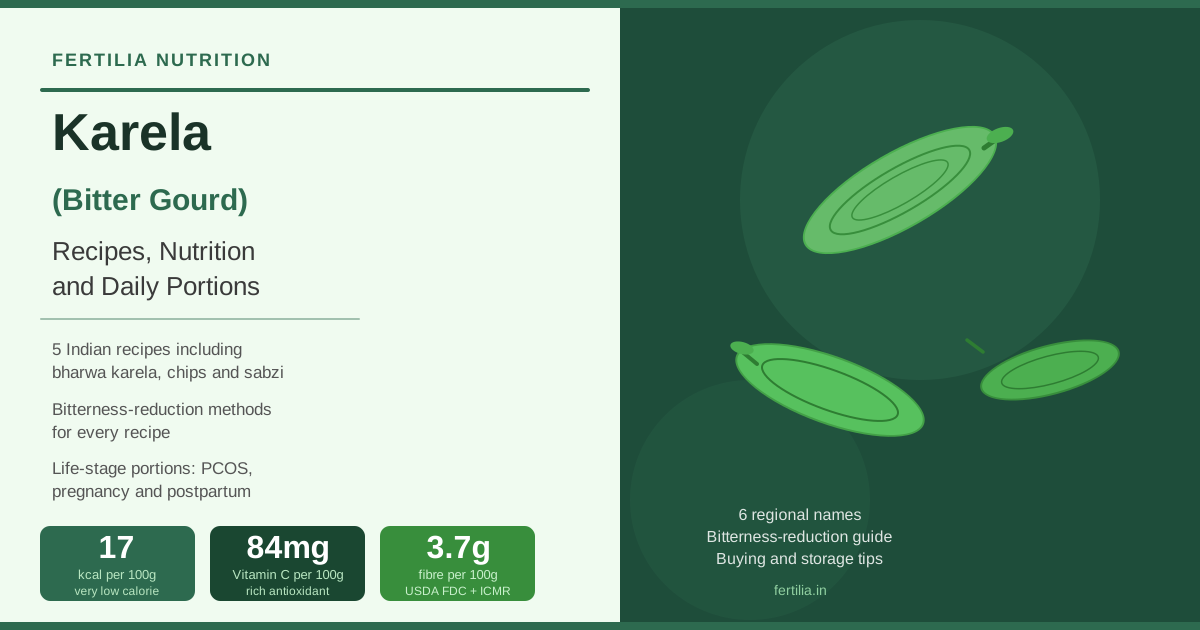
Karela earns strong reactions in Indian kitchens: children push it around the plate, while families insist it belongs there. For a woman searching for karela for PCOS, the practical answer is simple: one small karela (80-100g cooked), three to four times a week, is a workable serving within a balanced meal, not a remedy by itself. A 20-30-minute salt-rest, tamarind or lemon soak, or quick blanch makes the bitterness easier to manage. The five recipes below turn it into familiar meals rather than a daily test of willpower.
Karela and Blood Sugar: Where It Fits
Karela is the vegetable Indian families most often press on someone with “sugar problems”, usually as raw juice on an empty stomach. As a food, cooked karela is a low-calorie, fibre-containing choice that fits comfortably on a low-GI, blood-sugar-conscious plate, including a PCOS meal pattern. It is still a vegetable, not a treatment: eating it does not replace weight management, regular activity, the overall diet pattern, or anything your doctor has advised. For practical meal ideas, see our low-GI Indian foods guide; for the broader clinical picture, read insulin resistance in PCOS: signs, diet, and what to do.
What Is in Karela? Nutritional Data (per 100g raw)
The figures below are drawn from USDA FoodData Central (FDC ID 168393, ‘Balsam-pear (bitter gourd), pods, raw’).
| Nutrient | Per 100g raw karela |
|---|---|
| Energy | 17 kcal |
| Protein | 1.0g |
| Fat | 0.2g |
| Carbohydrates | 3.7g |
| Dietary Fibre | 2.8g |
| Vitamin C | 84mg |
| Folate | 72mcg |
| Calcium | 19mg |
| Iron | 0.4mg |
| Potassium | 296mg |
These figures describe raw karela. An adult woman’s vitamin C requirement is 65mg per day (ICMR-NIN 2020), so 100g of raw karela covers roughly a full day’s worth, though cooking and the salt-rest lower what actually reaches your plate. Its dependable everyday value is the 2.8g of fibre and vegetable bulk it brings for just 17 kcal per 100g raw.
Karela also provides 72mcg folate per 100g raw, but it is not a folate strategy. If you are planning a pregnancy, follow your doctor’s folic acid advice. Eat karela as a vegetable, not as a supplement. For the full picture on pregnancy nutrition, our complete evidence-based pregnancy guide has a dedicated nutrition section.
Karela by Name: Regional Names Across India
Karela is pavakkai in Tamil, kakarakaya in Telugu, hagalakayi in Kannada, pavakka in Malayalam, karle in Marathi, and uchhe/korola in Bengali.
Buying and Storage Guide
| Guide | Quick check |
|---|---|
| Look for | Firm, bright green, small to medium karela that feels heavy for its size |
| Avoid | Yellow or orange patches, dark spots, soft sections, or a hollow feel |
| Store raw | Keep unwashed and loosely wrapped in the refrigerator for 4-5 days |
| Store cooked | Refrigerate in a covered container and use within 2-3 days |
Bitterness-Reduction Methods
This is the section most people need before anything else. Karela’s bitterness comes from a group of natural plant compounds (cucurbitacins, including momordicin). That bitterness does not disappear entirely but it can be brought down significantly before cooking. Here are three reliable methods:
Method 1: Salt-Rest (Most Common)
Slice or cut the karela as required by your recipe. Place the pieces in a bowl, sprinkle generously with salt (about half a teaspoon per small karela), and toss to coat. Let it rest for 20 to 30 minutes. Squeeze the pieces firmly with your hands and rinse thoroughly with cold water. Pat dry. Salting draws out water and takes some of that bitterness with it. A common kitchen mistake is using plenty of salt for the rest and then giving the pieces only a quick rinse, which leaves the finished sabzi overly salty. Squeeze and rinse thoroughly under cold water before cooking.
Method 2: Tamarind or Lemon Soak
After slicing, soak the karela pieces in a bowl of water with a tablespoon of tamarind extract or the juice of one lemon for 15 to 20 minutes. Drain and rinse before using. This works particularly well for thin slices that will be used in chutneys or crisped preparations.
Method 3: Quick Blanch
Bring a pot of water to a boil with a pinch of salt. Drop in the sliced karela and blanch for two minutes. Drain immediately and rinse with cold water. This is faster than the salt-rest and is useful when you are making bharwa karela or need the karela softer from the start.
Tip: Removing the seeds and the white pith from inside the karela also reduces bitterness considerably. Scoop it out with a small spoon before cooking.
Life-Stage Portions
These portions are a practical way to include karela in a varied week, not targets you need to hit.
| Life Stage | Suggested Serving | Frequency | Notes |
|---|---|---|---|
| General (healthy adult women) | 80-100g cooked (1 small karela) | 3-4 times per week | As part of a mixed sabzi plate |
| PCOS | 80-100g cooked | 3-4 times per week | Pair with roti and dal for a balanced meal. For more meal ideas, see our PCOS diet chart |
| Pregnancy | 60-80g cooked as sabzi | 2-3 times per week | Cooked sabzi only; skip concentrated juice (see FAQ). |
| Postpartum | 80-100g cooked | 3-4 times per week | As part of your usual vegetable rotation |
Have a question about building a complete PCOS or pregnancy diet? Dr. Suganya Venkat and the Fertilia team are available for a personal consultation. Chat with us on WhatsApp and we can help you plan meals that fit your specific situation.
5 Indian Karela Recipes
Recipe 1: Simple Karela Sabzi
Serves: 2-3 | Prep time: 35 min (including salt-rest) | Cook time: 15 min
Ingredients:
- 2 small karela (about 150-180g)
- 1 tsp salt (for salt-rest)
- 2 tsp oil
- 1 tsp mustard seeds
- 1/4 tsp hing (asafoetida)
- 1/2 tsp haldi (turmeric)
- 1 tsp jeera (cumin) powder
- 1 tsp coriander powder
- Salt to taste
- 1 tsp jaggery or sugar (balances the residual bitterness)
- Fresh coriander leaves for garnish
Method:
- Wash and slice karela into thin rounds. Remove and discard seeds and white pith.
- Toss with 1 tsp salt and rest for 25 minutes. Squeeze well and rinse with cold water.
- Heat oil in a pan on medium flame. Add mustard seeds and let them splutter.
- Add hing, then the karela slices. Stir to coat with the oil.
- Add haldi, jeera powder, coriander powder, and salt. Stir and cook on medium-low flame for 10-12 minutes, stirring occasionally, until the karela is cooked through and lightly golden at the edges.
- Add jaggery or a pinch of sugar in the last two minutes. Stir through.
- Garnish with fresh coriander. Serve with roti and dal.
Recipe 2: Bharwa Karela (Stuffed Bitter Gourd)
Serves: 2 | Prep time: 40 min | Cook time: 25 min
Ingredients:
- 4 small karela
- 1 tsp salt (for prep)
- 2 tsp oil
For the stuffing:
- 2 tbsp besan (chickpea flour)
- 1 tsp amchur (dry mango powder)
- 1 tsp coriander powder
- 1/2 tsp red chilli powder
- 1/2 tsp haldi
- 1/2 tsp garam masala
- 1 tsp fennel seeds (saunf)
- 1 tsp jaggery
- Salt to taste
Method:
- Make a long slit on each karela without cutting all the way through. Rub salt into the slit and on the outside. Rest for 30 minutes. Rinse and pat dry.
- Dry-roast besan in a small pan until it smells nutty, about 3-4 minutes on low heat. Remove from heat.
- Mix roasted besan with all stuffing spices and jaggery.
- Fill each karela tightly with the stuffing mix, pressing gently.
- Heat oil in a wide pan or tawa on medium-low. Place the stuffed karela in a single layer. Cover and cook for 10 minutes. Turn gently and cook for another 10-12 minutes until the skin is wrinkled and golden.
- Serve with dal-chawal or as a side with roti.
Recipe 3: Karela Peanut Masala (Andhra-Style)
Serves: 2-3 | Prep time: 35 min | Cook time: 15 min
Ingredients:
- 2 medium karela (about 200g)
- 1 tsp salt (for salt-rest)
- 2 tsp oil
- 1/2 tsp mustard seeds
- 1/2 tsp urad dal
- 8-10 curry leaves (kadi patta)
- 2 dried red chillies
- 3 tbsp roasted peanuts, coarsely ground
- 1/2 tsp haldi
- 1/2 tsp red chilli powder
- 1/2 tsp jaggery
- Salt to taste
- Lemon juice (half a lemon)
Method:
- Slice karela into thin rounds, remove seeds and pith. Salt-rest for 25 minutes, squeeze and rinse.
- Heat oil on medium. Add mustard seeds, urad dal, curry leaves, and red chillies. Let the dal turn golden.
- Add karela slices. Cook on medium-low for 8-10 minutes, stirring occasionally, until tender.
- Add haldi, chilli powder, and jaggery. Stir and cook for 2 more minutes.
- Add ground peanuts and salt. Toss well. Cook for 1-2 minutes on low heat.
- Squeeze lemon juice over the top just before serving.
This preparation is particularly popular in Andhra and Telangana households and pairs well with plain rice and rasam.
Recipe 4: Baked Karela Chips
Serves: 2 (as a snack) | Prep time: 35 min | Cook time: 25-30 min
Ingredients:
- 2 small karela
- 1 tsp salt (for prep)
- 1 tsp oil
- 1/2 tsp haldi
- 1/2 tsp red chilli powder
- 1/2 tsp amchur
- Salt to taste
Method:
-
Wash and slice karela into very thin rounds (2-3mm thickness). Remove seeds. Salt-rest for 20 minutes, squeeze firmly, pat completely dry with a kitchen towel.
-
Preheat oven to 180°C.
No oven? Shallow-fry the dried slices on a tawa in 1 tsp oil on low-medium heat for 12 to 15 minutes, turning often, until crisp.
-
Toss the dried karela slices with oil, haldi, chilli powder, amchur, and a little salt in a bowl.
-
Spread in a single layer on a baking tray lined with parchment.
-
Bake for 25-30 minutes, flipping halfway, until crisp and darkened at the edges. Watch the last five minutes closely as they can go from golden to over-done quickly.
-
Cool on the tray for 5 minutes before eating. They crisp up further as they cool.
These make a crunchy, very low-calorie snack. The bitterness mellows significantly in the oven, leaving a pleasantly sharp flavour that most people find more approachable than cooked karela sabzi.
Recipe 5: Karela Nimbu Stir-Fry
Serves: 2 | Prep time: 35 min | Cook time: 10 min
Ingredients:
- 2 small karela, sliced into thin rounds, seeds removed
- 1 tsp salt (for prep)
- 1 tsp oil
- 3-4 cloves garlic, minced
- 1/2 tsp jeera
- 1/2 tsp haldi
- Salt to taste
- Juice of 1 lemon
- Fresh coriander and a pinch of red chilli flakes to finish
Method:
- Salt-rest sliced karela for 25 minutes. Squeeze and rinse well.
- Heat oil on medium-high. Add jeera and garlic, stir for 30 seconds.
- Add the karela. Stir-fry on medium-high for 6-8 minutes, turning frequently, until the edges are lightly browned.
- Season with haldi and salt.
- Remove from heat. Squeeze lemon juice generously over the top. Finish with coriander and chilli flakes.
This is the quickest preparation and works well as a side dish for dal-chawal, sambar-rice, or alongside moong dal khichdi.
Weekly Fit on Your Indian Plate
Karela fits naturally into most Indian meal patterns as a vegetable side (subzi). Here is a simple weekly rotation:
| Day | Main dal or protein | Karela preparation |
|---|---|---|
| Monday | Toor dal + rasam | Karela sabzi |
| Wednesday | Moong dal khichdi | Karela nimbu stir-fry |
| Friday | Rajma or chana curry | Baked karela chips (snack) |
| Sunday | Dal tadka | Bharwa karela |
For a full list of Indian vegetables and legumes worth adding to your plate, our PCOS diet chart and high-fibre Indian foods guide cover the broader landscape with portions. For iron-rich vegetable options, the iron-rich foods guide is useful, particularly during pregnancy.
Frequently Asked Questions
Q1: Is karela safe to eat during pregnancy?
Cooked karela can be one of the family vegetables you eat during pregnancy, in a normal sabzi serving. Concentrated karela juice is a much larger dose than any sabzi and has not been studied in pregnancy, so the safe default is to skip it and stick to cooked karela. Take gestational diabetes or other blood-sugar questions to your obstetrician.
Q2: Can I give karela to my toddler or young child?
Karela is not a first food. Once your child is already eating a range of family vegetables, you can mash well-cooked karela into dal or khichdi, salt-rested first to cut the bitterness. When to introduce any new food is a question for your paediatrician.
Q3: How often should I eat karela if I have PCOS?
Three to four times a week as a cooked vegetable side is a reasonable frequency. Pair it with a source of protein (dal, paneer, or eggs) and a whole-grain roti or rice for a balanced meal. Karela alone is not a treatment for PCOS. For the evidence on what food patterns actually support PCOS management, read our low-GI Indian foods guide and the PCOS diet chart.
Q4: Does cooking destroy karela’s nutrients?
Cooking and salt-resting lower water-soluble vitamins, so the 84mg vitamin C figure for raw karela is not what lands on the plate. Choose a shorter cooking method if you like, but use the salt-rest if it makes karela enjoyable enough to eat. The practical trade-off is worthwhile if it helps you keep karela in your regular vegetable rotation.
Q5: What is the difference between small pavakkai and large North Indian karela?
Both are varieties of Momordica charantia, the same plant species. The small South Indian variety (pavakkai) is typically 8-12cm long, spiky, and a lighter green. It is more intensely bitter and has smaller seeds. The North Indian variety is larger (15-20cm), smoother, darker green, and slightly less bitter. Both are nutritionally similar. Use whichever is fresh and available at your local market.
Q6: Can I eat karela daily?
You do not need to eat karela daily. The women who try to put it on the plate every single day often stop within a couple of weeks because the bitterness wears thin. Three to four times a week, cooked in different ways, is much easier to keep up while leaving room for other vegetables.
Q7: I hate the taste of karela. Is it worth the effort?
This depends on you. Karela is one of many vegetables you can include, but nothing about it is irreplaceable. Palak, lauki, ridge gourd, brinjal, and dozens of other Indian vegetables offer variety without the bitter taste management effort. If karela does not appeal to you after trying the bitterness-reduction methods, it is completely fine to skip it and focus on vegetables you enjoy. A varied vegetable plate matters more than any single ingredient.
For personalised guidance on fitting Indian vegetables into your daily meals for PCOS, pregnancy, or postpartum recovery, reach out to the Fertilia team directly. Start a conversation on WhatsApp and we can answer your questions. If PCOS is what brought you here, karela and other everyday foods are built into Dr. Suganya’s 90-day PCOS Symptom Reversal program.
Written by Ms. Elakiya Ravichandran, Program Manager at Fertilia Health. For clinical questions about PCOS, pregnancy nutrition, or postpartum recovery, consult with Dr. Suganya Venkat, OB-GYN with 15+ years of clinical experience.