A new symptom after starting the pill can leave you unsure whether to continue, change brands or stop. You deserve to have the symptom taken seriously without being told that every change is dangerous, or that the pill cannot possibly be involved.
Spotting and some other symptoms may settle during the first few months. You can ask for a review sooner if they bother you. New severe symptoms or a significant mood change should not be put through a three-month waiting period.
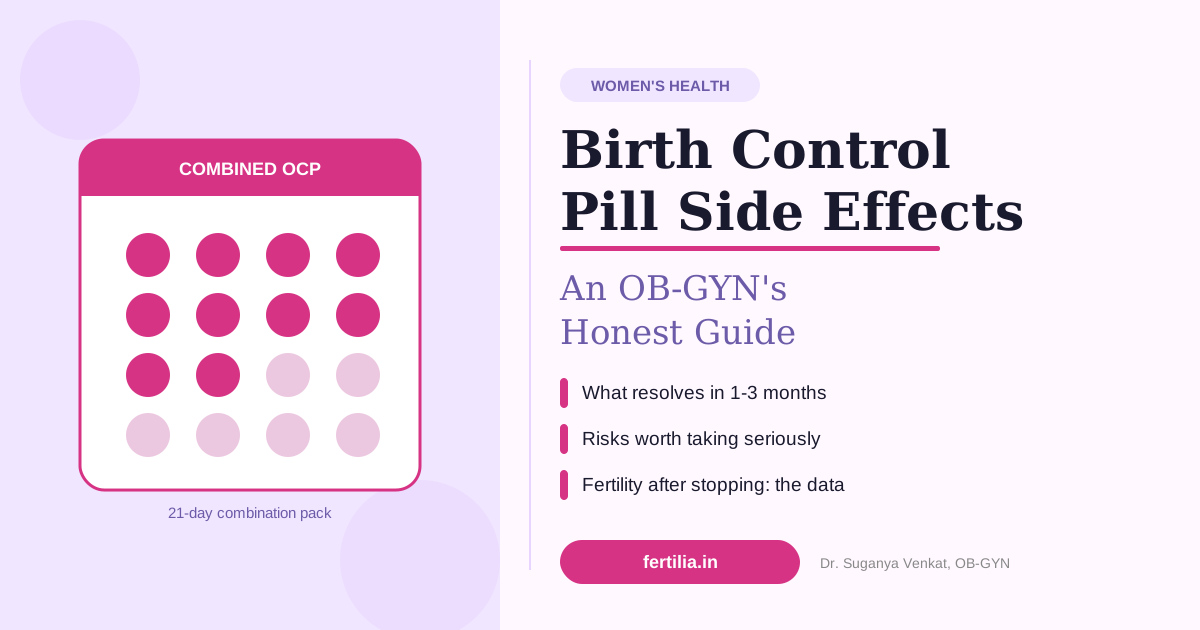
This guide is about the combined oral contraceptive pill, containing oestrogen and a progestogen. The progestogen-only mini-pill, emergency pills such as i-Pill, and tablets prescribed only to delay bleeding have different instructions and risks. Bring your actual strip or a clear photograph to the consultation.
Symptoms that need prompt help
Blood clots are uncommon, but recognising symptoms matters more than memorising a percentage. The NHS describes warning signs of DVT, pulmonary embolism and stroke. Seek care as follows:
- Emergency care locally: sudden breathlessness, chest pain, coughing blood, collapse, or sudden weakness, speech difficulty or loss of vision. Tell the treating team that you take a combined pill. Do not wait for a WhatsApp response or routine appointment.
- Urgent assessment: new pain and swelling in one leg needs urgent local care. Any new or markedly changed headache needs evaluation; new visual, sensory or speech symptoms should not be self-diagnosed as migraine. Confirmed migraine with aura makes the combined pill unsuitable: seek prompt advice about stopping it and arranging alternative protection.
- Significant mood deterioration: contact a clinician promptly, even in the first week. Thoughts of self-harm need prompt support. If you may act on them or cannot stay safe, call India’s emergency number 112 or go to the nearest emergency department, and ask someone you trust to stay with you. For mental-health support, Tele-MANAS offers the toll-free 14416 helpline, available around the clock. It does not replace emergency care in immediate danger.
Severe pelvic pain or heavy bleeding with faintness also needs urgent assessment, including consideration of pregnancy when relevant. ACOG’s abnormal-bleeding guidance explains why symptoms should not automatically be attributed to a normal pill adjustment.
Common symptoms: what may settle, and what to do
The NHS combined-pill guidance, reviewed February 2024, describes early bleeding changes and reports of nausea, sore breasts, headaches and mood changes. The timing alone cannot establish the cause of an individual symptom.
| What you notice | A useful next step |
|---|---|
| Light spotting in the first few months | Check missed doses and other medicines; discuss persistent or troublesome bleeding rather than changing the schedule yourself |
| Nausea or breast tenderness | Record when it happens and ask about practical measures or another formulation if it is bothersome |
| Headache | Describe whether it is new or different, and whether vision, sensation or speech changes occur; new aura needs prompt review |
| Low mood, irritability or loss of enjoyment | Seek review when it affects you; three months is not a required wait |
| A symptom that persists after three months | Arrange a review of the pill and other possible causes; you can request this earlier |
You can choose another method if the current one does not suit you. A review can address the symptom and maintain contraception while you decide.
Bleeding that starts after a previously settled pattern, continues, occurs after sex or is accompanied by pain deserves assessment. In its section on bleeding during extended or continuous combined-hormonal use, CDC’s 2024 guidance describes checking relevant causes such as inconsistent use, medicine interactions, pregnancy, infection and uterine conditions. A clinician may suggest a different formulation or a tailored regimen, but not every pack can be used in the same way.
What the combined pill does
The combined pill mainly prevents ovulation and also affects cervical mucus. It can help with heavy or painful periods, acne and endometriosis symptoms, as described in the NHS overview. Prescribing it for these reasons can be appropriate treatment.
Protection depends on taking the correct product on its prescribed schedule. Some packs contain inactive tablets; some have a pill-free interval or a clinician-agreed continuous schedule. Follow your own Indian pack and prescriber’s instructions. Pills do not protect against sexually transmitted infections; condoms can provide additional protection.
Missed pills, vomiting and other medicines
Vomiting, severe diarrhoea, missed active pills and medicine interactions can affect protection. Ask a pharmacist or clinician promptly, with the pack and timing available, rather than guessing which tablets to repeat. CDC’s pill-use guidance and the NHS instructions explain why the formulation and circumstances matter.
Disclose all medicines and supplements, especially treatments for epilepsy, tuberculosis or HIV, lamotrigine and St John’s wort. Interactions can affect contraception or the other medicine, so this needs a product-specific check.
If unprotected sex occurred during a gap in protection, get timely local advice about emergency contraception. Our i-Pill and Unwanted-72 guide explains that separate option and its testing advice. Do not delay care while waiting for a pregnancy test to detect recent sex.
Blood clots and blood pressure
What the clot numbers mean
Oestrogen-containing contraception increases venous thromboembolism (VTE) risk: a clot in a deep vein or lung. It is one important risk, not the only possible serious adverse effect.
The MHRA’s February 2014 European review gives the following estimated total cases per 10,000 women over one year for selected low-dose ethinylestradiol combinations:
| Group | Estimated VTE cases per 10,000 women per year |
|---|---|
| Non-pregnant women not using combined hormonal contraception | 2 |
| Combined pill with levonorgestrel, norethisterone or norgestimate | 5-7 |
| Combined pill with desogestrel, gestodene or drospirenone | 9-12 |
These are counselling estimates from a European review, not measured Indian rates or your personal prediction. They are total cases, not additional cases above baseline. The table does not cover every modern formulation, and the oestrogen dose and your health history also matter.
A past clot, known thrombophilia, major surgery or prolonged immobility can change eligibility. Tell your clinician about family clot history and planned surgery as well. A lower-risk combined pill still contains oestrogen; it is not automatically suitable for someone who should avoid it. Do not switch to a friend’s brand on the strength of this table.
Blood pressure needs an actual measurement
A small number of users develop raised blood pressure. CDC’s 2024 prescribing guidance recommends checking blood pressure before starting and reassessing it during ongoing care. Feeling well does not tell you the reading.
For an online consultation, bring a recent properly measured reading from a local healthcare service or an appropriate home monitor. A pelvic examination, scan or routine hormone panel is not required solely to start a combined pill in an otherwise healthy person, although symptoms may require separate investigation.
If you need a non-urgent review of your pill and reports, message Dr. Suganya Venkat for an online consultation. She is an OB-GYN with 15+ years of experience. Fertilia consultations are online, pan-India; urgent symptoms need local care.
Mood and weight: uncertainty is not dismissal
Mood changes
Observational studies have reported associations between hormonal contraception and depression-related outcomes, but cannot establish that contraception caused an individual’s depression.
A 2021 systematic review of randomised trials by de Wit and colleagues (PMID 34099098) did not find worsening depressive symptoms compared with placebo. However, certainty was very low, and first-time users, adolescents and women with previous negative experiences were insufficiently represented. The trials do not justify telling a woman that her symptoms cannot be pill-related.
Discuss when symptoms started, their effect on sleep and daily life, other medicines and previous mental-health difficulties. A clinician can assess depression and discuss changing contraception if wanted. Switching away from oestrogen does not guarantee that mood symptoms will disappear, and changing the pill should not replace mental-health care when needed.
Weight changes
The 2014 Cochrane review by Gallo and colleagues (PMID 24477630) concluded that evidence was insufficient to determine the effect of combined contraceptives on weight, although no large effect was evident. That is more cautious than saying the pill has been proved incapable of causing any weight change.
If your weight changes noticeably, ask for an assessment of the timing, medicines, fluid retention and other health factors. Avoid assuming either that the pill caused it or that PCOS must explain it. Evidence about combined pills should not be applied to every hormonal method, particularly injections.
Breast cancer: put the finding in context
Mørch and colleagues’ 2017 Danish cohort study (PMID 29211679) found a relative breast-cancer risk of 1.20 (95% confidence interval 1.14-1.26) among current or recent users of any hormonal contraception, compared with never-users. The absolute difference was 13 additional diagnoses per 100,000 person-years (95% confidence interval 10-16).
The first figure means a 20% relative increase, not a 20% chance of developing breast cancer. The absolute estimate covered multiple hormonal methods and women aged 15-49; it is not a combined-pill-only rate for an Indian woman in her twenties. Risk varied with duration, and the study found some elevation after stopping among longer-term users. It was observational, not a trial proving cause in an individual.
There are benefits to consider too. The US National Cancer Institute’s evidence summary describes higher breast and cervical cancer risks associated with oral contraception, but lower endometrial, ovarian and colorectal cancer risks. These do not cancel one another into a single personal score.
A personal history of breast cancer needs specialist contraceptive advice. A family history alone is a different situation and is not automatically a ban on the combined pill under WHO’s 2025 eligibility guidance. Discuss known inherited cancer susceptibility and screening with your clinician rather than assuming a hormone-free or progestogen-only option is always the answer.
When is the combined pill unsuitable or not preferred?
The WHO Medical Eligibility Criteria, sixth edition, 2025, distinguishes conditions where use is unacceptable from those where risks usually outweigh benefits. This is a selected checklist, not a self-screening prescription:
- Migraine with aura: combined pills should not be used. Migraine without aura still requires individual assessment, especially with age or other stroke risks.
- Smoking at age 35 or older: combined pills are generally not recommended; smoking 15 or more cigarettes a day is an unacceptable-risk category. These are not identical categories.
- Blood pressure of at least 160 systolic OR 100 diastolic, vascular disease, previous stroke or ischaemic heart disease: combined pills should not be used. Even controlled hypertension, or readings of 140-159 systolic or 90-99 diastolic, usually favour another method; one reading alone does not diagnose hypertension.
- Past/current DVT or pulmonary embolism, known thrombophilia, or major surgery with prolonged immobilisation: oestrogen-containing pills need avoidance under WHO guidance. Anticoagulant treatment is not permission to self-prescribe one.
- Current breast cancer, severe decompensated liver disease or certain liver tumours: combined pills are unsuitable. Previous breast cancer also needs specialist advice.
- Recent childbirth: suitability depends on time since delivery, breastfeeding and clot risk.
Breastfeeding and postpartum timing
For women who are breastfeeding, WHO’s 2025 combined-pill table classifies use as:
- Before six weeks postpartum: do not use.
- Six weeks to under six months, primarily breastfeeding: generally do not use.
- Six months onwards: generally usable, subject to the rest of your history.
Both feeding considerations and postpartum clot risk matter. Breastfeeding evidence has limitations, so no method should be described as guaranteed to have zero effect on feeding. Progestogen-only pills may be suitable earlier, but the clinician still needs to check timing, medical conditions and medicines. Non-breastfeeding women also have early-postpartum restrictions.
If a combined pill is unsuitable, our India contraception comparison explains pills, devices, injections and barrier methods. Each has its own eligibility checks, bleeding effects and fertility-return considerations; they are not a universally safe replacement list.
For someone considering a device rather than a daily tablet, our Copper-T versus Mirena choice guide compares hormone exposure, bleeding and insertion considerations. A device needs a trained local provider and its own assessment.
Fertility and periods after stopping
Combined-pill use is not associated with a lasting loss of fertility. Barnhart and Schreiber’s 2009 review (PMID 19268187) found return to fertility comparable with other contraceptive methods, while recognising a temporary early delay in conception for some former pill users. It does not establish a universal 20-day return to ovulation.
Pregnancy can occur before the first natural period. If you do not want pregnancy, arrange the next method without an unprotected gap. If you do want pregnancy, your clinician can review your medicines and preconception care. You do not need a special diet to “clear” the pill.
The pill does not freeze age-related fertility changes. Nor can every difficulty conceiving be attributed to PCOS: ovulation, sperm, tubal factors and other conditions may matter. The NHS fertility overview describes these different causes. Seek earlier advice for absent/irregular cycles or known fertility concerns rather than waiting out a standard trying period.
If the period does not return
Exclude pregnancy first. A urine test cannot detect pregnancy immediately after sex; the NHS testing guide advises testing at least 21 days after the latest unprotected sex when you do not know when a period is due. Repeat an early negative at the appropriate time.
ASRM’s 2024 amenorrhea opinion says absent periods require investigation after more than three months if cycles were previously regular, or six months if they were irregular. These are general amenorrhea thresholds, not a compulsory waiting period after the pill. Ask earlier if you have other symptoms, want pregnancy or are concerned about the delay.
After pregnancy exclusion, assessment commonly includes history, examination and tests such as TSH, prolactin, FSH and estradiol, selected by the clinician. AMH is frequently unnecessary, according to that opinion. A universal LH/FSH/AMH panel cannot reliably explain every missing period. The label “post-pill amenorrhea” describes the timing, not the cause.
When the pill is prescribed for PCOS
The 2023 international PCOS guideline supports combined pills for irregular cycles and excess hair growth in suitable women. Lifestyle support and, when indicated, medicines such as metformin address metabolic needs alongside symptom treatment. No particular food is proven to make the transition off the pill easier.
If cycles were irregular before treatment, they may become irregular again after stopping. That needs assessment rather than an automatic new diagnosis or an assurance that everything is PCOS. Discuss what the pill is treating, what other care you need and whether pregnancy is currently a goal. Lifestyle changes should not silently replace necessary contraception or prescribed care.
Questions for your review
Bring the pill strip, start date, recent blood-pressure reading, symptom notes and medicine list. Ask:
- Is this symptom likely to be related, and does it need another investigation?
- Am I still eligible for oestrogen-containing contraception?
- Would another formulation or method better fit my priorities?
- How do I switch without a gap, and do I need emergency contraception?
- What is the follow-up plan for symptoms, blood pressure and pregnancy goals?
For a non-urgent discussion, WhatsApp Dr. Suganya for an online review. The Fertilia video/phone consultation is ₹399. Examinations or procedures, when needed, are arranged locally; emergency symptoms need immediate local assessment.
Frequently asked questions
Must I wait three months before changing a pill that makes me feel unwell?
No. Mild early symptoms may settle, but you can request a review at any time. Significant mood changes, new migraine/aura or warning symptoms need earlier assessment. Plan any method change so pregnancy protection is not unintentionally lost.
Does the combined pill definitely cause no weight gain?
That is too strong. The Cochrane review found no large effect, but the evidence could not exclude all weight changes. Your experience deserves assessment without a predetermined explanation.
Is every oestrogen-free method safe if I cannot take the combined pill?
No. Progestogen-only pills, injections and hormonal IUDs still have medical restrictions. For example, current breast cancer changes hormonal-method eligibility. A clinician should assess the particular alternative.
Does five years on the pill leave my fertility exactly where it was?
No contraceptive can promise that. Previous pill use is not associated with lasting infertility, but age and other fertility factors can change during those years. Discuss current pregnancy plans and any irregular cycles.
Can I take a combined pill six weeks after delivery while breastfeeding?
Not automatically. WHO’s 2025 guidance generally advises against it from six weeks to under six months when primarily breastfeeding. Ask about a suitable method and start date rather than relying on milk supply alone.
Does the breast-cancer statistic mean I have a 20% chance of cancer?
No. It is a relative comparison from one observational cohort, not a personal probability. Absolute risk depends on age, history and other factors, and contraceptive benefits also matter.
My period is absent after stopping. Should I order AMH?
Start with pregnancy testing at the right time and a clinical review. AMH is not a routine explanation for a missing period; the next tests depend on your history and examination.
Clinical sources reviewed 14 September 2026. Original publication date retained. This guide supports a prescribing conversation, not a personal prescription.