You see two lines. Faint, maybe, but unmistakably there. You test again the next morning. Still positive. You tell your partner, perhaps even a close friend, and you let yourself feel the quiet joy of it.
Then your period arrives.
Sometimes it comes a few days late. Sometimes it is heavier than usual, with more cramping. You test again and the line has disappeared. You are left wondering: was the test wrong? Did I imagine it? Was I really pregnant?
You were. What happened is called a chemical pregnancy, and it is far more common than most women realise. Because sensitive home pregnancy tests can detect hCG at very low levels, women today are discovering early losses that previous generations never knew about. That awareness is valuable, but it also means more women are sitting with questions that deserve real answers.
This post answers those questions plainly, with evidence, and without catastrophising.
What Is a Chemical Pregnancy?
A chemical pregnancy (also called a biochemical pregnancy loss) is a very early pregnancy loss that occurs after the embryo implants in the uterine lining but before the pregnancy reaches a stage where it can be confirmed on ultrasound.
The term “chemical” refers to the fact that the pregnancy is detected only by chemistry: by the hormone hCG (human chorionic gonadotropin) in your blood or urine. The embryo implants, begins producing hCG, and your pregnancy test turns positive. But development stops very early, before the gestational sac is visible on ultrasound (typically before 5 to 6 weeks from your last menstrual period).
This is what separates a chemical pregnancy from a clinical miscarriage. A clinical miscarriage occurs after the pregnancy has been confirmed on ultrasound, usually from 6 to 7 weeks onward. A chemical pregnancy is an even earlier loss, one that would have gone completely unnoticed before the arrival of highly sensitive home pregnancy tests in recent decades.
It is worth understanding this clearly: chemical pregnancies are not a modern phenomenon. They have always happened. What is new is our ability to detect them.
How common is a chemical pregnancy?
Landmark research published in the New England Journal of Medicine (Wilcox AJ et al., 1988) followed women who were trying to conceive and found that 22 percent of all pregnancies were lost before they were clinically recognised. Many of those losses were chemical pregnancies. More recent data suggests that chemical pregnancies may represent close to 50 to 75 percent of all spontaneous pregnancy losses (Macklon NS et al., Human Reproduction Update, 2002).
If you have had a chemical pregnancy, you are not in rare or unlucky territory. You are part of a well-documented pattern that affects many women who are actively trying to conceive.
Signs of a Chemical Pregnancy
Because a chemical pregnancy resolves so early, the signs are minimal. Many women only notice them if they test before their expected period date.
A positive pregnancy test followed by a negative. This is the clearest sign. You test positive on a urine or blood test, and within days to a week the test becomes negative and your period arrives. In some cases, the positive was very faint.
A period that arrives around or slightly after the expected date. It may be heavier than usual, with stronger cramping, or it may look completely normal. Some women notice small clots or tissue. Others notice nothing different about the bleed itself.
A brief rise in hCG that then falls. If you have had blood beta hCG tests during this time, you will see hCG rise and then drop rather than continue doubling as it should in a healthy pregnancy. For more on how hCG behaves in early pregnancy, read our guide on Beta hCG Levels: What Your Numbers Mean.
No ultrasound findings. Because the loss occurs before 5 to 6 weeks, no gestational sac or embryo is visible on scan. The uterus will look empty on ultrasound.
What you will typically not experience: significant pelvic pain that is different from period cramping, fever, heavy ongoing bleeding, or any sign of an ectopic pregnancy (which requires a different workup if your hCG does not fall appropriately).
One thing worth noting: the positive-then-negative pattern can occasionally be confused with a very early positive from a sensitive test followed by a period that was slightly late. If you test on day 10 after ovulation and see a faint line that disappears three days later when your period arrives, this could be a chemical pregnancy or simply a borderline result followed by a normal cycle. The difference matters to your doctor but does not change what you need to do next. You can read more about how to time and interpret tests accurately in our guide on Home Pregnancy Test: When to Take It and How to Read the Results.
Why Chemical Pregnancies Happen
Understanding why a chemical pregnancy happens is often what matters most to women. The short answer is: in the majority of cases, it is not about you.
Chromosomal abnormalities in the embryo. This is the most common cause of early pregnancy loss at every stage, including chemical pregnancies. When an egg and sperm combine, the resulting embryo receives chromosomes from both. Sometimes an error occurs in that process: an extra chromosome, a missing one, or a structural problem. The embryo begins to develop, implants in the uterine lining, and produces hCG, but the chromosomal error means it cannot progress. The body recognises this and the pregnancy ends.
For more on this, read our guide on Egg Freezing in India. This is not a reflection of your age (though chromosomal errors do become more frequent as eggs age), your health, or anything you did. It is a quality control process. The vast majority of chromosomal errors occur at the moment of fertilisation and are random events.
Uterine factors. In some cases, the uterine environment creates conditions that make it difficult for an embryo to continue developing. Submucous fibroids (fibroids that extend into the uterine cavity), endometrial polyps, a uterine septum, or adhesions from a previous procedure can all interfere with early implantation. These are not causes of a single chemical pregnancy in most cases, but they are worth evaluating if losses are recurrent.
Hormonal and thyroid factors. Progesterone is the hormone responsible for maintaining the uterine lining in early pregnancy. If progesterone production after ovulation is insufficient (a luteal phase defect), the lining may not be adequately supported. Similarly, thyroid dysfunction (both hypothyroidism and hyperthyroidism) is associated with early pregnancy loss and is frequently under-detected in Indian women. A simple TSH test can identify this.
Other factors. Blood clotting disorders (like antiphospholipid syndrome) are more commonly associated with recurrent losses than with a single chemical pregnancy. Poorly controlled blood sugar and significant nutritional deficiencies (especially vitamin D and B12, both common in India) may also play a role in some cases.
What does not cause a chemical pregnancy: exercising, lifting something, eating the wrong food, having sex, feeling stressed (though chronic stress does affect hormonal health more broadly), working, or not taking enough rest. These are the questions women always ask, and the answer to all of them is the same: no.
If you have had a chemical pregnancy and want to understand whether there is anything worth evaluating in your specific situation, Dr. Suganya offers evidence-based consultations that go beyond a single blood test. She will look at your full picture and tell you what, if anything, needs attention. Message us directly on WhatsApp: wa.me/919940270499
What a Chemical Pregnancy Means for Your Fertility
This is the question that keeps women up at night. And the answer, for most women, is genuinely reassuring.
One chemical pregnancy is not a sign of infertility. Full stop. It is a common occurrence in the natural process of conception. The fact that implantation happened at all is meaningful: the egg was fertilised, it travelled to the uterus, it implanted in the lining, and your body produced hCG. That is the full sequence of early pregnancy working as it should. The embryo simply did not carry the genetic material needed to develop further. This is different from not being able to get pregnant.
Most women go on to have healthy pregnancies. The clinical evidence is consistent on this point: one chemical pregnancy does not reduce future pregnancy rates. Many reproductive specialists view a chemical pregnancy as a confirmation that the basics are working: ovulation, fertilisation, implantation. The issue was with this specific embryo, not the system.
When to investigate. The threshold for investigation changes when losses become recurrent. Three or more consecutive pregnancy losses (chemical or clinical) warrant a thorough workup. This is not because three is a magic number but because at that point, a random chromosomal error becomes a less likely explanation for every loss, and treatable contributing factors are more likely to be found.
A standard recurrent loss workup typically includes:
- Thyroid function (TSH, free T4, thyroid antibodies)
- Prolactin
- Vitamin D and B12 levels
- Antiphospholipid antibodies (APS panel)
- Uterine cavity evaluation (saline sonography or hysteroscopy)
- Blood sugar and insulin markers
- Parental chromosomal testing (karyotype) for some couples
In women with PCOS, insulin resistance and elevated androgens may contribute to early pregnancy loss, and addressing those factors alongside conception efforts can improve outcomes. Two or more losses in someone with PCOS is a reasonable trigger to discuss the full picture with your doctor.
For a full explanation of how beta hCG trends can be monitored after a positive test to detect whether a very early pregnancy is progressing, see our guide on Beta hCG Levels: What Your Numbers Mean.
What to Do After a Chemical Pregnancy
Give yourself permission to grieve. A chemical pregnancy is an early loss. Some women feel it deeply; others feel mostly confusion. Both responses are normal. The brevity of the pregnancy does not diminish the significance of the experience.
Wait for one normal period before trying again. Most OBs recommend this for practical reasons: it allows the uterine lining to shed and rebuild fully, and it gives you a reliable date for tracking your next cycle. Some women choose to try sooner; there is no strong evidence that this is harmful, but waiting one cycle gives your body and your tracking a clean baseline.
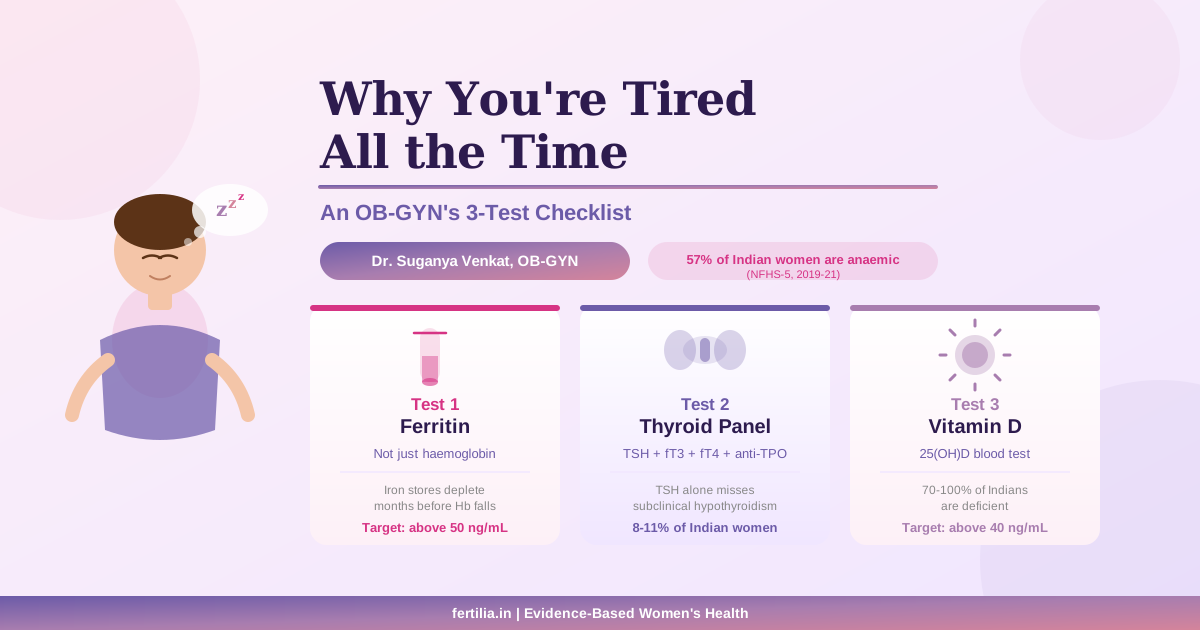
Check your thyroid and vitamin D. These are two of the most commonly missed contributors to early pregnancy loss in Indian women. A single blood test for TSH and a 25-OH vitamin D level will tell you whether either needs attention. If your thyroid shows even a borderline elevation in TSH, especially if you have a family history of thyroid disease or any PCOS diagnosis, it is worth addressing before your next cycle.
Continue folic acid. If you were already taking a folate supplement, continue it. If you were not, now is a good time to start. For more on dosing and timing, see our guide on Folic Acid in Pregnancy: When to Start and How Much.
Track your next cycle. Note the length, the quality of ovulation signs, and any spotting before your period. This gives you and your doctor a fuller picture. For more on ovulation tracking, read our guide on How to Track Ovulation: Indian Woman’s Guide.
Contact your doctor if: this is your second or third consecutive loss, your hCG levels took longer than expected to fall to zero after the chemical pregnancy, or you had any symptoms that did not resolve with your period (persistent cramping, continued positive tests, or bleeding that was significantly heavier than normal).
Key Takeaways
- A chemical pregnancy is a very early loss confirmed by hCG, not ultrasound, usually before 5 to 6 weeks.
- The most common cause is a chromosomal error in the embryo. It is not caused by anything you did.
- Signs are minimal: a positive test followed by a period, sometimes heavier or slightly late.
- One chemical pregnancy does not mean something is wrong with your fertility.
- Most women who experience a chemical pregnancy go on to conceive successfully.
- Three or more consecutive losses warrant investigation for treatable factors including thyroid, uterus, and progesterone.
- Wait for one normal period, check thyroid and vitamin D, and continue folic acid.
Frequently Asked Questions
Can a chemical pregnancy be confused with a late period?
Yes, especially if you do not test early. A chemical pregnancy looks like a period that arrives a few days late, sometimes with slightly heavier bleeding. Before sensitive home pregnancy tests were available, most chemical pregnancies were never identified. If you have not taken a pregnancy test, there is no way to know whether a late or heavier period was a chemical pregnancy or simply a late cycle. The distinction only becomes relevant if you are tracking conception attempts closely or if late/heavy periods are happening repeatedly.
How soon can I try again after a chemical pregnancy?
Most OBs recommend waiting for one full menstrual cycle before trying again. This is practical rather than medical: one normal period resets your cycle tracking and gives the uterine lining a chance to shed and rebuild. There is no strong evidence that trying immediately is harmful. If you feel ready and have had your period, you can discuss the timing with your doctor based on your individual situation.
Does a chemical pregnancy mean something is wrong with my fertility?
Not in most cases. One chemical pregnancy is not a marker of infertility. The fact that implantation occurred confirms that the core steps of early pregnancy (ovulation, fertilisation, implantation) are functioning. The embryo simply did not have the chromosomal continuity to develop further. This is a random event that affects many women who go on to have healthy pregnancies.
What is the difference between a chemical pregnancy and a clinical miscarriage?
A clinical miscarriage is a pregnancy loss that occurs after the pregnancy has been confirmed on ultrasound, usually from 6 to 7 weeks onward. A chemical pregnancy is an earlier loss, confirmed only by hCG, with no gestational sac visible on scan. Clinically, both are pregnancy losses, but the evaluation and management differ. A single chemical pregnancy typically does not require investigation. Recurrent clinical miscarriages or a mix of both types together do warrant workup. For a full explanation of clinical miscarriage, read our guide on Miscarriage: Causes, Signs and Recovery.
Should I see a doctor after one chemical pregnancy?
There is no clinical requirement to investigate after one chemical pregnancy. Most doctors will offer reassurance and advise you to continue trying. However, if you have any of the following, it is worth a conversation: a known thyroid condition, PCOS, a history of irregular cycles, a family history of recurrent loss, or if this is your second chemical pregnancy in a row. A brief review of your thyroid, vitamin D, and basic hormonal health takes very little time and can catch something simple that is worth addressing.
How common is it to have more than one chemical pregnancy?
Most women who have one chemical pregnancy do not have another. However, recurrent chemical pregnancies (three or more consecutive) do occur and warrant investigation. In these cases, a workup for treatable contributing factors (thyroid, uterine cavity, clotting, progesterone) can identify a cause in a meaningful proportion of cases and allow for targeted treatment before the next cycle.
Can low progesterone cause a chemical pregnancy?
Progesterone is the hormone that maintains the uterine lining after ovulation. If progesterone production is insufficient in the luteal phase (the second half of the cycle), the lining may not support early implantation adequately. This is called a luteal phase defect. It is not the most common cause of a single chemical pregnancy, but it is one of the factors evaluated in recurrent loss workups. If you have consistently short cycles (less than 25 days) or bleeding that starts more than 2 days before your period is due, a luteal phase defect is worth discussing with your OBG.
Understanding what happened and what to do next is the first step. If you have had a chemical pregnancy and want a clear, evidence-based picture of your fertility health, Dr. Suganya can help. She specialises in fertility consultations for women who are trying to conceive and want to understand their bodies, not just receive a prescription. Reach her on WhatsApp: wa.me/919940270499
Dr. Suganya Venkat is a DNB OB-GYN (GKNM Hospital, Coimbatore) with an MD in Pathology (CMC Vellore) and 5 Gold Medals from SRMC. She has over 15 years of clinical experience in fertility, PCOS, and pregnancy care.