In most Indian dry fruit jars, almonds get the front row and walnuts sit just behind them, quietly. Four halves on a small plate alongside the morning tea, a few chopped pieces stirred into kheer at a festival, or a handful tucked into a child’s lunchbox. Walnuts (aakhrot in Hindi, akrot in Marathi, akrot kottai in Tamil) have always been part of the Indian dry fruit rotation, but they rarely get a guide of their own.
This post lays out exactly what a walnut provides nutritionally, how many to eat at different stages of a woman’s life, how Kashmiri and Californian varieties compare in an Indian kitchen, and four practical recipes that go beyond eating them plain. All nutritional figures are sourced from USDA FoodData Central, and all portion ranges are written for everyday home practice.
What Is in a Walnut? USDA Nutritional Profile
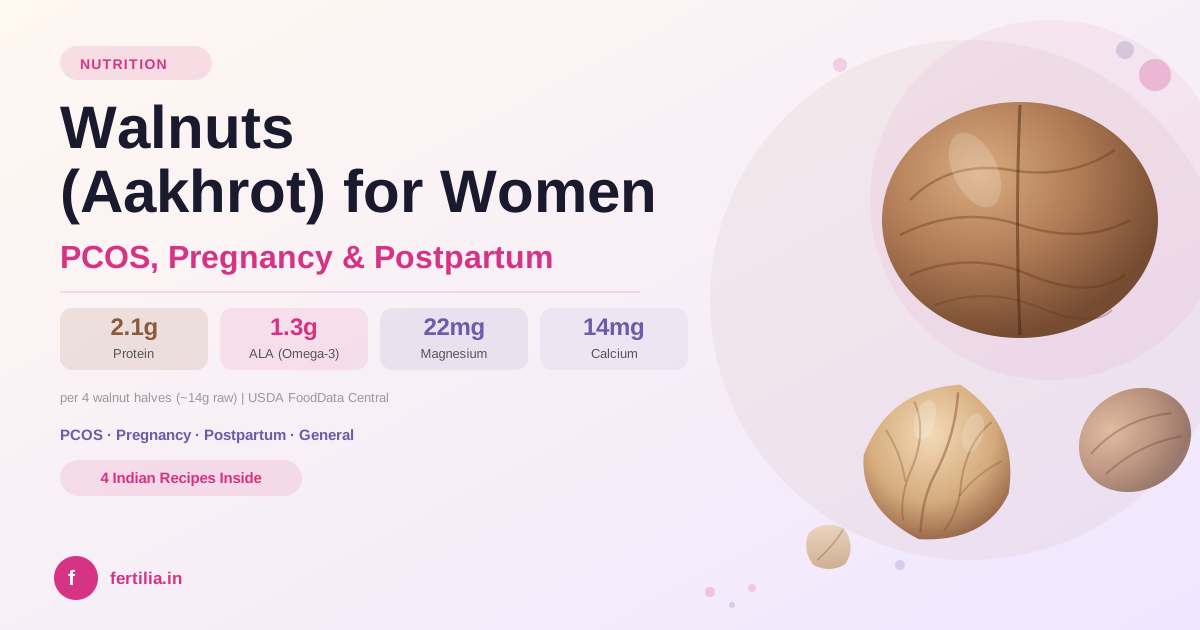
All figures below come from USDA FoodData Central, FDC ID 170187 (Nuts, walnuts, English).
| Nutrient | Per 100g raw | Per 4 walnut halves (~14g) |
|---|---|---|
| Energy | 654 kcal | 92 kcal |
| Protein | 15.2g | 2.1g |
| Total fat | 65.2g | 9.1g |
| Of which ALA (omega-3 fatty acid) | 9.08g | 1.27g |
| Carbohydrates | 13.7g | 1.9g |
| Dietary fibre | 6.7g | 0.94g |
| Calcium | 98mg | 14mg |
| Iron | 2.91mg | 0.41mg |
| Magnesium | 158mg | 22mg |
| Phosphorus | 346mg | 48mg |
| Potassium | 441mg | 62mg |
| Zinc | 3.09mg | 0.43mg |
| Folate | 98 mcg | 14 mcg |
| Vitamin E (alpha-tocopherol) | 0.7mg | 0.10mg |
One walnut half weighs approximately 3.5g raw. 4 halves is the standard daily reference portion used in most Indian dietary guidance, including ICMR-NIN food group examples.
Where walnuts fit in a balanced Indian plate
A portion of 4 walnut halves is small but calorie-dense. It contributes meaningfully to daily intake of plant-based omega-3 fat (ALA), magnesium and protein when added alongside dahi, dal, ragi and seasonal fruit. The omega-3 content per gram is higher in walnuts than in almonds or cashews, which is the practical reason most Indian dry fruit mixes for women already include them. For the role walnuts play alongside iron-rich Indian foods, see our iron-rich foods for pregnancy guide.
Walnuts Across India: Regional Names
| Language | Name |
|---|---|
| Hindi / Urdu | Aakhrot / Akhrot |
| Tamil | Akrot kottai / Walnut paruppu |
| Telugu | Akhrotlu |
| Kannada | Akrotu |
| Malayalam | Akrot parippu |
| Marathi | Akrot |
| Bengali | Akhrot |
| Gujarati | Akhrot |
| Punjabi | Akhrot |
| Kashmiri | Doon |
In Kashmir, where most Indian walnuts are grown, the local name is simply “doon” and a small pile of fresh whole walnuts in the shell is part of every winter household. Across the rest of India, “aakhrot” is the common name used at dry fruit counters and in family kitchens.
Kashmiri vs Californian Walnuts: A Practical Comparison
Two walnut varieties are commonly sold in Indian markets. The choice is mostly about taste, budget and availability, not nutrition.
| Feature | Kashmiri walnut | Californian walnut |
|---|---|---|
| Origin | Grown in J&K, Himachal, Uttarakhand | Imported from California |
| Shell | Thin, hand-cracks easily | Thicker, often pre-shelled |
| Kernel size | Smaller, more delicate | Larger, more uniform |
| Kernel colour | Light golden | Slightly darker amber |
| Taste | Mild, slightly sweet | Richer, sometimes a touch more bitter from the skin |
| Availability | Seasonal peak Sept to Feb; year-round shelled | Year-round in supermarkets |
| Price | Higher per kg, especially for whole shelled halves | Lower per kg for shelled |
| Best for | Eating plain, garnishing kheer or halwa | Pulao, laddoos, baking, daily snacking |
For everyday use at home, plain Californian walnut halves are the practical default. Kashmiri walnuts are a nice option for special occasions or when the season is on.
Inshell vs shelled vs walnut pieces
In Indian shops you will see three forms:
- Inshell walnuts (whole, with the shell on): the freshest option. The kernel inside is protected from light, heat and air, so it stays good for longer. You will need a nutcracker.
- Shelled walnut halves: the most common ready-to-eat form. Look for clean, light-coloured halves with no broken bits or dark patches.
- Walnut pieces / chopped walnuts: smaller broken pieces, sold by weight. Cheaper. Best for laddoos, cakes, pulao, chutneys where the shape does not matter.
How Many Walnuts Per Day? Life-Stage Portions
| Life stage | Daily portion (raw walnut halves) | Notes |
|---|---|---|
| General (adult woman) | 4 halves (~14g) | A simple morning or evening snack |
| First trimester pregnancy | 3 to 4 halves | Start lower if nausea is strong; chopped into porridge is easier than whole |
| Second trimester pregnancy | 4 to 6 halves | Spread across breakfast and an afternoon snack |
| Third trimester pregnancy | 4 to 6 halves | Pair with dahi, fruit or a small katori of soaked moong |
| Postpartum (Week 1+) | 4 to 6 halves | Chopped into ragi porridge, laddoo or warm milk; gentler texture in the early weeks |
| Gestational diabetes | 4 halves | Counts as a protein-and-fat snack; pair with a low-GI grain like ragi or jowar |
| PCOS (non-pregnant) | 4 to 5 halves | A handful as part of a balanced breakfast or evening snack |
| Children (5 years and above) | 2 halves | Chopped into porridge or fruit to avoid choking risk on whole pieces |
Six walnut halves per day is a reasonable upper end for most adults. Walnuts are calorie-dense (about 92 kcal per 4 halves), so going much beyond the portions above is rarely the smarter move. They also work best in rotation with almonds, dates, figs and other dry fruits rather than as the only snack. For the full Indian dry fruit rotation and how walnuts fit alongside almonds and figs, see our dry fruits during pregnancy guide and the companion badam during pregnancy guide.
Looking for a personalised plan that fits walnuts, dal, dahi and the foods your family already cooks into your weekly diet for PCOS, pregnancy or postpartum recovery? Dr. Suganya’s team at Fertilia builds individual nutrition plans for women across India. Message Dr. Suganya on WhatsApp to get started.
Do Walnuts Need to Be Soaked?
Unlike almonds, walnuts do not need to be soaked before eating. Most Indian households eat them straight from the jar.
When soaking is worth it
- If the papery skin tastes bitter. Soak 4 to 6 walnut halves in plain drinking water for 30 to 60 minutes. The skin loosens slightly and the bitter note softens.
- If the walnuts feel very dry or hard. A short soak (15 to 30 minutes) makes them easier to bite.
- For postpartum use in the early weeks. Some women find soaked, chopped walnuts gentler on the stomach than crunchy raw pieces, especially during the first 40 days.
When soaking is not needed
For everyday snacking and most recipes, raw walnut halves work as they are. Long overnight soaking is not recommended because walnuts have high oil content and can start to taste off after several hours in water.
How to Choose, Store and Buy Walnuts
Walnuts have one practical issue that almonds and cashews do not: the high oil content makes them spoil faster. A good walnut habit relies on choosing well and storing them right.
Choosing good walnuts
A good shelled walnut half is:
- Light golden to amber in colour, with no dark or oily-looking patches.
- Whole or in clean halves (broken pieces are fine if you intend to chop them anyway).
- Firm to the touch, not soft or rubbery.
- Mild and slightly sweet on first bite, with no sharp bitter or musty taste.
A sharp, paint-like or musty smell means the walnut has gone rancid. Throw the whole batch out and start again from a sealed pack.
What to avoid
- Salted or honey-coated walnuts: add sodium or sugar that quietly stack up across the day. Plain raw is the better default for daily eating.
- Open-jar street walnuts: prone to dust, moisture and rancidity, especially in humid Indian climates. Choose sealed branded packs or freshly weighed nuts from a clean dry fruit store.
- Very dark kernels with shrivelled edges: a sign of old or poorly stored stock.
Storage
| State | Where | How long |
|---|---|---|
| Raw inshell | Cool, dry kitchen cupboard | Up to 1 year |
| Raw shelled, sealed pack | Cool, dry cupboard | Up to 3 months |
| Raw shelled, opened | Airtight jar in the fridge | Up to 6 months |
| Raw shelled, frozen | Airtight bag in the freezer | Up to 1 year |
| Chopped or in a recipe (e.g. laddoo) | Airtight container in the fridge | 1 to 2 weeks |
The simplest home rule: keep the bulk pack in the fridge or freezer, and decant only a week’s worth into the small kitchen jar you use daily. This single habit prevents most of the rancidity problems Indian families run into with walnuts.
4 Indian Walnut Recipes
Recipe 1: Walnut and Coriander Chutney
A bright, North-Indian-style chutney that pairs with paratha, dal-chawal, or even idli. The walnut adds body and a subtle nutty richness without overpowering the coriander.
Ingredients (makes about 1 small katori):
- 1/3 cup walnut halves (about 8 to 10 halves)
- 1 cup fresh coriander leaves, washed
- 4 to 6 fresh mint leaves (optional)
- 1 small green chilli (adjust to taste; skip for kids and very early pregnancy)
- 1 small clove garlic
- 1 teaspoon lemon juice
- 2 tablespoons dahi (curd)
- Salt to taste
- 2 to 3 tablespoons water as needed for blending
Method:
- Dry-roast the walnut halves on a low flame for 2 to 3 minutes, just until lightly warm and fragrant. Cool completely.
- Add walnuts, coriander, mint, green chilli, garlic, lemon juice and salt to a small blender or chutney jar.
- Pulse a few times. Add the dahi and 1 tablespoon of water. Blend to a soft paste.
- Add more water a teaspoon at a time only if needed.
- Taste and adjust salt and lemon.
Portion: 1 to 2 tablespoons per meal. Stays good in an airtight jar in the fridge for 2 days.
Recipe 2: Walnut and Date Energy Balls (No Cook)
A no-cook, no-added-sugar laddoo that uses dates as the only sweetener. Easy to make in 15 minutes and keeps well in the fridge for a quick afternoon bite during pregnancy, postpartum, or PCOS.
Ingredients (makes 10 to 12 small balls):
- 1 cup walnut halves (about 100g)
- 12 to 14 soft pitted dates (khajoor)
- 2 tablespoons desiccated coconut (or freshly grated coconut)
- 1 tablespoon ground flax seeds (alsi) (optional)
- 1/2 teaspoon cardamom (elaichi) powder
- A small pinch of salt
Method:
- Dry-roast the walnut halves on a low flame for 3 to 4 minutes, stirring often, until just warm and fragrant. Cool completely.
- Pulse the cooled walnuts in a small food processor or mixie jar until they form a coarse meal. Do not over-process; they should stay slightly crumbly, not turn into walnut butter.
- Add dates, coconut, ground flax, cardamom and salt. Pulse again in short bursts until the mixture starts coming together when pressed between fingers.
- Take a small portion (about 1 tablespoon) and roll firmly between palms into a smooth ball. Repeat with the rest.
- Roll the finished balls in a little extra coconut if you like, and store in an airtight container in the fridge.
Portion: 1 to 2 balls a day from the second trimester onwards, postpartum, or as a PCOS-friendly afternoon snack. Keeps in the fridge for up to 2 weeks.
Recipe 3: Walnut and Dahi Raita
A cooling, simple side that fits almost any North or South Indian meal. The walnut adds soft crunch and the dahi turns it into a quick protein-and-fat side during pregnancy.
Ingredients (serves 2):
- 1 cup thick fresh dahi (curd), whisked smooth
- 6 to 8 walnut halves, chopped fine
- 1/4 cup grated cucumber (kheera), squeezed lightly to remove water
- 1 tablespoon finely chopped coriander
- A pinch of roasted jeera powder
- A pinch of black salt or regular salt to taste
- A small grind of black pepper (optional)
Method:
- Add the whisked dahi to a small bowl.
- Stir in the grated cucumber, chopped walnuts and coriander.
- Season with roasted jeera powder, salt and a small grind of pepper.
- Mix gently. Chill for 10 minutes before serving if possible.
Tip: For a postpartum-friendly version, skip the raw cucumber in Week 1 and just use the dahi and chopped walnuts. The same raita with grated boiled beetroot in place of cucumber turns a soft pink and works beautifully alongside a simple dal-chawal lunch. For more postpartum-friendly meal pairings, see our after-delivery food guide.
Recipe 4: Walnut Pulao
A mild, fragrant rice dish that turns plain ghee rice into a one-pot meal with protein and good fats. Pairs well with a katori of dahi and a simple dal.
Ingredients (serves 3):
- 1 cup basmati rice (or sona masoori), washed and soaked for 15 minutes
- 2 cups water
- 1 tablespoon ghee
- 1/2 cup walnut halves, broken into smaller pieces
- 1 small onion, finely sliced
- 1 small bay leaf (tej patta)
- 2 to 3 green cardamom pods, lightly crushed
- 1 small piece cinnamon (dalchini)
- 1/2 teaspoon jeera (cumin seeds)
- 1/4 teaspoon turmeric powder (haldi)
- Salt to taste
- 1 tablespoon finely chopped coriander to garnish
Method:
- Heat ghee in a heavy-bottomed pan or pressure cooker. Add jeera, bay leaf, cardamom and cinnamon. Stir for 10 seconds until fragrant.
- Add the sliced onion. Saute on medium flame for 2 to 3 minutes until just translucent.
- Add the broken walnut pieces. Stir for 1 minute on low flame, just until lightly toasted.
- Add the drained rice and turmeric. Stir gently for 1 minute to coat.
- Add water and salt. Bring to a boil, then reduce to a low flame and cover.
- Cook for 12 to 15 minutes on a low flame, or pressure cook for 2 whistles and let the pressure release naturally.
- Fluff gently with a fork. Garnish with chopped coriander and serve warm.
Portion: 1 katori (about 150g cooked) as part of a balanced lunch or dinner. Pairs well with dahi raita, palak dal, or rajma.
Walnuts and the Indian Weekly Plate
Walnuts work best as a small, predictable daily habit rather than an occasional indulgence. A practical week looks like this:
| Time | Walnut habit | Pairing |
|---|---|---|
| Morning (with breakfast or after) | 4 walnut halves, chopped | Mixed into ragi porridge, oats, or stirred into a small bowl of dahi with fruit |
| Mid-morning | A few walnut pieces (2 halves), chopped | Sprinkled over a fruit bowl with banana, papaya (ripe only), or guava |
| Afternoon snack | 1 walnut and date energy ball | With a cup of haldi milk or chai |
| Evening | 4 walnut halves, plain | On a small plate alongside an evening cup of tea |
| Weekend meal | 1 katori walnut pulao + dahi raita | As a one-pot lunch with a small katori of dal |
The total stays inside the 4 to 6 walnut halves per day range. Spread across the day in this way, it is genuinely easy to fit in without feeling heavy.
For an end-to-end Indian fertility nutrition plan that builds walnuts in alongside dal, til, ragi and seasonal vegetables, see our fertility foods Indian diet list.
A Note on Walnut Allergy
Tree nut allergies, including walnut, are less common in India than in some other parts of the world but they do occur. If walnuts are new to your diet, start with one or two halves the first time and wait 30 minutes before having more.
Signs that walnuts may not suit you include tingling of the lips or tongue immediately after eating, itching of the mouth or throat, a rash on the face or neck, or repeated stomach upset that follows eating walnuts. If any of these happen, skip walnuts for now and choose a different healthy-fat source: a few soaked almonds, ground alsi (flax seeds) on dahi or porridge, or a small handful of pumpkin seeds (kaddu ke beej) on salads. For more on protein and fat sources during postpartum, see our postpartum anxiety and food support guide.
This precaution applies the first time anyone tries walnuts, not only during pregnancy. If walnuts were already a comfortable part of your diet before pregnancy or PCOS work-up, continuing them at the portions in this guide is straightforward.
Walnuts in PCOS, Pregnancy and Postpartum: The Quick View
Walnuts are a useful everyday addition across all three life stages, but the role of the snack changes slightly:
- PCOS: A small portion (4 to 5 halves) once a day, paired with a protein source like dahi, dal or a boiled egg, fits into a low-GI Indian eating pattern. For the broader food framework that explains how PCOS-friendly eating works in an Indian kitchen, see our PCOS food and lifestyle guide.
- Pregnancy: 4 to 6 halves per day across both common and seasonal Indian foods. Walnuts help round out the calcium, magnesium and good-fat picture alongside dahi, paneer, dal and seasonal greens. For pairing walnuts with calcium-focused foods in pregnancy, see our calcium in pregnancy guide.
- Postpartum: 4 to 6 halves per day, often chopped into a warm porridge, laddoo, or stirred into the day’s first cup of milk. Walnuts pair naturally with traditional postpartum foods like gond ke laddoo, dink ke laddoo and ragi kanji.
Want a complete, week-by-week Indian nutrition plan built around the foods your family already cooks? Dr. Suganya’s team at Fertilia builds personalised plans for women across Tamil Nadu and the rest of India. Message Dr. Suganya on WhatsApp to start, or download our free Foods for Egg Health guide for a structured Indian fertility nutrition framework.
For more on this, read our guide on Cashew (Kaju) Benefits for Women.
Frequently Asked Questions
How many walnuts should I eat per day?
Four walnut halves (about 14g) per day is the standard portion for most adult women. During pregnancy or postpartum, 4 to 6 halves a day is a comfortable range. Spread the portion across the day rather than eating it all at once.
Are walnuts safe during pregnancy?
Yes. Walnuts are safe through all three trimesters at the portions in this guide (3 to 6 halves per day depending on trimester). Choose plain raw walnut halves, store them in the fridge once the pack is opened, and skip salted or honey-coated varieties.
Are walnuts good for PCOS?
Yes, as part of a balanced Indian plate. A daily portion of 4 to 5 walnut halves works well alongside ragi or jowar rotis, dahi, dal, palak and rajma. Walnuts are calorie-dense, so the portion size matters more than how often you eat them. For the broader food framework, see our PCOS food and lifestyle guide.
Do walnuts need to be soaked before eating?
No, walnuts do not need to be soaked. Most Indian households eat them straight from the jar. A short 30 to 60 minute soak helps only if the papery skin tastes bitter or if you find the texture too dry. Avoid long overnight soaks because the high oil content can start to taste off.
Kashmiri vs Californian walnuts: which is better?
Both are nutritionally similar. Kashmiri walnuts have a thinner shell and a milder, slightly sweeter kernel, and are at their best between September and February. Californian walnuts are larger, more uniform and easier to find year-round in Indian supermarkets. For daily snacking, Californian is the practical default; Kashmiri walnuts are a nice option for festivals or when in season.
Can children eat walnuts?
Yes, from about 2 years onwards, but always chopped or ground for younger children to avoid choking risk. Two walnut halves chopped into porridge, kheer or dahi is a reasonable starting portion for children aged 5 and above. For very young toddlers, ground walnut stirred into a meal is safer than whole pieces.
How should I store walnuts in an Indian kitchen?
Once the pack is opened, keep walnuts in an airtight jar in the fridge for up to 6 months, or freeze them for up to 1 year. Decant only a week’s worth into your kitchen counter jar at a time. Inshell walnuts can be stored at room temperature for up to a year if your kitchen is cool and dry; shelled walnuts at room temperature go rancid quickly, especially during Indian summers and monsoons.
Download our free Foods for Egg Health guide for a complete Indian fertility nutrition framework, or message Dr. Suganya on WhatsApp for a personalised nutrition plan that fits walnuts, dal, dahi and seasonal Indian foods into your daily routine. If you are trying to conceive, these foods are part of the plan in Dr. Suganya’s Fertility program.
For more on this, read our guide on Jeera Water in Pregnancy.
For more on this, read our guide on Amla for Women.
For more on this, read our guide on Coconut Milk.