In most Indian homes the amla tree is treated as a small piece of household wisdom. The fruit shows up as pickle on a steel thali, as a quick chutney during winter, as a chyawanprash spoonful for the kids before school, and as a tiny green orb floating in a glass of morning water when somebody in the family is recovering from a cold. It is one of the oldest functional foods in the Indian kitchen, and for very good reason.
This guide takes amla in its everyday Indian forms, fresh, juice, powder and murabba, and lays out exactly what each one provides, how much to take, and how to fit it into a regular Indian eating pattern. All numbers come from ICMR-NIN 2017 (Indian Food Composition Tables) and USDA FoodData Central where applicable.
What Is in Amla? Nutritional Profile
Amla (Phyllanthus emblica), also called Indian gooseberry or nellikkai, is a small round pale-green fruit with a tart, slightly bitter and astringent taste. The English name “gooseberry” is a translation convenience; the European gooseberry (Ribes uva-crispa) is a different fruit altogether, which is why “amla” or “Indian gooseberry” is the precise term to use.
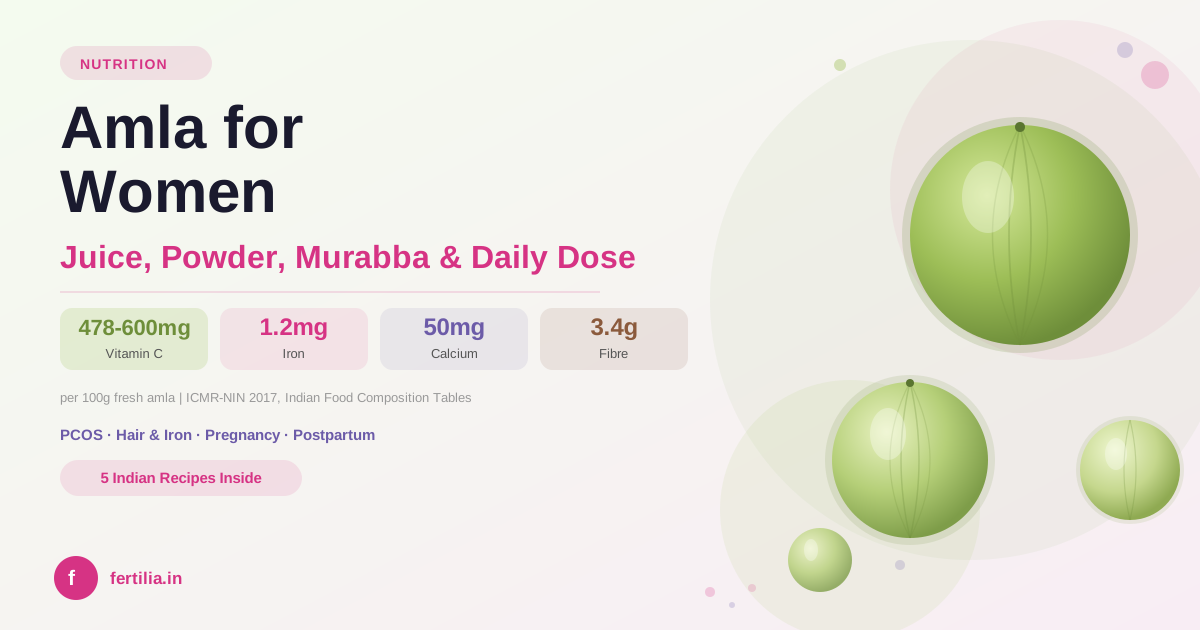
The defining nutritional feature of fresh amla is its vitamin C content, which is among the highest of any fruit eaten in India.
| Nutrient | Per 100g fresh amla | Per 1 amla (about 15g) |
|---|---|---|
| Energy | 44 kcal | 7 kcal |
| Moisture | 81g | 12g |
| Protein | 0.5g | 0.08g |
| Fat | 0.1g | 0.02g |
| Carbohydrates | 13.7g | 2.1g |
| Dietary fibre | 3.4g | 0.5g |
| Calcium | 50mg | 7.5mg |
| Iron | 1.2mg | 0.18mg |
| Phosphorus | 20mg | 3mg |
| Vitamin C | 478 to 600mg | ~75 to 90mg |
Source: ICMR-NIN 2017, Indian Food Composition Tables (Longvah et al.). Vitamin C range reflects variation across cultivars and ripeness.
A few practical things to note from this table.
Vitamin C is the headline nutrient. A single fresh amla delivers, on average, the entire adult daily vitamin C requirement for an Indian woman (ICMR-NIN 2020 RDA: 65mg/day for adult non-pregnant women) and then some. This is not a marginal source like a slice of orange or a wedge of lemon. It is one of the densest natural vitamin C foods in the Indian food basket.
Iron is modest but useful in context. One fresh amla on its own contributes only a small amount of iron (0.18mg), but the vitamin C in amla is widely recommended alongside iron-rich plant foods like palak, methi, rajma, chana and ragi because vitamin C supports the absorption of non-heme (plant) iron at the same meal. This is the practical reason most traditional Indian thalis pair a tart fruit, chutney or pickle with a dal-rice or roti-sabzi meal.
Fibre is meaningful at the daily level. 3.4g of fibre per 100g is comparable to most fresh fruits, and contributes to the overall fibre target during PCOS and pregnancy. For the bigger picture on fibre across an Indian eating pattern, see our guide to high-fibre Indian foods for PCOS and gut health.
Amla Across India: Regional Names
| Language | Name |
|---|---|
| Hindi / Urdu | Amla |
| Sanskrit | Amalaki |
| Tamil | Nellikkai |
| Telugu | Usirikaya |
| Kannada | Nelli kayi |
| Malayalam | Nellikka |
| Marathi | Avla |
| Bengali | Amloki |
| Gujarati | Amla |
| Punjabi | Aaonla |
The Sanskrit name “amalaki” is the one you will see in Ayurvedic and chyawanprash labels, while “amla” and “nellikkai” are the most common everyday names in North and South India respectively.
Fresh, Juice, Powder, Murabba: Which Form Is Best?
All four have a place, and most Indian households end up using more than one across the year. The choice depends on what is in season, how you like the taste, and what you are using it for.
Fresh amla
In season from late October through February in most of India. Fresh fruit retains the full vitamin C content listed in the nutritional table above. The taste is sharp, sour and astringent on its own, which is why fresh amla is more often used as chutney, pickle, in dal, or eaten in small pieces with rock salt and a pinch of red chilli powder than chewed whole.
Best for: maximum vitamin C, daily winter use, chutneys and pickles, freshly pressed juice.
Amla juice
Two kinds are commonly sold. Fresh home-pressed juice (made by blending fresh amla with water and straining) is the closest to whole fresh amla. Bottled commercial amla juice is a concentrate that often includes preservatives, added sugar or honey, and sometimes other ingredients like aloe vera or tulsi.
Vitamin C in bottled juice degrades over time and during processing; the labelled values are usually higher than what is actually delivered by the time you drink it. For everyday use, fresh home-pressed juice (30ml diluted in 100ml water once a day) is the better choice when fresh amla is in season.
Best for: women who find chewing fresh amla too sharp; quick morning habit.
One caveat for pregnancy: stick to fresh home-pressed juice in pregnancy. Skip bottled commercial amla juices, especially those with added preservatives, mixed-herb formulations or sugar concentrates.
Amla powder
Made by drying and grinding fresh amla. Dehydration retains roughly 50 to 70 percent of the original vitamin C. Work it through and one teaspoon (about 5g) of good-quality amla powder is equivalent to roughly 25g of fresh amla, so it lands somewhere in the region of the daily target rather than far above it. Powder is convenient and useful; it is not a megadose, and the exact figure varies a great deal with the quality of the drying.
Amla powder is the most convenient year-round form: it stays well in the cupboard for months, mixes easily into warm water, gets stirred into chutneys, sprinkled over fruit, or added to hair oil at home.
Best for: off-season daily use, hair care, women who travel often, mixing into warm water on a regular basis.
Amla murabba
A traditional Indian preserve, where whole amla is soaked in sugar syrup and slowly cooked until the fruit softens and absorbs the sweetness. The murabba retains some vitamin C but the sugar load is the cost: one piece (about 25g) carries roughly 15 to 20g of sugar.
Best for: women who find amla taste hard to manage on its own; occasional winter treat; not for daily PCOS or gestational diabetes routines because of the sugar load.
A quick side-by-side
| Form | Vitamin C retained | Sugar | Daily ease | Best season |
|---|---|---|---|---|
| Fresh amla | 100% | None | Medium (sharp taste) | Oct to Feb |
| Fresh home-pressed juice | ~95% | None | High | Oct to Feb |
| Amla powder | 50 to 70% | None | Very high (year-round) | All year |
| Amla murabba | 30 to 50% | Heavy | High (taste) but heavy on sugar | All year (festive use) |
| Chyawanprash (mention) | Variable (heat-processed) | Heavy | Very high | Winter tradition |
A daily teaspoon of amla powder in warm water, plus a fresh amla in season, is the simplest year-round combination for most women. Murabba and chyawanprash are nice to have alongside, in small portions.
For more on this, read our guide on Coconut Milk.
Daily Dose: How Much Amla Per Day
| Form | Adult daily portion | Notes |
|---|---|---|
| Fresh amla | 1 fruit per day | Eat with rock salt; chop into chutney or grate over a fruit bowl if the taste is too sharp on its own |
| Fresh home-pressed juice | 30ml diluted in 100ml water | First thing in the morning works well; add a few drops of lemon if needed |
| Bottled commercial juice (when fresh is not in season) | 20 to 30ml in water, once a day | Choose a brand without added sugar; skip during pregnancy |
| Amla powder | 1 teaspoon (~5g) in warm water | Once a day in the morning, or stirred into dal or chutney at lunch |
| Murabba | 1 small piece (about 25g), 2 to 3 times a week | Not daily; the sugar adds up |
| Chyawanprash | 1 teaspoon (about 5g) once a day | A traditional combined preparation; check the sugar content on the label, particularly if managing PCOS or gestational diabetes |
Going above these portions does not produce extra benefit and may cause acidity, loose stools or tooth-enamel sensitivity, particularly with concentrated juice. The principle is simple: small daily, not large occasional.
Looking for a Personalised PCOS or Pregnancy Nutrition Plan?
Daily habits like amla, jeera water and ragi go a long way, but they sit inside the bigger work of meal balance, movement and the markers that actually need tracking. Dr. Suganya’s 90-day PCOS program builds the full plan for women living and eating in Indian homes. Download her free PCOS reversal guide to see what the approach looks like, or message her team on WhatsApp for a quick conversation about whether it fits your situation.
5 Indian Amla Recipes
Recipe 1: Fresh Amla Juice (Home-Pressed)
A simple morning drink that delivers the full vitamin C content of fresh amla in a more drinkable form.
Ingredients (serves 1):
- 2 fresh amlas, deseeded and chopped roughly
- 1 cup (200ml) water
- A small piece of fresh adrak (about 1 cm), optional
- 1 teaspoon honey or jaggery powder, optional
- A pinch of black salt or rock salt
Method:
- Add the chopped amla, water and adrak to a blender. Blend on medium for 30 seconds until smooth.
- Strain through a fine mesh sieve, pressing the pulp with a spoon to extract the juice.
- Stir in honey or jaggery if using, and a pinch of rock salt.
- Drink fresh, first thing in the morning on a light stomach (not on a completely empty stomach if you have acidity).
Tip: A small splash of lemon juice and a pinch of jeera powder turns it into an amla-jeera-nimbu cooler, very common in Gujarat and Rajasthan during late winter.
Recipe 2: Sweet & Salty Amla Candy (Sun-Dried)
A traditional Indian preparation that uses the natural sweetness of the dehydrating process. Long shelf life, easy to carry, and a useful in-between-meal nibble.
Ingredients (makes a small jar):
- 500g fresh amla
- 4 tablespoons rock salt
- 2 tablespoons jaggery powder or sugar, optional
- 1 teaspoon black pepper powder
- 1 teaspoon roasted jeera powder
Method:
- Wash the amlas, then steam them whole in a pressure cooker for 1 whistle on medium heat. Cool, then deseed and break each amla into its natural segments.
- Mix the amla segments with rock salt, jaggery, black pepper and jeera in a wide bowl. Let it sit covered for 6 to 8 hours so the salt draws out moisture.
- Spread the segments on a clean plate or tray.
- Dry in the sun for 3 to 4 days, bringing them indoors at night, until they are firm but still slightly chewy.
- Store in a clean dry glass jar at room temperature for up to 3 months.
Portion: 2 to 3 pieces a day as a snack. Higher salt content, so go easy if blood pressure is being monitored.
Recipe 3: Amla Chutney (South Indian Style)
A bright, slightly tart chutney that pairs beautifully with idli, dosa, curd rice, dal-chawal or as a side with a regular thali. This is the most practical way to add amla to a daily Indian meal.
Ingredients (makes about 1 small bowl):
- 4 to 5 fresh amlas, deseeded and chopped
- 2 tablespoons grated coconut
- 1 small piece of fresh adrak (about 2 cm)
- 2 green chillies (adjust to taste)
- 1 small bunch fresh coriander leaves
- Half teaspoon rock salt
For the tadka:
- 1 teaspoon oil
- Half teaspoon mustard seeds (rai)
- A pinch of asafoetida (hing)
- 6 to 8 curry leaves
Method:
- Add the chopped amla, coconut, adrak, green chillies, coriander leaves and rock salt to a blender. Pulse with a splash of water until you get a coarse, spoonable chutney.
- Transfer to a serving bowl.
- Heat oil in a small pan. Add mustard seeds. When they crackle, add hing and curry leaves. Switch off the flame.
- Pour the tadka over the chutney and mix gently.
- Serve fresh, alongside dal-chawal, idli, dosa or rotis. Keeps well in the fridge for up to 3 days.
Tip: Adding a tablespoon of this chutney to a dal-rice or rajma-chawal meal is the simplest practical way to pair vitamin C with iron-rich legumes at the same plate.
Recipe 4: Amla Rice (Nellikkai Sadam)
A Tamil household favourite, particularly during winter when fresh amla is in season. Light, tart, slightly spicy, and a complete meal with a side of curd and a vegetable.
Ingredients (serves 2):
- 1 cup cooked rice (preferably cooled, day-old rice works well)
- 2 fresh amlas, grated finely
- 2 teaspoons oil (sesame oil is traditional)
- 1 teaspoon mustard seeds
- 1 teaspoon split urad dal
- 1 teaspoon chana dal
- 2 dried red chillies, broken
- 8 to 10 curry leaves
- 1 small piece adrak, grated
- A pinch of asafoetida
- Quarter teaspoon turmeric (haldi)
- Rock salt to taste
- 1 tablespoon roasted peanuts (optional)
Method:
- Heat oil in a wide pan. Add mustard seeds, urad dal and chana dal. Wait for the dals to turn light golden.
- Add red chillies, curry leaves, grated adrak and asafoetida. Stir for 10 seconds.
- Add turmeric and the grated amla. Stir well and cook for 2 minutes on low flame, until the rawness of the amla mellows but its colour stays bright.
- Add the cooked rice, rock salt and roasted peanuts. Mix gently so the rice does not break.
- Cover and rest for 2 minutes off the flame.
- Serve warm with a small bowl of dahi and a vegetable like beans poriyal or aloo curry.
Tip: A spoon of dahi on the side balances the sharp flavour of the amla beautifully.
Recipe 5: Homemade Amla Murabba
A traditional preserve, particularly popular in North India through winter. The sugar load is heavy, so this is best treated as a small daily piece, not as a free helping.
Ingredients (makes a small jar):
- 500g fresh amla, washed
- 500g sugar (or 350g jaggery powder for a less refined version)
- 2 cups water
- 4 to 5 green cardamom pods, lightly crushed
- A small pinch of saffron strands (optional)
- 1 teaspoon lemon juice
Method:
- Prick the amlas all over with a fork, then soak in plain water for 24 hours. Drain.
- Steam the amlas in a pressure cooker for 1 whistle on medium heat. Cool, then gently squeeze out any extra water.
- In a heavy-bottomed pan, dissolve the sugar in 2 cups of water on low flame. Bring to a gentle simmer.
- Add the amlas and cardamom. Simmer on low flame for 20 to 25 minutes, until the syrup thickens slightly and the amlas turn translucent and soft.
- Add saffron and lemon juice. Switch off the flame.
- Cool completely, then transfer to a clean dry glass jar. Store at room temperature for up to 3 months.
Portion: 1 small piece (about 25g) two to three times a week. Skip for daily routines during gestational diabetes or active PCOS weight management.
Amla for Hair: How Indian Households Use It
Amla has been part of Indian hair-care traditions for generations: in oil, in powder applied as a hair pack, and in chyawanprash taken internally. The actual hair-and-scalp work happens on the inside (consistent nutrition, the right tests, treating root causes when needed) and on the outside (gentle scalp care, oil massage, avoiding harsh chemicals).
A typical Indian home hair-care use of amla looks like this:
| Use | How |
|---|---|
| Amla oil (massage) | Warm 2 tablespoons of amla oil (homemade or branded), massage into the scalp the night before a wash, 2 to 3 times a week |
| Amla powder hair pack | Mix 2 tablespoons amla powder with warm water (or dahi) into a paste, apply to scalp and lengths, rest 30 minutes, wash off |
| Internal amla habit | One fresh amla per day in season, or 1 teaspoon amla powder daily, year-round |
If hair loss is a primary concern, particularly if your scalp parting has widened or your hair density has dropped over the past 6 to 12 months, the underlying cause matters more than any topical. For the medical investigation and treatment side of scalp thinning in PCOS specifically, please read our clinical guide on PCOS hair loss and what actually works. The food side, amla, palak, methi, rajma, ragi, dahi, sits alongside that work, not in place of it.
Amla in PCOS, Pregnancy and Postpartum: Daily Portions Table
| Life stage | Daily portion | Best form | Notes |
|---|---|---|---|
| PCOS (active) | 1 fresh amla or 1 teaspoon amla powder | Fresh + powder | Skip daily murabba (sugar load); chutney with meals is ideal |
| Trying to conceive | 1 fresh amla or 1 teaspoon amla powder | Fresh + powder | A daily vitamin C source supports iron-rich foods like palak, ragi and rajma at meals |
| Pregnancy | Ask your doctor first | Fresh or chutney | Once cleared, treat it as an ordinary food: home-pressed rather than bottled, and less of it if morning sickness makes the sharp taste hard to tolerate |
| Gestational diabetes (GDM) | Follow your doctor’s carbohydrate plan | Fresh only | Whatever the plan allows, skip murabba and chyawanprash because of the sugar load |
| Postpartum (Week 1 to 6) | Half to 1 teaspoon amla chutney with meals | Chutney form | Start gentle and build up as appetite returns |
| Postpartum (Week 6+) | 1 fresh amla or 1 teaspoon powder | Fresh + powder | A useful daily habit alongside iron-rich postpartum foods |
| General women’s health | 1 fresh amla daily in season, 1 teaspoon powder off-season | Fresh + powder | The simplest year-round habit |
For a broader look at iron-rich foods to combine with a daily amla habit, see our iron-rich foods in pregnancy guide and our Indian fertility-supportive food list.
Buying and Storage Guide
How to choose good fresh amla
A good fresh amla is:
- Firm to the touch, with a smooth, slightly waxy skin
- Pale green in colour, with a slightly translucent quality
- Round and heavy for its size
- Free of brown spots, soft patches or visible cracks
Avoid amlas that look dull, shrivelled or have visible mould; these are old stock.
Buying amla powder
Look for:
- A pale green-to-light-brown powder (not greyish or dark brown, which suggests over-processing or old stock)
- A single ingredient list: “amla” only, no fillers, no starch, no sugar
- A clear “best before” date with at least 6 months of remaining shelf life
- A small fresh-cut, slightly tart aroma when you open the pack
Buying amla juice (bottled)
Look for:
- A short ingredient list, ideally “amla juice, water” and nothing else
- No added sugar, honey, jaggery, glucose, fructose syrup or preservatives
- Clear refrigeration instructions on the label
- A dated, sealed bottle (skip street-sold open bottles)
For pregnancy, skip bottled juices altogether and stick to fresh home-pressed.
Storage
| Form | Where | How long |
|---|---|---|
| Fresh amla (whole) | Vegetable drawer of fridge | Up to 2 weeks |
| Fresh amla (chopped) | Small airtight box in fridge | 2 to 3 days |
| Home-pressed juice | Glass jar in fridge | 24 hours (drink fresh ideally) |
| Bottled commercial juice (opened) | Fridge as per label | Per label, usually 30 days |
| Amla powder | Airtight container, cool dry cupboard | 6 to 12 months |
| Amla murabba (homemade) | Clean dry glass jar | Up to 3 months |
| Amla chutney (homemade) | Small airtight box in fridge | 3 days |
| Sun-dried amla candy | Clean dry glass jar at room temp | Up to 3 months |
A Note on Acidity and Tooth Sensitivity
Amla is acidic, and concentrated juice can occasionally cause acidity or tooth-enamel sensitivity if taken on a fully empty stomach in large amounts. Two simple practical adjustments:
- Dilute fresh juice with at least 100ml of water before drinking.
- Eat one or two soaked almonds or a small piece of fruit before taking neat amla powder in warm water, especially if you tend toward acidity.
- Rinse your mouth with plain water after drinking amla juice to protect tooth enamel; avoid brushing immediately after.
These are the same small practical tips used for any acidic fruit like nimbu, kiwi or orange juice. None of them reduce the benefits of amla; they just make it easier on a sensitive stomach or sensitive teeth.
Frequently Asked Questions
How many amlas can I eat in a day?
One fresh amla a day is a comfortable everyday portion for most women, in season. Two amlas a day, particularly during winter, is fine if you tolerate the tart taste well. There is no benefit to eating large handfuls; the vitamin C in a single fresh amla already covers the adult daily target.
Is amla juice safe during pregnancy?
Whether a particular food or preparation suits your pregnancy is your doctor’s call, not a nutritionist’s, so please raise it with whoever is looking after you, or ask Dr. Suganya on WhatsApp. What I can say on the food side: if it is cleared, fresh home-pressed amla is the form to use, and it is worth skipping bottled commercial amla juices, particularly those with added sugar, preservatives, or mixed-herb formulations. The same caution applies to chyawanprash, where the sugar content on the label is worth reading.
For more on this, read our guide on Ajwain Water in Pregnancy.
Can amla help with hair fall?
A daily amla habit, internal (one fresh amla or 1 teaspoon powder per day) and external (amla oil massage 2 to 3 times a week), is a useful part of Indian hair care. But hair fall has many possible causes that a food or topical habit alone cannot fix, and working out which one applies to you needs a doctor. For the full picture on scalp thinning in PCOS, read our clinical guide to PCOS hair loss.
Is amla good for PCOS?
A daily amla habit fits well into a PCOS-friendly Indian diet: it is low in calories, high in vitamin C, and pairs well with iron-rich plant foods like palak, methi, rajma and ragi at the same meal. The PCOS diet sits inside a bigger picture, see our PCOS diet chart for Indian women for the full daily structure. Skip the murabba and sweetened chyawanprash for daily PCOS routines; the sugar load works against the goal.
When is the best time to take amla powder?
First thing in the morning, 1 teaspoon stirred into a cup of warm water, is the most common Indian practice. If you have a sensitive stomach, take it after a few sips of warm water and a small bite of fruit, rather than on a completely empty stomach.
Can I take amla while breastfeeding?
Amla is eaten routinely by new mothers across India, and on the food side half to 1 teaspoon of amla chutney with meals is a gentle starting point, moving to a daily fresh amla or 1 teaspoon of powder as your appetite returns. If you have any specific concern about your recovery or your baby, that is a question for your doctor rather than a food guide.
Amla vs chyawanprash, which is better?
They are different things. Plain amla (fresh, powder or juice) is a single-ingredient daily habit. Chyawanprash is a traditional Indian formulation combining amla with many other herbs and a sugar or jaggery base. Both are widely used. For everyday women’s health a daily teaspoon of amla powder in warm water plus a fresh amla in season is the simplest practical routine; chyawanprash is a nice winter addition if you already use it at home, in small daily teaspoon portions, with the sugar content noted on the label.
Amla is a small daily habit. The bigger work, what to eat across the week, how to move, what to track, and how to read your body’s signals, sits inside Dr. Suganya’s 90-day programs: PCOS · Fertility · Postpartum recovery. Download her free PCOS reversal guide to see how the approach works for PCOS specifically, or download the iron and calcium-rich foods guide if you are building a daily eating routine around foods like amla, palak, ragi and dahi. If you would like to talk through what fits your situation, message her team on WhatsApp and they will take it from there.
Related Reading on Fertilia
- Iron-Rich Foods in Pregnancy: An Indian Guide
- PCOS Hair Loss (Scalp Thinning): What Works
- Fertility Foods for Women: An Indian Diet List
- PCOS Diet Chart: What to Eat and Avoid (Indian)
- High-Fibre Indian Foods for PCOS & Gut Health
- Dahi (Curd) for Women: Calcium, Recipes & Daily Portions
- Ragi Benefits for Indian Women
- Anti-Inflammatory Indian Foods: A Daily Thali Guide
- Jeera Water in Pregnancy: Is It Safe? Daily Dose Guide
- Methi Water Benefits for Fertility, PCOS and Milk Supply