In most Indian households, the badam jar lives somewhere within arm’s reach of the morning tea, and the moment a pregnancy is announced, the family ritual begins: a small bowl of almonds in water, kept by the bedside or on the kitchen counter, ready to be peeled and eaten first thing the next morning. The advice is passed down from grandmothers and aunts, repeated by mothers-in-law, and almost universally accepted as one of the simplest, most sensible things a pregnant woman can do for herself.
This guide takes that traditional habit and lays out exactly what almonds provide nutritionally, how many to eat at each stage of pregnancy, why most Indian families insist on soaking and peeling them, and five practical recipes that go beyond eating them plain. All nutritional figures are sourced from USDA FoodData Central, and all portion ranges are written for daily home practice in an Indian kitchen.
For more on this, read our guide on Apple in Pregnancy.
What Is in Badam? USDA Nutritional Profile
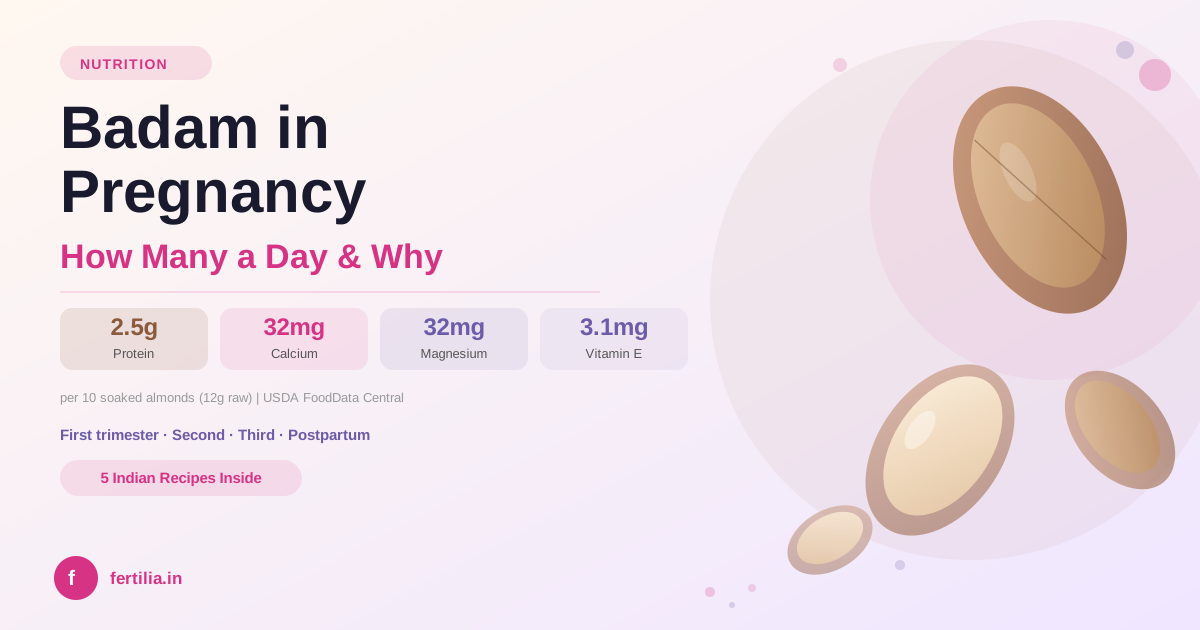
All figures below come from USDA FoodData Central, FDC ID 170567 (Nuts, almonds, raw).
| Nutrient | Per 100g raw | Per 10 almonds (12g) |
|---|---|---|
| Energy | 579 kcal | 69 kcal |
| Protein | 21.2g | 2.5g |
| Total fat | 49.9g | 6.0g |
| Carbohydrates | 21.6g | 2.6g |
| Dietary fibre | 12.5g | 1.5g |
| Calcium | 269mg | 32mg |
| Iron | 3.7mg | 0.45mg |
| Magnesium | 270mg | 32mg |
| Vitamin E (alpha-tocopherol) | 25.6mg | 3.1mg |
| Folate | 44 mcg | 5.3 mcg |
| Potassium | 733mg | 88mg |
| Zinc | 3.1mg | 0.37mg |
One almond weighs approximately 1.2g raw. 10 almonds is a standard daily reference serving used in most Indian dietary guidance.
Where almonds fit in a pregnancy diet
A serving of 10 soaked almonds is small, but it is calorie-dense and nutrient-dense for its size. It contributes meaningfully toward daily calcium, magnesium, vitamin E and protein targets when added alongside dahi, dal, paneer and other Indian staples. For the full picture on calcium needs during pregnancy and which Indian foods cover them, see our calcium in pregnancy guide.
Almonds also contribute to iron intake from food. Plant-based iron is best absorbed alongside a vitamin C-rich ingredient, which is one reason South Indian almond preparations often include lemon or amla in the same meal. For a complete list of iron-rich Indian foods and pairings for pregnancy, see our iron-rich foods guide.
Almonds Across India: Regional Names
| Language | Name |
|---|---|
| Hindi / Urdu / Punjabi | Badam |
| Tamil | Vadumai / Badam paruppu |
| Telugu | Badam pappu |
| Kannada | Badami |
| Malayalam | Badam parippu |
| Marathi | Badam |
| Bengali | Kath badam |
| Gujarati | Badam |
The Hindi name “badam” is used widely across India, even in regions with their own local name, particularly when buying from grocery stores or speaking with elders.
Soaked Almonds vs Raw Almonds: Which Is Better During Pregnancy?
In Indian kitchens, almonds are almost always soaked before being eaten. There is a practical reason for this that holds up regardless of which side of the soaked-versus-raw discussion you read online.
Why soaking and peeling is the Indian standard
When almonds are soaked overnight, the brown skin softens and slips off easily the next morning. Many pregnant women find peeled almonds gentler on the stomach, easier to chew, and less likely to leave a bitter aftertaste, particularly during early pregnancy when nausea makes any strong flavour harder to tolerate.
Soaked, peeled almonds also pair more easily into the rest of an Indian breakfast: they blend smoothly into milk, fit into ragi porridge or oats, and can be chopped into a fruit bowl without the texture of dry skin standing out.
How to soak almonds the right way
- Take 8 to 12 raw almonds in a small bowl in the evening.
- Cover with clean drinking water (about 4 times the volume of the almonds).
- Leave covered, on the kitchen counter or in the fridge, for 6 to 8 hours overnight.
- In the morning, drain the water and peel the brown skin off each almond between thumb and finger. The skin slips off easily once soaked.
- Eat plain, add to warm milk, or use in any of the recipes below.
A quick comparison
| Feature | Raw with skin | Soaked, peeled |
|---|---|---|
| Texture | Firmer, slightly chewy skin | Softer, easier to bite |
| Digestion | Some women report a heavier feel | Generally easier on the stomach |
| Taste | Slightly bitter from skin tannins | Milder, sweeter |
| Time required | None | Overnight soak |
| Indian habit | Less common at home | Standard in most Indian households |
| Nutrient content | Same | Practically the same |
For day-to-day pregnancy eating, soaked and peeled is the simpler choice for most women.
How Many Almonds Per Day During Pregnancy?
| Life stage | Daily portion | Notes |
|---|---|---|
| First trimester | 6 to 8 soaked almonds | Start lower if nausea is strong; chopped almonds in ragi porridge can be easier than whole |
| Second trimester | 8 to 12 soaked almonds | Spread across morning and an afternoon snack |
| Third trimester | 8 to 12 soaked almonds | Pair with dahi or dates for a filling snack between meals |
| Postpartum (Week 1+) | 8 to 12 soaked almonds | Soft, peeled almonds in warm milk or a small laddoo; gradual reintroduction |
| Gestational diabetes | 8 to 10 soaked almonds | Counts as a protein-and-fat snack; pair with a low-GI grain like ragi or jowar |
| PCOS (non-pregnant) | 8 to 10 soaked almonds | A handful as part of a balanced breakfast or evening snack |
Twelve almonds per day is a reasonable upper end for most pregnant women. There is no benefit to eating large handfuls at one sitting; the practical habit is a small daily portion spread across the day. Almonds work best as part of a varied dry fruit rotation that includes walnuts, dates, and figs. For the full Indian dry fruit rotation during pregnancy and how almonds fit alongside walnuts and figs, see our dry fruits during pregnancy guide.
Looking for personalised pregnancy nutrition guidance, including how to fit almonds, dal, dahi and seasonal fruits into your weekly meal plan? Dr. Suganya’s team builds individual nutrition plans for women across India as part of the 90-day Pregnancy Care program. Message Dr. Suganya on WhatsApp to get started.
For more on this, read our guide on Walnuts (Aakhrot) for Women.
For more on this, read our guide on Banana in Pregnancy.
How to Choose, Store and Buy Almonds
Choosing good almonds
A good raw almond is:
- Cream to light brown in colour, with no dark patches or visible mould.
- Whole, with the shape intact (broken pieces are fine for grinding but harder to soak evenly).
- Firm when pressed (a soft or hollow almond is old or stale).
- Free of any sharp, sour or musty smell.
Indian markets sell several varieties:
- Mamra badam (Iranian variety): premium, smaller, considered the most expensive and richest in flavour.
- California almonds: the most common everyday almond in Indian supermarkets, larger and uniform in size, well-suited for soaking, milk and laddoos.
- Gurbandi badam (Afghan variety): smaller, slightly sweeter, popular in North Indian sweet shops.
For everyday pregnancy use, plain California almonds are the practical default. Mamra and Gurbandi are nice additions if available, but not necessary.
What to avoid during pregnancy
- Salted almonds: the salt load adds up across the day, especially if blood pressure is being monitored.
- Flavoured packs: peri-peri, smoked, honey-roasted, masala-coated. These often contain added sugars, oils or seasonings that are best skipped while pregnant.
- Almonds that look dusty or oily on the surface: a sign of poor storage or rancidity.
- Open-jar street almonds: choose sealed, branded packs or freshly weighed nuts from a clean dry-fruit store.
Storage
| State | Where | How long |
|---|---|---|
| Raw, sealed pack | Cool, dry kitchen cupboard | Up to 6 months |
| Raw, opened pack | Airtight container in the fridge | Up to 1 year |
| Soaked, peeled | Small jar in the fridge | 2 to 3 days |
| Almond milk (homemade) | Airtight glass jar in the fridge | Up to 48 hours |
| Almond flour | Airtight container in the fridge | 2 to 3 months |
Almonds turn rancid when stored in warm humid kitchens for too long. If a bite tastes sharp, bitter or off, discard the batch and start fresh from a sealed pack.
5 Indian Almond Recipes for Pregnant Women
Recipe 1: Badam Doodh (Soaked Almond Milk)
A warm, calming drink that goes back generations in Indian pregnancy nutrition. It is gentle on the stomach, naturally sweet, and an easy way to fit calcium and protein into mornings or evenings.
Ingredients (serves 1):
- 8 to 10 soaked, peeled almonds
- 1 cup full-fat milk (or low-fat as advised)
- A pinch of cardamom (elaichi) powder
- 1 teaspoon jaggery or 1 to 2 soaked dates (optional, to taste)
- A small pinch of saffron strands (optional)
Method:
- Add the peeled almonds and milk to a blender. Blend on medium speed for 30 to 45 seconds until smooth.
- Pour into a small saucepan and warm on low flame for 2 to 3 minutes. Do not boil.
- Stir in cardamom powder and saffron.
- Add jaggery or chopped dates and stir until dissolved.
- Pour into a cup and drink warm.
Tip: Replace half the milk with water for a lighter version, particularly if dairy feels heavy in the first trimester.
Recipe 2: Badam-Khajoor Laddoo (Almond and Date Laddoo)
A no-cook, no-sugar laddoo that uses dates as the only sweetener. Easy to make in 15 minutes and keeps well in the fridge for a quick mid-morning bite.
Ingredients (makes 10 to 12 laddoos):
- 1 cup raw almonds (about 140g)
- 12 to 14 soft pitted dates (khajoor)
- 2 tablespoons desiccated coconut
- 1 tablespoon roasted sesame seeds (til)
- Quarter teaspoon cardamom powder
- A pinch of salt
Method:
- Dry-roast the almonds on low flame for 5 to 6 minutes, stirring often, until just fragrant. Cool completely.
- Pulse the cooled almonds in a food processor until they form a coarse meal (do not over-process or they turn into butter).
- Add dates, coconut, sesame, cardamom and salt to the processor. Pulse again until the mixture sticks together when pressed between fingers.
- Take a small portion and roll firmly between your palms into a smooth ball. Repeat with the rest.
- Store in an airtight container in the fridge.
Portion: 1 to 2 laddoos a day from the second trimester onwards, or as an afternoon snack.
Recipe 3: Badam Kesar Milk (Almond Saffron Milk)
A festive, slightly indulgent version of badam doodh, often made on weekends or for family visits during pregnancy. The saffron warmth pairs well with cool evenings.
Ingredients (serves 2):
- 12 to 15 soaked, peeled almonds
- 2 cups full-fat milk
- 6 to 8 strands of saffron (kesar)
- 2 to 3 green cardamom pods, lightly crushed
- 4 to 6 unsalted pistachios, slivered
- 1 to 2 teaspoons jaggery, sugar or honey (to taste)
Method:
- Soak the saffron strands in 1 tablespoon of warm milk for 10 minutes to release the colour.
- Blend the peeled almonds with half the cup of milk until smooth.
- Pour the almond paste and remaining milk into a heavy saucepan with the crushed cardamom. Simmer on low flame for 6 to 8 minutes, stirring often.
- Stir in the soaked saffron and its milk.
- Add the sweetener and stir to dissolve.
- Pour into two cups and garnish with slivered pistachios.
Tip: For a chilled summer version, cool the milk completely, then pour over a glass with a few ice cubes.
Recipe 4: Badam Burfi (Almond Burfi)
A traditional Indian sweet made with almond flour and ghee. A small piece works as an occasional dessert or festival treat across the second and third trimesters.
Ingredients (makes 12 to 15 small pieces):
- 1.5 cups almond flour (or freshly ground soaked almonds)
- Half cup jaggery powder or sugar
- Quarter cup water
- 2 tablespoons ghee
- Quarter teaspoon cardamom powder
- 1 tablespoon slivered almonds or pistachios for garnish
Method:
- In a heavy pan, combine the jaggery and water. Heat on low flame, stirring, until the jaggery dissolves completely.
- Add the almond flour to the syrup. Stir continuously on low flame.
- Add ghee, one tablespoon at a time. Keep stirring as the mixture thickens and starts pulling away from the sides of the pan (8 to 10 minutes).
- Stir in cardamom powder.
- Pour onto a greased plate or tray lined with parchment. Smooth the top.
- Sprinkle slivered almonds or pistachios on top. Press gently to set.
- Cool for 10 minutes, then cut into small squares or diamonds.
- Cool completely before storing in an airtight container.
Portion: 1 small piece (about 15g) as an occasional treat. Almond burfi is calorie-dense; daily indulgence is not recommended.
Recipe 5: Badam Halwa
A warm, slow-cooked Indian dessert that uses ground soaked almonds, ghee and milk. Traditionally offered in small portions during festivals and special meals.
Ingredients (serves 4):
- 1 cup soaked, peeled almonds (about 140g raw before soaking)
- Half cup milk
- Half cup jaggery powder (adjust to taste)
- 3 to 4 tablespoons ghee
- Half teaspoon cardamom powder
- 2 to 3 saffron strands (optional)
- 1 tablespoon slivered nuts for garnish
Method:
- Blend the soaked, peeled almonds with the milk into a smooth paste. Add a splash more milk if needed to ease the blending.
- Heat 1 tablespoon of ghee in a heavy pan on low flame. Add the almond paste and cook, stirring continuously, for 4 to 5 minutes.
- Add the jaggery and stir until dissolved.
- Continue cooking on low flame, adding 1 tablespoon of ghee at a time as the halwa thickens. The mixture is done when it pulls together as a soft mass and the ghee separates at the edges (about 10 to 12 minutes total).
- Stir in cardamom and saffron.
- Scoop into small bowls and garnish with slivered nuts.
Portion: One small bowl (about 50g) as an occasional dessert, particularly in the third trimester or postpartum.
A Note on Almond Allergy
Tree nut allergies, including almond, are less common in India than in some other parts of the world but they do occur. If almonds are new to your diet, start with one or two soaked, peeled almonds the first time and wait 30 minutes before having more.
Signs that almonds do not suit you include tingling of the lips or tongue immediately after eating, itching of the mouth or throat, a rash on the face or neck, or stomach upset that consistently follows eating almonds. If any of these happen, skip almonds for now and choose a different calcium-and-protein-rich combination: dahi with rajma, ragi porridge with milk, paneer with dal, or moringa leaf sabzi alongside dal.
This precaution applies the first time anyone tries almonds, not only during pregnancy. If almonds were already a comfortable part of your diet before pregnancy, continuing them at the portions in this guide is straightforward.
Almonds and the Indian Pregnancy Plate: How They Fit
Almonds are a small, daily habit that complements an Indian pregnancy diet rather than replacing any main meal. A practical week looks like this:
For more on this, read our guide on Custard Apple (Sitaphal) in Pregnancy.
| Time | Almond habit | Pairing |
|---|---|---|
| Morning (with breakfast or after) | 6 to 10 soaked, peeled almonds | Ragi porridge, oats, idli with sambar, or dosa |
| Mid-morning | A small handful (5 to 6 almonds), chopped | Mixed into a fruit bowl with banana, papaya (only ripe) or guava |
| Afternoon snack | 2 to 3 almonds, chopped | On top of curd rice or sprinkled over a fruit chaat |
| Evening | 1 cup badam doodh (using 8 to 10 almonds) | As a calming pre-dinner or before-bed drink |
| Weekend treat | 1 piece badam burfi or 1 to 2 laddoos | Small portion, with chai or after lunch |
The total stays inside the 8 to 12 almonds per day range. Spread across the day, it is genuinely hard to feel heavy or over-stuffed; concentrated in one sitting, the same amount can feel like too much.
Want a complete, week-by-week pregnancy nutrition plan that balances almonds, dahi, dal and seasonal Indian fruits at each trimester? Dr. Suganya’s team builds personalised plans for women across Tamil Nadu and the rest of India. Message Dr. Suganya on WhatsApp to start, or download our free Pregnancy Guide for a full overview of nutrition, tests and what to expect at each stage.
Frequently Asked Questions
How many almonds should I eat per day during pregnancy?
Six to eight soaked almonds per day in the first trimester, and eight to twelve in the second and third trimesters, is a practical range for most women. Spread the portion across the day rather than eating it all at once.
For more on this, read our guide on Dates During Pregnancy.
Should almonds be soaked before eating during pregnancy?
Soaking almonds overnight for 6 to 8 hours and peeling the brown skin in the morning is the standard Indian approach. Soaked almonds are softer, milder in taste, and easier to add to milk, porridge or laddoos. Raw almonds with the skin on are also fine if they suit you; the nutrient content is practically the same.
Can I eat almonds in the first trimester?
Yes. Six to eight soaked, peeled almonds a day in the first trimester is a comfortable starting point. If nausea makes the texture difficult, chop them small and stir into ragi porridge or oats rather than eating whole.
What is the best time to eat almonds during pregnancy?
Morning, with or after breakfast, is the most common Indian practice. Soaked almonds eaten first thing or alongside a breakfast like ragi porridge, oats, idli or dosa keep the portion contained and pair well with the rest of the meal.
Should I peel the brown skin off soaked almonds?
In most Indian households, yes. Peeled almonds are softer and milder, and most pregnant women find them gentler on the stomach. The brown skin is not harmful and can be eaten if preferred, especially when chopped into porridge or oats.
Can I drink badam milk daily during pregnancy?
A cup of badam doodh made with 8 to 10 almonds is a comforting daily option for many pregnant women. Use a portion of jaggery, dates or a small amount of sugar as your sweetener, and skip it on days when you have already had a heavier dairy meal.
Are flavoured or salted almonds safe during pregnancy?
Plain raw or plain unsalted-roasted almonds are the better choice during pregnancy. Salted, peri-peri, honey-roasted and masala-coated packs add sodium, sugar or oil that are best limited at this stage. Stick to plain almonds and add your own flavour in the recipe (cardamom, saffron, jaggery).
Download our free Pregnancy Guide for a complete overview of pregnancy nutrition, tests and what to expect at each trimester.