Nobody warned you about this part. You are a few weeks into pregnancy, feeling queasy, exhausted, and now your belly is bloated before you have eaten anything substantial. Or you are in the third trimester and every meal ends with uncomfortable fullness and gas that does not seem to shift no matter what you do.
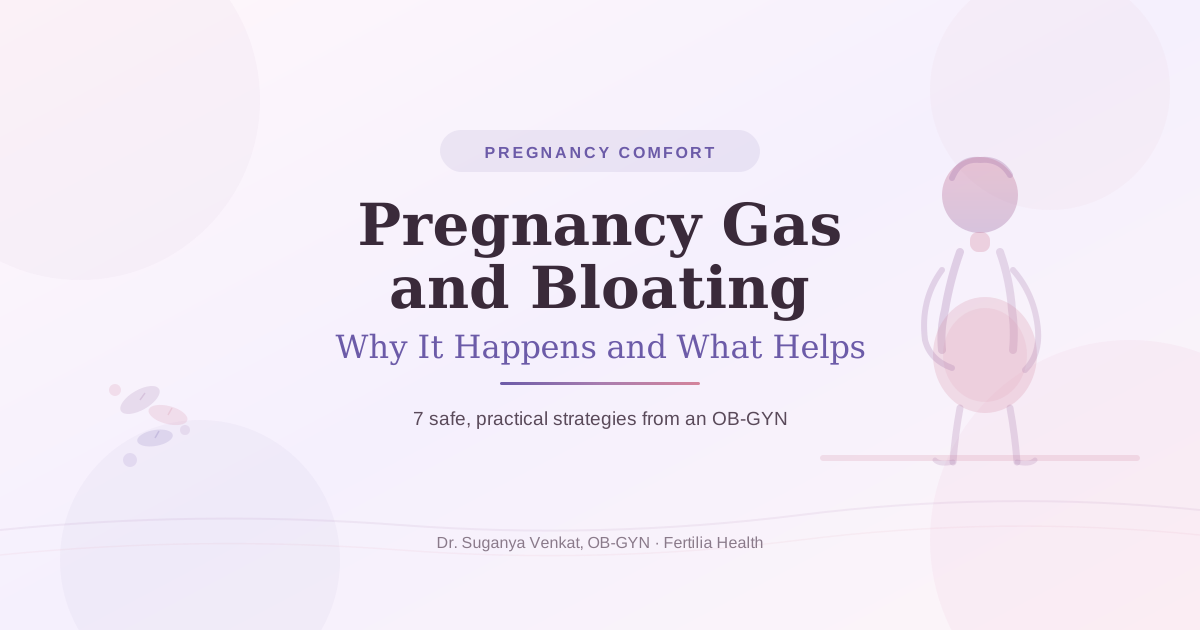
Pregnancy gas and bloating are among the most common digestive complaints across all three trimesters. They are normal. They are temporary. And there are real, practical strategies that help.
For more on this, read our guide on White Discharge in Pregnancy. This post covers:
- Why pregnancy causes gas and bloating, trimester by trimester
- Which foods and habits make it worse in the Indian context
- Seven safe, evidence-based ways to find relief
- When abdominal discomfort needs same-day attention
- Answers to the questions I hear most in my clinic
Why Does Pregnancy Cause Gas and Bloating?
The short answer is progesterone. The longer answer involves your entire digestive system slowing down to accommodate a growing baby.
Progesterone relaxes your gut
From the earliest weeks of pregnancy, progesterone rises sharply to maintain the uterine lining and prevent early contractions. This hormone works by relaxing smooth muscle throughout the body, which is exactly what the uterus needs. The problem is that your digestive tract is also made of smooth muscle.
As progesterone relaxes the intestinal walls, food moves through your digestive system more slowly. Gastric emptying (the rate at which food leaves your stomach) is delayed. Intestinal transit time lengthens. Research published in Gut (Lawson et al., 1985) confirmed that gastric emptying is significantly slower during pregnancy compared to non-pregnant women, and that this delay is most pronounced in the first and second trimesters.
When food moves slowly through the gut, bacteria in the large intestine have more time to ferment it. Fermentation produces gas. This is why bloating often begins as early as five or six weeks into pregnancy, long before the uterus is large enough to cause any physical compression.
The growing uterus adds pressure
In the second and third trimesters, the expanding uterus presses upward against the stomach and intestines. This compression reduces the space your digestive organs have to function and makes it harder for gas to move through comfortably. By the third trimester, when the fundus reaches the lower ribs, this upward pressure is at its peak.
The result is bloating that often feels worst in the evenings, after sitting for long periods, or after larger meals.
Iron supplements slow the bowel
Most pregnant women in India are prescribed iron supplements, sometimes from the first trimester. Iron is essential for foetal development and for preventing pregnancy anaemia, but it consistently slows bowel movements and causes constipation. Constipation and gas travel together: when stool moves slowly through the colon, gas builds up behind it and has nowhere comfortable to go.
For more on this, read our guide on Pregnancy Constipation. If you notice that your bloating and gas worsened after starting your iron supplement, you are not imagining it. This is a well-documented side effect, and there are ways to manage it without stopping the iron.
Swallowing more air than usual
Nausea in the first trimester often changes eating habits in ways that increase the amount of air swallowed: taking small, rapid bites, drinking through straws, chewing gum for relief, or swallowing frequently to manage nausea. Swallowed air moves into the stomach and intestines and has to exit somehow.
For more on this, read our guide on Second Month of Pregnancy.
Which Trimester Is Worst?
Each trimester has its own pattern.
First trimester: Bloating is driven almost entirely by progesterone. The uterus is still small, but the hormonal effect on gut motility is already significant. Many women describe feeling visibly bloated before they are ten weeks along, before there is any baby bump to explain it.
For more on this, read our guide on Progesterone in Pregnancy. Second trimester: For most women, gas and bloating improve somewhat in the second trimester as the body adapts to elevated progesterone levels. Nausea often resolves too, which reduces aerophagia-related habits. Many women describe this as the most comfortable digestive phase of pregnancy.
Third trimester: Bloating returns and often peaks. The combination of physical compression from the uterus, continued slowing of bowel motility from progesterone, and the challenge of digesting a full meal in a compressed space makes this the most uncomfortable phase for many women.
What Makes It Worse
Some foods and habits consistently worsen pregnancy gas more than others.
Foods that tend to produce more gas:
- Pulses in large portions: rajma, chana, urad dal, and black-eyed peas ferment significantly in the large intestine because of their oligosaccharide content. These are nutritionally important during pregnancy and should not be avoided. Smaller portions and better preparation make a real difference.
- Cruciferous vegetables in large quantities: cauliflower, cabbage, and broccoli contain raffinose, a complex sugar that gut bacteria ferment aggressively. A small serving with your thali is fine. A large cauliflower sabzi eaten on a slow-gut day may be uncomfortable.
- Carbonated drinks: even plain soda water or fizzy nimbu pani introduces carbon dioxide into the digestive tract that must be expelled.
- Fried foods and heavy curries: fat slows gastric emptying further, compounding the progesterone effect.
Habits that worsen symptoms:
- Eating large meals at once rather than smaller portions through the day
- Lying down or reclining immediately after eating
- Eating very quickly
- Drinking through straws or chewing gum
- Tight salwars or waistbands pressing on the abdomen
7 Safe Ways to Find Relief
1. Switch to smaller, more frequent meals
This single change makes more difference than any other. A smaller meal distends the stomach less, requires less digestive effort, and produces less fermentation downstream. Instead of three large meals, aim for five to six smaller eating occasions through the day.
Practical options that work well in smaller portions: idli with thin sambar, a small bowl of curd rice, poha with vegetables, a cup of moong dal with one or two chapati, or daliya with a small sabzi. These are easy to digest and unlikely to trigger a significant gas episode.
2. Walk for 10 to 15 minutes after meals
A gentle walk after eating encourages peristalsis, the wave-like contractions that move food through the gut. Research consistently shows that light post-meal movement speeds gastric emptying compared to sitting or lying down. A slow 10 to 15 minute walk around the house, or a brief outdoor walk in the cooler morning or evening hours, is sufficient.
This aligns with the American College of Obstetricians and Gynecologists (ACOG, 2020) recommendation for light, regular physical activity throughout pregnancy as a way to support digestive comfort and general wellbeing. For a complete trimester-by-trimester exercise guide, Pregnancy Exercises: Safe Workouts by Trimester covers this in detail.
3. Try warm jeera water or ajwain water
Jeera (cumin) and ajwain (carom seeds) are among the most well-supported traditional Indian remedies for digestive discomfort in pregnancy. Ajwain contains thymol, which activates digestive enzymes and reduces intestinal spasm. Jeera has well-known carminative properties that help expel trapped gas.
To prepare: boil half a teaspoon of ajwain seeds or one teaspoon of jeera seeds in 1.5 cups of water for five to seven minutes, strain, and sip warm. Drink 20 to 30 minutes before a meal or when bloating is most uncomfortable. Both are safe in culinary quantities throughout pregnancy. For dosing details and trimester-specific guidance, Ajwain Water in Pregnancy: Is It Safe? is a useful reference. Saunf (fennel seeds) is another traditional carminative that can help with pregnancy bloating when sipped as warm water after meals.
4. Adjust the timing of your iron supplement
Iron supplements are most commonly taken on an empty stomach in the morning, when absorption is best. However, this timing also maximises the constipating effect on the bowel and can worsen bloating throughout the day.
Talk to your OB-GYN about whether taking your iron supplement with a small meal, or shifting the timing to later in the day, is appropriate for your specific supplement and haemoglobin levels. Taking iron alongside a small portion of a vitamin C-rich food (amla, guava, or a small glass of fresh nimbu pani) can improve absorption and may allow a lower dose with fewer GI side effects. This is not a decision to make without medical input, as iron dosing in pregnancy depends on your individual blood tests.
5. Sit upright for at least 30 minutes after eating
Gravity helps move food in the right direction. Lying down or reclining shortly after a meal moves stomach contents toward the oesophagus and makes it harder for gas to pass through the intestines. Sitting upright in a comfortable chair, or sitting cross-legged on the floor as many Indian women find natural, for at least 30 minutes after eating reduces both gas and the heartburn that often accompanies it.
If heartburn and bloating occur together, Pregnancy Heartburn and Acidity: Safe Relief That Works covers the management strategies for both.
6. Drink fluids between meals, not during
Drinking large amounts of water during a meal dilutes stomach acid, distends the stomach, and slows digestion. Instead, aim to drink fluids between meals: a glass of water or warm jeera water 20 to 30 minutes before eating, then another glass an hour after, rather than sipping continuously through the meal.
Total fluid intake during pregnancy should be around 2.5 to 3 litres per day, including the fluid in food. Coconut water, diluted chaas (buttermilk with a pinch of jeera and sendha namak), and warm soups count toward this total and are gentler on the digestive system than large amounts of cold water drunk quickly.
7. Soak pulses and cook them thoroughly
If rajma, chana, or urad dal are causing significant gas, the solution is not to eliminate them. Both are excellent sources of protein and iron during pregnancy. The solution is better preparation:
- Soak overnight: soaking dried pulses for eight hours or more significantly reduces the oligosaccharides responsible for fermentation. Discard the soaking water before cooking.
- Cook until very soft: undercooked pulses are harder to digest. A pressure cooker makes this straightforward.
- Start with smaller portions: half a cup of cooked dal rather than a full bowl, and observe how your body responds over two to three days.
Lightly spiced, well-cooked moong dal or masoor dal with a simple haldi and jeera tadka is one of the most digestible protein sources available in a typical Indian pregnancy diet.
Experiencing persistent bloating, discomfort after every meal, or gas that is affecting your sleep or appetite during pregnancy? Message Dr. Suganya on WhatsApp for personalised guidance. Our team responds within 24 hours.
When to Take Abdominal Pain Seriously
Most pregnancy gas is uncomfortable but completely harmless. There are situations, however, where abdominal discomfort during pregnancy warrants the same day medical attention.
Contact your OB-GYN the same day if you experience:
- Severe or sudden abdominal pain that does not ease with walking or changing position
- Bloating accompanied by fever, chills, or vomiting that cannot be controlled
- Significant constipation lasting more than five to seven days despite dietary modifications
- Any abdominal pain in the third trimester that comes in rhythmic waves and feels different from typical gas (this must be distinguished from early labour)
- Blood in the stool, or any rectal bleeding
For more on this, read our guide on Braxton Hicks Contractions.
- A rapid, visible increase in abdominal size over a few hours (unusual distension)
If you are uncertain whether what you are feeling is gas, heartburn, or something requiring attention, always call your doctor rather than waiting. In pregnancy, it is always better to check.
Practical Summary: What to Start Today
- Eat five to six small meals rather than three large ones
- Take a 10 to 15 minute walk after lunch and dinner
- Sip warm jeera or ajwain water before your most difficult meals
- Sit upright for 30 minutes after eating
- Soak pulses overnight and cook them thoroughly
- Drink fluids between meals, not during
- Speak to your OB-GYN about iron supplement timing if constipation is contributing to bloating
None of these require special products or significant changes to your diet. They work with the foods and habits already part of Indian pregnancy culture, adjusted for a slower-moving gut.
For a complete guide to what to eat and what to avoid throughout pregnancy, What to Eat During Pregnancy: Indian Diet Guide and Pregnancy Do’s and Don’ts: Evidence-Based Guide are useful companions to this post.
If you are in the Pregnancy Support Programme and want a trimester-specific nutrition plan reviewed by Dr. Suganya, the Pregnancy Guide resource page has everything you need.
Frequently Asked Questions
Is gas and bloating normal in early pregnancy?
Yes. Bloating is one of the earliest and most common pregnancy symptoms. It begins as early as five to six weeks, driven by rising progesterone levels that slow gut motility before the uterus has grown large enough to cause any physical compression. Many women notice their clothes feel tight before they have any visible bump. This is entirely normal and not a sign that anything is wrong.
Which foods cause the most gas during pregnancy?
In the Indian diet, the biggest contributors are large portions of rajma, chana, urad dal, cauliflower, and cabbage, because of their oligosaccharide content. Carbonated drinks and fried foods worsen symptoms by adding gas directly and slowing gastric emptying. These foods are not harmful in pregnancy and do not need to be avoided entirely. Smaller portions and better preparation (overnight soaking, thorough cooking) reduce the gas-producing effect significantly.
Is it safe to take antacid or gas-relief tablets during pregnancy?
For more on this, read our guide on PUPPS Rash in Pregnancy.
For more on this, read our guide on Swollen Feet in Pregnancy. Simethicone, the active ingredient in most over-the-counter gas-relief tablets, is generally considered safe in pregnancy as it is not absorbed into the bloodstream. However, any medication during pregnancy, including over-the-counter remedies, should only be taken with your OB-GYN’s knowledge and approval. Do not use antacids containing sodium bicarbonate or magnesium trisilicate without checking first. The dietary and lifestyle strategies in this post should be your first line of approach.
Does pregnancy gas ever go away?
Yes. For most women, the bloating of the first trimester improves in the second trimester as the body adapts to elevated progesterone levels. It often returns in the third trimester as the uterus compresses the intestines. After delivery, digestive motility returns to its normal pace within a few weeks, and the bloating resolves.
For more on this, read our guide on Headache in Pregnancy. Why is gas and bloating worse in the evening?
Two main reasons. First, food and gas accumulate throughout the day, so by evening there is simply more in the digestive tract. Second, dinner is often the largest meal of the day and is typically followed by sitting or lying down, both of which slow transit and prevent gas from moving through comfortably. Eating dinner a little earlier, keeping it lighter than lunch, and taking a short walk after eating are the most effective interventions for evening bloating.
Can pregnancy gas feel like contractions or baby movement?
Gas moving through the intestines can feel like flutters, bubbling, or even intermittent cramping, particularly in the first half of pregnancy before foetal movement is well established. In later pregnancy, strong gas cramps can occasionally be mistaken for uterine contractions. The distinguishing feature of true contractions is that they are rhythmic, become progressively closer together, and do not resolve with walking or position changes. If you are unsure, contact your OB-GYN rather than guessing.
Are there yoga poses or gentle exercises that help with pregnancy gas?
Yes. Gentle, supported movements can help shift trapped gas. Cat-cow stretches on hands and knees and a supported side-lying knee-to-chest position are safe during pregnancy and encourage gas to move through the intestines. Walking after meals, as described in this post, is the most practical and consistent option. Avoid lying flat on your back after the first trimester, inversions, and deep twists. Pregnancy Exercises: Safe Workouts by Trimester covers the full range of safe pregnancy movements.
Struggling with bloating, constipation, or any other digestive discomfort during pregnancy? You do not have to manage it alone. WhatsApp Dr. Suganya directly and our team will help you find relief that is safe for you and your baby.
For support across the whole pregnancy, not just the bloating, see Dr. Suganya’s Pregnancy Care program.