Every pregnant woman in India gets the papaya warning within days of her positive test. It comes from mothers, mothers-in-law, neighbours, and WhatsApp forwards, usually stated as an absolute rule: no papaya during pregnancy, full stop.
As an OB-GYN, I hear this question at least two or three times a week. And my answer is always the same: which papaya, and how ripe is it?
That distinction matters more than most people realise. The traditional warning has a real scientific basis, but it applies specifically to raw and unripe papaya, not to the ripe, sweet, orange-fleshed papaya sold at most fruit stalls. Let me explain exactly what the science says, where the warning comes from, and what you actually need to avoid versus what you can eat safely.
Why the Papaya Warning Exists
The concern about papaya during pregnancy is based on real research, not just folklore.
Unripe and semi-ripe papaya produce a milky latex that is concentrated in the skin, seeds, and flesh of the unripe fruit. This latex contains papain, a proteolytic enzyme, along with other compounds that have been shown in laboratory studies to stimulate contractions in uterine smooth muscle.
The most frequently cited study on this topic is Adebiyi et al. (2002), published in the British Journal of Nutrition (PMID: 12144717). The researchers extracted latex from unripe papaya and tested it on uterine tissue using a rat model. They found that the latex produced significant uterine contractions at relatively low concentrations, appearing to work through prostaglandin-mediated pathways, similar to how some medications used for labour induction work.
This is why the traditional warning exists. It is also why raw papaya has historically been associated in some South Asian traditional practices with stimulating menstruation. The ability of unripe papaya compounds to act on smooth muscle appears to be real, at least in animal models.
Importantly, the same study found that fully ripe papaya did not produce the same response. As papaya ripens, the concentration of latex and active compounds drops sharply. By the time the fruit is fully ripe and orange throughout, the levels are substantially lower.
The Ripe vs Raw Distinction That Most People Miss
This is the single most important thing to understand about papaya during pregnancy, and it is the piece that most traditional family advice leaves out.
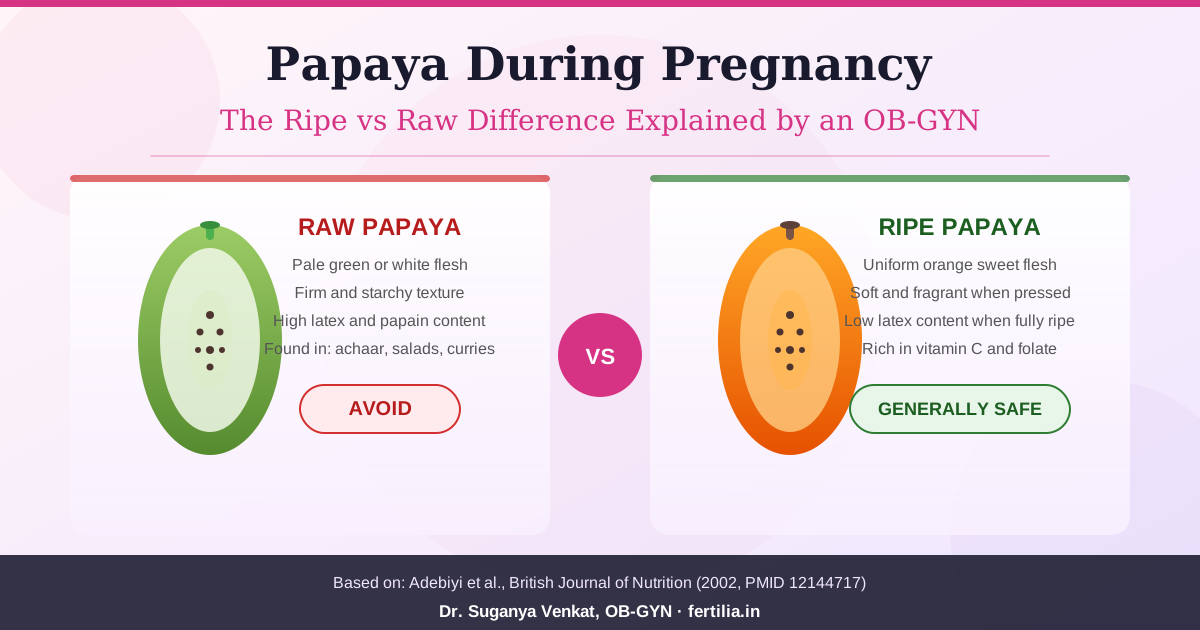
Raw (unripe) papaya: The flesh is white or pale green, firm, and starchy. It has little sweetness. Latex and papain concentrations are high. This is what the warning is about.
Semi-ripe papaya: The flesh starts to turn orange at the edges but remains partly white and firm in the centre. This transitional stage still carries meaningful amounts of latex. Best avoided during pregnancy.
Fully ripe papaya: The flesh is uniformly orange, soft, and sweet. The skin has yellowed or turned orange throughout. Papain and latex content are significantly lower at this stage. The research does not support the same concern for ripe papaya that it does for raw papaya.
The difficulty is that ripe and unripe papaya can look similar from the outside if you are not familiar with the fruit, and many common Indian cooking preparations use raw papaya. This is where the blanket “no papaya at all” advice comes from. It simplifies a nuanced medical distinction into a rule that anyone can follow without needing to judge ripeness.
Now that you understand the distinction, you can apply the more accurate version.
What I Actually Recommend to My Patients
My standard clinical advice is as follows:
Avoid raw and semi-ripe papaya in any form. This includes raw papaya salads, chutneys, achaar, curries made with unripe papaya, unripe papaya juice, and any dish where the papaya is clearly not fully ripe. The latex concentration is highest in unripe fruit and in the seeds and skin at any stage of ripeness.
Ripe papaya in moderate amounts is generally considered safe. A portion of 80 to 100g (roughly half a cup) of ripe papaya a few times a week is unlikely to pose a risk. Most major obstetric guidelines do not list ripe papaya as a food to avoid in pregnancy. The concern in research literature is specific to raw and unripe forms.
When you cannot confirm ripeness, skip it. If you are at a wedding or buffet, or eating a dish prepared by someone else, and you cannot determine whether the papaya used was ripe or raw, choose something else. There are plenty of other fruits readily available.
Extra caution in the first trimester makes sense. If you are in your first trimester and want to avoid any uncertainty, it is perfectly reasonable to avoid papaya entirely during this period and reintroduce ripe papaya in the second trimester once you feel settled. There is no essential nutrient in papaya that cannot be obtained from other common Indian foods.
Have questions about your pregnancy diet? Chat with Dr. Suganya on WhatsApp
The Nutritional Case for Ripe Papaya
Once you know that ripe papaya is generally safe, it is worth understanding what it actually offers, because several of those nutrients matter in pregnancy.
Per 100g of ripe papaya (USDA FoodData Central, ID 169926):
| Nutrient | Amount per 100g |
|---|---|
| Energy | 43 kcal |
| Vitamin C | 61.8 mg |
| Folate (DFE) | 37 mcg |
| Beta-carotene | 274 mcg |
| Fibre | 1.7 g |
| Potassium | 182 mg |
Vitamin C at 61.8 mg per 100g covers roughly 60 to 75 percent of the pregnancy requirement and supports non-haem iron absorption from plant foods. This matters for Indian women who eat primarily vegetarian diets: NFHS-5 data shows 52.2 percent anaemia prevalence in pregnant women in India, and pairing iron-rich foods like palak and rajma with vitamin C sources improves absorption. See our guide to iron-rich Indian foods for pregnancy for the full list.
Folate at 37 mcg per 100g contributes to the daily 400 to 500 mcg target during pregnancy. Neural tube closure happens in the first four weeks after conception, often before a woman knows she is pregnant, which is why folate-rich foods and supplementation matter from pre-conception onwards. Palak, chana, moong dal, and methi are more concentrated sources if you want to maximise folate from food.
Beta-carotene converts to vitamin A in the body and supports fetal eye development and immune function.
Ripe papaya is also hydrating (it is about 88 percent water by weight), which helps with the increased fluid needs of pregnancy and can ease the digestive sluggishness many women experience in the first trimester.
Is ripe papaya essential? No. But for women who enjoy it, a few slices of ripe papaya is a genuinely useful addition to a pregnancy diet, not something to fear.
The Indian Kitchen Breakdown: What to Skip and What Is Fine
Raw papaya is used far more widely in Indian cooking than in most other cuisines. Here is a practical breakdown by preparation type.
Preparations to avoid during pregnancy:
- Kacha papita ki sabzi (raw papaya curry)
- Raw papaya achaar or pickle
- Raw papaya kachumber or salad
- Unripe papaya thoran (South Indian stir-fry with green papaya)
- Raw papaya chutney
- Raw papaya juice or smoothies
- Any restaurant or wedding dish where you cannot verify the ripeness of the papaya used
Generally fine in moderate amounts:
- Ripe papaya eaten fresh as a fruit
- Ripe papaya with a squeeze of lemon and a pinch of sendha namak or regular salt
- Ripe papaya lassi or smoothie (using fully orange, sweet papaya)
- Ripe papaya in a fruit chaat
A quick ripeness check: ripe papaya should be uniformly orange inside, soft when pressed from outside (like a ripe peach), and fragrant at the stem end. If the flesh is white inside, the papaya is unripe. Avoid it.
A Note on Papaya Leaf Juice
Papaya leaf juice has become popular in recent years for dengue fever management, based on some preliminary evidence suggesting it may support platelet count recovery. This preparation should be completely avoided during pregnancy.
Papaya leaves contain very high concentrations of the same bioactive compounds present in unripe papaya fruit. There is no established safety data for papaya leaf preparations during pregnancy. If you develop dengue fever during pregnancy, your care should be managed by your medical team using established medical protocols.
Other Commonly Warned Foods That Are Actually Safe
Since this post addresses a case where a food has an unfairly broad total ban when only partial caution is warranted, let me briefly note a few others that come up in the same category:
Ripe pineapple in normal fruit portions: Safe. The bromelain concern applies to pineapple core and concentrated bromelain supplements, not a few slices of ripe pineapple.
Haldi (turmeric) in cooking quantities: Safe. The concern about turmeric in pregnancy relates to high-dose supplemental forms, not the pinch that goes into dal, rice, or a glass of haldi doodh. Normal culinary use is fine.
Jeera water and ajwain water: Generally safe in the amounts used as a home remedy for digestion. The concern is only for very large amounts taken as concentrated herbal preparations.
Dahi (yoghurt): Completely safe when made from pasteurised milk or from milk you have boiled at home. The concern with dairy in pregnancy is about unpasteurised milk or cheese.
For the full evidence-based breakdown of what is safe and what is not during pregnancy, see our pregnancy do’s and don’ts guide. For trimester-by-trimester guidance on what to eat, read our complete Indian pregnancy diet chart.
You can also download our free safe and unsafe foods in pregnancy resource for a printable reference.
FAQ: Papaya During Pregnancy
Q: Can I eat ripe papaya in the first trimester?
Most obstetric guidelines consider ripe papaya safe in moderate amounts throughout pregnancy. If you are in the first trimester and prefer to be cautious, it is completely reasonable to avoid all papaya during this period and reintroduce ripe papaya in the second trimester. There is no nutritional reason to force it.
Q: I accidentally ate a small amount of raw papaya in a salad. Should I worry?
A small accidental ingestion of raw papaya is very unlikely to cause a problem. The research showing concern was conducted with concentrated papaya latex in animal models, not with small amounts of raw papaya flesh consumed as part of a meal. There is no need to panic over an accidental bite or two. Contact your OB-GYN if you experience any cramping, spotting, or unusual symptoms.
Q: Why does my family say no papaya at all when the real concern is just raw papaya?
Traditional warnings often simplify medical information for ease of communication across generations. “Avoid raw papaya” requires knowing how to assess ripeness, which is not always straightforward. “Avoid all papaya” is a simpler rule with a greater margin of safety, which is why it persists. Now that you understand the distinction, you can apply the evidence-based version.
Q: Is papaya safe in the third trimester?
Ripe papaya is generally considered safe throughout pregnancy when eaten in moderate amounts. Raw papaya should be avoided at all stages. Some clinicians advise extra caution with anything that could theoretically stimulate contractions in the weeks before the due date, but this is a general precautionary principle, not a finding specific to ripe papaya consumption.
Q: Can I eat papaya while breastfeeding?
Yes. The concerns about uterotonic effects are specific to pregnancy. Ripe papaya is suitable for breastfeeding mothers. Many traditional postpartum diets across South and Southeast Asia include papaya, and some traditional medicine systems associate it with milk production, though the clinical evidence for papaya as a galactagogue is limited.
Q: What about papaya enzyme capsules sold as digestive supplements?
Papaya enzyme capsules (containing concentrated papain) should be avoided during pregnancy. These are concentrated preparations of the very enzyme that raises the concern about raw papaya. They are not equivalent to eating a piece of ripe fruit. If you need digestive support during pregnancy, speak with your OB-GYN about safe options, and see our guide to managing pregnancy gas and bloating for food-based strategies.
Q: If I choose to avoid all papaya, what gives me the same nutrients?
Ripe papaya’s main contributions to a pregnancy diet are vitamin C, folate, and beta-carotene. Alternatives:
- For vitamin C: amla (one of the richest sources available), guava, orange, mosambi
- For folate: palak (194 mcg/100g), chana (172 mcg/100g), moong dal (159 mcg/100g)
- For beta-carotene: carrots, sweet potato, methi, palak
None of these require papaya. Your first trimester guide has more on key nutrients by week.
Managing your pregnancy diet in the middle of family opinions, WhatsApp forwards, and your own anxieties about doing the right thing is genuinely hard. If you want personalised guidance based on your specific health history, trimester, and nutritional needs, I work with women through all three trimesters on exactly these questions.
Message Dr. Suganya on WhatsApp to discuss your pregnancy diet
Food safety is one piece of the bigger picture Dr. Suganya covers in her Pregnancy Care program.
Dr. Suganya Venkat is an OB-GYN with 15+ years of clinical experience. DNB OB-GYN (GKNM Hospital, Coimbatore) · MD Pathology (CMC Vellore) · MBBS with 5 Gold Medals (SRMC).