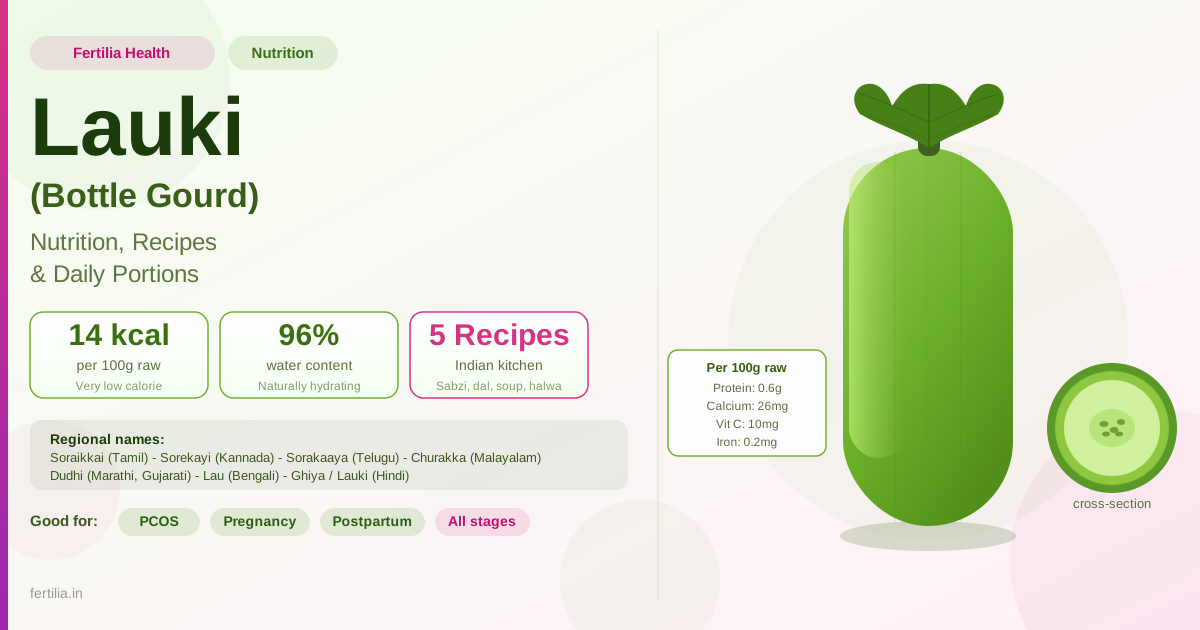
Lauki earns its place in the Indian kitchen because it is inexpensive, widely available, and works in five different dishes: a quick sabzi, a combined dal, a cooling raita, a classic halwa, and a light soup. It is one of those vegetables that does not demand any special technique. You peel it, chop it, and cook it.
This post covers what lauki contains nutritionally, what it is called across Indian languages, how much to eat at different life stages, and five practical recipes you can make at home.
What Is in Lauki? Nutritional Facts (USDA FoodData Central)
Based on USDA FoodData Central data for raw bottle gourd, per 100g:
| Nutrient | Per 100g raw |
|---|---|
| Energy | 14 kcal |
| Water | 96g (96%) |
| Protein | 0.6g |
| Carbohydrates | 3.4g |
| Dietary fibre | 0.5g |
| Vitamin C | 10mg |
| Calcium | 26mg |
| Iron | 0.2mg |
| Potassium | 150mg |
Cooked lauki (boiled and drained) will have around 6-8mg vitamin C per 100g, as vitamin C reduces with heat and water. The calorie count stays similarly low after cooking.
What stands out is the water content. At 96 grams of water per 100g of vegetable, lauki contributes meaningfully to daily fluid intake with almost no calorie cost. This is part of why it fits well across different Indian dietary approaches, from a light postpartum diet to a PCOS food plan.
ICMR-NIN 2017 (Nutritive Value of Indian Foods) lists lauki at 12 kcal per 100g edible portion with 26mg calcium and 0.5mg iron, which reflects slightly different cultivar data. Both sources confirm that lauki is a very low-calorie, high-water vegetable with modest but useful mineral contributions.
Lauki Across Indian Languages: Regional Names
Lauki goes by different names depending on where you live in India. This table covers the most commonly used names:
| Language | Name | Script |
|---|---|---|
| Hindi | Lauki, Ghiya, Dudhi | लौकी / घीया / दूधी |
| Tamil | Soraikkai, Churakkai | சுரைக்காய் |
| Telugu | Sorakaaya | సొరకాయ |
| Kannada | Sorekayi | ಸೊರೆಕಾಯಿ |
| Malayalam | Churakka | ചുരക്ക |
| Marathi | Dudhi | दुधी |
| Gujarati | Dudhi | દૂધી |
| Bengali | Lau | লাউ |
If a recipe calls for “bottle gourd,” “calabash gourd,” or “white-flowered gourd,” these all refer to lauki. The long pale-green variety (round or cylinder-shaped) sold at most Indian vegetable markets is the same vegetable.
How to Select, Prepare, and Store Lauki
Buying guide
- Press the skin gently: a good lauki feels firm, not soft or spongy
- Look for: light green, smooth, unblemished skin. Avoid any yellowing, dull grey patches, or wrinkled skin
- Size: medium-sized lauki (25-35 cm) tends to have fewer seeds and more usable flesh than very large ones
- Weight: it should feel heavy relative to its size because of the high water content
Before cooking
- Peel before use: the skin is edible but often thick and may have a slightly bitter edge
- Cut away large seeds if the lauki is overly mature (many small seeds = young lauki; fewer, harder seeds = older)
- Taste a small raw piece before cooking. Good lauki tastes mild and very slightly sweet. If it tastes distinctly bitter, discard the entire vegetable and buy a fresh one
This post covers lauki as a cooked vegetable in sabzis, dals, soups, and desserts. If you have seen guidance about lauki juice preparations, speak to your doctor before trying any juice form.
Storage
| Form | Where to Store | How Long |
|---|---|---|
| Whole, uncut | Room temperature or refrigerator | 5-7 days at room temp; up to 2 weeks refrigerated |
| Cut (uncooked) | Refrigerator, wrapped tightly | 2 days maximum |
| Cooked | Airtight container, refrigerator | 2 days |
Lauki for PCOS: How It Fits
Lauki is a low-calorie, high-water vegetable that adds volume and mild flavour to a plate without significantly adding to total daily carbohydrate or calorie load. It fits well as a daily vegetable in a PCOS food plan alongside dals, rotis, and other Indian vegetables.
For more on this, read our guide on Karela (Bitter Gourd). For a complete Indian food plan for PCOS, read our PCOS diet guide with a full Indian food chart.
You can also download our PCOS diet resource for a structured food reference.
How Much Lauki to Eat: Life-Stage Portions
One cup of cooked lauki weighs approximately 100-150g after prep and cooking loss.
| Life Stage | Suggested Portion | How Often | Best Form |
|---|---|---|---|
| General (all women) | 1 cup cooked (100-150g) | Daily or every other day | Sabzi, dal, soup |
| PCOS | 1-1.5 cups cooked | Daily | Sabzi, dal |
| Pregnancy (T1, T2, T3) | 1 cup cooked | Daily | Well-cooked sabzi, dal, soup |
| Postpartum (Week 1 onward) | 1 cup well-cooked | Daily | Soft dal or soup |
| GDM (gestational diabetes) | 1-1.5 cups | Daily | Low-oil sabzi, dal |
One medium whole lauki (approximately 500g with skin) typically yields 300-350g of usable cooked vegetable after peeling, deseeding, and cooking.
Pregnancy: Lauki fits naturally into a pregnancy diet as a hydrating, low-calorie vegetable. For the full picture on what to eat during pregnancy, read our complete pregnancy nutrition guide.
Postpartum: Lauki is one of the gentlest vegetables for the weeks after delivery because it is soft when cooked and mild on digestion. See our after-delivery food guide for Indian mothers for week-by-week food advice.
Ready to put lauki into your daily plate? Chat with our team on WhatsApp for personalised food guidance.
5 Lauki Recipes for Indian Kitchens
Recipe 1: Lauki ki Sabzi (Quick Stir-Fry)
The most common way lauki is cooked across North and Central India. Ready in under 20 minutes.
Ingredients (serves 4):
- 500g lauki, peeled and diced into 2cm cubes
- 1 tsp jeera (cumin seeds)
- 1/4 tsp haldi
- 1 tsp dhania (coriander) powder
- 1/2 tsp salt
- 1 tbsp mustard oil or groundnut oil
- 2 tbsp fresh coriander leaves, chopped
Method:
- Heat oil in a kadai over medium heat. Add jeera and let it splutter for 30 seconds.
- Add diced lauki. Add haldi, dhania powder, and salt. Stir to coat.
- Cover and cook on medium-low heat for 12-15 minutes, stirring once or twice.
- Check with a fork. The lauki should be tender and hold its shape.
- Garnish with fresh coriander. Serve hot with roti or as a side with rice and dal.
Recipe 2: Lauki Dal (Bottle Gourd with Toor Dal)
A combined dal-sabzi. The lauki cooks directly in the dal, absorbing flavour while adding volume with almost no extra calories.
Ingredients (serves 4):
- 1 cup toor dal (split pigeon peas), rinsed
- 250g lauki, peeled and cubed
- 1 tomato, chopped
- 1/4 tsp haldi
- 1/2 tsp salt
- 1 tsp jeera
- 1-2 dried red chillies
- 1 tbsp ghee
Method:
- Add toor dal, lauki, tomato, haldi, salt, and 2.5 cups water to a pressure cooker.
- Pressure cook for 3-4 whistles on medium heat. Allow pressure to release naturally.
- Heat ghee in a small pan for tadka. Add jeera and red chillies. Cook until jeera turns golden.
- Pour tadka over the dal. Stir and serve hot with plain rice.
Recipe 3: Lauki Raita (Grated Bottle Gourd with Dahi)
A cooling side that works particularly well in summer and is very easy to prepare.
Ingredients (serves 4):
- 200g lauki, peeled and grated
- 2 cups thick dahi (curd)
- 1/4 tsp jeera powder
- 1/4 tsp salt
- A few curry leaves
- 1 tsp oil (for tempering)
Method:
- Microwave the grated lauki for 3-4 minutes until just tender, or steam it for 5 minutes. Squeeze out excess water using a clean cloth. Let it cool completely.
- Beat the dahi smooth. Fold in the cooled, squeezed lauki.
- Add jeera powder and salt. Mix well.
- Heat oil in a small pan, add curry leaves, and let them crackle. Pour over the raita.
- Refrigerate for 15 minutes. Serve chilled alongside your main meal.
Recipe 4: Lauki Halwa (Bottle Gourd Dessert)
A traditional Indian sweet where lauki’s water content becomes an asset. It is lighter than gajar halwa and works as an occasional treat.
Ingredients (serves 6-8):
- 500g lauki, peeled and grated (about 3 cups after grating)
- 2 cups full-fat milk
- 3-4 tbsp jaggery, grated (or sugar)
- 1 tbsp ghee
- 1/4 tsp cardamom powder (elaichi)
- 10 cashews (optional)
Method:
- Heat ghee in a heavy-bottomed pan over medium heat. Add grated lauki and cook, stirring, for 5 minutes until moisture begins to release.
- Add milk. Cook on medium heat, stirring regularly, until the milk is fully absorbed. This takes about 20-25 minutes.
- Add jaggery and mix well. Cook for another 5-7 minutes until the halwa comes together and looks glossy.
- Add cardamom powder and mix. Garnish with cashews.
- Serve warm or at room temperature. Stores in the refrigerator for up to 2 days.
Recipe 5: Lauki Clear Soup (Bottle Gourd Shorba)
A light, easy-to-digest soup that works well in the postpartum period or as a light dinner.
Ingredients (serves 2):
- 200g lauki, peeled and cubed
- 1 tomato, chopped
- 2 cups water or homemade vegetable stock
- 1/4 tsp haldi
- 1/4 tsp jeera powder
- 1/4 tsp black pepper
- 1/2 tsp salt
- Fresh coriander, to garnish
Method:
- Add lauki, tomato, haldi, and water to a medium pot. Bring to a boil.
- Reduce to a simmer, cover, and cook for 15 minutes until lauki is very soft.
- Use a spoon to lightly mash a few pieces of lauki for body (or blend half the soup for a smoother consistency).
- Return to the pot. Add jeera powder, black pepper, and salt. Simmer for 2 minutes.
- Ladle into bowls and garnish with fresh coriander. Serve hot.
Lauki on the Indian Plate: Weekly Rotation
Lauki works alongside other vegetables, dals, and millets rather than replacing them. Here is one way to bring it into a regular weekly rotation:
| Day | How to Use Lauki |
|---|---|
| Monday | Lauki ki sabzi with roti and dal |
| Wednesday | Lauki dal with plain rice |
| Friday | Lauki raita as a side dish with any meal |
| Sunday | Lauki halwa as an occasional dessert |
This pattern gives two-to-three servings per week, which adds hydration and volume to the plate without getting repetitive.
For a broader comparison of dals and their nutritional content, read our toor dal guide and our moong dal guide.
For iron-rich vegetable and food combinations in pregnancy, read our iron-rich foods guide for Indian women.
Frequently Asked Questions About Lauki
Q: Is lauki good for weight loss?
Lauki has 14 kcal per 100g and is 96% water. A full cup of cooked lauki adds volume to a meal for very few calories. It pairs well with roti and dal to make a filling plate without a high calorie count.
For more on this, read our guide on Masoor Dal Benefits for Women. Q: Can I eat lauki every day?
Yes. Lauki is a mild vegetable with no restrictions on daily use for most women. One to two cups of cooked lauki as part of a varied diet is completely fine. The key is variety: rotate lauki with other vegetables rather than eating it as the only vegetable every single day.
Q: Is lauki good during pregnancy?
Cooked lauki is a safe, hydrating vegetable that fits well in a pregnancy diet. Its high water content contributes to daily fluid needs and the calorie count is low enough that it can be eaten freely. One cup of cooked lauki daily works across all three trimesters. For a full pregnancy food guide, read our complete guide to healthy pregnancy.
Q: What is lauki called in Tamil?
Lauki is called soraikkai (சுரைக்காய்) or churakkai in Tamil. In Kannada: sorekayi. In Telugu: sorakaaya. In Malayalam: churakka. In Marathi and Gujarati: dudhi. In Bengali: lau.
Q: Is lauki good for PCOS?
Lauki fits well into a PCOS food plan because it is low in calories, high in water, and mild on digestion. It works as a daily vegetable alongside dals, rotis, and other PCOS-friendly foods. For a full food list, read our PCOS diet chart for Indian women.
Q: How do I know if lauki is bitter?
Before cooking, cut off a small piece and taste it raw. Fresh lauki tastes mild and very slightly sweet. If it tastes distinctly bitter, do not cook it. Discard the entire vegetable and buy a fresh one instead.
Q: Is lauki good in the postpartum period?
Lauki is one of the gentler vegetables for the weeks after delivery. It is soft when cooked, easy to digest, and can be made into a soft dal or a light soup. Read our after-delivery food guide for Indian mothers for week-by-week guidance on postpartum eating.
Lauki is a simple vegetable with a nutritional profile that earns its place at every life stage. Whether you are managing PCOS, eating through a pregnancy, or recovering after delivery, cooked lauki in any of its forms fits naturally into the Indian plate.
Chat with our team on WhatsApp if you want personalised guidance on including lauki or other Indian vegetables in your daily diet. A light, low-calorie vegetable like lauki is an easy win on a PCOS plate, and Dr. Suganya’s 90-day PCOS Symptom Reversal program makes the most of staples like it.