A 29-year-old booked a consultation with me last year wanting to understand why her periods had become unpredictable over the previous 18 months. She and her husband had been trying to conceive for about eight months. Her previous doctor had checked her AMH, a Day-2 hormonal panel, and her thyroid. All of it had come back within normal range. The referral letter said “unexplained subfertility.”
As we went through her history, she mentioned she was on domperidone. Her gastroenterologist had prescribed it for gastric reflux about 18 months earlier, and she had been taking it every day since. She did not think it was relevant to her fertility.
Her prolactin came back at 87 ng/mL.
That single result explained everything: the irregular cycles, the difficulty conceiving, and the mild nipple discharge she had been embarrassed to mention. We stopped the domperidone, her gastroenterologist switched her to a different reflux medication, and within three months her prolactin had normalised and her cycles returned to a predictable pattern.
This is not an unusual story. What is unusual is that it took 18 months and two doctors before anyone connected the medication to the symptom.
This guide covers what prolactin does, why it rises, what symptoms it causes, how to read your result, and what the evidence says about getting your cycles and your fertility back.
What Prolactin Does in Women
Prolactin is a hormone produced by the pituitary gland, a small structure at the base of the brain. Its primary role is to stimulate breast milk production. Prolactin rises naturally during pregnancy and stays elevated during breastfeeding, which also suppresses ovulation. That suppression is intentional: the body’s mechanism for spacing pregnancies.
Under normal circumstances, prolactin is kept low by dopamine. Dopamine is released by the hypothalamus and travels to the pituitary, where it acts as a brake on prolactin secretion. This is why drugs that block dopamine receptors are among the most reliable ways to raise prolactin: they remove that brake.
When prolactin rises outside of pregnancy and breastfeeding, it suppresses GnRH (gonadotropin-releasing hormone), the signal that starts the cascade of events leading to follicle development and ovulation. The result: irregular or absent periods and reduced fertility. The pathway is direct. High prolactin blocks GnRH; reduced GnRH lowers FSH and LH; without adequate FSH and LH, the follicle does not mature and ovulation does not occur.
How this fits into a complete fertility assessment is covered in The Honest Fertility Workup: An OB-GYN’s Indian Guide, which walks through every layer of the diagnostic picture, including where prolactin and TSH sit alongside AMH, AFC, and Day-21 progesterone.
Symptoms of High Prolactin
The symptoms of elevated prolactin range from subtle to obvious, and they vary based on how high the level is and how long it has been elevated.
Irregular or absent periods. This is the most common presenting symptom. Prolactin-driven suppression of ovulation disrupts the hormonal cycle, leading to cycles that are unpredictable in timing, sometimes very light, and occasionally absent. For women who are tracking ovulation, a consistently low Day-21 progesterone is often the first lab clue that ovulation is not happening, and elevated prolactin is one of the reasons to look for.
Galactorrhea. Milky discharge from one or both nipples in a woman who is not pregnant and not breastfeeding. This occurs in roughly 30 to 80 percent of women with hyperprolactinemia, depending on the study. It is often spontaneous but can be elicited by pressure. Many women notice it for months, assuming it will resolve on its own.
Difficulty conceiving. If ovulation is suppressed, natural conception cannot happen. This is the symptom that eventually prompts most investigations.
Vaginal dryness and reduced cervical mucus. Elevated prolactin suppresses oestrogen production. Reduced oestrogen thins the vaginal mucosa and alters the quality of cervical mucus through the fertile window, which affects sperm transport.
Low libido. Also driven by the oestrogen suppression that accompanies sustained prolactin elevation.
Headaches and visual changes. Less common symptoms that suggest a prolactinoma large enough to press on adjacent structures. Loss of peripheral (side) vision in particular warrants urgent assessment. Most women with elevated prolactin do not have these symptoms.
💜 Got a prolactin result you are trying to make sense of? Message Dr. Suganya’s team on WhatsApp and we will help you read the result alongside your full hormonal picture.
The Five Main Causes of High Prolactin
Getting the cause right matters, because it determines the treatment entirely.
Medication-Induced (The Most Common Cause in Indian Clinical Practice)
This is the cause most often missed in Indian outpatient settings. Several classes of medication reliably raise prolactin by blocking dopamine receptors:
Antiemetics and gastroprokinetics. Domperidone and metoclopramide are prescribed very commonly in India for nausea, acid reflux, and gastric motility issues. Domperidone in particular is one of the most widely dispensed reflux medications at Indian pharmacies. Women on these medications for months or years often develop significantly elevated prolactin without anyone drawing the connection.
Antipsychotics. Risperidone, haloperidol, amisulpride, and chlorpromazine all raise prolactin substantially. Women on antipsychotic therapy who are trying to conceive need a careful medication review with their psychiatrist before any fertility treatment is started.
Antidepressants. Some SSRIs (particularly fluoxetine and paroxetine) and older tricyclic antidepressants can produce mild to moderate prolactin elevation, though this is generally less marked than with antipsychotics.
Antihypertensives. Verapamil, a calcium channel blocker used for blood pressure and cardiac arrhythmias, can raise prolactin.
Opioids and high-dose oestrogen pills. Regular opioid use and high-dose combined oral contraceptive pills can occasionally cause mild elevations.
If any of these are in your current medication list, the first step is discussing alternatives with whichever doctor prescribed them. The goal is not to stop a medication you need, but to find an alternative that achieves the same clinical purpose without the prolactin effect. This is always a collaborative decision.
Prolactinoma (Benign Pituitary Tumour)
When medications are excluded, prolactinoma is the most common structural cause. These are benign tumours of the lactotroph cells in the pituitary. A microadenoma is smaller than 10 mm; a macroadenoma is larger than 10 mm. Microadenomas are far more common and rarely cause pressure symptoms. A macroadenoma can produce headaches and visual field changes if it compresses the optic chiasm.
Hypothyroidism
High TRH (thyrotropin-releasing hormone), which the brain produces more of when the thyroid is underactive, also stimulates prolactin release. This is why TSH and prolactin are always tested together in a fertility workup. If hypothyroidism is driving the prolactin elevation, treating the thyroid condition with levothyroxine usually normalises prolactin without any additional medication. Women with unexplained fatigue alongside cycle irregularity will find our fatigue and hormones guide useful for understanding how thyroid, iron, and vitamin D interact.
Stress and Physical Factors
Prolactin is acutely stress-responsive. A difficult blood draw, recent breast examination, nipple stimulation in the preceding 24 hours, intense exercise immediately before the sample, or significant sleep deprivation can all produce a transiently elevated result. This is why a mildly elevated reading in a woman with regular cycles and no galactorrhea should always be repeated before any decisions are made.
Idiopathic Hyperprolactinemia and Macroprolactin
In some women, the prolactin molecule itself explains the elevated result. Macroprolactin is a form of prolactin bound to an IgG antibody, making it biologically inactive despite appearing elevated in standard assays. A woman with persistently high prolactin but no symptoms (regular cycles, no galactorrhea, no fertility difficulty) may have macroprolactin. Most reputable Indian labs now offer a macroprolactin-specific assay; this is worth requesting before any treatment is started in an asymptomatic woman.
How High Is “High”? Understanding Your Prolactin Number
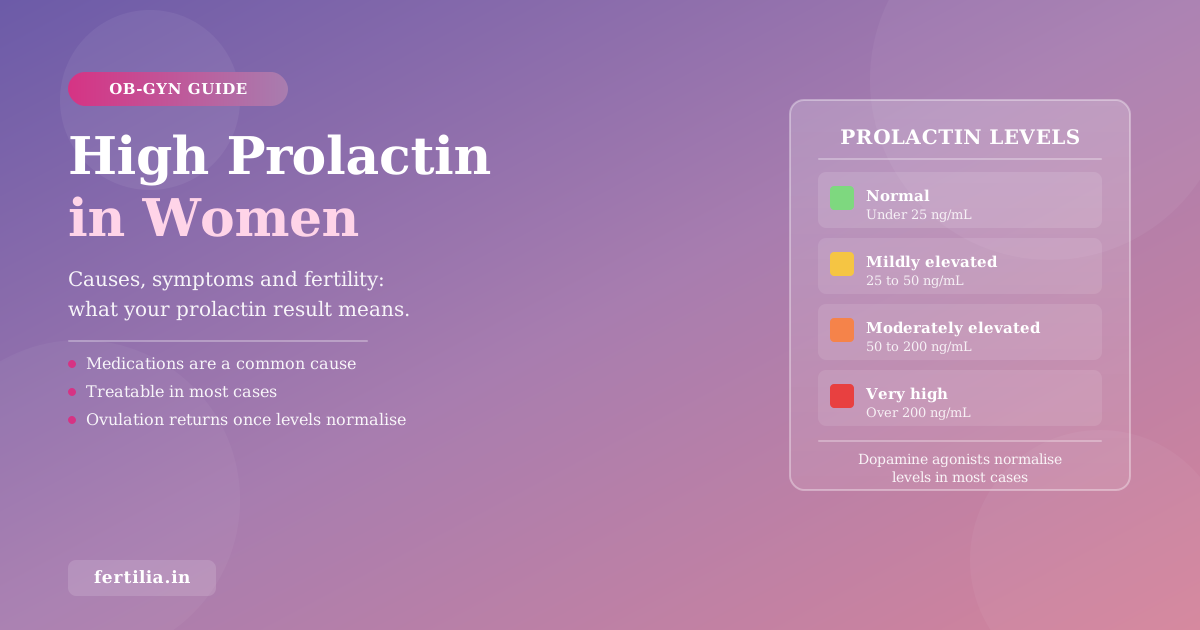
Normal prolactin in a non-pregnant, non-breastfeeding woman is below 25 ng/mL by most laboratory reference ranges, consistent with the Endocrine Society clinical practice guidelines (Melmed et al. 2011, Journal of Clinical Endocrinology and Metabolism). Here is how clinicians interpret the full range:
| Prolactin level | Interpretation | Typical next step |
|---|---|---|
| Under 25 ng/mL | Normal | No action needed |
| 25 to 50 ng/mL | Mildly elevated | Repeat morning sample, fasted, no recent breast exam |
| 50 to 100 ng/mL | Moderately elevated | Investigate: medications, TSH, consider imaging |
| 100 to 200 ng/mL | Significantly elevated | Likely microadenoma; pituitary imaging indicated |
| Over 200 ng/mL | Very high | Likely macroadenoma; pituitary MRI mandatory |
One important note: different laboratories use slightly different reference ranges. Most Indian labs report in ng/mL, but some report in mIU/L. To convert mIU/L to ng/mL, divide by 21.2. Always check the units and reference range printed on your lab report before comparing against the thresholds above.
How to Get the Prolactin Test Right
The prolactin test is sensitive to conditions around the blood draw. Getting it wrong can produce a falsely high result and trigger unnecessary investigation.
Timing. Prolactin follows a mild diurnal rhythm and is highest in the early morning. Most guidelines recommend a morning sample, ideally before 11 AM, taken after the patient has been awake and resting for at least an hour. Afternoon samples tend to run slightly lower.
No breast examination in the preceding 24 hours. Nipple stimulation, including a clinical breast examination or mammogram, can acutely raise prolactin. If you have had either in the day before your test, reschedule the blood draw.
Avoid intense exercise immediately before. A vigorous workout in the two hours before the test can produce a transient elevation.
If the first result is mildly elevated. Repeat it. A single reading in the 25 to 50 ng/mL range, with no galactorrhea and regular cycles, should be confirmed with a second morning sample under controlled conditions before any workup begins. Situational elevations are common.
Cost and access. A serum prolactin test in India costs approximately ₹400 to ₹800 at major labs including Thyrocare, Dr. Lal PathLabs, Metropolis, and Redcliffe. Home collection is available from most of these. Results are generally available within 24 hours.
When Is an MRI of the Pituitary Needed?
Not every elevated prolactin warrants an MRI. Here is when it does:
Sustained prolactin above 100 ng/mL after medication causes have been excluded and after a second confirmatory test. At this level, a prolactinoma is the most likely explanation and needs to be characterised.
Any prolactin elevation accompanied by headaches or visual field changes. These symptoms suggest a macroadenoma pressing on adjacent structures and require imaging on an urgent basis, not a routine referral timeline.
Prolactin above 50 ng/mL in a woman under 25. Younger women with significant elevations benefit from earlier imaging.
The scan is an MRI of the pituitary gland with and without gadolinium contrast. It is a targeted scan, not a full brain MRI. Most tertiary hospitals and major imaging centres in Indian cities can perform this; cost is typically ₹5,000 to ₹12,000 depending on the centre and city.
This approach is consistent with Schlechte’s 2003 review of prolactinoma natural history (Journal of Clinical Endocrinology and Metabolism), which remains a foundational reference for prolactinoma assessment and the threshold-based imaging decision.
Treatment Options
Treatment depends entirely on the identified cause.
Medication-induced hyperprolactinemia. The first step is discussing alternatives with the prescribing doctor. For domperidone, the gastroenterologist may be able to substitute a proton-pump inhibitor or a different prokinetic agent. For antipsychotics, the psychiatrist may consider quetiapine or clozapine, which raise prolactin substantially less than risperidone or haloperidol. The aim is to address the cause, not to add a further medication to suppress the side effect.
Prolactinoma. Dopamine agonists are the treatment of choice. Cabergoline is preferred over bromocriptine because it requires less frequent dosing (twice weekly rather than daily or multiple times daily) and has better tolerability. The standard starting dose is 0.25 to 0.5 mg twice weekly, with gradual titration based on prolactin response and side effects.
The evidence for cabergoline is strong: prolactin normalises in over 80 percent of patients with microadenomas, and most prolactinomas shrink substantially with dopamine agonist therapy. Surgery is reserved for the minority of patients who do not respond to cabergoline after adequate titration, and it is rarely needed. Cabergoline is available in India; generic formulations typically cost ₹80 to ₹200 per tablet at major pharmacies.
Hypothyroidism-driven elevation. Treating the thyroid condition with levothyroxine usually normalises prolactin without any additional intervention. This is one of the strongest arguments for always testing TSH at the same time as prolactin.
Macroprolactin. Biologically inactive macroprolactin does not require treatment. Confirming it is macroprolactin (rather than true hyperprolactinemia) is what stops unnecessary medication or imaging.
What Happens to Fertility Once Prolactin Normalises
The ovulation suppression caused by elevated prolactin is reversible. Once the underlying cause is addressed and prolactin returns to the normal range, the hypothalamic-pituitary-ovarian axis typically resumes normal function within weeks to months.
In clinical practice, ovulation usually returns within one to three months of prolactin normalising. For women with prolactinomas on cabergoline therapy, many conceive naturally within six months of starting treatment, once ovulation has been confirmed.
The correct sequence for most women is: identify the cause, treat it, confirm prolactin has normalised, and then confirm ovulation has returned. A mid-luteal progesterone test is the most direct way to confirm ovulation: our guide to Day-21 Progesterone explains exactly how to time this test for your cycle length and how to read the result.
For women with additional fertility questions beyond prolactin normalisation, including those with ovarian reserve concerns, Low AMH and Pregnancy: Can You Still Conceive Naturally? addresses how prolactin fits within the broader fertility picture. Our guide to natural conception as a couple is also a useful parallel read once prolactin is under control.
High prolactin is one of the most treatable causes of fertility difficulty in women. Unlike some harder-to-modify factors such as age or tubal damage, prolactin responds consistently to targeted treatment in the majority of cases. The diagnosis requires two correctly timed blood tests and sometimes an MRI. The treatment is usually a twice-weekly tablet.
If you have irregular cycles, galactorrhea, or difficulty conceiving and prolactin has not yet been checked, it is worth asking your doctor to add it to your next panel. If it has been checked and the result is elevated, the next step is identifying the cause. That conversation does not need to be complicated. It just needs to happen.
You can download our free Period Health Resource for a practical overview of what irregular cycles can indicate and when to investigate further. For women who want to work through their full hormonal picture alongside a clinician, the Fertilia Fertility Program combines diagnostic clarity with the lifestyle support that underpins long-term hormonal health.
💜 Want to discuss a high prolactin result with Dr. Suganya? Message our team on WhatsApp and we will help you understand what the result means and what to do next.
Frequently Asked Questions
What causes high prolactin in females? The most common causes are medications (especially domperidone, metoclopramide, antipsychotics, and some antidepressants), prolactinoma (a benign pituitary tumour), and hypothyroidism. Stress and physical factors around the blood draw, such as a recent breast examination or intense exercise, can also produce a transient elevation. A repeat morning test alongside a medication review and TSH is usually enough to identify the cause.
Can stress cause high prolactin? Yes, acutely. A stressful blood draw, poor sleep, intense exercise immediately before the test, or recent nipple stimulation can all produce a transiently elevated result. This is why a mildly elevated prolactin (25 to 50 ng/mL) with no symptoms should be repeated under rested, morning conditions before any treatment or imaging is arranged. Chronic stress can also contribute to mildly elevated prolactin through its effects on hypothalamic dopamine signalling.
Can high prolactin go away on its own? Sometimes. Stress-related or transiently elevated prolactin often normalises on repeat testing without intervention. Medication-induced elevation resolves when the offending drug is stopped or switched. Prolactinoma-related elevation requires treatment; it does not typically resolve on its own, though some microadenomas remain stable for years without growing.
Is high prolactin always a tumour? No. In the Indian outpatient context, medication-induced elevation is more common than prolactinoma as a presenting cause, particularly given the widespread use of domperidone and antipsychotics. A prolactinoma is a benign growth (not cancer) and is found in a minority of women with elevated prolactin. A significantly elevated reading (above 100 ng/mL) after medications have been excluded does warrant imaging, but a mildly elevated reading does not automatically mean there is a tumour.
Does domperidone cause high prolactin? Yes. Domperidone is a dopamine receptor antagonist, and dopamine is the primary suppressor of prolactin secretion. Women on domperidone for weeks to months commonly develop elevated prolactin. This is a well-documented pharmacological effect, not an unusual drug reaction. If you are on domperidone and have developed irregular cycles or are trying to conceive, raising this with your prescribing doctor is worthwhile. An alternative reflux medication that does not affect dopamine receptors, such as a proton-pump inhibitor, is often a straightforward switch.
Can I get pregnant with high prolactin? Spontaneous natural conception is significantly less likely when prolactin is elevated, because ovulation is suppressed. Once prolactin normalises, ovulation returns in most women and natural conception becomes possible again. Many women with prolactinoma conceive naturally after prolactin is controlled with cabergoline, without needing IVF or further fertility intervention.
Do I need an MRI for high prolactin? Not automatically. An MRI of the pituitary is indicated when prolactin is sustained above 100 ng/mL after excluding medication causes and confirming with a second test, when headaches or visual field changes are present alongside the elevation, or when the clinical picture points to a structural cause. A mildly elevated result (25 to 50 ng/mL) in a woman who is otherwise asymptomatic does not require immediate imaging. Your doctor will advise based on your full clinical picture.