The one piece of advice nearly every pregnant woman in India hears: “Walk for 30 minutes.”
That advice is not wrong. But if your goal is a normal delivery, it tells you less than half of what the research actually shows.
The clinical evidence on antenatal exercise has grown substantially over the last two decades. We now know which types of movement reduce the risk of a caesarean section, which shorten active labour, and which strengthen the specific muscles you will rely on most during the pushing stage. Walking is one part of that picture, not the whole picture.
This post covers what the research shows, why four specific types of exercise make a difference to delivery outcomes, how to fit them into your week, and what Indian pregnant women in particular need to know about sedentary risk.
What “Exercise” Actually Means in Pregnancy
Most antenatal exercise research defines moderate-intensity exercise as movement that raises your heart rate and makes you slightly breathless, but still allows you to hold a full conversation. Walking at a purposeful pace, swimming, stationary cycling, and prenatal yoga all qualify.
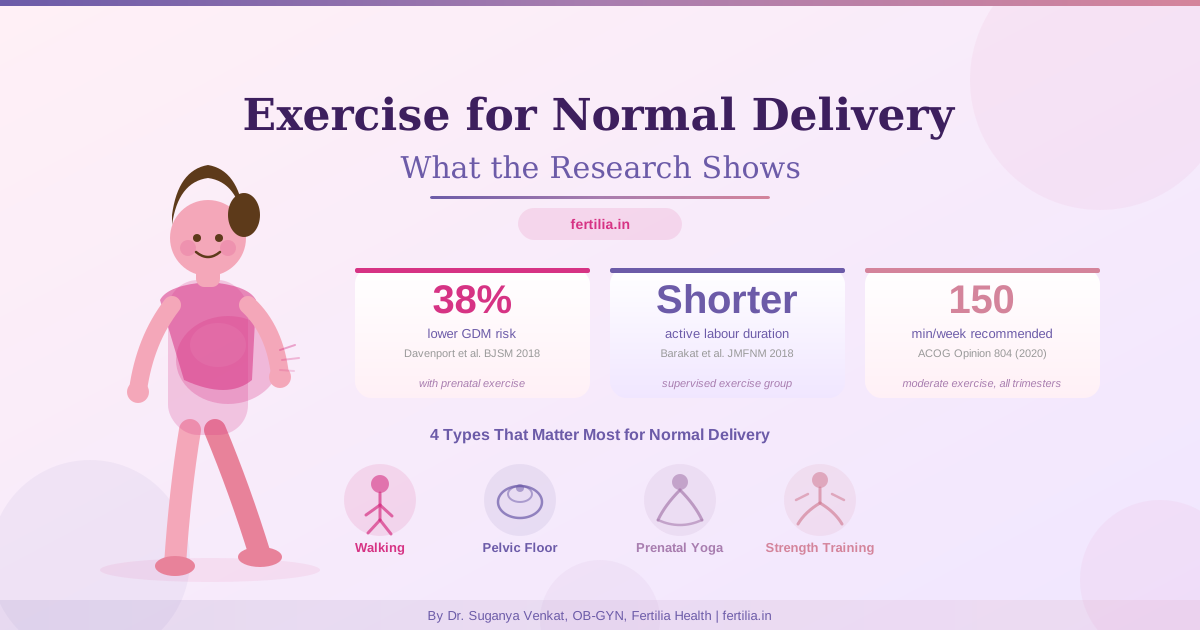
The ACOG Committee Opinion 804 (2020), the standard guideline used by obstetricians globally, recommends 150 minutes of moderate-intensity aerobic activity per week in uncomplicated pregnancies. That translates to 30 minutes a day, five days a week. A gentle 10-minute stroll after dinner is beneficial for blood sugar but does not provide the cardiovascular and musculoskeletal benefits associated with better delivery outcomes in the research.
The distinction matters because most studies linking exercise to better delivery outcomes were done with women exercising at this moderate level consistently, not at very light intensity.
The Research: 4 Ways Exercise Helps With Normal Delivery
1. Shorter Active Labour
A 2018 study by Barakat and colleagues, published in the Journal of Maternal-Fetal and Neonatal Medicine, followed women in a supervised exercise programme through the third trimester. Those who exercised had a meaningfully shorter active labour compared to the control group. The difference was clinically significant, not just statistically so.
The mechanism is well established. Regular aerobic exercise improves cardiovascular efficiency, reduces excess gestational weight gain, and supports more effective uterine contractility. A well-conditioned body moves through the labour process more fluidly.
2. Lower Risk of Emergency Caesarean Section
A meta-analysis by Barakat et al., published in the British Journal of Sports Medicine (2014), pooled data from multiple RCTs and found that women who followed supervised antenatal exercise programmes had a statistically significant lower risk of emergency caesarean section compared to sedentary controls.
Emergency C-sections (as opposed to planned ones) are often the result of prolonged labour, foetal distress during a difficult second stage, or delivery complications that are partly influenced by maternal fitness, foetal position, and pelvic floor function. Exercise addresses all three indirectly.
3. Stronger Pelvic Floor for the Pushing Stage
The pelvic floor is the group of muscles and connective tissue forming the base of your pelvis. During the second stage of labour (the pushing stage), these muscles must coordinate: relax to allow the baby to descend, then contract effectively to assist each push.
Dumoulin et al.’s 2018 Cochrane review on pelvic floor muscle training (PFMT) confirmed that consistent Kegel exercise is the most evidence-supported intervention for pelvic floor strength during and after pregnancy. Women who do PFMT consistently through pregnancy have better neuromuscular coordination during delivery and recover faster from any pelvic floor strain afterward.
4. Reduced Gestational Diabetes Risk (Which Directly Affects Delivery Mode)
Davenport et al. (British Journal of Sports Medicine, 2018) conducted a systematic review and meta-analysis showing that prenatal exercise reduces the risk of gestational diabetes mellitus (GDM) by approximately 38%. This matters for delivery because GDM increases the likelihood of a large baby (macrosomia), which in turn raises the likelihood of instrumental delivery or caesarean section.
For more on this, read our guide on Normal Delivery vs C-Section. Preventing GDM through exercise is one of the most effective upstream actions you can take to protect your chances of a normal delivery.
Have questions about building an exercise routine for your specific pregnancy? WhatsApp Dr. Suganya’s team at +91 99402 70499 for personalised guidance.
The 4 Exercise Types That Matter Most
1. Walking (With the Right Intensity)
Walking is accessible, free, and appropriate across all three trimesters. The research-backed target is brisk walking at a pace where you can talk but not sing: roughly 3.5 to 4 km/h for most women, or whatever leaves you slightly warm and mildly breathless.
In the Indian context: walk in the cooler parts of the day (before 9 am or after 6 pm in summer), on flat surfaces, and wear supportive footwear. From the third trimester onwards, walking on uneven ground or climbing steep surfaces adds unnecessary fall risk without additional benefit.
Progress from 15 to 20 minutes in the first trimester to 30 minutes in the second and third, aiming for five days a week. This alone meets the ACOG 150-minute weekly target.
2. Pelvic Floor Exercises (Kegels)
Pelvic floor exercises are the single most research-supported exercise for direct labour benefit. They take less than five minutes a day and can be done anywhere.
How to do them correctly:
- Identify the right muscles: imagine you are stopping the flow of urine mid-stream. The muscles you engage are your pelvic floor.
- Contract these muscles for 5 seconds, then fully release for 5 seconds. That is one repetition.
- Build to 10 repetitions, three times a day.
The full release is as important as the contraction. A pelvic floor that can relax completely is what allows the baby to descend through the birth canal. Women who practise this release consistently have better pushing coordination. Start in the first trimester and continue daily through to delivery.
3. Prenatal Yoga and Hip-Opening Mobility
Prenatal yoga addresses something that neither walking nor Kegels targets directly: foetal positioning and pelvic mobility.
Hip-opening poses (bound angle pose or supta baddha konasana, supported squats, and cat-cow sequences) work the hip rotators and inner thighs, increasing the space available in the pelvis for the baby to descend into an optimal position (ideally left occiput anterior, or LOA). Malpresentation is one of the main reasons normal delivery becomes difficult or stalls.
Birdee et al. (2016, a systematic review published in the Journal of Women’s Health) found yoga interventions during pregnancy associated with reduced labour pain and improved birth outcomes across multiple studies. In India, antenatal yoga is already well-established at many hospitals, and the physical component (poses and mobility work, not just breathing) is the part with the clearest labour benefit. For exactly which poses are safe in each trimester, and which to avoid, see our trimester-by-trimester pregnancy yoga guide.
Aim for two sessions of 30 to 45 minutes per week from the second trimester. Avoid inversions, deep backbends, and lying flat on your back after 16 weeks.
4. Light Resistance and Strength Training
Light to moderate resistance training during pregnancy is both safe and beneficial. Barakat et al. (British Journal of Sports Medicine, 2011) published a randomised controlled trial showing that supervised resistance training three times a week through pregnancy produced no adverse maternal or foetal outcomes and was associated with better gestational weight management.
You do not need a gym. Bodyweight exercises such as supported squats (holding a surface for balance), modified lunges, and wall push-ups are all appropriate in uncomplicated pregnancies. These exercises strengthen the legs, glutes, and lower back, reducing back pain (one of the most common pregnancy complaints in the third trimester) and contributing to effective pushing during labour.
If you are new to resistance training: two sessions of 20 minutes per week is enough. Focus on controlled movements and never maximal effort.
What Indian Pregnant Women Need to Know About Sedentary Risk
Urban Indian women are disproportionately sedentary during pregnancy, often because of desk-based work, heat, and well-intentioned family advice to rest. That family advice comes from genuine care, but it is not consistent with current clinical evidence for low-risk pregnancies.
ICMR-NIN 2020 guidelines on physical activity classify the majority of desk workers as sedentary and note specific risks of prolonged sitting, including impaired glucose metabolism and excess gestational weight gain, both of which affect delivery outcomes.
Practical adaptations for the Indian context:
- Heat: exercise indoors or in the early morning. Swimming in a pool is one of the best options in South Indian summers and is low-impact even in the third trimester.
- Family pressure to rest: the evidence is clear that moderate exercise is safe and beneficial in low-risk pregnancies. Sharing this post or the ACOG guideline reference with concerned family members is a reasonable response.
- No gym access: walking, yoga, and Kegels can all be done at home. No equipment is required.
- Desk work: set a timer to stand and walk for 5 minutes every hour. Even this level of movement reduces the risks associated with prolonged sitting.
For the complete guide to which specific exercises are safe at each trimester, with trimester-by-trimester modifications, see our pregnancy exercises by trimester guide.
When NOT to Exercise: Absolute Contraindications
Exercise is appropriate for uncomplicated pregnancies. Your doctor should confirm there are no contraindications at your first antenatal visit. Per ACOG 804, absolute contraindications to aerobic exercise during pregnancy include:
| Condition | Why Exercise Is Not Advised |
|---|---|
| Cervical incompetence | Physical activity may exacerbate cervical opening |
| Placenta previa after 26 weeks | Risk of bleeding with any exertion |
| Severe pre-eclampsia or pregnancy-induced hypertension | Cardiovascular risk with exertion |
| Preterm labour in the current pregnancy | Any activity could trigger contractions |
| Uncontrolled type 1 diabetes or cardiac disease | Requires specialist clearance |
| Ruptured membranes | Infection risk; no activity until reviewed by doctor |
If you have any of the above, do not start or continue an exercise programme without explicit clearance from your obstetrician. For women with these conditions, rest and close monitoring are the evidence-based approach.
For guidance on what else to avoid during pregnancy, see our pregnancy do’s and don’ts guide.
A Practical Weekly Plan
Here is what combining all four exercise types looks like in a typical week:
| Day | Activity | Duration |
|---|---|---|
| Monday | Brisk walk | 30 minutes |
| Tuesday | Prenatal yoga (hip-opening and mobility) | 40 minutes |
| Wednesday | Brisk walk | 30 minutes |
| Thursday | Bodyweight resistance (squats, wall push-ups) | 25 minutes |
| Friday | Brisk walk | 30 minutes |
| Saturday | Prenatal yoga or swimming | 40 minutes |
| Sunday | Rest or a gentle 15-minute walk | 15 minutes |
Pelvic floor exercises: 10 reps, three times daily, every single day. These take under 5 minutes and can be done sitting at a desk, waiting for dal to cook, or lying in bed before sleep.
This plan meets the ACOG 150-minute weekly target, includes pelvic floor work, addresses positioning and mobility, and builds strength, all without requiring a gym membership or specialised equipment.
For context on how exercise and weight gain interact during pregnancy, see our pregnancy weight gain guide.
To understand the full scope of what helps and what to avoid during pregnancy, the pregnancy do’s and don’ts guide covers this in detail.
Want a week-by-week exercise plan built around your specific pregnancy, health history, and trimester? WhatsApp Dr. Suganya’s team at +91 99402 70499 and ask about her Pregnancy Care program.
Frequently Asked Questions
Is it safe to exercise during pregnancy in India?
Yes, for low-risk pregnancies. ACOG Committee Opinion 804 (2020) recommends 150 minutes of moderate exercise per week throughout pregnancy in the absence of contraindications. The evidence from multiple large studies and meta-analyses is consistent: exercise reduces C-section risk, shortens active labour, lowers gestational diabetes risk, and improves pelvic floor function. Get clearance from your OB-GYN at your first antenatal visit, particularly if you have any high-risk factors such as pre-eclampsia, placenta previa, or preterm labour history.
How much walking is enough for a normal delivery?
Brisk walking for 30 minutes, five days a week meets the ACOG guideline. The key word is brisk: a pace that makes you slightly breathless but still allows you to hold a conversation. A slow 10-minute post-dinner stroll is beneficial for blood sugar regulation but does not provide the cardiovascular and musculoskeletal benefits associated with better delivery outcomes in the research. Aim to build up to this level by the start of the second trimester.
Can I start exercising in the third trimester if I was sedentary before?
Yes, with some caution. Start with 15 to 20 minutes of gentle walking and build up slowly over two to three weeks. Avoid high-intensity activity, anything with fall risk, and exercises that require lying flat on your back after 16 weeks. A supervised antenatal exercise class or a physiotherapist-guided programme is the safest way to start late in pregnancy. The research shows benefit even from late-pregnancy exercise, so starting in the third trimester is much better than not starting at all.
Do pelvic floor exercises really make a difference to labour?
Yes. The pelvic floor must both contract (to assist pushing) and fully relax (to let the baby descend). Women who do daily pelvic floor muscle training during pregnancy have better neuromuscular control of both actions. Dumoulin et al.’s Cochrane review (2018) found consistent evidence that PFMT reduces urinary incontinence during and after pregnancy, and clinically, better pelvic floor function is associated with more effective pushing and a shorter second stage of labour.
Is prenatal yoga safe during pregnancy?
Prenatal yoga, adapted specifically for pregnancy, is safe in uncomplicated pregnancies. Avoid hot yoga (elevated core temperature is a risk during pregnancy), inversions, deep backbends, and lying flat on your back after 16 weeks. Standard prenatal yoga that focuses on hip-opening, breathing, and gentle mobility is one of the most consistently recommended activities for labour preparation across both international guidelines and Indian obstetric practice.
What exercises should I absolutely avoid during pregnancy?
Per ACOG 804 (2020): avoid contact sports (risk of abdominal trauma), exercises with high fall risk (open-road cycling, skipping on uneven surfaces), hot yoga or any exercise in a heated environment, and exercises requiring lying flat on your back after 16 weeks (which can compress the vena cava and reduce blood flow to the baby). Stop immediately and call your doctor if you experience vaginal bleeding, contractions, severe shortness of breath, chest pain, or reduced foetal movement during or after exercise.
Can exercise help the baby get into the right position for delivery?
Prenatal yoga poses that encourage the baby to descend and engage (cat-cow, supported squats, forward-leaning positions) from the second trimester onwards may support optimal foetal positioning before the baby fully settles at 34 to 36 weeks. These are not a substitute for medical intervention if a confirmed malpresentation is found at your late-pregnancy scan. If your baby is in a posterior or oblique position at 36 weeks, discuss targeted yoga or physiotherapy alongside any medical options your obstetrician recommends. For the complete guide to normal delivery preparation, see Normal Delivery Tips: What Actually Helps.