You might notice it first in the shower drain. A clump of hair that seems larger than usual. Then in the morning: the part line looks a little wider. The hair at your temples looks finer than it was six months ago. You pull your hair into a ponytail and it feels thinner in your hand.
If you have PCOS, this kind of scalp thinning is not a coincidence. It is not stress. It is not your shampoo.
It is also completely separate from the excess hair that PCOS causes on the face and body. That is a different process driven by the same hormones but acting on different follicles in the opposite direction. This post is specifically about scalp hair loss in PCOS: why it happens, what drives it, and what the clinical evidence actually supports for reversing it.
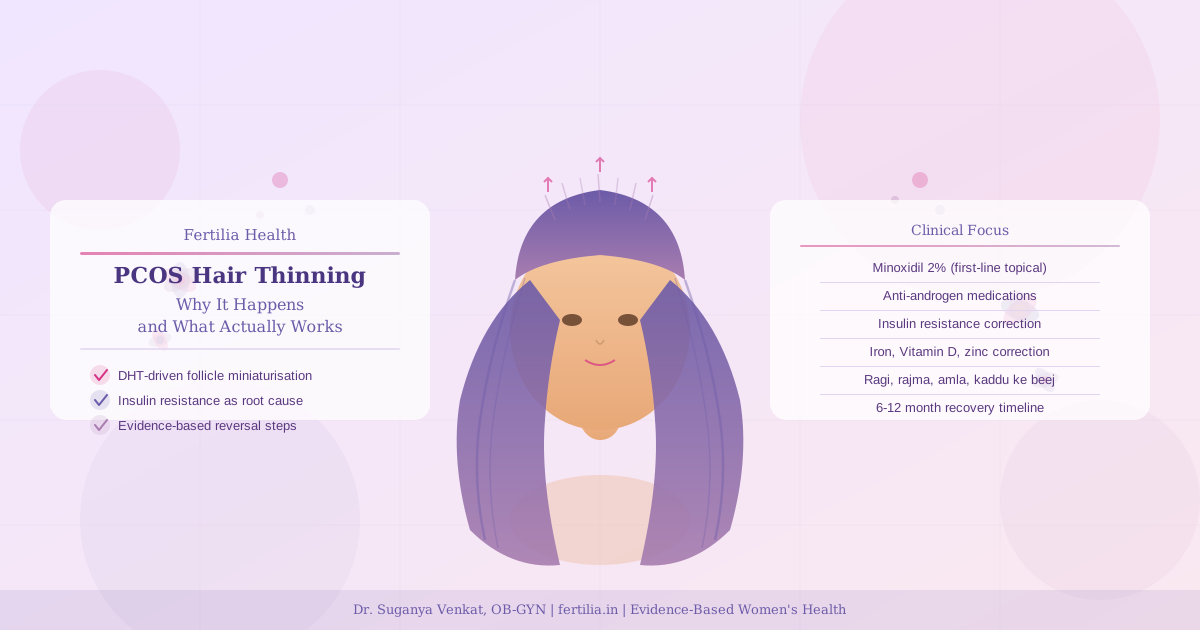
What this post covers
- Why PCOS causes scalp thinning but is separate from facial and body hair growth
- The four drivers behind PCOS-related scalp thinning
- Which tests are worth getting before starting treatment
- First-line treatments with clinical evidence
- India-relevant nutrition that supports follicle recovery
- What to realistically expect, and over what timeframe
Why scalp follicles react differently to PCOS androgens
PCOS is associated with elevated androgens, particularly testosterone and its more potent form, dihydrotestosterone (DHT). The same hormone that drives excess facial and body hair in PCOS has the opposite effect on scalp follicles.
Scalp follicles in women with a genetic predisposition to androgenic alopecia shrink when exposed to DHT. Over repeated growth cycles, the follicle miniaturises: what was once a thick, pigmented terminal hair gradually produces finer, shorter, less pigmented hairs. This process is called androgenic alopecia, and it is the most common form of hair loss in women with PCOS.
The enzyme responsible for converting testosterone to DHT is called 5-alpha reductase. It is present in hair follicles, and its activity determines how much DHT each follicle encounters. In women with PCOS, elevated circulating testosterone combined with higher 5-alpha reductase activity in scalp follicles creates a situation where those follicles receive more DHT than they can tolerate over time.
This is distinct from hirsutism (facial and body hair growth) and distinct from non-androgenic causes of hair thinning such as telogen effluvium from severe stress, rapid weight loss, or thyroid disorders. Distinguishing between them matters because the treatments differ.
For the full PCOS hormonal picture, PCOS: Symptoms, Root Causes and Treatment covers the driver framework this post builds on.
The four drivers of scalp thinning in PCOS
1. Elevated DHT from hyperandrogenism
Hyperandrogenism, defined per the Rotterdam Criteria as elevated serum androgens or clinical signs of androgen excess, is present in approximately 60 to 80% of women with PCOS (Azziz R et al., Journal of Clinical Endocrinology and Metabolism, 2006). Elevated testosterone increases the substrate available for DHT production via 5-alpha reductase in scalp follicles.
The result is not sudden or dramatic. Follicle miniaturisation unfolds gradually across multiple hair growth cycles, each lasting two to five years. This is why PCOS-related thinning often goes unnoticed for years before it becomes visible as a wider part line or noticeably reduced ponytail volume.
2. Insulin resistance amplifying androgen production
Insulin resistance drives excess androgen production in the ovaries. When insulin levels are chronically elevated, theca cells in the ovary increase testosterone secretion. This is the same pathway responsible for irregular periods, the PCOS belly pattern, and the skin changes of PCOS; it also directly raises the androgen load that reaches scalp follicles.
Research by Dunaif (Endocrine Reviews, 1997) established that insulin resistance is present in approximately 50 to 70% of women with PCOS regardless of body weight, and that hyperinsulinaemia directly stimulates ovarian androgen production. Addressing insulin resistance is one of the most direct ways to reduce the androgen signal reaching scalp follicles.
For a detailed look at what insulin resistance means in PCOS and how to address it practically, Insulin Resistance and PCOS: Signs, Diet and What to Do covers this in depth.
3. Nutritional deficiencies
Three deficiencies commonly occur alongside PCOS and independently worsen hair thinning:
Iron (serum ferritin below 70 ng/mL): Hair follicles are among the most metabolically active tissues in the body and are highly sensitive to iron availability. Rushton (Clinical and Experimental Dermatology, 2002) identified low serum ferritin as a significant contributor to diffuse hair shedding in women, and noted that hair loss may persist or worsen even when using topical treatments if ferritin remains below 70 ng/mL. NFHS-5 data shows that 57% of Indian women between 15 and 49 years are anaemic, making ferritin deficiency particularly relevant in this context.
Vitamin D deficiency: Ritu and Gupta’s review documented widespread deficiency across varied Indian populations (Nutrients, 2014, PMID 24566435). It did not establish whether deficiency caused a woman’s hair loss or whether supplementation would restore hair growth. Discuss a confirmed deficiency with your doctor as part of your broader assessment.
Zinc: Zinc supports follicle structure and the production of keratin. It is involved in DNA synthesis and protein turnover in rapidly dividing follicle cells. Zinc deficiency has been associated with telogen effluvium and a reduced response to topical hair treatments.
4. Low-grade inflammation
PCOS is associated with chronic low-grade inflammation, reflected in elevated high-sensitivity CRP in multiple studies. Inflammatory cytokines can disrupt the hair growth cycle and push follicles prematurely into the resting (telogen) phase. Reducing inflammation through diet, sleep, and stress management is part of the same package as addressing androgens and insulin resistance, not separate from it.
Tests worth getting before starting treatment
Treating PCOS-related scalp thinning without a blood picture is working without a map. These tests clarify both the driver and any deficiencies:
- Free testosterone and SHBG: Total testosterone often appears normal while free testosterone (the biologically active fraction) is elevated. Low sex hormone-binding globulin allows more testosterone to circulate in its active form. Request both, not just total testosterone.
- Serum ferritin: This is not the same as haemoglobin. Normal haemoglobin does not rule out low ferritin. Ask for ferritin specifically, with a target of at least 70 ng/mL for optimal follicle support.
- 25(OH) Vitamin D: Target range is 40 to 60 ng/mL.
- Full thyroid panel (TSH, free T3, free T4, anti-TPO): Hypothyroidism and Hashimoto’s thyroiditis are both more common in women with PCOS and both independently cause significant diffuse hair thinning. Ruling out thyroid disease before attributing all thinning to PCOS androgens is important. For more on the thyroid connection, Thyroid and Fertility: The Hidden Connection covers the overlap in detail.
- Fasting insulin and fasting glucose (or HOMA-IR): To quantify insulin resistance if not already documented.
What actually works: the clinical evidence
1. Address the PCOS drivers at the source
This sounds obvious but is frequently skipped in favour of topical treatments alone. Topical treatments applied to a scalp that continues receiving high DHT levels are working against a persistent upstream pressure. The most durable improvement comes from lowering the androgen load at its source.
Improving insulin sensitivity through a low-GI diet, regular resistance exercise, and myo-inositol supplementation directly reduces ovarian testosterone production. A 2019 meta-analysis of multiple randomised controlled trials found that myo-inositol at 2 g twice daily significantly reduced fasting insulin, free testosterone, and luteinising hormone in women with PCOS. Lower testosterone means less substrate for DHT production in scalp follicles.
The PCOS-specific nutrition framework in PCOS/PCOD Diet Chart: Indian Meal Plan (Breakfast to Dinner) provides the practical daily structure for this approach.
2. Minoxidil 2% (topical, first-line)
Minoxidil is the only topically applied treatment with robust clinical evidence for female androgenic alopecia. It works by prolonging the anagen (growth) phase of the hair cycle and increasing follicle size. For women, the 2% formulation is applied once or twice daily to the scalp.
Shapiro J and Price VH (Dermatologic Clinics, 1998) reviewed the clinical evidence and confirmed the 2% formulation’s efficacy and safety profile for female-pattern hair loss. Hair density and hair count improve significantly with consistent use over 6 to 12 months.
Minoxidil requires a prescription in India and is started under medical supervision. It is not used during pregnancy or while trying to conceive.
3. Anti-androgen medications (prescription)
For women with PCOS whose scalp thinning is clearly androgen-driven, medications that block androgen receptors or reduce androgen production address the cause rather than only the symptom:
Spironolactone: At doses of 50 to 200 mg daily, spironolactone blocks androgen receptors in hair follicles and reduces adrenal androgen production. It is among the most commonly used anti-androgens for PCOS-related scalp thinning and hirsutism in India. It is contraindicated during pregnancy and while trying to conceive, so requires reliable contraception during use.
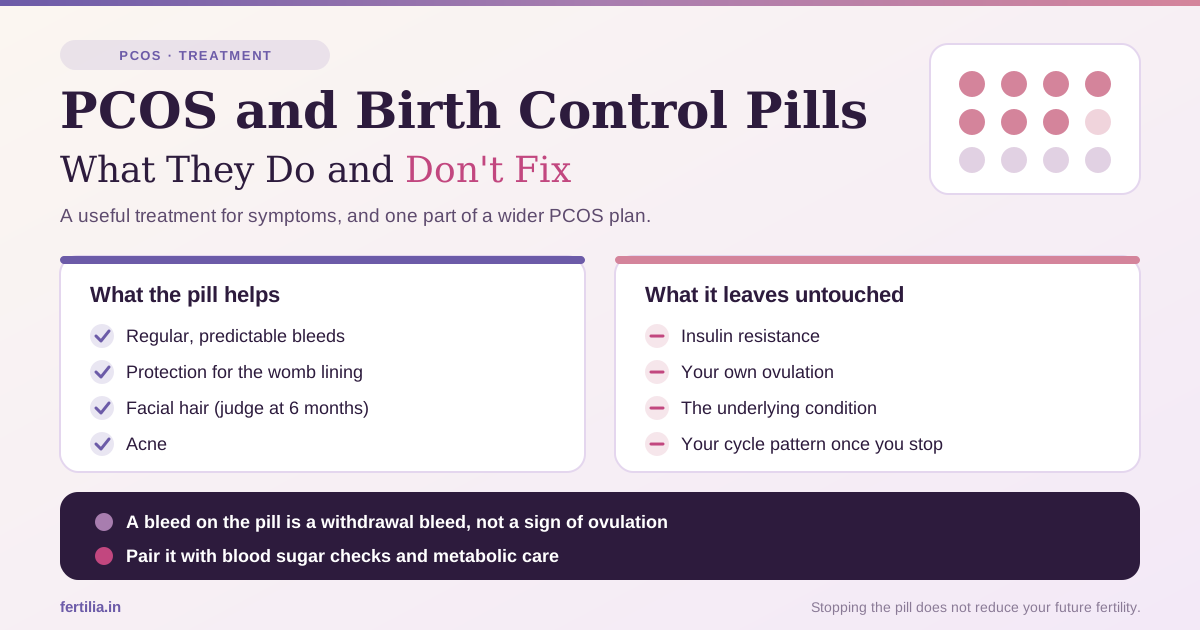
Oral contraceptive pills with anti-androgenic profile: Certain combined OCPs lower free testosterone by raising SHBG and suppress ovarian androgen production. These are useful when contraception is also wanted and when broader PCOS hormonal management is appropriate.
The combination of anti-androgen treatment with minoxidil addresses both the driver (ongoing DHT exposure) and the follicle’s growth cycle directly, and tends to produce better outcomes than either approach alone. A dermatologist or gynaecologist familiar with PCOS can guide the right combination based on your specific hormonal picture.
💜 Not sure which tests to request, or what your results mean for your scalp thinning? Message Dr. Suganya on WhatsApp and she can walk you through your specific hormonal picture and what a personalised plan looks like.
India-relevant nutrition to support hair recovery
Food choices matter here both directly (providing nutrients the follicle needs) and indirectly (supporting insulin sensitivity, reducing inflammation, and correcting deficiencies).
For iron: Ragi provides approximately 4.6 mg of iron per 100 g (ICMR-NIN 2017), making it one of the richest plant iron sources in the Indian kitchen. Rajma (kidney beans) and chana (chickpeas) provide plant-based iron alongside protein and fibre. Palak (spinach) contributes iron along with folate. Pair all plant iron sources with a vitamin C food for meaningfully improved absorption.
For vitamin C (iron absorption support): Amla is one of the richest natural sources of vitamin C available in India. Adding raw amla, amla juice, or amla powder to your morning routine supports iron absorption from your meals. Fresh lemon squeezed over dal or sabzi achieves the same effect with less effort.
For protein: Hair is approximately 95% keratin, which is a protein. Inadequate protein intake directly limits the raw material for follicle production. Moong dal, rajma, chana dal, dahi, paneer, and eggs are all excellent Indian sources. Aim for 0.8 to 1.2 g of protein per kilogram of body weight daily.
For zinc: Kaddu ke beej (pumpkin seeds) are among the richest food sources of zinc available in Indian kitchens, at approximately 7.8 mg per 100 g. A small handful of lightly roasted kaddu ke beej daily supports zinc intake. Til (sesame seeds) and dahi also contribute meaningfully.
For Vitamin D: Very few foods supply adequate Vitamin D. Sunlight exposure of 20 to 30 minutes of direct skin exposure between 11 AM and 1 PM remains the primary natural source, though deficiency at this level of sun exposure is still common in India due to melanin and indoor lifestyles. Testing your levels and supplementing under medical guidance is often necessary.
Practical daily additions for scalp health
The lifestyle changes that improve insulin resistance in PCOS are the same ones that support hair recovery: a low-GI diet, regular movement (particularly resistance exercise), adequate sleep, and stress management. None of this is separate from PCOS management generally. Scalp thinning is one downstream effect of unaddressed PCOS drivers, and addressing those drivers produces improvements across symptoms simultaneously.
A few specific practices for the scalp itself:
- Scalp massage for 5 to 10 minutes daily using fingertips at medium pressure improves scalp blood circulation and has been associated with increased hair thickness in small published studies
- Avoid tight hairstyles (tight braids, buns, and ponytails) that create chronic traction on already-vulnerable follicles
- Use a wide-tooth comb on wet hair to reduce mechanical breakage
- Coconut oil applied as a pre-wash treatment has been shown to reduce protein loss from the hair shaft (Rele AS and Mohile RB, Journal of Cosmetic Science, 2003)
What to expect: realistic timelines
The hair growth cycle runs in phases: anagen (active growth, two to five years), catagen (transition, two to three weeks), and telogen (resting and shedding, three to four months). Miniaturised follicles cycle faster, producing shorter, finer hairs. Recovery means gradually returning these follicles to normal cycling, which takes time.
Women who start comprehensive treatment (addressing the metabolic drivers, using minoxidil, and correcting nutritional deficiencies) typically see:
Months 1 to 3: Possible initial shedding as minoxidil synchronises follicle cycling. This is expected and is not a sign of worsening. Nutritional corrections underway. Insulin sensitivity beginning to respond.
Months 3 to 6: Hair shedding begins to reduce. Early regrowth may become visible along the part line. Follicle miniaturisation begins slowing as androgen levels drop with consistent metabolic treatment.
Months 6 to 12: Meaningful improvement in density in most women who stay consistent. Ponytail thickness may noticeably improve. The part line begins narrowing.
12 months and beyond: Continued gradual improvement. Women who have also addressed the metabolic drivers of PCOS tend to sustain the improvement long term. Those who rely only on topical treatment without addressing the androgen driver often plateau and then regress once treatment stops.
The earlier treatment begins, the better the outcome. Follicles that have been miniaturised for a shorter period recover more fully than those that have been in that state for many years.
Frequently Asked Questions
Q: My hair is thinning but my testosterone came back “normal.” Can PCOS still be the cause?
Yes. Free testosterone and SHBG together tell the real story. Women with PCOS can have normal or mildly elevated total testosterone but significantly elevated free testosterone because SHBG is low. Low SHBG means more testosterone is circulating in its active, biologically available form. Request free testosterone and SHBG specifically when investigating PCOS-related hair thinning.
Q: Can I use the 5% minoxidil formulation for faster results?
The 2% formulation is the evidence-based and regulatory-approved option for women. The 5% formulation has not been adequately studied in women for safety and efficacy, and it carries a higher risk of adverse effects including systemic absorption and, for some women, facial and body hair growth from skin contact. Use the 2% formulation as prescribed under medical supervision.
Q: I have PCOS and I am trying to conceive. What hair treatments are safe during this time?
Spironolactone and oral contraceptive pills are not compatible with trying to conceive. Minoxidil is contraindicated in pregnancy and during the conception phase. The safest approach while TTC is to focus on lifestyle and nutritional interventions: insulin resistance correction through diet and exercise, iron and Vitamin D correction where deficient, and myo-inositol. These address the androgen driver without involving medications that are contraindicated during conception.
Q: Will my hair come back to exactly what it was before PCOS affected it?
For follicles that have been miniaturised for a relatively short time (less than three to five years), significant regrowth is achievable with consistent treatment. For follicles miniaturised over a longer period, recovery is partial rather than complete. This is why earlier treatment produces better outcomes. The goal is to stop the progressive miniaturisation, recover as much density as the follicle can support, and maintain that by keeping the PCOS androgen drivers under control long term.
Q: I am on metformin for PCOS. Will that help my scalp hair?
Metformin improves insulin sensitivity, which reduces hyperinsulinaemia and in turn reduces ovarian androgen production. This addresses one of the key drivers of scalp thinning. Women on metformin who see meaningful improvements in their metabolic markers often notice slower hair loss progression over time. Metformin alone is unlikely to reverse established thinning, but it contributes to the overall reduction in the androgen load that is the foundation of sustained improvement. Metformin for PCOS: When You Need It covers who benefits from metformin and what it does and does not address.
Q: Is the hair thinning from PCOS the same as the hair loss that happens after pregnancy?
No. Postpartum hair loss (postpartum telogen effluvium) is triggered by the sharp drop in oestrogen after delivery. It starts around 3 to 4 months postpartum, peaks around 6 months, and in most women fully reverses by 12 months without any treatment. PCOS-related androgenic alopecia is a chronic, progressive thinning driven by sustained androgen excess. It does not self-resolve and tends to worsen progressively without treatment. The two can coexist in women with PCOS who have recently delivered, which makes distinguishing them important before choosing a treatment approach.
Q: Are there oil massages or natural remedies that genuinely help?
Certain practices offer evidence-supported benefits as adjuncts, not as primary treatments. Scalp massage (5 to 10 minutes daily, fingertip pressure) has been associated with increased hair shaft thickness in small studies. Coconut oil as a pre-wash treatment reduces protein loss from the hair shaft. These are safe additions alongside medical treatment. They are not substitutes for addressing the hormonal driver or for evidence-based medical interventions.
Key takeaways
- PCOS-related scalp thinning is driven by DHT miniaturising scalp follicles, a separate process from the facial and body hair growth that PCOS also causes
- Insulin resistance raises ovarian testosterone production, which feeds DHT levels at the scalp
- Getting free testosterone, SHBG, serum ferritin, Vitamin D, and a full thyroid panel before treating gives you the complete picture
- Minoxidil 2% is the first-line topical treatment with robust clinical evidence for female androgenic alopecia
- Anti-androgens (spironolactone) address the driver and work best in combination with topical treatment
- Correcting iron, Vitamin D, and zinc deficiencies removes the nutritional bottlenecks to follicle recovery
- India-relevant foods for hair: ragi, rajma, palak (iron); amla (vitamin C for iron absorption); kaddu ke beej and til (zinc); dahi and dal (protein)
- Expect meaningful improvement at 6 to 12 months with consistent treatment; outcomes depend on how long follicles have been miniaturised
Related reading: PCOS Hair Growth: Why It Happens and What Works covers the opposite PCOS hair problem (excess body hair). PCOS Facial Hair: Why It Grows and How to Reduce It covers hirsutism specifically. Insulin Resistance and PCOS: Signs, Diet and What to Do covers the metabolic driver in depth.
You can also download our complete PCOS Reversal Guide at fertilia.in/resources/pcos-reversal-guide/, which covers the full programme approach to managing the PCOS drivers that affect hair, periods, weight, and fertility together.
💜 PCOS-related hair thinning is treatable, but it works best with a personalised approach based on your specific hormonal picture. Connect with Dr. Suganya on WhatsApp to understand what is driving your thinning and what a personalised plan looks like for you. The full version of that plan, covering hair, periods, weight, and fertility together, is her 90-day PCOS Symptom Reversal program.
Dr. Suganya Venkat, OB-GYN with 15+ years of clinical experience. DNB OB-GYN (GKNM, Coimbatore) · MD Pathology (CMC Vellore) · MBBS with 5 Gold Medals (SRMC).