Two women. Same complaint: sex is too painful to manage. One describes a sharp burning at the vaginal entrance that appears the moment anything touches that area, and lingers for hours after. The other describes something different: a physical wall, an involuntary clamping that makes entry feel impossible before the burning has even had a chance to register.
Both are told the same thing by well-meaning friends and sometimes even clinicians: “It is all in your head.” Neither one is correct. And both need a different path forward, because the underlying mechanism in each case is genuinely different.
This post focuses on how an OB-GYN distinguishes between vulvodynia and vaginismus, why getting that distinction right changes the treatment, and what a woman can expect when she finally has the right conversation with the right clinician.
What Each Condition Actually Is
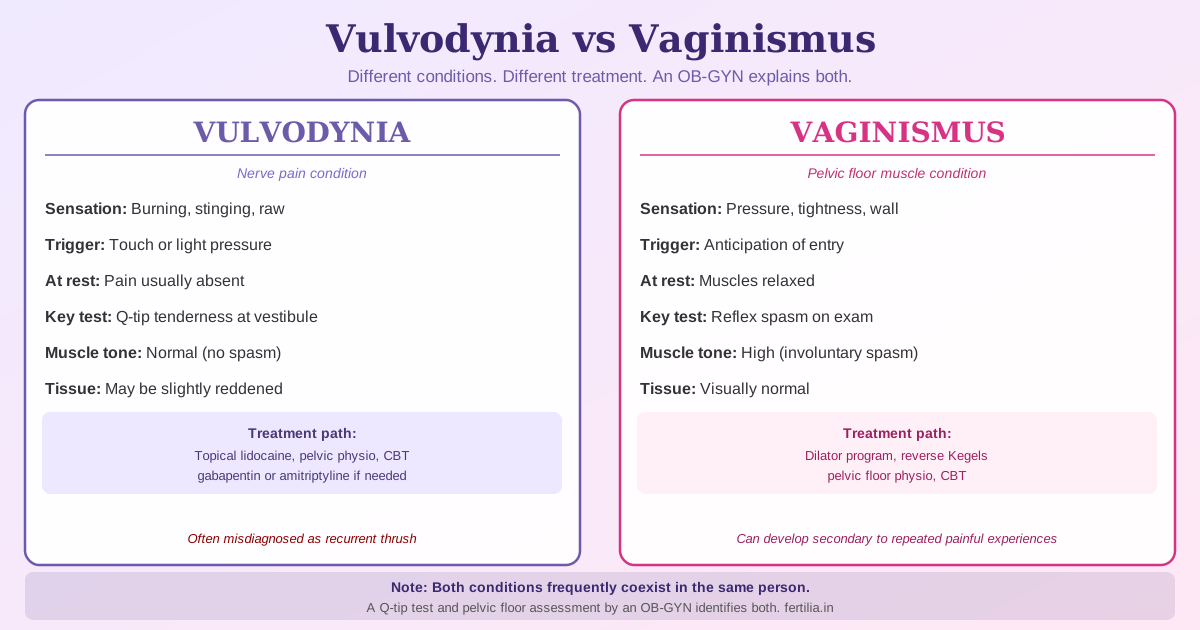
Vaginismus is an involuntary tightening or spasm of the pelvic floor muscles that surround the vaginal opening. The muscles contract reflexively, often before anything has made contact, and that contraction makes penetration painful, difficult, or completely impossible. There is no structural abnormality in the vaginal tissue itself. The problem is in the muscle response.
The full clinical picture and the 12-week treatment protocol are covered in the Vaginismus: An OB-GYN’s Honest Guide for India. For this comparison, the essential point is: vaginismus is a muscle problem.
Vulvodynia is chronic vulvar pain that lasts at least three months and has no clearly identifiable cause such as active infection, dermatological disease, or injury. The International Society for the Study of Vulvovaginal Disease (ISSVD) updated the consensus terminology in 2015, published by Bornstein and colleagues (2016, J Low Genit Tract Dis, PMID 27002677), classifying vulvodynia along two dimensions:
- Location: Generalised (pain across the whole vulva) or Localised (pain confined to the vestibule, clitoris, or another specific area)
- Provoked or Unprovoked: Does the pain occur spontaneously, or only when the area is touched or subjected to pressure?
The most common and clinically relevant form is Provoked Vestibulodynia (PVD): pain localised to the vestibule (the tissue just inside the vaginal entrance, between the inner labia minora and the hymen) that appears specifically when that area is touched or pressured. It is absent at rest. PVD is the form most frequently confused with vaginismus, because both cause pain during or at the attempt of penetration.
Harlow and Stewart (2003, J Am Med Womens Assoc, PMID 12744420) found in a community-based study that approximately 16% of women report chronic vulvar pain symptoms at some point in their lives. PVD is the most common subtype. Despite these numbers, it is routinely under-recognised in clinical practice in India.
The key distinction: vulvodynia is a nerve-based condition. The vestibular tissue in PVD shows pathological changes, including increased density of nociceptive nerve fibres, chronic low-grade neurogenic inflammation, and central sensitisation that amplifies pain signals from the vestibule. This is a measurable, documented process and does not occur in vaginismus, where the vulvar tissue itself is structurally normal.
The Presenting Story: How Each Patient Describes It
The history often gives the diagnosis away before the examination begins.
Vaginismus typically presents like this:
- Penetration is impossible or only possible with significant pain and conscious effort
- Tampons and gynaecological examinations trigger the same involuntary resistance
- The woman describes “hitting a wall” or “something blocking” rather than burning
- There is often anticipatory fear: the muscles tighten before contact, not just during
- Visual inspection of the vulval skin and vestibular tissue is normal
Provoked Vestibulodynia typically presents like this:
- There is a burning, stinging, or raw sensation specifically at the vaginal entrance
- The pain appears the moment that area is touched, sometimes even with clothing
- It may persist or worsen for hours after intercourse
- Tampons may be manageable but still cause some discomfort at the entrance point
- The vestibular tissue may appear slightly reddened or erythematous, though not always
- Women often describe it as “like touching an open wound” or “a burning that doesn’t switch off”
A practical question a woman can consider before her appointment: if wearing fitted clothing or sitting for long periods causes burning at the vulval entrance even without penetration, that points toward PVD. If the discomfort only occurs during attempted entry and feels like physical resistance, that leans toward vaginismus. These are not diagnostic tests, but they help orient the history.
The Q-Tip Test: How the Diagnosis Is Made
In clinic, the test that most reliably distinguishes PVD from vaginismus is the cotton-swab test (also called the Q-tip test), originally described by Friedrich (1987, J Reprod Med, PMID 3560069). The clinician uses a cotton-tipped applicator to apply very light pressure to multiple positions around the vestibule, working systematically around the clock face: at 12, 2, 4, 6, 8, and 10 o’clock. The patient scores discomfort at each point from 0 to 10.
In PVD, there is typically focal, sharp tenderness concentrated at the posterior vestibule (4-6-8 o’clock positions), often scored 6 to 10 out of 10. The tenderness is reproducible across examinations and is not explained by any visible skin disease, discharge, or current infection.
In vaginismus without PVD, the cotton swab applied to the vestibular tissue is not particularly painful. The problem begins when entry is attempted: the pelvic floor muscles contract involuntarily. An experienced clinician can detect this elevated resting tone and the reflex spasm response during single-finger pelvic floor assessment.
A proper clinical examination is important for this reason. Guessing between the two conditions based on symptoms alone is less reliable than a careful Q-tip test followed by pelvic floor assessment. The two-minute test is available at any gynaecology clinic, requires no specialist equipment, and changes the treatment pathway significantly.
When Both Coexist: The Most Common Complexity
Here is something many women never hear explained: vaginismus and PVD coexist in a significant proportion of patients. Reissing and colleagues (2004, Arch Sex Behav, PMID 14739686) found that approximately half of women diagnosed with vaginismus also show signs consistent with vestibulodynia on clinical examination.
The mechanism is understandable. A woman develops pain at the vestibule from PVD. Intercourse causes burning. The body learns to anticipate that burning: before the next attempt, the pelvic floor contracts as a protective measure. Over repeated experiences, that contraction becomes automatic. She now has both: the original nerve-pain condition at the vestibule and a secondary pelvic floor spasm on top of it.
This is why treatment in one area does not always resolve the full picture. A woman who treats the PVD successfully, bringing the burning down, may still find penetration difficult because the secondary muscle spasm has its own momentum and needs separate work. And a woman who goes straight to dilator therapy for the spasm component may plateau because the underlying vestibular sensitivity was never addressed.
Getting the correct diagnosis means knowing which component is primary, which developed as a consequence, and which ones need to be addressed simultaneously.
If you have been told “nothing is wrong” but still experience burning or pain at the entrance, a focused consultation can clarify whether you are dealing with PVD, vaginismus, or both. Dr. Suganya’s clinic is open for this conversation.
Chat with Dr. Suganya on WhatsApp
📘 Want the full differential in one place? Download Dr. Suganya’s free 39-page Navigating Vaginismus: Information, Support, and Recovery. Section 5 covers vulvodynia, vestibulodynia and 8 other conditions that can mimic vaginismus and how each is distinguished clinically. Get the guide →
Prefer Instagram? Comment PAINLESS on any @fertilia.health post and we’ll DM you the guide directly.
Treatment: Where the Pathways Differ
This is where the diagnosis matters most. The treatment pathways share some elements but differ substantially at the core.
For Vaginismus
The primary treatment is pelvic floor down-training: systematic relaxation and gradual exposure of the pelvic floor muscles using graduated vaginal dilators, combined with reverse Kegel exercises and diaphragmatic breathing. The protocol and technique are detailed in Vaginismus Exercises at Home: 12-Week Dilator Plan. Pelvic floor physiotherapy is the most important professional involvement. Psychological support addresses the fear-anticipation cycle that sustains the spasm.
For Vulvodynia (PVD)
The treatment approach is layered, and most women benefit from more than one modality at the same time.
Topical anaesthetic (first step). Zolnoun and colleagues (2003, Obstet Gynecol) reported that overnight application of 5% lidocaine ointment to the vestibule reduced pain in women with PVD. That was an open-label case series with no placebo arm, so treat it as encouraging rather than proven. It is low-risk, affordable, and can be started as soon as the diagnosis is confirmed. The application is done at bedtime; the area is rinsed in the morning. This does not cure PVD, but it reduces the threshold of discomfort and makes subsequent physiotherapy easier.
Physical therapy. A systematic review by Morin and colleagues (2017, Sex Med Rev, PMID 28363763) confirmed that pelvic floor physiotherapy for PVD addresses both the vestibular hypersensitivity and any secondary pelvic floor changes that have accumulated. This is where the treatment of PVD and vaginismus genuinely overlap: both conditions benefit from pelvic floor physiotherapy, just for different reasons. For PVD, the physiotherapist targets desensitisation of the vestibular tissue alongside pelvic floor work. For vaginismus, the focus is primarily on the muscle.
Cognitive behavioural therapy (CBT). A landmark randomised trial by Bergeron and colleagues (2001, Pain, PMID 11275387) compared CBT, biofeedback, and surgical vestibulectomy for PVD. All three reduced pain scores, with CBT showing outcomes equivalent to surgery at six months. CBT for PVD targets pain catastrophisation and intimacy-related anxiety, both of which amplify vestibular sensitivity and sustain the condition.
Low-dose oral medication. For women with persistent moderate-to-severe PVD that has not responded adequately to topical and physical treatments, low-dose tricyclic antidepressants (typically amitriptyline 10-25 mg at night) or gabapentin are sometimes used to reduce neuropathic pain. Be aware that the trial evidence here is disappointing: Foster et al. (2010, Obstet Gynecol) tested oral desipramine and topical lidocaine against placebo and found no benefit over placebo, and the gabapentin trial (Brown et al., 2018) likewise failed to beat placebo. They are still used, because individual women do report benefit, but nobody should tell you they are proven. These medications are prescribed by a gynaecologist or pain specialist. The doses used for vulvodynia pain are far lower than antidepressant or epilepsy dosing. A woman receiving these should not be concerned that she is being told her condition is psychiatric: the mechanism is neuropathic pain modulation, not mood treatment.
Topical corticosteroids (such as clobetasol) may help when low-grade inflammation is a contributing factor. They are prescribed for short courses and under medical supervision, not long-term.
Surgical vestibulectomy (removal of the tender vestibular tissue) is reserved for women with clearly localised PVD who have completed at least six months of conservative treatment without adequate relief. Bergeron 2001 showed it is effective. Surgery is the end of the treatment ladder, not the starting point.
What Does Not Work for PVD
Repeated antifungal treatment. This is the most common wrong pathway in Indian practice. PVD is frequently misdiagnosed as recurrent candidiasis because the burning sensation at the vestibule is superficially similar to thrush symptoms. The distinguishing feature is that in PVD the vaginal discharge examination shows normal flora, no white cells on wet prep, and no fungal hyphae. If multiple courses of fluconazole or clotrimazole have not resolved the burning, and the burning is specifically at the entrance rather than inside or accompanied by significant discharge, PVD should be formally assessed.
Dilator therapy alone, without addressing the vestibular sensitivity component, is also not the primary treatment for pure PVD. It becomes appropriate when a secondary vaginismus component has developed on top of the PVD.
What This Looks Like in India
Both conditions are underdiagnosed in India, and PVD is particularly under-recognised. The combination of limited awareness, brief consultation windows, and the cultural difficulty of discussing vulvar pain means that many women spend years receiving repeated antifungal prescriptions for what is, in fact, a nerve condition.
Here is what helps:
Name it clearly at your appointment. Say: “I have chronic burning at the vaginal entrance when anything touches that area. I want to rule out provoked vestibulodynia.” Using the correct term moves the consultation into a diagnostic framework rather than a symptom-level discussion.
Ask for a Q-tip test. Any trained gynaecologist can perform it. It takes two to three minutes, requires no specialist equipment, and changes the treatment recommendation when positive.
Pelvic floor physiotherapists trained in vulvar pain conditions are available in most large Indian cities. The Vaginismus Doctor India guide covers the questions to ask when identifying a clinician with the relevant training in this area.
Treatment is effective. PVD responds well to physiotherapy and CBT combinations. Vaginismus resolution rates with conservative therapy reach 78-86% in systematic reviews (Zulfikaroglu et al. 2026, PMID 41148166). The condition that has been dismissed or mismanaged for years very often has a clear treatment pathway once it is correctly identified.
Frequently Asked Questions
1. Is vulvodynia the same as vaginismus?
No. Vulvodynia is chronic nerve-related pain in the vulvar tissue, most commonly at the vestibule in its provoked vestibulodynia form. Vaginismus is an involuntary spasm of the pelvic floor muscles around the vaginal opening. Both cause pain during or at the attempt of intercourse, but the mechanism differs and so does the primary treatment. They can and frequently do coexist in the same person.
2. How does a doctor distinguish them clinically?
The Q-tip test is the primary clinical tool: light cotton-swab pressure is applied to vestibular positions at multiple clock points. Focal, reproducible tenderness at 4-6-8 o’clock suggests provoked vestibulodynia. Pelvic floor assessment identifies involuntary muscle tone and reflex spasm response consistent with vaginismus. A history of burning that persists for hours after contact, or occurs with clothing and without penetration attempt, leans toward PVD. A history of “hitting a wall” that prevents all entry regardless of lubrication or relaxation leans toward vaginismus.
3. Can I have both at the same time?
Yes, and it is common. Reissing et al. (2004) found that roughly half of women with vaginismus also show vestibulodynia signs on examination. A nerve-pain condition at the vestibule frequently triggers a secondary protective muscle spasm over repeated painful experiences. Both components need treatment, often simultaneously, for the best outcome.
4. Will antifungal treatment help vulvodynia?
No. PVD is not caused by fungal infection. Repeated antifungal courses are the most common wrong pathway. If you have had multiple courses of fluconazole or topical antifungals without lasting improvement, and your symptoms are specifically a burning at the entrance on contact rather than itch, internal irritation, or discharge, ask your gynaecologist to assess for PVD. A wet-mount examination showing no fungal hyphae, no excess white cells, and normal flora alongside persistent burning is a strong clinical pointer toward PVD.
5. Is vulvodynia treated with surgery?
Surgery (vestibulectomy) is one option but is not where treatment starts. Most women are managed with a combination of topical lidocaine, physical therapy, and CBT. Low-dose gabapentin or amitriptyline is added when the former combination is insufficient. Surgery is considered only after six or more months of conservative treatment have not produced adequate relief for clearly localised PVD. Bergeron et al. (2001) showed it is effective when correctly indicated.
6. Will dilator therapy help if I have vulvodynia?
Dilator therapy is the core treatment for vaginismus, not primary PVD. If you have pure PVD without a secondary muscle spasm component, dilators alone will not resolve the vestibular nerve sensitivity. If you have both conditions, as is common, pelvic floor physiotherapy can address both components simultaneously. A proper assessment will identify whether dilators belong in your treatment plan and at which stage.
7. Where can I get assessed for vulvodynia in India?
A gynaecologist familiar with pelvic pain conditions can perform the initial assessment and Q-tip test. For the physiotherapy and CBT components, the same specialist pathway described in the Vaginismus Doctor India guide applies: look for a clinician who works alongside a pelvic floor physiotherapist and can refer to a psychosexual therapist or CBT-trained counsellor. Teleconsultation is available for an initial assessment and treatment planning conversation.
Taking the Next Step
If chronic burning at the vaginal entrance has been your reality, the most useful thing to know is this: there is a name for it, there is a two-minute test for it, and there is an evidence-based treatment for it. Being told nothing is wrong, or receiving another antifungal prescription, or being offered reassurance without investigation is not the response you need.
The path forward starts with the right diagnosis. From there, treatment is well-mapped and genuinely effective.
If your pain turns out to be the muscle spasm of vaginismus rather than vulvodynia, Fertilia’s online treatment program for vaginismus treats it directly, combining dilation, pelvic floor down-training, and psychological support over 12 weeks.
Chat with Dr. Suganya on WhatsApp
For further reading in this series: Dyspareunia vs Vaginismus: How Doctors Tell the Difference covers the full range of conditions that cause painful sex, and Reverse Kegels: How to Do the Exercises, Step by Step explains the pelvic floor muscle component in more detail.