When a patient of mine starts dilator therapy for vaginismus, one of the first questions I get on WhatsApp is: “Doctor, where do I actually buy one? Everything I find online is either sketchy or overpriced.”
For more on this, read our guide on How to Choose a Vaginismus Doctor in India. It is a fair question. Vaginal dilators sit in an odd gap in Indian healthcare. They are genuine medical devices with strong evidence behind them, but you will not find them at the corner chemist, and the Indian e-commerce listings that do exist are a mix of legitimate therapeutic sets and completely misleading products. The search results are dominated by Amazon and Flipkart product pages that give you a star rating and a centimetre measurement but no guidance on what size to start with, which material to choose, or what to do once the box arrives.
This guide fills that gap. Before you purchase anything, please read the complete vaginismus guide to understand why dilator therapy works and whether it is the right starting point for your situation. This post assumes you have already done that and are ready to make an informed choice.
Why a Dilator at All?
Vaginismus involves an involuntary, conditioned contraction of the pelvic floor muscles around the vaginal entrance. The muscles have learned to guard, and the guarding has become automatic. The goal of dilator therapy is graded desensitisation: systematically exposing the tissues and the nervous system to progressively larger objects in a controlled, pain-free setting, so that the muscle response gradually unlearns the guarding reflex.
This is not a novel concept. A 2018 systematic review and meta-analysis by Maseroli and colleagues (PMID 30446469) covering 43 observational studies and 3 RCTs found an overall treatment success rate of 79%, rising to 82% in higher-quality studies. Importantly, the review found that treatment success did not significantly depend on how long the woman had had the condition, whether it was primary or secondary vaginismus, or her age. That is genuinely encouraging: duration does not determine outcome.
A 2026 meta-analysis by Zulfikaroglu and colleagues (PMID 41148166) confirmed that dilator therapy alone achieves approximately 78% success, while multimodal approaches combining dilators with pelvic floor physiotherapy and psychological support achieve 85-86%. Graded exposure with dilators is the clinical backbone of vaginismus treatment regardless of the other layers you add. The 12-week dilator protocol on this site walks through the full progression.
Material Guide: What to Choose and What to Avoid
Not all dilators are the same material, and the material matters both for comfort and for safety.
Medical-grade silicone (recommended): Soft, smooth, and slightly flexible. Silicone gives a little when the pelvic floor is tense, which reduces the bruising sensation of hitting a guarded muscle wall. It is non-porous (so bacteria cannot colonise it), easy to clean, and body-safe with no leaching of chemicals. Most reputable sets available in India today use silicone for the smaller sizes. If the listing does not specify the material or just says “flexible rubber,” skip it.
Medical-grade plastic or PVC: Rigid and unforgiving. Common in pharmaceutical-branded sets. It works, but rigidity means any pelvic floor tensing is felt immediately as hard pressure rather than a gradual squeeze, which beginners often find harder to relax with. PVC also degrades over time and is harder to clean thoroughly.
Glass: Technically body-safe and very smooth, but heavy and fragile. Glass dilators are uncommon in the Indian market and not a practical first choice.
Handheld vibrators marketed as “therapeutic dilators”: Avoid these during active vaginismus treatment. The vibration adds a second stimulus variable when the goal is purely graduated exposure to diameter and pressure. You want the training environment to be as simple and predictable as possible. Some women do introduce gentle vibration later in treatment at the recommendation of their therapist, but as an initial dilator for vaginismus, a plain smooth surface is better.
Set vs Single: Why the Progression Matters
Buying a single dilator is almost always the wrong approach for vaginismus treatment. The progression from size to size is itself therapeutic. Skipping a size is the most common reason women stall: they went too fast, encountered resistance, and concluded therapy is not working when they simply needed the intermediate step.
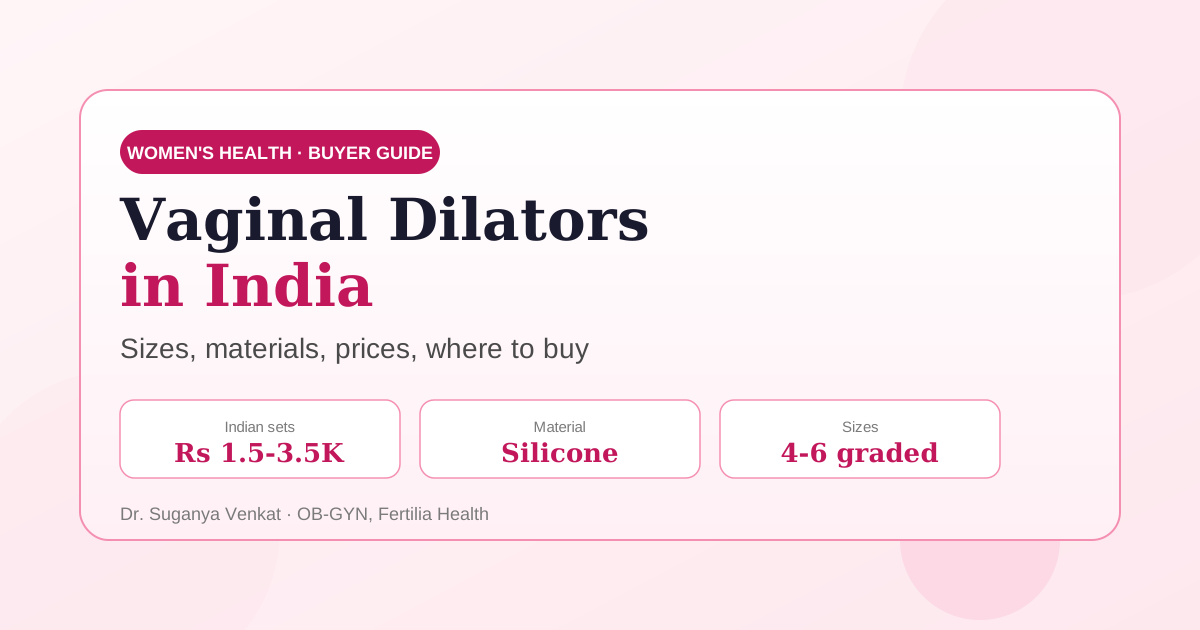
A good graded set gives you four to six sizes with smooth increments of roughly 0.5 cm in diameter between each. The approximate diameter progression in most India-available sets runs from about 1.0 cm (smallest, close to a fingertip) up to 3.5-4.0 cm (the largest, comparable to the diameter of an average erect penis). Each step is achievable only when the previous one is fully comfortable. That architecture is the therapy: it is not just about the final size.
If you start with a set and later find that even the smallest size is too large for comfortable first contact, that is important clinical information, and a sign that you should start treatment with a pelvic floor physiotherapist before continuing at home. Dyspareunia vs vaginismus discusses that distinction in detail.
India Market Overview: What Is Available and What It Costs
As of May 2026, here is what you are realistically looking at in the Indian market.
Amielle Comfort Kit: Available on 1mg and PharmEasy, sometimes on Amazon. This is a pharmaceutical-branded set, often with 4-5 sizes in medical-grade plastic or PVC. Price range approximately Rs 4,500-6,500. The brand has a long clinical track record and is what many hospital-based physiotherapists recommend. The downside is the rigid material and the relatively higher cost.
Indian-manufactured silicone sets: Available on Amazon.in and Flipkart from brands including B-Arm, JDMeditech, Body Fitness V-Trainers, and Advin. Price range approximately Rs 1,500-3,500 for a 4-6 piece set. Quality varies by brand, but the better listings clearly state medical-grade silicone, provide size measurements in centimetres, and include a carry case. Read the listing carefully: if it says “dilator set” but shows images of kegel weights or a vaginal tightening cone, it is not a dilator set.
Imported sets (Intimate Rose, Soul Source, others): These are the sets most commonly used in US and UK pelvic floor therapy protocols. They are available in India occasionally through Proactive For Her or via imports, at approximately Rs 8,000-15,000. The silicone quality and size range are excellent, but availability is inconsistent and customs clearance adds delay. For most Indian women, a well-rated domestic silicone set or the Amielle kit is entirely sufficient.
IndiaMart: Manufacturers and wholesalers list here, sometimes at lower prices than retail. The product descriptions are often sparse. If you order through IndiaMart, verify that the listing explicitly states medical-grade silicone or medical-grade plastic, has identifiable brand/manufacturer information, and that the seller can provide documentation on materials.
What not to buy: Vaginal tightening cones (these are pelvic floor strengthening devices, the exact opposite of what vaginismus therapy requires, since vaginismus involves excess tension, not weakness). “Couples dilator sets” that come with novelty shapes or textures. Any product bundled with a “vaginismus cure supplement” or pill, which has no evidence base.
💬 If you are unsure which product is right for your grade of vaginismus, I can guide you directly. Message Dr. Suganya on WhatsApp
📘 Buying a dilator is step one. The protocol is what makes it work. Download Dr. Suganya’s free 39-page Navigating Vaginismus: Information, Support, and Recovery for the full how-to, including how dilator therapy fits alongside pelvic floor physiotherapy and CBT. Get the guide →
Prefer Instagram? Comment PAINLESS on any @fertilia.health post and we’ll DM you the guide directly.
Where to Buy: Discreet Ordering Note
One practical concern I hear often: “Will the packaging make it obvious what it is?”
Major Indian online pharmacies (1mg, PharmEasy) and Amazon.in dispatch in unmarked outer packaging. The outer courier label does not reveal the contents. Delivery personnel and family members who receive the parcel at the door will see a standard courier box or envelope. For maximum discretion, ship to a work address or a post office locker service if that is available in your city.
The only exception is if you order through a specialised women’s health retailer and they include branded packaging in the outer wrapper. Proactive For Her, for example, is known for discreet dispatch, but it is worth confirming at checkout.
How to Use a Dilator: A Brief Protocol
The full step-by-step 12-week protocol is at Vaginismus Exercises at Home. What follows is a clean summary so you know what you are committing to before you purchase.
Before you begin: Wash your hands thoroughly. Apply a generous amount of water-based lubricant to the dilator and to the vaginal opening. Choose a time when you will not be interrupted and when you are not already anxious or rushed.
Position: Lie on your back with knees bent and feet flat on the surface, knees apart. Alternatively, lie on your side with the top knee bent and resting on a pillow. Choose whichever feels less guarded. There is no “correct” position: the one where your muscles can relax most easily is correct for you.
Breathing first: Before any insertion attempt, spend two to three minutes doing diaphragmatic breathing: slow breath in through the nose for four counts, belly rises, slow breath out through the mouth for six counts. This activates the parasympathetic nervous system and genuinely reduces pelvic floor tone. It is not a formality.
First contact: On your first session, the goal is not insertion. Hold the smallest dilator at the vaginal opening with gentle pressure. Breathe. Notice the sensation. If the muscles are not contracting in reflex, you can gently begin to advance, one centimetre at a time, pausing after each centimetre to breathe and wait for any tension to release.
Hold: Once at a comfortable depth (even one centimetre is genuine progress on Day 1), hold the position while continuing to breathe. Session length builds gradually, guided by comfort, with no fixed minimum. You are not trying to move the dilator in and out. You are letting the muscle learn that the object is not a threat.
Withdrawal: Slow and deliberate. No sudden movement.
How often: Starting every other day gives the body time to recover between sessions. Daily practice is not harmful, but it has not been shown to be superior. How often and for how long you practise is guided by your comfort and, in a supported program, reviewed with your physiotherapist.
When to progress to the next size: When insertion of the current size is consistently comfortable, your breathing stays relaxed, and there is no significant pain or distress. You do not progress by reaching a set number of minutes or sessions. If you are still at the same size after two weeks of regular practice, that is a signal to revisit the programme with a pelvic floor physiotherapist rather than continuing independently.
Lubricant Choice Matters
This is a detail many Indian guides omit, and it causes real problems.
Use a water-based lubricant: KY Jelly, Durex Play, Manforce Wet, or any pharmacy-labelled water-based lubricant. Apply generously, reapply during the session if needed, and do not economise.
Do not use silicone-based lubricant with a silicone dilator. Silicone-on-silicone causes the surface to degrade over time, making the dilator tacky and harder to clean.
Do not use petroleum jelly (Vaseline) with silicone dilators. Oil-based products penetrate silicone at a molecular level and degrade it. They also disrupt vaginal pH, which can trigger bacterial vaginosis in some women.
Coconut oil and ghee are occasionally used in India and are better than Vaseline with silicone (plant-based, not petroleum-based), but their viscosity is temperature-dependent and inconsistent, making them unreliable during active training. Use a dedicated water-based lubricant for therapy sessions.
Flavoured lubricants are fine recreationally but are not recommended during active vaginismus therapy: the added sugars and flavourings can alter vaginal flora during the multi-week treatment period. The AAGL guidance on lubricants and vaginal tissue recommends pH-balanced, osmolality-appropriate formulations for therapeutic use specifically.
Cleaning and Storage
After each session, clean with warm water and mild soap (standard hand soap is fine for silicone; avoid triclosan-based antibacterial soaps, which degrade the surface over time). Rinse thoroughly, air-dry completely, and store in a fabric bag or the original case away from direct sunlight. For periodic sterilisation, follow the manufacturer’s instructions: boiling works for silicone but can warp plastic dilators.
When Dilators Are Not Enough on Their Own
For most women with primary vaginismus, a structured home programme with a graded dilator set and the 12-week protocol is a reasonable starting point. But there are situations where working at home alone is not appropriate as the sole approach.
If you have moderate to severe vaginismus (Lamont Grade 3 or 4, where even a speculum examination is impossible or where the thighs close reflexively), the evidence base strongly supports combining dilator therapy with pelvic floor physiotherapy and psychological support. The Zulfikaroglu 2026 meta-analysis (PMID 41148166) shows that multimodal treatment reaches 85-86% success compared to 78% for dilators alone, and the gap is larger for higher grades.
If your painful sex developed after delivery rather than at the start of sexual activity, the picture is different. Postpartum tissue changes, scar tissue from episiotomy, or hormonal shifts in breastfeeding can all cause pain that mimics vaginismus but has different drivers. Painful sex after delivery covers that context separately.
If you have been stalling on dilator therapy without guidance, Fertilia’s online Vaginismus Recovery Program provides full setup support, troubleshooting, and weekly check-ins so you are not left guessing whether you are doing it right.
💬 You do not have to navigate this alone. Many women I see have been trying dilator therapy without guidance for months, stalling at the same size. A 30-minute WhatsApp consultation can identify exactly where the block is. Reach Dr. Suganya here.
Related Reading in This Series
- Vaginismus: An OB-GYN’s Honest Guide for Indian Women - the hub for this entire series
- 12-Week Dilator Protocol: Full Step-by-Step Guide - the complete home programme this post references
- Dyspareunia vs Vaginismus: How Doctors Tell Them Apart - if you are unsure which condition you are dealing with
- Painful Sex After Delivery: Why It Hurts and What Helps - if symptoms started postpartum
Frequently Asked Questions
Where can I buy vaginal dilators in India?
The two practical options are online pharmacies (1mg and PharmEasy) and the wider marketplaces (Amazon.in and Flipkart). For most women a medical-grade silicone set in the Rs 1,500 to Rs 5,000 range (B-Arm, JDMeditech, Advin) does the job; the Amielle Comfort Kit (Rs 4,500 to Rs 6,500) is the next step up. Imported brands like Intimate Rose are available intermittently on the same platforms but cost significantly more. All four platforms ship in unmarked outer packaging, and no prescription is needed.
Are silicone dilators better than PVC for vaginismus?
For active vaginismus treatment, yes. Medical-grade silicone is non-porous, body-safe, easier to clean and disinfect, and warms gradually to body temperature, which matters when the goal is reducing the protective spasm rather than triggering it. PVC sets are cheaper but tend to be harder, retain a colder feel, and the porous surface holds residue that requires more careful cleaning. For a long course of graded therapy, silicone is the right material to start with.
Which is the best vaginal dilator set available in India?
For most women, a medical-grade silicone set in the Rs 1,500-3,500 range (B-Arm, JDMeditech, Advin on Amazon/Flipkart) or the Amielle Comfort Kit (Rs 4,500-6,500 on 1mg/PharmEasy) are both sound choices. Key criteria: silicone material, 4-6 sizes, clear size labelling in centimetres. Imported brands like Intimate Rose are higher quality but inconsistently available in India and significantly more expensive.
How many sizes do I need in a dilator set?
A minimum of four sizes with smooth diameter increments. Six sizes is better. The progression from the smallest to the largest should feel like a gentle staircase, not a jump. Sets that only include two or three sizes are unsuitable for vaginismus therapy because the increments are too large.
Can I use a regular vibrator instead of a dilator?
Not as a substitute for a graded dilator set during active vaginismus treatment. Vibrators introduce a second variable (vibration) that makes it harder to isolate the effect of graded exposure. They also rarely come in a full progression of diameters. Start with a plain smooth dilator set; some women introduce vibration as a separate tool later in treatment, but that is a discussion to have with your treating clinician.
Will anyone know what I ordered online?
No. 1mg, PharmEasy, and Amazon.in all ship in unmarked outer packaging. The courier and anyone receiving the parcel will see a standard courier box with no product name visible externally.
How long does a dilator set last?
A medical-grade silicone dilator, properly cleaned and stored, lasts several years. Replace it if the surface becomes tacky, discoloured, or cracked.
My dilator feels too wide even on the smallest size. What should I do?
This is important clinical information, not a sign that dilator therapy is wrong for you. It means your starting point is earlier: you may need to work with a pelvic floor physiotherapist before home dilators are appropriate, or simply that you are not yet fully relaxed at the start of sessions. Review the breathing and positioning steps, and consider a WhatsApp consultation before continuing.
Is a prescription needed to buy a vaginal dilator in India?
No. Vaginal dilators are classified as medical devices, not controlled substances. You can purchase them directly from online pharmacies, Amazon, Flipkart, or IndiaMart without a prescription.
Which size dilator should I start with?
The smallest one in the set. In most India-available sets that is roughly 1.0 cm across, close to the width of a fingertip. Do not choose a starting size based on where you hope to get to: the graded architecture is what does the work, not the final size. Move up only when insertion of the current size is consistently comfortable, your breathing stays relaxed, and there is no significant pain or distress. Progression is guided by comfort, not by reaching a set number of minutes.
Are the vaginal dilators sold on Amazon safe to use?
Some are, and some are not dilator sets at all. Indian-manufactured medical-grade silicone sets are legitimate and typically cost Rs 1,500 to Rs 3,500 for four to six pieces. The problem is that the same search results also return kegel weights and “vaginal tightening” cones described as dilators. Three checks before buying: the listing states medical-grade silicone rather than PVC, it gives diameters in centimetres, and the images show a graded set rather than a single item or a weighted cone.
Can I use a finger instead of a dilator?
For the earliest step, yes. The smallest dilator in most sets is about 1.0 cm across, close to a fingertip, so a finger covers a similar starting point and needs nothing ordered or delivered. What a finger cannot provide is the graded progression in controlled increments of roughly 0.5 cm, and that progression is the therapy rather than an accessory to it. Beginning with a finger during the early body-mapping and breathing work is reasonable; a set becomes worth having once you are ready to step up in measured stages.