In many South Indian homes, a ripe pomegranate is placed at the doorstep when a daughter returns home after delivering. The deep ruby colour, the hundreds of glistening arils, the sweet-tart burst with every bite: anar is not just a fruit. It is woven into how Indian families care for their women.
During pregnancy, pomegranate earns its place in the kitchen on its own nutritional merits. This guide covers the actual numbers from USDA FoodData Central, how fresh fruit compares to packaged juice, portions by trimester, and three easy Indian recipes you can prepare in under ten minutes.
For more on this, read our guide on Watermelon in Pregnancy.
What Is in a Pomegranate? (Nutrition Facts Per 100g)
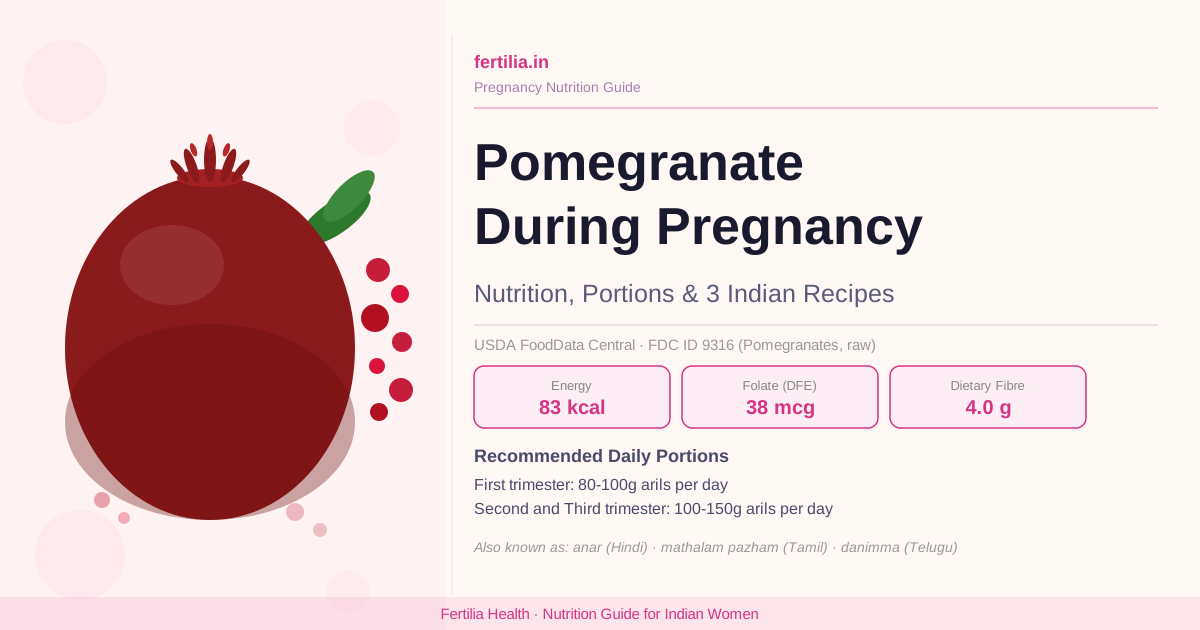
The data below comes from USDA FoodData Central, FDC ID 9316 (Pomegranates, raw). All values are for 100g of raw arils, which is roughly one-third of a medium pomegranate.
| Nutrient | Per 100g |
|---|---|
| Energy | 83 kcal |
| Protein | 1.67g |
| Fat | 1.17g |
| Carbohydrate | 18.7g |
| Dietary Fibre | 4.0g |
| Sugars | 13.67g |
| Folate (DFE) | 38mcg |
| Vitamin C | 10.2mg |
| Vitamin K | 16.4mcg |
| Iron | 0.30mg |
| Potassium | 236mg |
| Calcium | 10mg |
Reading the table for pregnancy:
Folate stands out. At 38mcg per 100g, a 150g portion of pomegranate arils provides about 57mcg of folate (DFE). Folate requirements are higher during pregnancy than at other stages of life. For the full picture on folate and pregnancy requirements, read our complete guide to folic acid and folate in pregnancy.
Fibre at 4.0g per 100g is a meaningful contribution to daily intake. Digestion often slows during pregnancy, and fibre from whole fruits is one part of a balanced approach to digestive comfort.
Iron at 0.30mg per 100g is a modest amount. Pomegranate is not a primary iron source. For a full list of iron-rich Indian foods during pregnancy, see our iron-rich foods pregnancy guide. If you eat well but still feel tired a lot, Dr. Suganya’s 3-test checklist for constant tiredness is a useful read.
Pomegranate in Different Indian Languages
Pomegranate appears in every regional cuisine across India. When buying from a local vendor, these names will help:
| Language | Name | Script |
|---|---|---|
| Hindi | Anar | अनार |
| Tamil | Mathalam pazham | மாதுளம்பழம் |
| Telugu | Danimma | దానిమ్మ |
| Kannada | Dalimbe | ದಾಳಿಂಬೆ |
| Malayalam | Mathalam | മാതളം |
| Bengali | Dalim | দালিম |
| Marathi | Dalimb | डाळिंब |
| Gujarati | Anar | અनાร |
| Punjabi | Anar | ਅਨਾਰ |
| Odia | Dalimba | ଡାଲିମ୍ବ |
Pomegranate is available in Indian markets year-round, with peak season running from October through February. Cold-storage supplies and out-of-season cultivation from Maharashtra and Rajasthan keep the fruit accessible through summer in most cities.
Fresh Pomegranate vs Pomegranate Juice
This is one of the most common questions pregnant women ask about pomegranate. Both fresh fruit and packaged juice are available widely, but they are not nutritionally equivalent.
| Feature | Fresh Arils (100g) | Packaged Juice (100ml) |
|---|---|---|
| Calories | 83 kcal | approximately 54 kcal |
| Dietary Fibre | 4.0g | approximately 0.1g |
| Sugars | 13.67g | approximately 12g |
| Folate (DFE) | 38mcg | approximately 8mcg |
| Vitamin C | 10.2mg | approximately 0.1mg |
| Processing | None | Pasteurised, filtered |
Packaging and pasteurisation remove most of the fibre, a significant share of the folate, and nearly all of the vitamin C. What remains in most packaged pomegranate juices is sweetened liquid with a fraction of the whole fruit’s nutrition.
Freshly pressed home juice, made by blending arils without straining, retains more nutrients than packaged juice. But even homemade juice loses the intact fibre that comes from eating whole arils.
Practical guidance for pregnancy: Eat the arils directly, scatter them over dahi, or mix them into a fruit chaat. If you prefer juice, make it fresh at home and do not strain out the pulp.
Want help building a trimester-by-trimester food plan that works for your body? Message Dr. Suganya’s team on WhatsApp. Our nutrition team can put together a personalised pregnancy meal plan for you, as part of the 90-day Pregnancy Care program.
Portion Guide by Trimester and Life Stage
Portions below are for raw arils, not whole fruit. One medium pomegranate (around 300-350g whole) typically yields 250-280g of arils once opened.
| Life Stage | Daily Portion (Arils) | Notes |
|---|---|---|
| First trimester | 80-100g | Appetite and nausea vary; start with a small handful |
| Second trimester | 100-150g | Digestion is generally more comfortable; full portion works well |
| Third trimester | 100-150g | Fibre intake matters as constipation often peaks in months 8-9 |
| Postpartum (recovery) | 80-100g | A good winter recovery fruit; pairs well with jaggery-laced dahi |
| PCOS (non-pregnant) | 100g | Fits comfortably as part of a balanced meal |
| General (non-pregnant) | 100-150g | Part of a varied fruit rotation |
If you are managing gestational diabetes or have been given specific dietary restrictions, check with your clinical team about daily fruit portions.
How to Open a Pomegranate Without Making a Mess
Opening a pomegranate cleanly is a skill worth learning. The method used in most South Indian kitchens:
- Roll the whole pomegranate on a flat surface with your palm, pressing gently. This loosens the arils inside.
- Score around the centre with a knife, cutting through the outer skin only, not all the way through.
- Pull the two halves apart over a large bowl of water.
- Submerge each half and break the sections apart with your fingers. The arils sink; the white pith floats.
- Skim away the floating pith, drain the water, and collect the arils.
The water method keeps red juice from staining your counter and hands.
Buying and Storage Guide
What to look for when buying:
- Choose a pomegranate that feels heavy for its size (heavier means more juice and more arils)
- Skin should be firm and leathery, not soft, wrinkled, or cracked
- Colour ranges from pale pink to deep burgundy depending on variety; colour alone is not a reliable quality indicator
- Avoid fruits with visible mould, broken skin, or a vinegary smell
Storage:
- Whole, uncut pomegranate: up to 1 month in the refrigerator; 2 weeks at cool room temperature
- Deseeded arils in an airtight container: refrigerate and use within 4-5 days
- Freezing arils: spread them in a single layer on a tray, freeze until solid, then transfer to a sealed container. Frozen arils keep for up to 3 months and work well in lassi and smoothies, though they lose their crunch when thawed.
3 Simple Indian Recipes Using Pomegranate
Recipe 1: Anar Raita
A cooling, dahi-based side dish that takes five minutes. Pairs well with rice, roti, or paratha.
Ingredients (serves 2):
- 150g thick dahi (full-fat or low-fat)
- 80g pomegranate arils
- A pinch of roasted jeera powder
- A pinch of black salt (kala namak)
- A few fresh mint leaves, torn
- Optional: a small pinch of red chilli powder
Method:
- Whisk the dahi until smooth.
- Fold in the pomegranate arils.
- Season with jeera powder and black salt. Add chilli powder if using.
- Garnish with torn mint leaves.
- Serve immediately or refrigerate for up to 2 hours.
The natural sweetness of anar works well against the tartness of dahi, making this a combination that is easy on the palate even when food preferences shift during pregnancy.
Recipe 2: Pomegranate Fruit Chaat
A quick snack or light dessert. Chaat masala adds a tangy depth to the fruit’s natural sweetness.
Ingredients (serves 2):
- 100g pomegranate arils
- 1 medium banana, sliced
- 1 small apple, diced
- Juice of half a lime
- A pinch of chaat masala
- A pinch of black salt
- A small handful of fresh coriander, chopped
Method:
- Combine pomegranate arils, banana slices, and diced apple in a bowl.
- Squeeze lime juice over the fruit.
- Sprinkle chaat masala and black salt.
- Toss gently and top with fresh coriander.
- Serve immediately (banana slices discolour after about 30 minutes).
Variation: Replace apple with guava during guava season. Add a teaspoon of pre-soaked sabja seeds for extra texture.
Recipe 3: Anar Lassi
A thicker, fruit-based lassi that works well in the second and third trimester when appetite is good.
Ingredients (serves 2):
- 100g pomegranate arils
- 250ml thick dahi
- 100ml cold water or chilled milk
- 1 teaspoon honey or a small piece of jaggery (optional, for sweetness)
- A pinch of cardamom powder (elaichi)
- A few ice cubes
Method:
- Blend the pomegranate arils until they break down into a rough paste.
- Pass the paste through a fine mesh strainer to separate the juice from the hard seed centres. Press firmly to extract all colour and flavour.
- Add the dahi, water or milk, sweetener if using, and cardamom.
- Blend until smooth and frothy.
- Add ice and serve immediately.
Note: The straining step removes the hard white seed centres from the blended arils. The extracted juice carries most of the colour and flavour; the hard seed pieces are the only part that does not blend smooth.
Ready to sort out your pregnancy nutrition from first trimester to postpartum? Message Dr. Suganya’s team on WhatsApp. We will put together a plan that fits your food preferences and schedule.
Frequently Asked Questions
Is pomegranate safe to eat during pregnancy?
Yes. Pomegranate is safe to eat during a normal pregnancy. It is not listed as a food to avoid during pregnancy in standard clinical guidance. If you have gestational diabetes or specific dietary restrictions from your doctor, check with your care team about the right portion for your plan.
How much pomegranate can I eat per day during pregnancy?
For most women in the second and third trimester, 100-150g of arils per day (roughly one-third to half a medium pomegranate) is a comfortable portion. In the first trimester, when appetite may be lower and nausea common, 80-100g is plenty.
Is pomegranate juice better than fresh pomegranate during pregnancy?
Fresh arils are nutritionally better than packaged juice. Whole arils retain 4.0g of dietary fibre per 100g; packaged juice has almost none. If you prefer juice, make it fresh at home without straining out the pulp.
When is the best time to eat pomegranate during pregnancy?
Any time of day works. Many women find fruit easiest as a mid-morning snack between breakfast and lunch, or as a light afternoon snack. Eating it alongside protein-rich foods like dahi or dal makes for a satisfying, balanced plate.
What are the regional Indian names for pomegranate?
Anar in Hindi, Punjabi, and Gujarati; Mathalam pazham in Tamil; Danimma in Telugu; Dalimbe in Kannada; Mathalam in Malayalam; Dalim in Bengali; Dalimb in Marathi; Dalimba in Odia.
Can I eat pomegranate seeds during pregnancy?
The white inner seed at the centre of each aril is edible. Most people chew and swallow the whole aril; this is completely safe. If the hard texture is uncomfortable, you can bite the aril, extract the juice, and discard the seed. Both approaches are fine.
Does pomegranate help with constipation during pregnancy?
Pomegranate provides 4.0g of dietary fibre per 100g, which contributes to daily fibre intake. Managing digestive comfort during pregnancy involves total daily fibre from all food sources, adequate water intake, and regular movement. No single fruit is a complete solution on its own.
For a complete trimester-by-trimester nutrition guide, download our free Pregnancy Guide.
Related reads:
- Beetroot in Pregnancy: Folate, Iron and Daily Portions
- Iron-Rich Indian Foods for Pregnancy: Complete Guide
- Dry Fruits During Pregnancy: Which Ones and How Much
- Kiwi During Pregnancy: Nutrition Facts and Daily Portions
- Mango During Pregnancy: Safe, Benefits and How Much
- After Delivery Food for Indian Mothers