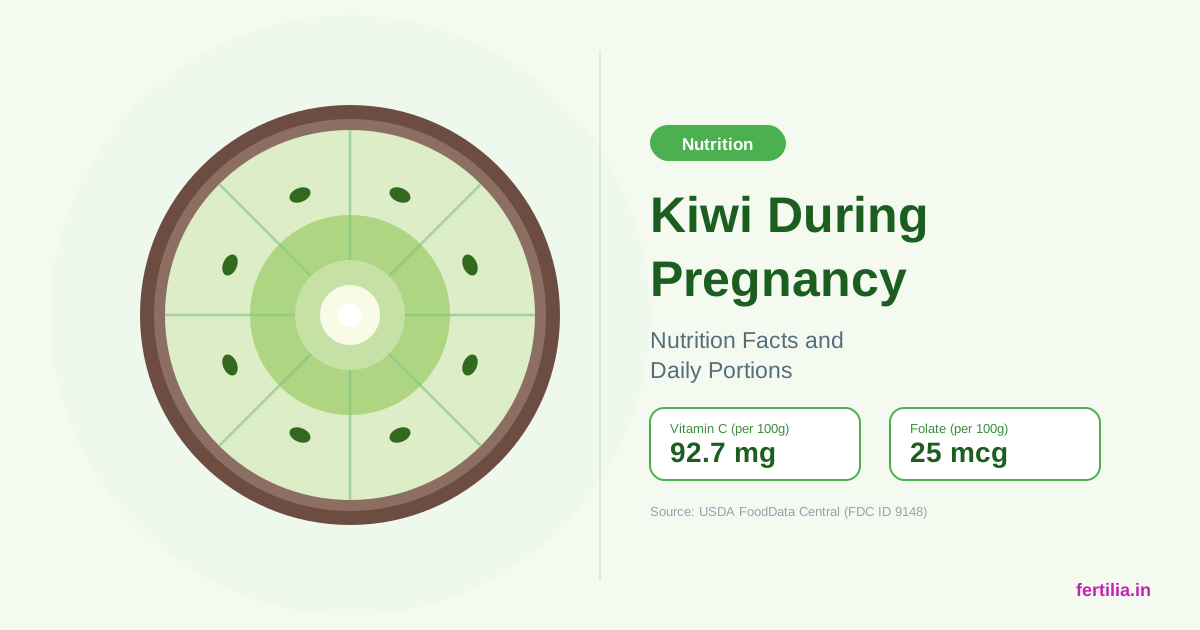
Kiwi is safe during pregnancy: 1 kiwi per day in the first trimester, and 1 to 2 kiwis per day in the second and third trimesters. One medium green kiwi (about 75g) provides roughly 69mg of vitamin C, 18.8mcg of folate, and 2.25g of fibre (USDA FoodData Central, FDC ID 168153). Start with a quarter of a fruit if you have never eaten kiwi before, and watch for any oral tingling.
The question I get asked about kiwi in consultations is rarely about nutrition. It is “is an imported fruit safe?” or “is it a cold fruit?”, usually from a mother-in-law’s list. The answer is that kiwi is an ordinary fruit, and the only real caution is the allergy note below. On the “cold fruit” worry: the hot-and-cold classification of foods is a cultural framework, not a physiological one, and there is no evidence that a fruit’s thermal category affects a pregnancy. If a chilled fruit straight from the fridge sets off nausea or a sore throat, let it come to room temperature first, which is the practical version of what your family is worried about.
Kiwi in Pregnancy: Quick Reference
| Guidance | |
|---|---|
| Safe in pregnancy? | Yes, across all three trimesters |
| Daily amount | First trimester: 1 medium kiwi (75g); Second and third trimesters: 1–2 medium kiwis |
| If gestational diabetes | Low to moderate glycaemic index; 1 kiwi per day, eaten with a protein such as dahi, is generally a moderate portion; confirm with your care team |
| Key nutrients | Vitamin C 69.5mg, Folate 18.8mcg, Fibre 2.25g, Potassium 234mg, Iron 0.23mg per medium kiwi (75g) |
| Best time | Mid-morning or afternoon snack; pairs well with dahi raita at lunch |
| Skip if | Kiwi allergy (oral tingling, lip or tongue itching after eating); if trying kiwi for the first time, start with a quarter fruit |
Jump to: Nutritional Profile · Green vs Gold · How Much Per Day · Storage & Selection · Recipes · Allergy Note · FAQ
When kiwi turns up on a prenatal nutrition list, most women are told it is good for vitamin C and leave it at that. They do not get told how many to eat, whether the green or gold variety matters, how to pick a ripe one, or what to make with it at home. This guide fills that gap using nutritional data from USDA FoodData Central (fdc.nal.usda.gov).
Kiwi is now grown in Himachal Pradesh, Uttarakhand, Arunachal Pradesh, and Sikkim, which means it reaches most Indian supermarkets and many neighbourhood stores fairly consistently. It is no longer only an imported item.
What Does Kiwi Contain? Nutritional Profile for Pregnant Women
All numbers below come from USDA FoodData Central, FDC ID 168153 (kiwifruit, green, raw; legacy NDB 9148).
| Nutrient | Per 100g | Per 1 medium kiwi (75g) |
|---|---|---|
| Energy | 61 kcal | 46 kcal |
| Protein | 1.14g | 0.86g |
| Fat | 0.52g | 0.39g |
| Carbohydrates | 14.66g | 11.0g |
| Dietary fibre | 3.0g | 2.25g |
| Sugars | 8.99g | 6.74g |
| Calcium | 34mg | 25.5mg |
| Iron | 0.31mg | 0.23mg |
| Magnesium | 17mg | 12.8mg |
| Potassium | 312mg | 234mg |
| Vitamin C | 92.7mg | 69.5mg |
| Folate (as DFE) | 25 mcg | 18.8 mcg |
| Vitamin E | 1.46mg | 1.10mg |
| Vitamin K | 40.3 mcg | 30.2 mcg |
One medium kiwi weighs approximately 75g without skin.
What these numbers mean during pregnancy
Vitamin C: One medium kiwi provides about 69mg of vitamin C, close to the full daily recommended amount for pregnant women (ICMR-NIN Recommended Dietary Allowances and Estimated Average Requirements, 2020: 80mg per day for pregnant women). Vitamin C-rich foods pair well with iron-rich Indian meals like dal, rajma, and palak. For a complete list of iron-rich Indian foods for pregnancy, see our iron-rich foods guide for pregnancy.
Folate: Kiwi contributes to your folate intake from food, though it does not replace folic acid supplements during pregnancy. For the full picture on folate requirements, supplement doses, and the best Indian food sources (palak, chana, moong dal), see our folate in pregnancy guide.
Dietary fibre: Two kiwis provide about 4.5g of fibre, contributing meaningfully toward the daily target of 25 to 30g. This is useful in the second and third trimesters, when constipation is a common pregnancy complaint.
Potassium: At 312mg per 100g, kiwi is a useful source of potassium, which supports healthy fluid balance and is part of a varied pregnancy diet.
Green Kiwi vs Gold Kiwi: Which One During Pregnancy?
Both varieties are safe and nutritious during pregnancy. Here is a practical comparison.
| Feature | Green kiwi | Gold kiwi |
|---|---|---|
| Vitamin C | 92.7mg per 100g | Approximately 161mg per 100g |
| Taste | Tart, slightly tangy | Sweeter, less acidic |
| Texture | Firmer | Softer |
| Skin | Fuzzy brown | Smooth golden yellow |
| Availability in India | Widely available | Less common, found at premium supermarkets |
| Approximate price (metro supermarkets, as of May 2026; check locally) | Rs 30 to Rs 60 per piece | Rs 80 to Rs 150 per piece |
Which to choose: Green kiwi is the practical default for most households. Gold kiwi is a useful option for women who find green kiwi too tart, particularly during early pregnancy when nausea can make acidic foods harder to manage. Both varieties are equally good nutritional choices. The higher vitamin C in gold kiwi is a bonus, not a requirement.
Are you looking for personalised guidance on what fruits, foods, and portions to include at each stage of your pregnancy? Dr. Suganya’s team can help you build a complete pregnancy nutrition plan. Message Dr. Suganya on WhatsApp to book a consultation.
How Much Kiwi Per Day? Trimester-Wise Portion Guide
| Life Stage | Daily Portion | Notes |
|---|---|---|
| First trimester | 1 medium kiwi (about 75g) | Start with a quarter if this is your first time eating kiwi |
| Second trimester | 1 to 2 medium kiwis (75 to 150g) | Appetite increases; add to a fruit bowl or dahi raita |
| Third trimester | 1 to 2 medium kiwis (75 to 150g) | Pair with a handful of dry fruits for a filling snack |
| Postpartum (breastfeeding) | 1 to 2 medium kiwis (75 to 150g) | Good vitamin C source during recovery |
(Outside pregnancy, one kiwi a day alongside other fruits is also a reasonable portion for women managing PCOS.)
Two kiwis per day is a sensible upper limit during pregnancy for most women. A varied fruit rotation across the week is better than relying on any single fruit. Good companions to kiwi in a pregnancy fruit rotation include mango, banana, guava, dates, and pomegranate.
For detailed information on two other popular pregnancy fruits, see our mango during pregnancy guide and our dates during pregnancy guide.
How to Choose, Wash, and Store Kiwi
Choosing a ripe kiwi
A ripe kiwi:
- Gives slightly when pressed near the stem end with your thumb (similar to how a ripe peach yields)
- Has a mild, sweet fragrance near the stem
- Has no visible mould, bruising, or very soft sunken patches
An unripe kiwi is very firm and quite sour. To ripen one at home, keep it in a paper bag with a banana or apple at room temperature for one to two days. Both fruits release ethylene gas, which speeds the ripening process naturally.
Washing kiwi
The fuzzy skin of green kiwi traps dust and surface residue. Washing the whole fruit before cutting matters because the knife can carry surface residue into the flesh.
Steps:
- Run the whole kiwi under cool tap water for 30 seconds.
- Rub the skin gently with your hands or a soft vegetable brush.
- Pat dry with a clean cloth.
- Peel or slice as needed.
Can you eat the skin?
Kiwi skin is edible and provides a small amount of extra fibre, but the fuzzy texture puts most people off. Gold kiwi skin is much smoother; some people eat it without noticing.
Storage guide
| State | Where to store | How long |
|---|---|---|
| Unripe | Countertop or paper bag at room temperature | Until ripe (1 to 4 days) |
| Ripe, whole | Refrigerator | Up to 1 week |
| Cut and covered | Airtight container in refrigerator | 2 to 3 days |
| Blended (smoothie) | Airtight container in refrigerator | Drink within 24 hours |
3 Indian-Friendly Kiwi Recipes for Pregnant Women
Recipe 1: Kiwi Banana Lassi
A filling drink that combines kiwi with the calcium in curd and the potassium in banana. The banana adds natural sweetness that balances kiwi’s tartness, making this gentler on a sensitive first-trimester stomach than plain kiwi.
Ingredients (serves 1):
- 2 medium kiwis, peeled and chopped
- 1 ripe banana, sliced
- Half cup thick curd (dahi)
- Half cup chilled water or milk
- 1 teaspoon jaggery powder (optional, adjust to taste)
- A few ice cubes
Method:
- Add all ingredients to a blender.
- Blend on medium speed for 30 to 45 seconds until smooth.
- Pour into a glass and serve immediately.
Tip: If still too tart, gold kiwi or a very ripe green kiwi will give a milder result.
Recipe 2: Kiwi Dahi Raita
A no-cook raita that comes together in five minutes. It pairs well with rice, roti, or as a standalone snack. Particularly useful in the second and third trimesters when a light, cooling side dish is welcome.
Ingredients (serves 2):
- 2 medium kiwis, peeled and diced small
- 1 cup thick curd (dahi), whisked smooth
- Quarter teaspoon roasted jeera (cumin) powder
- A pinch of rock salt or regular salt
- 1 tablespoon fresh mint leaves, finely chopped (optional)
Method:
- Whisk the curd until smooth and creamy.
- Add salt and jeera powder. Stir to combine.
- Fold in the diced kiwi.
- Garnish with fresh mint if using.
- Serve immediately or refrigerate briefly before serving.
Note: Assemble this raita just before eating. Kiwi releases juice as it sits, gradually thinning the raita after 20 to 30 minutes.
Recipe 3: Kiwi Fruit Chaat
A colourful, tangy chaat that works as a mid-morning or afternoon snack, especially in the second trimester when hunger arrives between meals.
Ingredients (serves 1 to 2):
- 2 medium kiwis, peeled and sliced into rounds
- 1 ripe banana, sliced
- 1 small guava, deseeded and diced
- Half teaspoon chaat masala
- Quarter teaspoon roasted jeera powder
- A pinch of black pepper
- Half teaspoon fresh lemon juice
Method:
- Combine all fruits in a bowl.
- Add chaat masala, jeera powder, and black pepper.
- Squeeze lemon juice over the fruit.
- Mix gently and serve immediately.
This chaat travels well in a tiffin box and uses fruits available across India.
A Note on Kiwi Allergy
Kiwi is one of the more commonly reported fruit allergens, particularly in people who react to birch pollen or latex. If you have never eaten kiwi before, start with about a quarter of one fruit on your first try and wait 15 minutes before having more.
Signs that kiwi does not suit you include oral tingling or itching of the lips and tongue immediately after eating. If you notice this, skip kiwi. Swelling of the lips, tongue, or throat, wheeze, breathlessness, or a spreading rash is different: stop eating and get emergency care immediately, because these are airway symptoms and they can progress within minutes. For most women who react, the mild oral form is all that happens, and the fix is simply to choose a different vitamin C-rich fruit instead: guava (around 228mg of vitamin C per 100g), amla, or citrus fruits all provide excellent vitamin C without this concern.
This applies to anyone trying kiwi for the first time, not only during pregnancy.
Building a complete pregnancy nutrition plan with personalised guidance? Dr. Suganya’s team supports women across Tamil Nadu and India. Message Dr. Suganya on WhatsApp for a consultation, or download our free Pregnancy Guide for a full overview of nutrition, tests, and what to expect trimester by trimester. For a guided version, her 90-day Pregnancy Care program builds foods like these into your weekly plan.
Frequently Asked Questions
Is kiwi safe during pregnancy?
Yes. Kiwi is safe throughout pregnancy. It provides vitamin C, folate, fibre, and potassium: all useful nutrients as part of a balanced pregnancy diet. One to two medium kiwis per day is a suitable daily amount for most pregnant women.
Can kiwi cause miscarriage?
No. Kiwi does not cause miscarriage at normal dietary quantities. One to two kiwis per day during pregnancy is a standard portion that is well-tolerated and safe throughout all three trimesters.
Can I eat kiwi every day during pregnancy?
Yes. One to two medium kiwis per day is a suitable daily amount for most pregnant women. Kiwi works well as part of a varied fruit rotation rather than as the only fruit.
Is kiwi safe in all three trimesters?
Yes, kiwi is safe throughout pregnancy. In the first trimester, one kiwi per day is a good starting point, particularly if nausea makes tart foods harder to manage. In the second and third trimesters, one to two kiwis per day is a practical daily portion.
Green kiwi or gold kiwi during pregnancy: which is better?
Both are good choices. Gold kiwi has about 1.7 times more vitamin C and a milder flavour. Green kiwi is more widely available and more affordable. Either variety works well nutritionally.
Does kiwi help with constipation during pregnancy?
Kiwi contains 3g of dietary fibre per 100g, which contributes to the daily fibre target of 25 to 30g. Alongside adequate water and a diet that includes rajma, ragi, and other fibre-rich Indian foods, kiwi is a useful part of a high-fibre pregnancy food plan.
Can I drink kiwi juice instead of eating the whole fruit?
Whole fruit is generally preferred because it keeps all the dietary fibre intact. A small glass of fresh kiwi juice without added sugar is fine occasionally, but the whole fruit is the better everyday choice.
Is kiwi good for the baby during pregnancy?
Kiwi provides vitamin C, folate, fibre, and potassium, all useful nutrients as part of a balanced pregnancy diet. It is one of many fruits that contribute to good pregnancy nutrition alongside Indian staples like dahi, dal, palak, and ragi.
Can I eat kiwi if I have gestational diabetes?
Kiwi is generally considered a low to moderate glycaemic index fruit. One fruit per day is generally a moderate portion, and what I actually tell women with gestational diabetes is to eat it with dahi or a handful of nuts rather than on its own, and to check their post-meal reading the first couple of times. For personalised guidance on fruit portions as part of a gestational diabetes meal plan, check with your care team.
Is kiwi good to eat in the first trimester?
Yes. One medium kiwi a day is a good choice in the first trimester. It provides vitamin C, folate, fibre, and potassium, all useful in early pregnancy. If you have never eaten kiwi before, start with a quarter of a fruit and watch for any oral tingling. If the tartness is hard to manage alongside first-trimester nausea, the sweeter gold kiwi or a very ripe green kiwi is gentler on the stomach.
Can I eat kiwi during jaundice?
Kiwi itself is fine during jaundice: it is a light, ripe fruit that is easy to tolerate. The important part of the answer is not the fruit. Jaundice in pregnancy needs prompt evaluation, within days rather than weeks, because the causes range from viral hepatitis to conditions specific to pregnancy such as obstetric cholestasis, and your doctor will guide your overall diet based on which it is.