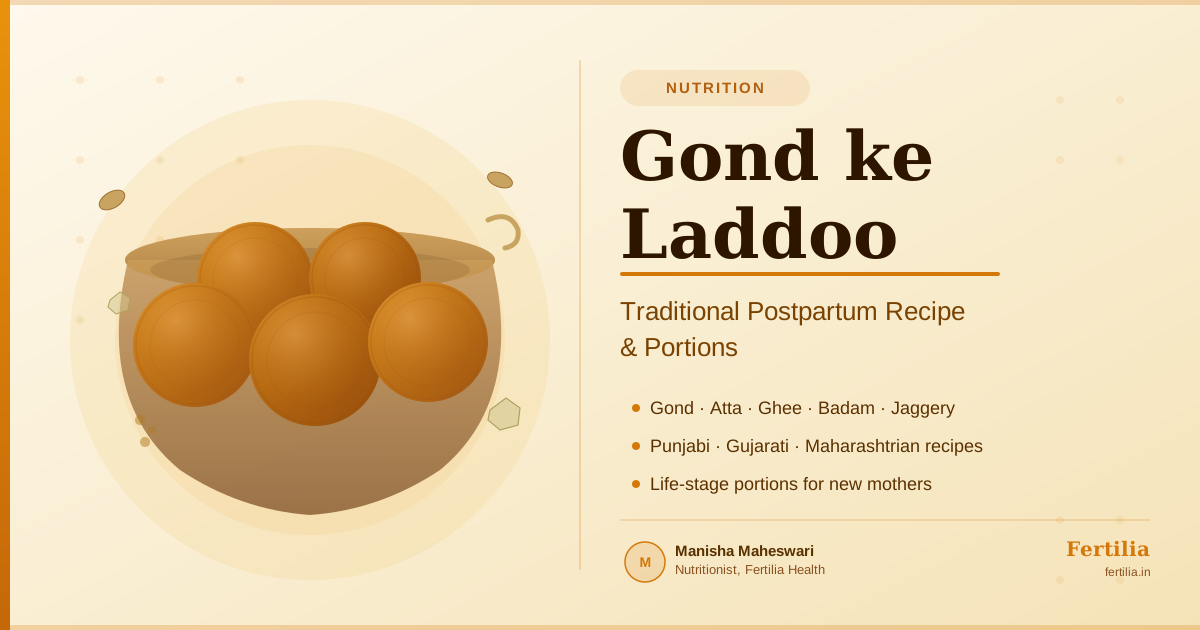
When a baby arrives, so does the tin of gond ke laddoo. In millions of North Indian, Gujarati, and Maharashtrian homes, these warm, fragrant laddoos appear at the bedside of a new mother within the first day or two of delivery. They are made before the baby’s due date, stored in an airtight dabba, and offered one or two at a time through the first forty days of the postpartum period.
The tradition has held across generations not because of superstition, but because these laddoos are genuinely nourishing. They are made from whole wheat, ghee, dry fruits, jaggery, and edible gum (gond or dink), all of which bring real nutritional value to a mother whose body is recovering from childbirth.
This guide covers what gond ke laddoo are made of, what each ingredient contributes nutritionally, three regional recipes, how much to eat and when, how to choose gond when you shop, and how to store the laddoos once made.
What Is Gond? Regional Names Across India
Gond (also called gondh or dink) refers to edible gum crystals that are derived from the resin of certain trees, primarily species of Acacia and Sterculia. In North India, the most commonly used variety comes from the Sterculia urens tree. Gond crystals are sold at grocery stores and provisions shops across the country, usually as rough, translucent to pale amber pieces.
When these crystals are dropped into hot ghee, they puff up dramatically, expanding four to five times their original volume within seconds. The puffed pieces are crunchy, airy, and almost tasteless on their own. Once ground or broken and mixed into the laddoo base, they lighten the texture of an otherwise dense sweet.
Here is what gond is called across India:
| Region / Language | Name for edible gum |
|---|---|
| Hindi (North India) | Gond, gondh |
| Gujarati | Dink |
| Marathi (Maharashtra) | Dink |
| Punjabi | Gondh |
| Bengali | Gondh |
| Rajasthani | Kangli |
For laddoos, you want transparent to light amber crystals that are clean and dry. The crystals should break apart easily. Dark brown, sticky, or dusty gond should be avoided, as it may have been stored poorly and can have an off taste when puffed.
What Each Key Ingredient Contributes
Gond ke laddoo is a multi-ingredient preparation. Understanding what each component brings helps you see why this is a genuinely nutritious postpartum food.
Whole wheat atta (ICMR-NIN 2017): Per 100g, atta provides 341 kcal, 12.1g protein, 1.5mg iron, 41mg calcium, and a useful amount of dietary fibre from the bran. In the laddoo, atta forms the base. It is slow-roasted in ghee until fragrant and golden, which develops its flavour significantly.
Ghee (USDA FDC ID 171394): Per 100g, ghee provides 876 kcal and 99.5g fat. Per teaspoon (5g), that is 44 kcal and 5g fat. Ghee is used generously in gond ke laddoo: for puffing the gond, for roasting the atta, and for binding. It contributes fat-soluble vitamins A, E, and K. For the nutritional profile of ghee in detail, see our ghee in pregnancy guide.
Almonds (badam) (USDA FDC ID 170567): Per 100g, raw almonds provide 579 kcal, 21.2g protein, 3.7mg iron, 269mg calcium, 25.6mg vitamin E, and 270mg magnesium. Almonds are added chopped and lightly roasted. They bring crunch, plant protein, and fat-soluble vitamin E to the laddoo. Our badam during pregnancy guide covers almond nutrition in full.
Cashews (kaju) (USDA FDC): Per 100g, raw cashews provide 553 kcal, 18.2g protein, 5.0mg iron, 292mg magnesium, and 37mg calcium. They add a mild, creamy flavour and are particularly rich in magnesium.
Jaggery (gur) (ICMR-NIN 2017): Per 100g, jaggery provides approximately 383 kcal, 0.4g protein, and approximately 2.6mg iron, though iron content varies by processing method and source. Jaggery is used in place of refined sugar in traditional recipes. It is not a low-sugar ingredient: it is still a concentrated sweetener, and the sweetness level in the laddoo depends on how much you add.
Edible gum (gond/dink): Gond is composed primarily of complex carbohydrates (polysaccharide gum fibres), with trace protein and fat. ICMR-NIN lists edible gum under miscellaneous foods and notes that it is predominantly carbohydrate-based, with a dietary fibre fraction. Its nutritional contribution per laddoo is modest since only 5-10g of raw gond (expanding to 20-40g puffed) typically goes into a batch of 15 laddoos.
Saunth (dry ginger powder): Dry ginger has a different flavour profile from fresh ginger and is used in postpartum recipes across India. It is added in small amounts (1 tablespoon per batch) primarily for flavour and the warmth it brings to the taste.
For more on this, read our guide on Methi Laddoo. Cardamom (elaichi): Used in small quantities (1 teaspoon per batch) for fragrance and flavour. The nutritional contribution per laddoo is negligible.
One whole laddoo made with the standard recipe below weighs approximately 50-55g and provides around 230-260 kcal, 4-5g protein, 11-13g fat, and approximately 1mg iron, though these figures will vary based on the exact quantities used and laddoo size.
Classic Punjabi Gond ke Laddoo Recipe
This is the version most widely made across North India. It is dense, warming, and fragrant.
Makes: 15-18 laddoos
Ingredients:
- 250g whole wheat atta (chakki atta)
- 75g gond crystals (edible gum)
- 150g desi ghee (plus 2-3 tbsp extra for puffing the gond)
- 150g jaggery, grated or powdered
- 75g almonds, roughly chopped
- 50g cashews, roughly chopped
- 1 tbsp saunth (dry ginger powder)
- 1 tsp elaichi (cardamom powder)
- 3-4 tbsp warm water or warm milk, as needed for binding
Method:
Step 1: Puff the gond. Heat 2-3 tbsp ghee in a heavy-bottomed kadai over medium heat. Drop in a few gond crystals at a time. They will puff up within 3-5 seconds. Remove immediately with a slotted spoon and spread on a plate. They burn quickly, so watch carefully. Do all the gond in batches, adding more ghee if needed. Once cool, crush the puffed gond with your hands into smaller pieces.
Step 2: Roast the dry fruits. In the same pan with a little ghee, lightly roast the chopped almonds and cashews on low heat for 2-3 minutes. Set aside.
Step 3: Roast the atta. In the same kadai, add the remaining ghee. Once warm, add the atta and roast on low heat, stirring continuously, for 12-15 minutes until the atta turns a warm golden colour and smells nutty. This step cannot be rushed. The atta must be roasted through or the laddoos will taste raw.
Step 4: Cool and mix. Take the pan off the heat and let the roasted atta cool for 10-15 minutes. It should be warm to the touch but not hot. Add the jaggery, saunth, and elaichi. Mix well. The residual warmth from the atta will help the jaggery blend in. Add the puffed gond and roasted dry fruits. Mix until everything is evenly distributed.
Step 5: Shape. If the mixture feels too dry to hold shape, add warm water or milk one teaspoon at a time. Take a small portion in your palm and roll into a firm ball. Place on a plate or tray. Repeat until all the mixture is used. Let the laddoos cool completely before storing.
Talk to Fertilia About Your Postpartum Nutrition
Every new mother’s recovery is different. If you want personalised guidance on what to eat during your postpartum period, including what traditional foods suit your situation, Dr. Suganya’s team is here to help.
Regional Variations
Gujarati Dink ke Laddoo
The Gujarati version uses the same edible gum (called dink in Gujarati) but has a slightly different supporting cast. Dried coconut (copra) is a key addition, adding a distinct sweetness and texture. Some families use sugar instead of jaggery, and some add a pinch of ajma (carom seeds) for digestive warmth. The base is often atta roasted with ghee, similar to the Punjabi version, but smaller in size and sometimes richer in coconut.
Core ingredients for the Gujarati version:
- Whole wheat atta or besan (some families use a mix)
- Ghee
- Dink (edible gum)
- Dried grated coconut (copra)
- Sugar or jaggery
- Almonds and cashews
- Cardamom
- Optional: a pinch of ajma
The method follows the same logic: puff the dink in ghee first, roast the atta base, then combine everything with the sweetener and shape.
Maharashtrian Dink Ladu
Maharashtra’s version, called dink ladu or dinkache ladu, often uses a suji (semolina) or coconut base instead of or alongside atta. Some families add dried ginger and poppy seeds (khus khus). The laddoos tend to be slightly firmer and more compact than the Punjabi version. Dried coconut (kopra) is a common addition here too.
Core ingredients for the Maharashtrian version:
- Rava (semolina) or a mix of atta and rava
- Ghee
- Dink (edible gum)
- Dried grated coconut
- Jaggery
- Almonds, cashews, and sometimes kharik (dried dates)
- Cardamom and dry ginger
The Maharashtrian version can also include edible charoli (chironji) seeds, which are not available in all regions but add a pleasant nuttiness.
Life-Stage Portions Guide
Postpartum (first 40 days)
Gond ke laddoo are traditionally eaten during the first 40 days of postpartum recovery, a period when new mothers rest and eat warming, nourishing foods. A standard portion guide:
| Week | Portion |
|---|---|
| Week 1 (after vaginal delivery) | 1 laddoo per day, with warm milk or as is |
| Week 1 (after C-section) | Start gond ke laddoo only after your care team confirms your digestion has normalised and you are tolerating solid foods |
| Weeks 2-4 | 1-2 laddoos per day |
| Weeks 5-6 (approaching 40 days) | 1-2 laddoos per day |
| After 40 days | Taper to 1 per day or occasional as a snack |
These are calorie-dense laddoos. Two laddoos per day is a meaningful addition to your total daily intake, which is exactly the point during early postpartum recovery when energy needs are high.
If You Are Breastfeeding
Gond ke laddoo are a common part of the postpartum diet for breastfeeding mothers and are included in most traditional postpartum meal plans across North India, Gujarat, and Maharashtra. For guidance on the full postpartum diet, see our after delivery food guide for Indian mothers.
If you have specific questions about foods that support lactation, see our breastfeeding diet guide or speak with our team on WhatsApp.
If You Have Gestational Diabetes or Are Managing Blood Sugar
Jaggery is still a form of sugar. Gond ke laddoo contain a meaningful amount of jaggery per serving. If your care team has asked you to manage your carbohydrate intake, check with them about portions before incorporating these laddoos into your daily diet. The portion may need to be adjusted.
PCOS or General Use
Gond ke laddoo are a traditional postpartum food and are not specifically designed for PCOS management or as an everyday food for non-postpartum women. They are dense and high in calories. If you enjoy them outside the postpartum period, treat them as an occasional sweet rather than a daily food.
How to Buy Gond
Gond crystals are available at:
- General grocery stores and provisions shops (kiranas), especially in North India
- Indian supermarkets in cities across the country
- Online grocery platforms (BigBasket, JioMart, Amazon India)
- Some pharmacies and Ayurvedic stores
What to look for:
- Transparent to pale amber crystals (not fully opaque or dark brown)
- Dry, clean pieces that break apart without crumbling into powder
- No dustiness, stickiness, or moisture
- Uniform colour throughout the piece (not mottled or partly dark)
What to avoid:
- Dark brown or black pieces (degraded or old)
- Sticky or clumping crystals (moisture damage)
- Very fine powder (loses expansion ability when puffed)
- Mixed lots with insect debris
Gond is typically sold in small packets of 100g to 200g. For a single batch of 15-18 laddoos, you need approximately 75g of raw gond.
Storage
Laddoos: Store in an airtight container at room temperature for up to three weeks. In a cool kitchen or refrigerator, they keep for four to six weeks. The generous amount of ghee acts as a natural preservative. If the laddoos develop any off smell, discard them.
Raw gond crystals: Store in a clean, dry, airtight glass or steel container. Keep away from moisture and heat. Properly stored gond keeps for 6-12 months.
Batch-making tip: Many families make a large batch of laddoos (30-40 pieces) before the baby is born so they are ready the moment the mother comes home. The long shelf life of these laddoos makes this practical.
Frequently Asked Questions
Q1: Can I eat gond ke laddoo from Day 1 after a vaginal delivery?
Yes, gond ke laddoo are traditionally given from the first day after a vaginal delivery in many Indian families. Start with one laddoo per day and see how your digestion feels. The puffed gond is easy to digest and the roasted atta is well-cooked. If you feel comfortable, you can increase to two per day from the second week.
Q2: When can I start gond ke laddoo after a C-section?
That is a question for the team looking after your recovery, not a nutrition question. Your doctor will tell you when your digestion has settled and you are back on a normal diet. Once they have said so, gond ke laddoo can be introduced like any other rich food: start with one a day and see how you feel. If you are still on a restricted diet or have any doubt, ask your treating doctor first, or message Dr. Suganya on WhatsApp.
Q3: How many laddoos should I eat per day?
One to two laddoos per day is the standard postpartum portion. Each laddoo is approximately 230-260 kcal, so two laddoos add around 460-520 kcal to your daily intake. This is appropriate during early postpartum recovery when energy needs are higher than usual. Beyond two per day, the calorie and sugar load becomes significant. If you are very active and hungry, two is a reasonable upper limit for most days.
Q4: What type of gond should I buy?
Look for transparent to light amber, dry, clean crystals that break apart cleanly. They should not be sticky, dusty, or dark brown. Sterculia urens gond (sometimes labelled as katira gond or soft gond) is the most commonly available type and puffs well in ghee. Acacia gond (babool gond) is also used and looks similar. Both work well for laddoos.
Q5: Can I make gond ke laddoo with less ghee?
You can reduce the ghee slightly, but the texture will change. Ghee is necessary for puffing the gond (without enough fat, the crystals will not puff properly) and for roasting the atta to the right golden stage. A leaner version will result in drier, less cohesive laddoos that crumble rather than hold shape. If you prefer a lighter version, try reducing the total ghee by 20-25% and adding a little warm milk to help bind the mixture.
Q6: Do gond ke laddoo increase breast milk supply?
Gond ke laddoo are a traditional postpartum food and are not clinically established as galactagogues (substances that stimulate milk production). The evidence for most galactagogue foods is limited. For specific information about supporting milk supply, see our breastfeeding diet guide for Indian mothers or speak with a lactation consultant. As part of a balanced, adequate diet, gond ke laddoo contribute to overall postpartum nourishment, and being well-nourished does support breastfeeding generally.
Q7: Can I freeze gond ke laddoo?
Yes, gond ke laddoo freeze well. Place them in a single layer on a tray, freeze until firm, then transfer to a freezer-safe bag or container. They keep in the freezer for up to three months. Thaw at room temperature for an hour or two before eating. The texture may be slightly firmer after freezing but the flavour is unaffected.
A Practical Recipe Summary
The steps look long when written out, but making gond ke laddoo is straightforward once you have done it once. The most important part is puffing the gond correctly (the ghee must be hot enough, and the crystals puffed for only a few seconds) and roasting the atta slowly until genuinely golden and nutty-smelling.
For a companion postpartum recipe that is simpler and takes about fifteen minutes, see our ragi kanji recipe for postpartum recovery. For a full guide to what to eat during the postpartum period, including foods to include and foods to approach carefully, see our after delivery food guide.
If you want to add more iron-rich foods alongside your gond ke laddoo, the kala chana iron and protein guide and the iron-rich foods in pregnancy guide have practical food lists for Indian kitchens.
For guidance on how to plan your entire postpartum diet, including foods for recovery, energy, and long-term nutrition, download our postpartum diet guide or chat with us on WhatsApp.
Download the Postpartum Diet Guide
Ready to Plan Your Postpartum Recovery?
A new mother deserves personalised support. If you want to talk through your postpartum diet, which foods work for your situation, and how to structure your first forty days of recovery, Dr. Suganya’s team at Fertilia is here. You can also browse all our postpartum recovery guides in one place.