Somewhere in the first week after delivery, you will encounter a postpartum belt. It might be the hospital itself sending you home with one. It might be your mother or mother-in-law arriving with a length of folded cotton cloth and firm instructions to keep it on for forty days. It might be a late-night Flipkart session where you scroll through pages of abdominal binders with product descriptions that say things like “helps uterus return to original position” and “clinically proven to flatten postpartum belly.”
The question underneath all of this is simple: does wearing a belt after delivery actually do anything useful?
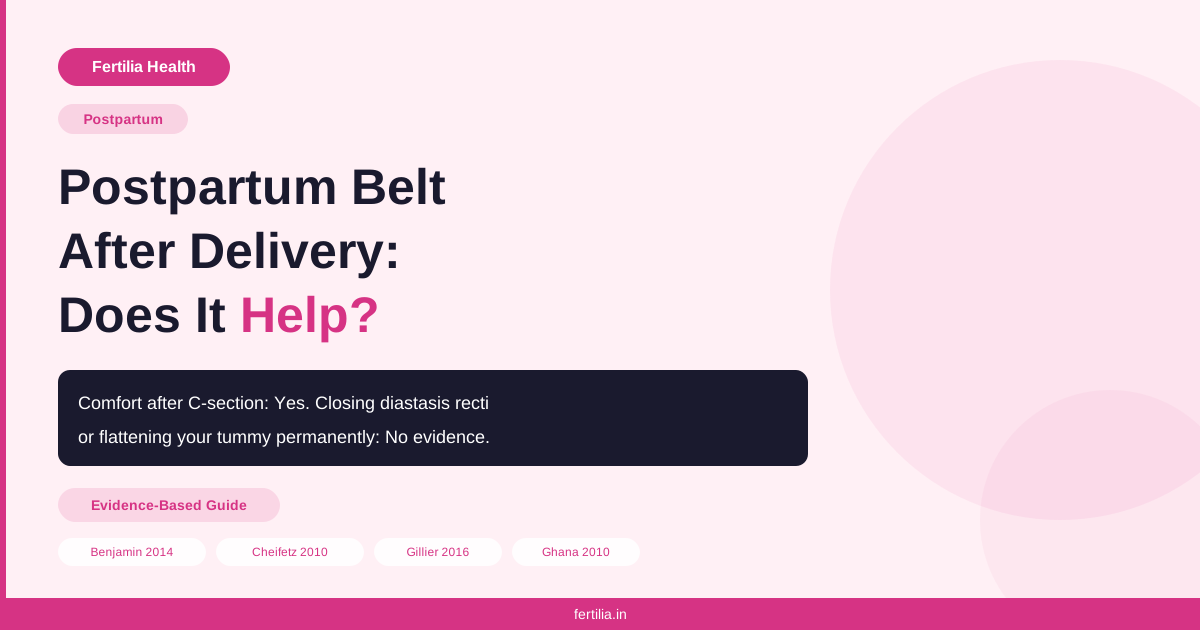
It depends on what you are asking it to do. After a C-section, research suggests a binder may ease pain and distress during the first two days, although the trials are small and their results are not uniform. For the claims printed on most packaging, the evidence is weak or absent. This post is part of our complete post-delivery care guide for Indian mothers, which covers the full six-week recovery period.
What a Postpartum Belt Does
A postpartum abdominal belt is, at its core, a compression device. It applies external pressure to the abdomen, which does three things: it provides a physical sense of containment (the abdominal wall has been stretched significantly over nine months), it offers counter-pressure that reduces the sensation of incision site movement after surgery, and it gives mild proprioceptive feedback to the core muscles.
That is what it does.
What it does not do is often more important. A belt does not push the uterus or any internal organ “back into place.” The uterus involutes on its own through a hormone-driven process, completing most of its size reduction by 6 weeks regardless of whether you wear a belt or not. A belt does not heal the stretched linea alba (the connective tissue running between your abdominal muscles). A belt does not burn fat. A belt does not flatten the postpartum belly permanently. These claims appear on product packaging routinely. They are not supported by clinical evidence.
Understanding this distinction matters because it changes what you expect from the belt. A tool that provides comfort and incision support in the first few weeks is genuinely useful. A tool that you are wearing for months expecting it to “fix” your abdomen is likely delaying the one thing that actually works, which is progressive core rehabilitation.
What the Evidence Can and Cannot Tell Us
A 2021 systematic review pooled six randomised trials of binders after C-section. It found lower pain and distress scores at 24 and 48 hours, but the included trials were small (Abd-ElGawad et al., International Journal of Gynaecology and Obstetrics, 2021, PMID 33471362). Individual trials have not all agreed. One US trial found no significant difference in pain or distress on either of the first two postoperative days (Gillier et al., International Journal of Gynaecology and Obstetrics, 2016, PMID 26892694), while an Iranian trial found lower pain and distress scores with a binder (Ghana et al., same journal, 2017, PMID 28241386).
That evidence supports a modest claim: a binder may make early movement after a C-section more comfortable. It does not establish that a belt reduces fat, restores abdominal strength, or permanently changes the abdomen.
When a Belt Makes Clinical Sense
After a C-section, in weeks 1 to 4
This is the most studied postpartum use. The trials above looked mainly at the first 24 to 48 hours after surgery and suggest that some women get short-term pain or distress relief. When you stand, cough, sneeze, or pick up the baby, a comfortably fitted binder can provide counter-pressure around the healing abdomen. The C-section recovery week-by-week guide includes specific guidance on belt use at each stage of healing and when to taper off.
During early mobilisation after any delivery
The first days of standing and walking after delivery, whether vaginal or surgical, can feel physically unsupported. The abdominal wall has been stretched for months and does not immediately spring back. A belt worn during activity (not at rest or during sleep) gives a sense of held-together support that many women find helpful for the first two to three weeks. This is a comfort benefit, and comfort is a valid reason.
As temporary support during specific demanding activities with diastasis recti
If you have confirmed diastasis recti and need to carry something heavy or stand for a long period before your core strength has rebuilt, wearing a belt during that specific activity is reasonable. It is external scaffolding for a task your internal system cannot yet fully handle. It is not treating the diastasis. The actual treatment for diastasis recti is covered in How to Check Yourself for Diastasis Recti and Safe Exercises.
When a Belt Does Not Help (and May Make Things Worse)
Wearing it continuously for months
A belt is passive support; it does not train your abdominal muscles. As movement becomes easier, use it less and let breathing, walking, and progressive exercise do the longer-term work.
Lacing it too tight
Tight abdominal compression increases intra-abdominal pressure. When you increase pressure inward and downward, the force travels into the pelvic floor. For women with any pelvic floor symptoms (leaking, heaviness, pelvic pain), a too-tight belt can worsen those symptoms. The correct fit is firm but not restrictive. You should be able to take a full diaphragmatic breath with the belly gently pressing into the belt without effort or discomfort.
Expecting it to close the diastasis recti gap
A 2023 review found that the two small studies comparing abdominal binding with exercise had inconsistent results, with no significant pooled effect on the inter-recti distance (Weingerl et al., SN Comprehensive Clinical Medicine, 2023, PMID 36466120). A belt may feel supportive, but it is not a proven way to close the gap. If diastasis recti is the concern, assessment and progressive abdominal rehabilitation matter more than compression alone.
Using it instead of starting postpartum exercises
The postpartum exercises by week guide outlines a two-track programme for normal delivery and C-section mothers, starting from diaphragmatic breathing in week 1 and progressing to bridges and walking by weeks five to six. A belt worn during the day does not substitute for this progression. The belt is temporary support. The exercises are the actual recovery path.
For the full picture on why the postpartum belly stays soft and what genuinely changes it, Postpartum Belly: Why It Stays and How to Heal covers the timeline in detail.
If you are unsure whether a belt is appropriate for your specific situation, particularly if you have had a C-section with complications, significant diastasis recti, or persistent abdominal discomfort, you can message Dr. Suganya directly on WhatsApp for a personalised assessment.
India Context: Traditional Belly Binding vs Modern Belts
Belly binding after delivery is not a recent invention. In Tamil Nadu and across South India, wrapping the abdomen after delivery is a long-standing part of the forty-day rest period (often described as vayiru kattuthal in Tamil). The traditional practice uses a long strip of soft cotton cloth, often a saree fall or a doubled dupatta, wrapped firmly around the lower abdomen. An experienced elder in the family or a traditional birth attendant (maruthuvachi) usually applies it.
Similar traditions exist across many cultures globally. The Mexican faja, the Malay bengkung, the Japanese sarashi all follow the same principle of post-birth abdominal wrapping. These practices developed from the consistent observation that external support made early recovery more comfortable.
No good head-to-head trial tells us whether a traditional wrap or a modern velcro binder works better. Choose on comfort, breathability, and whether you can loosen and reapply it yourself.
What the modern belt offers over the traditional wrap is practical convenience: you can remove and reapply it independently, without another person’s help. This matters at 3 AM when you need to feed the baby and cannot wake anyone to re-tie a cloth wrap. The modern binder is not superior in clinical terms. It is easier to use alone.
One practical note on the traditional wrap: when a cloth strip is applied by someone else, you cannot always easily loosen it yourself if it feels too tight. Whoever is wrapping you should check that you can still take a full deep breath once the wrap is in place. Breathability is also relevant in Tamil Nadu’s climate. A heavy cotton wrap in the Chennai or Coimbatore summer adds warmth against a healing incision. If the cloth feels hot or damp, change to a clean, breathable wrap or mesh binder. No edge should rub or press on the wound.
Shopping Guide: What to Look For
If you are buying a postpartum belt online, the range is broad and the marketing claims are often exaggerated. Here is what actually matters for the product, and what to ignore.
Fabric and breathability: Cotton or cotton-polyester with mesh ventilation panels is the right choice for Indian conditions. A synthetic or foam-lined binder worn against healing skin in a warm climate accumulates heat and moisture. Avoid full-compression neoprene or foam-lined corsets for postpartum use.
Adjustable velcro closure: Your waist size changes significantly in the first six weeks as postpartum swelling resolves and the uterus involutes. A three-row velcro closure lets you tighten the fit incrementally as your body changes. A single-size elastic band is less practical for this period.
Width and fit: Choose a binder wide enough to sit from below the ribs to the upper hip bones without folding when you sit. After a C-section, the lower edge and closure must not rub the horizontal scar. If it rolls into a narrow band, shifts onto the wound, or catches under the ribs, the fit is wrong.
Avoid underwire, boning, and steel panels: These features appear in products marketed as “postpartum corsets.” They can create hard pressure points and have no established recovery advantage over a simple, adjustable binder.
Closure: Two or three adjustable velcro panels are easier to loosen evenly as swelling changes than a fixed-size elastic tube. Check that the velcro does not sit over the scar or scratch the skin. A higher price does not prove a better recovery outcome.
Practical Notes: How to Wear It in the First Four Weeks
After a C-section: Follow your surgeon’s advice for position. The binder may span the lower abdomen, but no seam, edge, or velcro strip should press on the wound. Firm but breathable. Remove it when you lie down to rest and during sleep. Wear it during activity: standing, walking, moving around the house, going out. If you notice that the compression is worsening incision pain rather than reducing it, the belt is either positioned incorrectly (sitting directly on the scar) or too tight.
After a vaginal delivery: Same position, same principle. The goal is comfort during activity. Remove it during rest and sleep.
How long to wear it: There is no evidence-based daily-hour prescription. A practical default is to put it on for the upright activity that feels difficult, such as a walk or a longer spell of standing, then remove it for rest and sleep. Check the skin and wound each time you remove it. Over the first two to four weeks, shorten the wearing periods as movement becomes comfortable without it. If you still need the belt for routine movement at six weeks, ask your doctor or pelvic-floor physiotherapist to assess pain, wound healing, and core function.
Core Exercises and Lasting Recovery
A belt may make movement feel easier for a while. It cannot rebuild strength for you. Begin with breathing and short walks, then add abdominal and pelvic-floor work as pain, bleeding, and wound healing allow. The postpartum exercises by week guide gives separate progressions after vaginal and C-section delivery, including the signs that mean you should pause.
A belt can support the first four weeks. Your muscles will support the next four decades.
Summary: What to Do
- Consider a belt for short periods of upright activity after a C-section if it reduces discomfort
- Remove it for rest and sleep, and use it less as movement becomes easier
- Do not wear it 24/7 beyond the initial healing window
- Do not lace it tight if you have pelvic floor symptoms or diastasis recti
- Do not buy expensive corsets with claims about organ repositioning or permanent flattening
- Start core exercises as soon as your doctor clears you: this is where durable recovery happens
Frequently Asked Questions
Does a postpartum belt help close the tummy gap (diastasis recti)?
The limited studies comparing binding with exercise have produced inconsistent results, so a belt is not a proven way to close diastasis recti. It can provide temporary external support. Assessment and progressive abdominal exercise address function more directly.
Is it safe to wear a belt after a C-section?
It may be suitable if your surgeon or maternity team agrees and it improves comfort. Follow their positioning advice, and make sure no edge, seam, or velcro strip presses on the wound. Remove it during rest and sleep. Stop using it and seek prompt assessment if you develop increasing incision pain, redness, discharge, fever, wound separation, or new swelling.
Should I wear a belt after a normal vaginal delivery?
Only if it provides comfort. There is no post-surgical incision requiring support after a vaginal delivery. The rationale is purely comfort-based: a sense of containment while the stretched abdominal wall gradually regains tone. If it helps, wear it during activity in the first two to three weeks. If it feels unnecessary, there is no clinical reason to use one.
Traditional saree patti versus modern velcro belt: which is better for Indian mothers?
Nobody has compared them well enough to name a clinical winner. The modern velcro binder is easier to adjust by yourself, especially during night feeds. A soft cotton wrap may feel cooler and gentler on the skin. Choose whichever is comfortable and easy to loosen, as long as it does not restrict a full breath or press on an incision.
How tight should the postpartum belt be?
Firm but not constricting. You should be able to take a full deep breath, feeling the belly expand gently against the belt on the inhale, without strain or discomfort. If the belt leaves skin indentation marks, causes numbness, tingling, or increased pain, it is too tight. Correct fit means even, comfortable pressure across the lower abdomen. A too-tight belt increases intra-abdominal pressure and can worsen pelvic floor symptoms.
How many hours a day and for how many weeks should I wear it?
Use it for the upright activity that feels difficult, then take it off for rest and sleep. There is no proven number of hours that suits everyone. During the first two to four weeks, shorten the wearing periods as you become more comfortable without it. If you still need it for routine movement at six weeks, ask your doctor or pelvic-floor physiotherapist to assess why.
Are expensive postpartum corsets worth the price?
There is no evidence that boning, underwire, or expensive shaping features restore pre-pregnancy shape or reposition organs. Choose a breathable, adjustable product that does not roll, restrict breathing, or press on the wound. Price and shaping claims are not measures of recovery benefit.
If pain, wound discomfort, or abdominal weakness is making routine movement difficult, you can message Dr. Suganya on WhatsApp for an online assessment. For the full first-six-weeks plan, download the Postpartum Care Guide.