Dal palak on a Monday with leftover chapati. Palak paneer at a family dinner. A green paratha tucked into a child’s lunchbox. Palak (pasalai keerai in Tamil, palakura in Telugu, palak in most North Indian languages) shows up in Indian kitchens in more forms than almost any other leafy green. It is affordable, available all year in most Indian cities, and works with nearly every regional cooking style.
What makes palak worth looking at carefully is its nutrient density. It is not a food that needs to be eaten in large quantities to contribute something meaningful. A standard serving of cooked palak brings a notable amount of iron, folate, calcium, and vitamin A to the plate, and a handful of raw leaves adds vitamin C and folate to any meal.
This post covers exactly what palak provides nutritionally, how much to eat at different stages of a woman’s life, how fresh and frozen varieties compare, five Indian recipes, and a practical buying and storage guide.
What Is in Palak? Nutritional Profile
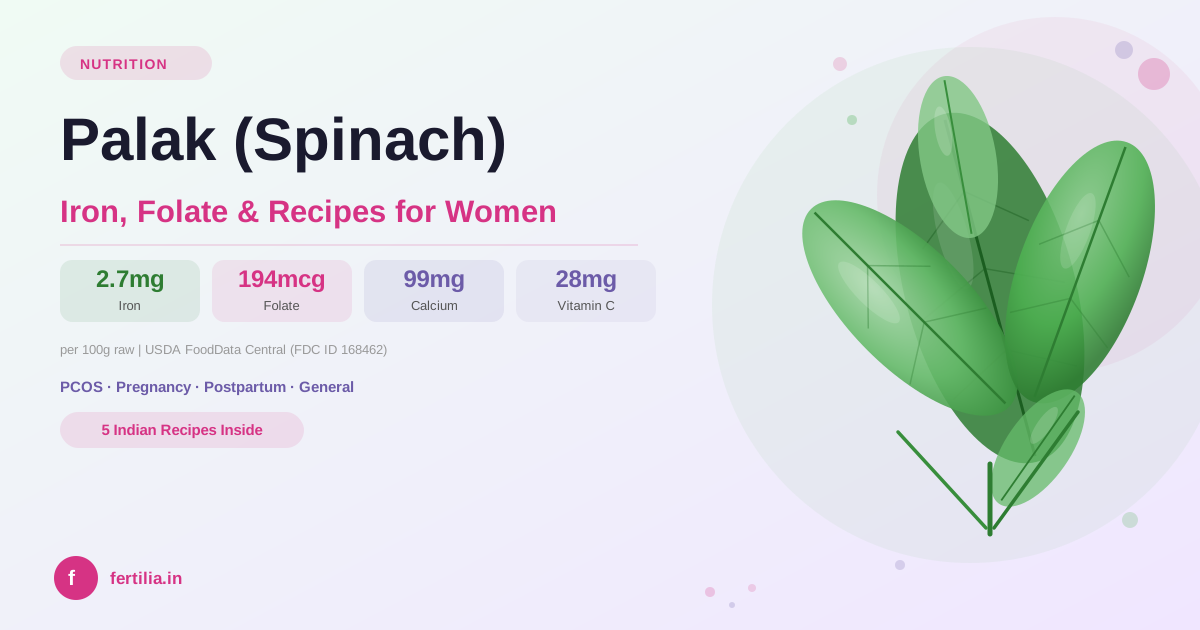
The per-100g-raw column comes from USDA FoodData Central, FDC ID 168462 (Spinach, raw). The katori column is our own approximation for a typical cooked serving, not a USDA figure, so treat it as an estimate rather than a measured value. Cooking concentrates most minerals (calcium, iron, magnesium) per gram because water cooks off, while heat-sensitive nutrients like folate and vitamin C decrease by roughly 20 to 30 percent.
| Nutrient | Per 100g raw | Per 1 katori cooked (~90g) |
|---|---|---|
| Energy | 23 kcal | 21 kcal |
| Protein | 2.9g | 2.6g |
| Total fat | 0.4g | 0.4g |
| Carbohydrate | 3.6g | 3.2g |
| Dietary fibre | 2.2g | 2.0g |
| Calcium | 99mg | ~122mg |
| Iron | 2.7mg | ~3.2mg |
| Folate | 194mcg | ~140mcg |
| Vitamin C | 28mg | ~10mg |
| Vitamin A (as beta-carotene) | 469mcg RAE | ~420mcg RAE |
| Magnesium | 79mg | ~71mg |
| Potassium | 558mg | ~502mg |
Reading the table: One katori of cooked palak (about 90g) provides roughly 3.2mg iron and 140mcg folate. That is a meaningful contribution toward the daily targets for both nutrients, particularly during pregnancy and the postpartum period.
For the role iron and folate play during pregnancy and how much is recommended daily, read our complete guide to iron-rich foods for pregnancy.
Palak is also one of the best everyday sources of folate for women managing PCOS and those on a fertility-supportive food plan. See our fertility foods Indian diet list for how palak fits into the broader picture.
Palak in Indian Languages
| Language | Local name | Script |
|---|---|---|
| Hindi | Palak | पालक |
| Tamil | Pasalai keerai | பசலை கீரை |
| Telugu | Palakura | పాలకూర |
| Kannada | Palak soppu | ಪಾಲಕ್ ಸೊಪ್ಪು |
| Malayalam | Cheera (spinach variety) | ചീര |
| Marathi | Palak | पालक |
| Bengali | Palong shaak | পালং শাক |
| Gujarati | Palak | પાલક |
| Punjabi | Palak | ਪਾਲਕ |
How Much Palak to Eat: Life-Stage Portions
These portions apply to cooked palak as a sabji, dal, or stir-fry. Raw palak in a salad or smoothie can be used in addition.
| Life stage | Daily portion | Notes |
|---|---|---|
| General adult | 1 to 2 katoris cooked | Most women can eat palak freely every day |
| PCOS | 1 to 2 katoris cooked | Works well in dal, sabji, paratha, or khichdi |
| Pregnancy (all trimesters) | 1 to 2 katoris cooked | Well-washed and freshly cooked rather than raw, for food safety |
| Postpartum | 1 to 2 katoris cooked | Soft and well-cooked suits most women; build up at your own pace |
Palak is included in a well-rounded postpartum food plan. For how to stage foods week by week after delivery, and for eating with gestational diabetes, those are questions for your doctor rather than a food guide. Our after delivery food guide for Indian mothers covers the general picture.
Have questions about building a palak-rich meal plan for your specific stage? Dr. Suganya's team can put one together for you.
Chat on WhatsAppFresh, Frozen and Dried Palak
Most Indian kitchens work with fresh palak, but frozen and dried forms are genuinely useful, especially when fresh is hard to find or you want a quicker option.
| Form | Folate | Practical notes |
|---|---|---|
| Fresh raw palak | Highest (194mcg/100g) | Best used within 2 to 3 days of purchase; wash well, remove thick stems |
| Frozen palak (cubes or chopped) | Lower (roughly 100 to 140mcg/100g depending on blanching method) | Reliable year-round; already washed and chopped; works well in dal, paneer, and rice |
| Dried moringa-palak powder blends | Variable; check label | Useful for adding to rotis, idli batter, and porridges; not a substitute for fresh |
Practical note: If fresh palak is unavailable or inconvenient, a 400g frozen pack from any supermarket gives you 4 to 5 servings of cooked sabji without any cleaning or chopping. Keep one in the freezer as a backup.
Washing, Cooking and Pairing Palak
Washing
Fresh palak leaves carry sand, grit, and pesticide residue on the surface. The standard method: fill a large bowl with water, submerge the leaves, swish gently, and lift the leaves out (do not pour through a colander, as this puts the grit back on the leaves). Repeat with fresh water two to three times. Trim the thick lower stems if they seem fibrous.
Blanching vs direct cooking
Blanching (drop leaves into boiling water for 30 to 60 seconds, then into cold water) gives a bright green colour and a milder flavour. It is useful when you want a vibrant saag paneer or palak soup.
Direct wilting in a pan (add washed leaves to a hot pan with a small amount of oil or directly into a simmering dal) is faster and better preserves the minerals. The colour is a darker green but the nutritional outcome is equivalent or slightly better for minerals.
Pressure cooking (adding palak directly to a pressure cooker with dal) is the quickest method and works well for dal palak. There is some nutrient loss compared to short cooking methods, but not dramatic for iron and calcium.
Pairing
Adding a squeeze of lemon juice over cooked palak, or cooking palak with tomatoes or amla-based chutneys, helps get more from the iron. This is a practical cooking tip worth applying when possible.
Buying and Storage Guide
| Situation | What to do |
|---|---|
| Buying fresh palak | Look for bright green, firm leaves with no yellow patches or sliminess; stems should be firm, not wilted |
| Storing in the fridge | Do not wash before storing; wrap loosely in a dry cloth or paper towel and keep in the vegetable drawer; use within 3 to 4 days |
| Washing before use | Wash just before cooking, not before refrigeration (moisture speeds spoilage) |
| Freezing at home | Blanch briefly, pat dry, spread on a tray to freeze, then transfer to a sealed bag; lasts up to 3 months |
| Buying frozen | Choose brands without added salt or seasoning; check that the pack is not clumped (a sign of thaw-refreeze) |
5 Indian Palak Recipes
1. Palak Dal
A weekday staple that works across most Indian regional traditions.
Ingredients (serves 4):
- 1 cup toor dal or moong dal
- 2 large bunches fresh palak (about 300g), washed and roughly chopped
- 1 onion, finely chopped
- 2 tomatoes, chopped
- 3 garlic cloves, minced
- 1 tsp jeera
- 1/2 tsp haldi
- 1 tsp ghee or oil
- Salt to taste
Method: Pressure cook the dal with haldi until soft. In a pan, heat ghee, add jeera, then garlic, onion, and tomatoes. Cook until soft. Add the chopped palak and stir until wilted (2 to 3 minutes). Add the cooked dal, stir well, adjust salt, and simmer for 5 minutes. Serve with rice or chapati.
2. Palak Paneer
Ingredients (serves 4):
- 400g fresh palak leaves, washed
- 200g paneer, cubed
- 1 onion, finely chopped
- 2 tomatoes, roughly chopped
- 1 tsp ginger-garlic paste
- 1 tsp jeera
- 1/2 tsp garam masala
- 1 tbsp oil or ghee
- Salt to taste
Method: Blanch palak in boiling water for 60 seconds, transfer to cold water, drain well, then blend to a smooth paste. In a pan, heat oil, add jeera, then onion and ginger-garlic paste. Cook until onion is golden. Add tomatoes and cook until soft. Add the palak puree, stir, add garam masala and salt. Add paneer cubes, stir gently, and cook on low heat for 5 minutes. Serve with roti or paratha.
3. Palak Paratha
Ingredients (makes 8 parathas):
- 2 cups whole wheat flour (atta)
- 1 cup fresh palak leaves, blanched and finely chopped or pureed
- 1/2 tsp ajwain
- 1/2 tsp jeera
- Salt to taste
- Oil or ghee for cooking
Method: Mix atta with the palak puree, ajwain, jeera, and salt. Add water gradually to form a soft dough (the palak adds moisture, so add water slowly). Rest for 15 minutes. Divide into 8 portions, roll each into a paratha, cook on a hot tawa with a small amount of oil or ghee on both sides. Serve with dahi or a simple sabji.
4. Palak Soup (Pregnancy-Friendly)
Light, easy to digest, and practical for mornings when a heavy meal is not appealing.
Ingredients (serves 2):
- 3 cups fresh palak leaves, washed
- 1 small onion, roughly chopped
- 2 garlic cloves
- 1 cup vegetable broth or water
- 1/2 tsp jeera
- 1 tsp oil or ghee
- Juice of half a lemon
- Salt to taste
Method: In a pan, heat oil, add jeera, then onion and garlic. Cook until soft. Add palak and stir until wilted (2 minutes). Add broth and simmer for 5 minutes. Cool slightly, blend until smooth, return to the pan, adjust salt, and heat gently. Finish with lemon juice before serving. Avoid boiling after adding lemon.
5. Palak Rice
Ingredients (serves 4):
- 1.5 cups basmati rice or any short-grain rice, cooked
- 2 large handfuls fresh palak, washed and finely chopped
- 1 onion, thinly sliced
- 1 tsp ginger-garlic paste
- 1/2 tsp jeera
- 1/2 tsp haldi
- 1/4 tsp garam masala
- 1 tbsp oil or ghee
- Salt to taste
Method: Heat oil in a kadai, add jeera, then sliced onion. Cook until golden. Add ginger-garlic paste and cook for 1 minute. Add haldi, then palak, and stir until wilted. Add cooked rice, garam masala, and salt. Toss gently until the palak is evenly mixed through the rice. Serve with dahi or raita.
Getting Palak onto Your Plate Through the Week
Palak does not need to be a separate sabji every day. The easiest way to get regular servings is to add it to dishes already in your weekly rotation.
| Day | How to use palak |
|---|---|
| Monday | A handful of chopped palak stirred into the dal at the end of cooking |
| Tuesday | Palak paratha instead of plain roti |
| Wednesday | Add a few palak leaves to a moong dal khichdi |
| Thursday | Palak sabji or saag paneer as a side dish |
| Friday | A small handful of raw palak in a smoothie with banana and milk |
| Saturday | Palak soup as a starter |
| Sunday | Palak rice or dal palak for a one-pot meal |
For a broader iron-rich food plan that includes dal, rajma, sesame seeds, and other everyday Indian ingredients alongside palak, see our high-fibre Indian foods guide and our rajma protein and iron guide.
For women managing PCOS, palak fits naturally into the PCOS food plan outlined in our PCOS diet chart.
For a complete reference to iron and calcium-rich Indian foods across all food groups, see our Iron and Calcium-Rich Foods guide.
Want a personalised food plan that includes palak and other iron-rich foods for your specific health goals? Talk to Dr. Suganya's team directly. If you are expecting, iron-and-folate greens like palak are built right into the 90-day Pregnancy Care program.
Chat on WhatsAppFrequently Asked Questions
Is palak safe during the first trimester? Yes. Well-washed, freshly cooked palak is safe throughout pregnancy, including the first trimester. The key is thorough washing to remove surface bacteria and pesticide residue, and cooking it fresh rather than storing cooked palak overnight. Frozen palak that has been properly stored is also safe. For food safety during early pregnancy, the guidance is to cook all leafy greens rather than eating them raw in salads.
How much palak should I eat per day? One to two katoris of cooked palak per day works well for most women. During pregnancy, one katori once or twice a day as part of a varied meal is practical. There is no strict upper limit, but eating a very large amount of palak as a primary food source (rather than as one ingredient among many) is not necessary. Variety across leafy greens (methi, moringa, drumstick leaves, chauli/amaranth) gives a broader range of nutrients than relying on any single one.
Can I eat palak every day? Yes, palak can be eaten daily without concern for most women. Some people who are prone to kidney stones are advised to moderate high-oxalate foods (and palak is relatively high in oxalates), but for women without a history of kidney stones, daily palak in normal cooking portions is fine.
For more on this, read our guide on Cashew (Kaju) Benefits for Women. What is the difference between fresh and frozen palak? Fresh palak has the highest folate content and the most vibrant flavour. However, folate degrades quickly after harvest, so palak that has been sitting in the market for 3 to 4 days may have lost a meaningful portion. Frozen palak is blanched and frozen quickly after harvest, which stops the folate degradation. For practical cooking purposes, well-sourced frozen palak is a reliable alternative to fresh. The iron and calcium content is similar between fresh and frozen.
Can I give palak to young children? Palak can be introduced to infants from around 8 to 9 months as a puree or mashed into dal. Because spinach is higher in oxalates than some other leafy greens, many paediatricians suggest it not be the first green introduced and not be given in large amounts to infants under 12 months. After 12 months, palak as part of a varied diet is fine for toddlers. Consult your child’s paediatrician for individualised guidance.
Should I eat palak raw or cooked? Both have a place. Raw palak in a salad or smoothie preserves the full folate and vitamin C content. Cooked palak is easier to eat in larger quantities, is gentler on digestion for some women, and cooking actually increases the concentration of iron and calcium per gram as water leaves. During pregnancy, cooked palak is recommended over raw salads for food safety reasons.
For more on this, read our guide on Beetroot in Pregnancy. How do I get the most iron from palak? A simple cooking habit helps: add lemon juice to cooked palak before serving, or cook palak with tomatoes in your sabji or dal. The vitamin C in lemon and tomatoes supports better absorption of the iron in palak. Pairing palak with a glass of chaas or dahi alongside the meal (as is common in most Indian households) is completely fine.
Palak is one of the few vegetables that earns its place on the plate for nutritional value, cooking versatility, and year-round availability. Dal palak, saag paneer, palak paratha, and a green soup are all practical ways to bring it in regularly. The recipe and portion table above is a starting point; most Indian kitchens already know how to use palak well.