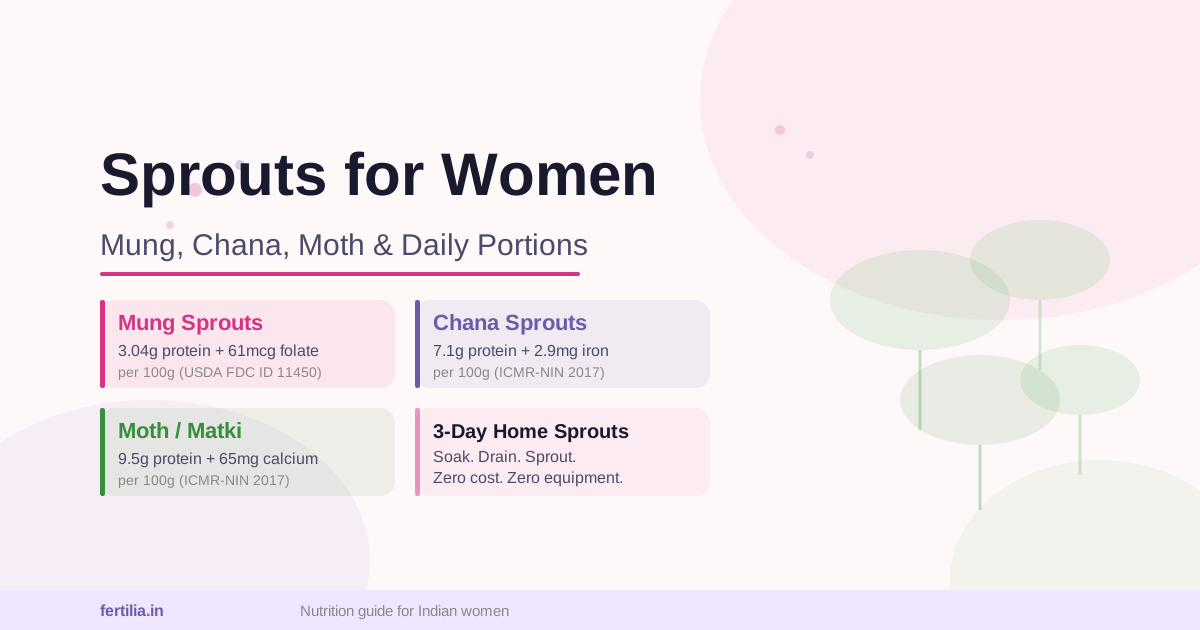
How much protein in sprouts? Mung sprouts: 3.04g per 100g. Chana (Bengal gram) sprouts: 7.1g per 100g. Moth bean (matki) sprouts: 9.5g per 100g. All three are affordable, easy to sprout at home in 3 days, and safe in pregnancy when cooked.
Sprouts Nutrition: Protein, Iron and Folate Per 100g
| Nutrient | Mung Sprouts | Chana Sprouts | Matki Sprouts |
|---|---|---|---|
| Protein (g) | 3.04 | 7.1 | 9.5 |
| Iron (mg) | 0.91 | 2.9 | 2.4 |
| Folate (mcg) | 61 | ~75 | ~60 |
| Calcium (mg) | 13 | 57 | 65 |
| Calories (kcal) | 30 | 78 | ~90 |
| Fibre (g) | 1.8 | 3.9 | 4.1 |
| Vitamin C (mg) | 13.2 | 5.1 | 4.0 |
Mung: USDA FDC ID 11450. Chana and matki: ICMR-NIN 2017.
Jump to: How to sprout at home (3 days) | 5 Indian recipes | Portions by life stage | Pregnancy safety
In almost every Indian kitchen, there is a steel dabba or a small cloth bundle sitting in a warm corner of the counter, quietly doing its thing overnight. Moong soaking in water. Matki tied in a wet cloth. Chana waiting to sprout. Sprouting is one of the oldest food habits in India, and yet it has gone from a daily kitchen ritual to something people see as a “health trend.”
This guide brings it back to basics. What is actually inside your sprouts, how to grow them at home in three days, five practical Indian recipes, and a clear guide on how much to eat at each life stage.
For women who want to understand how sprouts fit into a diet that supports their fertility goals, our complete list of fertility-supportive Indian foods covers folate, iron, and protein sources across all food groups. For women managing PCOS specifically, how diet supports PCOS explains where high-protein foods like sprouts fit.
Detailed Nutritional Facts: Mung, Chana, and Moth Sprouts
The three most commonly sprouted pulses in Indian kitchens are mung (moong), Bengal gram (chana), and moth bean (matki). Each has a different nutritional profile.
| Nutrient | Mung Sprouts | Chana Sprouts | Moth (Matki) Sprouts |
|---|---|---|---|
| Calories (kcal) | 30 | 78 | ~90 |
| Protein (g) | 3.04 | 7.1 | 9.5 |
| Fat (g) | 0.18 | 1.1 | 0.8 |
| Carbohydrates (g) | 5.94 | 11.7 | 12.0 |
| Dietary Fibre (g) | 1.8 | 3.9 | 4.1 |
| Iron (mg) | 0.91 | 2.9 | 2.4 |
| Calcium (mg) | 13 | 57 | 65 |
| Folate (mcg) | 61 | ~75 | ~60 |
| Vitamin C (mg) | 13.2 | 5.1 | 4.0 |
Mung bean sprouts: USDA FoodData Central, FDC ID 11450. Chana and moth bean sprouts: ICMR-NIN 2017, Nutritive Value of Indian Foods.
A few things worth noting from this table.
Mung sprouts are the lightest. At 30 kcal per 100g, they are over 90 percent water. They are gentle on digestion, which is why they appear in postpartum diets across South India and Gujarat. Their vitamin C (13.2mg per 100g) is higher than most pulses in raw form, and 61mcg of folate per 100g adds up meaningfully when eaten regularly.
Chana sprouts have significantly more protein and iron. 7.1g protein and 2.9mg iron per 100g makes sprouted chana a useful food for women who want plant protein without a heavy meal. Bengal gram is widely known as “boot” in North India and “kondakadalai” in Tamil Nadu.
Moth bean (matki) sprouts are the most protein-dense of the three. Around 9.5g protein per 100g is a meaningful amount from a food that costs nearly nothing and takes three days to prepare. In Maharashtra, matki usal is a daily staple. In Rajasthan, moth bean is called “moath” and is grown and consumed across the region.
For a broader look at how fibre from legumes fits into a daily eating pattern, see our guide to high-fibre Indian foods for PCOS and gut health.
Raw versus Steamed: Does Cooking Change the Nutrition?
Light steaming (5 to 7 minutes) reduces vitamin C by roughly 20 to 30 percent. But this is a worthwhile trade in many situations. Steamed sprouts are easier to digest and safe for everyone, including pregnant women, young children, and people with sensitive stomachs. Protein, iron, calcium, and folate content remains largely stable through light cooking.
Indian Regional Names
| Pulse | Hindi | Tamil | Telugu | Kannada | Malayalam |
|---|---|---|---|---|---|
| Mung (moong) | Moong | Pachai payaru | Pesara | Hesaru | Cherupayar |
| Bengal gram (chana) | Chana / Boot | Kondakadalai | Senagalu | Kadale | Kadala |
| Moth bean (matki) | Moth / Matki | Moth payaru | Moth (mothu) | Moth | Moth |
How to Sprout at Home: 3-Day Method
You need a steel or glass container, a piece of clean muslin cloth, and tap water.
Day 0 (Evening): Soak
Sort through the pulses and remove any broken or discoloured ones. Rinse two or three times. Cover with water at a ratio of 1 cup pulse to 3 cups water. Leave to soak for 8 to 10 hours. An overnight soak fits naturally into any routine.
Soaking doubles the volume, so use a container with room to spare.
Day 1 (Morning): Tie and Rest
Drain the soaking water completely. Rinse once more. Tie the damp pulses in a clean muslin cloth or a cotton kitchen towel. Place the bundle in a warm spot: inside an empty pot with a lid on, or in a steel dabba in a warm corner.
In summer, any counter spot works. In winter, the inside of a closed oven (switched off, just for warmth) is ideal. The pulses need warmth and darkness, not sunlight.
Day 2: Rinse and Check
Open the cloth, rinse the pulses with clean water, squeeze out excess moisture, tie again, and return to the warm spot. By this point, tiny white tails will begin to show.
Day 3 (Morning): Ready to Eat
Rinse once more. If tails are 1.5 to 3 cm long, the sprouts are ready. Moong tends to be ready in 2 days; chana and matki take the full 3 days or slightly longer depending on temperature.
Transfer to a clean container with a lid and refrigerate. Use within 2 to 3 days.
Tips by season:
- Summer: Sprouting happens faster (1.5 to 2 days for moong). Watch carefully to avoid over-fermentation.
- Monsoon: High humidity can make sprouts turn slimy faster. Rinse twice daily and refrigerate sooner.
- Winter: Add an extra half-day to your timeline. Warmth is more important in cold weather.
5 Indian Recipes with Sprouts
1. Sprouts Chaat (Street-Style)
The simplest use for a freshly sprouted batch of moong.
Ingredients (serves 2):
- 2 katori (200g) sprouted moong
- 1 small tomato, finely chopped
- 1 small onion, finely chopped
- Half a cucumber, chopped
- 2 tablespoons green chutney (coriander, green chilli, lemon)
- 1 tablespoon tamarind chutney
- Quarter teaspoon roasted jeera powder
- Salt to taste
- Squeeze of fresh lemon
Method: Toss everything together in a large bowl. Serve immediately. Adjust the chutneys to your preferred sweet-sour-spicy balance. A 200g serving has roughly 60 kcal and 6g protein.
2. Warm Sprouts and Tomato Salad
For women who prefer cooked sprouts, this comes together in under 10 minutes.
Ingredients (serves 2):
- 200g sprouted moong or chana (or a mix)
- 2 medium tomatoes, chopped
- Half teaspoon mustard seeds
- Half teaspoon jeera seeds
- 1 green chilli, slit
- 5 to 6 curry leaves
- 1 teaspoon coconut oil or refined oil
- Handful of coriander leaves
- Salt and lemon juice to taste
Method: Heat oil in a pan. Add mustard seeds and let them splutter. Add jeera, curry leaves, and green chilli. Tip in the sprouts and tomatoes. Stir for 3 to 4 minutes over medium heat until the sprouts are just tender. Finish with coriander and lemon.
3. Moong Sprouts Dal
The postpartum-friendly recipe in this list. Light, easy to digest, and warming.
Ingredients (serves 3):
- 1.5 katori (150g) sprouted moong
- 1 medium tomato, chopped
- Half an onion, chopped
- 1 teaspoon ghee
- Quarter teaspoon haldi (turmeric)
- Half teaspoon jeera
- Salt to taste
- Fresh coriander to garnish
Method: Heat ghee in a small pressure cooker or deep pan. Add jeera and let it sizzle. Add onion, saute for 2 minutes. Add tomato and cook until soft. Add sprouted moong, haldi, salt, and 1.5 cups water. Pressure cook for 2 whistles (or simmer covered for 15 minutes). Mash lightly, garnish with coriander. Serve with rice or roti.
A single serving (about 1 katori) provides roughly 8g protein and 0.9mg iron from the moong.
4. Sprouts Dosa
A simple way to add protein to a regular breakfast without changing the recipe too much.
Ingredients (makes 6 to 8 dosas):
- 1 cup regular idli-dosa batter (fermented)
- 1 katori (100g) sprouted moong
- 1 green chilli, finely minced
- Small piece of ginger, grated
- Salt to taste
Method: Blend the sprouted moong coarsely (not smooth) with 2 tablespoons of water. Fold into the dosa batter along with the chilli and ginger. Pour onto a hot tawa and cook as you would a regular dosa. The sprouts give the dosa a slightly nutty flavour and a useful protein boost without altering the texture much.
5. Sprouts Paratha Filling
A practical way to use chana or moth bean sprouts at lunch.
Ingredients (for 4 parathas):
- 200g sprouted chana or matki, lightly steamed
- Quarter teaspoon ajwain (carom seeds)
- Half teaspoon jeera powder
- Quarter teaspoon amchur (raw mango powder)
- Salt and red chilli powder to taste
- 1 teaspoon ghee
Method: Mash the steamed sprouts coarsely with a fork. Mix in all the spices and ghee. Use as a filling for whole wheat parathas. Serve with dahi or pickle. Sprouted chana filling adds around 7g protein per paratha, depending on filling quantity.
Sprouts are one of the simplest daily protein and folate sources, but they work best inside a complete eating plan. Dr. Suganya runs three programs that put food, movement, and clinical care together: PCOS, Fertility, and Postpartum recovery. To see how the approach looks for PCOS specifically, download her free PCOS reversal guide. If you’d like a quick chat about which program fits your situation, message her team on WhatsApp.
How Much to Eat: Life-Stage Portion Guide
| Life Stage | Recommended Portion | Best Form | Notes |
|---|---|---|---|
| PCOS | 1 katori (100g) per day | Raw chaat, dal, or salad | Moong or chana both work; spread across meals or as a mid-morning snack |
| Pregnancy | 1 katori (100g) per day | Always steamed or cooked | Raw sprouts are not safe in pregnancy; see food safety section below |
| Postpartum (first 4 weeks) | Half katori (50g) as dal | Moong sprouts dal, soft-cooked | Start small; moong is gentler than chana or matki in the early weeks |
| Postpartum (after 4 weeks) | 1 katori per day | Dal, chaat, or salad | Can reintroduce chana and matki gradually |
| General | 3 to 4 times per week | Any form | 1 katori (100g) per serving |
Sprouts pair well as part of a balanced plate. For a full picture of how to build an iron-rich meal during pregnancy, see our guide to iron-rich Indian foods for pregnancy. For PCOS-specific meal planning throughout the day, our PCOS weight loss diet and Indian meal plan shows how to fit sprouts alongside other key foods. Sprouts add iron and folate, but if you often feel tired, Dr. Suganya’s 3-test checklist for constant tiredness is worth a read.
Food Safety: What to Know Before You Eat
Most people eat sprouts without any issues. A few simple habits make a meaningful difference.
During Sprouting
- Rinse twice daily. Morning and evening rinses remove bacteria that can grow in the warm, moist environment needed for sprouting. This step is especially important in summer and the monsoon.
- Use clean equipment. Wash the container and cloth before each new batch.
- Discard if they smell sour or look slimy. Healthy sprouts smell mild and fresh. A sour or fermented smell, slimy texture, or pink and orange discolouration means the batch has gone off. Start fresh.
After Sprouting
- Refrigerate in a clean, dry container with a loose lid.
- Use within 2 to 3 days for best taste and safety.
- Rinse once before using.
During Pregnancy: Always Cook Your Sprouts
Raw sprouts are not recommended during pregnancy. The warm, humid conditions that sprouts need to grow can also allow bacteria to multiply. Light steaming for 5 to 7 minutes makes sprouts safe to eat during pregnancy, without significantly affecting iron, calcium, or protein content. Cooked sprouts in dal, a warm salad, or a paratha filling are practical and safe every day.
For more on what to eat and avoid in the weeks after delivery, see our post-delivery food guide for Indian mothers.
Who Should Always Cook Sprouts Before Eating
- Pregnant women
- Children under 5 years
- Elderly individuals with lower immunity
- Anyone recovering from illness or surgery
Storage Summary
| Storage | Duration |
|---|---|
| Counter (during sprouting) | 2 to 3 days max |
| Refrigerator (after sprouting) | 2 to 3 days |
| Freezer (lightly blanched first) | Up to 1 month |
To freeze: blanch for 2 minutes in boiling water, cool completely, pat dry, and freeze in a zip-lock bag. Thaw and add directly to cooked dishes.
Frequently Asked Questions
Are mung sprouts good for PCOS?
Yes. Mung sprouts are low in calories and carbohydrates, high in fibre, and contain useful amounts of folate and plant protein. They fit naturally into a PCOS-friendly eating pattern. For more on how to structure meals for PCOS alongside medical treatment, see our PCOS symptoms, root causes, and natural treatment guide.
Can I eat sprouts during pregnancy?
Yes, but always cooked or steamed during pregnancy. Raw sprouts carry a small food safety risk in pregnancy (see the food safety section above). A katori of moong sprouts dal, or lightly steamed chana sprouts added to your lunch, is a practical and safe way to include them throughout all three trimesters.
How long do homemade sprouts last after they are ready?
Two to three days in the refrigerator in a clean, covered container. Rinse once before using. If they smell sour or feel slimy, discard the batch and start fresh.
Mung sprouts versus chana sprouts: which is better?
Neither is universally better. Moong sprouts are lighter and gentler on digestion, making them ideal for every day and for the early postpartum period. Chana and matki sprouts have more protein and iron per 100g, making them a stronger choice for women who want a filling snack or need higher plant protein. For most women, rotating between the three pulses throughout the week is the simplest and most practical approach.
How do I make sprouts easier to digest?
Light steaming (5 to 7 minutes) or cooking them into a dal reduces digestive discomfort significantly. A tempering with jeera (cumin), ajwain (carom seeds), or a pinch of hing (asafoetida) also supports digestion. Chana and matki sprouts, being denser pulses, are always easier on the stomach when cooked rather than eaten raw.
Can I eat sprouts every day?
Yes. Sprouts are a safe, affordable, everyday food. A katori a day, in any form, is a practical and achievable goal for most women. If your diet already includes other dals and legumes, sprouts simply add variety and a fresh source of vitamin C and folate.
What is the best time to eat sprouts?
Any meal works. Many women eat sprouts as a mid-morning snack (chaat or salad), which fits naturally into the gap between breakfast and lunch. They can equally be included at lunch in dal form or as a paratha filling. If digestion is a concern, cooked sprouts at lunch rather than raw sprouts at dinner tend to sit more comfortably.
How much protein is in chana (Bengal gram) sprouts?
Chana sprouts provide about 7.1g of protein per 100g (ICMR-NIN 2017). That is more than mung sprouts (3.04g) and a little less than moth bean/matki sprouts (9.5g). Chana sprouts also bring about 2.9mg of iron per 100g, which makes them a useful plant-protein and iron source in a vegetarian diet.
Do moong and chana sprouts help with digestion?
Their fibre supports regular digestion, and the sprouting process makes the pulses lighter and easier to digest than the whole dry bean. If raw sprouts feel heavy, lightly steam them for 5 to 7 minutes and temper with jeera, ajwain, or a pinch of hing; this is the simplest way to keep them gentle on the stomach.
Moong sprouts or matki sprouts: which is cheaper?
Both are among the most affordable proteins in an Indian kitchen, since you sprout a small quantity of dry pulse at home. Moong is usually the most widely available and economical across India. Matki (moth bean) is similar in price, sometimes a little more in regions where it is less commonly stocked, but the difference is small.
Sprouts on their own won’t fix PCOS or speed postpartum recovery, but inside the right plan they’re a quiet, daily building block. Dr. Suganya’s 90-day programs handle the full picture: PCOS · Fertility · Postpartum recovery. Message her team on WhatsApp if you’d like a quick chat about what fits your situation.