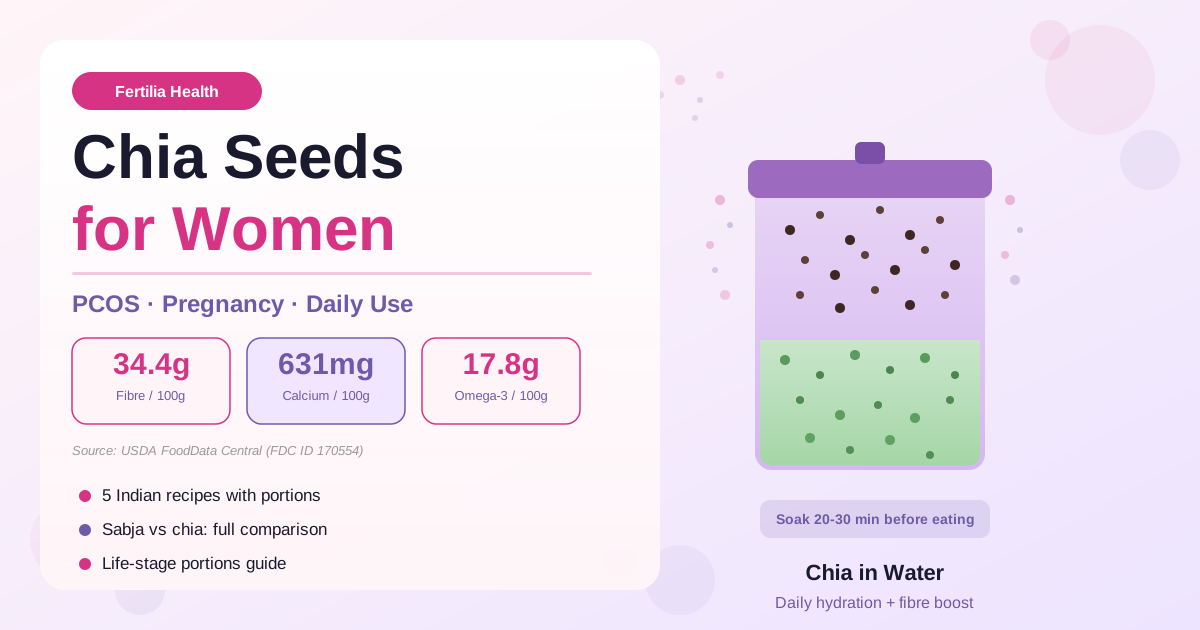
If you have spotted those small black and white seeds at your local supermarket and wondered whether they are worth adding to your daily routine, you are not alone. Chia seeds have become one of the most talked-about additions to women’s diets across India, and for good reason. Whether you are managing PCOS, in your second trimester, or in the early weeks after delivery, one tablespoon of chia seeds packs a surprising amount of fibre, calcium, and protein into your day.
This guide covers what chia seeds actually contain (per USDA FoodData Central data), how they differ from the more familiar sabja seeds, how to soak them correctly, five ways to use them in Indian cooking, and exactly how much to eat depending on your life stage.
For more on this, read our guide on Sabja Seeds Benefits.
Chia Seeds vs Sabja Seeds: They Are Not the Same
Before anything else, let us clear up a very common confusion in Indian kitchens.
Sabja seeds (also called basil seeds, tukmaria, or falooda seeds) come from the sweet basil plant (Ocimum basilicum). You will recognise them from falooda, rose sherbet, and nimbu pani. They swell within 2 to 5 minutes of soaking and have a smooth, slightly mucilaginous texture.
Chia seeds come from Salvia hispanica, a flowering plant native to Central America. They take 20 to 30 minutes to fully swell and form a thicker, pudding-like gel. They are not a traditional Indian ingredient, but are now widely available in Indian supermarkets, health food stores, and online platforms.
| Feature | Chia Seeds | Sabja Seeds |
|---|---|---|
| Plant source | Salvia hispanica | Ocimum basilicum |
| Soaking time | 20-30 minutes | 2-5 minutes |
| Calcium per 100g | 631mg | ~137mg |
| Omega-3 ALA per 100g | 17.8g | trace |
| Dietary fibre per 100g | 34.4g | ~22g |
| Protein per 100g | 16.5g | ~14g |
| Traditional Indian use | No | Yes (falooda, sharbat) |
Chia figures: USDA FDC ID 170554. Sabja figures: approximate values; standardised food composition data for basil seeds is limited in Western databases. Chia is substantially higher in calcium and omega-3 across all available sources.
Both are high-fibre additions to a healthy diet. If you prefer a traditional Indian option, sabja works beautifully in summer drinks. If you want higher calcium and omega-3, chia is the stronger choice nutritionally.
Chia Seeds: Nutritional Facts (USDA FDC ID 170554)
All figures below are from USDA FoodData Central, dried chia seeds (FDC ID 170554).
Per 100g
| Nutrient | Amount |
|---|---|
| Calories | 486 kcal |
| Protein | 16.5g |
| Total fat | 30.7g |
| Omega-3 ALA | 17.8g |
| Carbohydrate | 42.1g |
| Dietary fibre | 34.4g |
| Calcium | 631mg |
| Iron | 7.7mg |
| Magnesium | 335mg |
| Phosphorus | 860mg |
| Potassium | 407mg |
| Zinc | 4.6mg |
Per tablespoon (12g): a practical daily portion
| Nutrient | Amount |
|---|---|
| Calories | 58 kcal |
| Protein | 2.0g |
| Dietary fibre | 4.1g |
| Omega-3 ALA | 2.1g |
| Calcium | 76mg |
| Iron | 0.9mg |
| Magnesium | 40mg |
One tablespoon covers roughly 14% of a daily 30g fibre target and adds meaningful calcium and omega-3 without changing the flavour of your food much at all.
Chia seeds are one of several omega-3-rich foods that pair well with an anti-inflammatory eating pattern. For the full picture of how Indian foods fit together in this way, read our daily anti-inflammatory Indian thali guide.
How to Soak Chia Seeds
Eating chia seeds dry or with too little liquid is uncomfortable and defeats the purpose. Soaking activates the gel-forming property that makes chia seeds easier to digest and gives them their distinctive texture.
Basic soaking method:
- Add 2 tablespoons chia seeds to 300ml water or milk
- Stir thoroughly to prevent clumping
- Wait 10 minutes, then stir again to break up any clumps
- Leave for a further 10-20 minutes until the mixture thickens into a soft gel
- The total time needed is 20-30 minutes
Grinding option: If you or a family member dislikes the gel texture, grind chia seeds into a fine powder and stir into rotis, kanji, or smoothies. The nutritional content is unchanged.
Storage after soaking: Soaked chia keeps in the refrigerator for up to 5 days in a sealed jar.
Dry chia in recipes: For chutneys, rotis, and ladoos, dry chia seeds can be added directly to the mix without pre-soaking.
Want to know which foods work best for your specific situation? Dr. Suganya’s nutrition team at Fertilia can help you put together a plan that fits your life stage, whether that is the PCOS Symptom Reversal or Pregnancy Care program.
Portions by Life Stage
| Life Stage | Daily Amount | How to Use |
|---|---|---|
| PCOS | 1-2 tbsp (12-24g) | Add to dahi, water, or a morning smoothie |
| Pregnancy (first trimester) | 1 tbsp (12g) | Start small; increase if well-tolerated |
| Pregnancy (second and third trimester) | 1-2 tbsp (12-24g) | Add to kheer, raita, lassi, or water |
| Postpartum (breastfeeding) | 1-2 tbsp (12-24g) | Add to kanji, kheer, or buttermilk drinks |
| General (no specific condition) | 1-2 tbsp (12-24g) | Can be eaten daily as part of any meal |
Starting out: Chia is very high in fibre (34.4g per 100g). If you are adding chia seeds for the first time, start with 1 teaspoon daily in the first week, then increase gradually over two weeks. Drink plenty of water throughout the day, especially when eating fibre-rich foods.
5 Indian Chia Seed Recipes
1. Chia Nimbu Pani (Chia Lemon Water)
A refreshing summer drink that doubles as your daily chia portion.
Ingredients (1 serving):
- 1 tbsp chia seeds
- 1 glass water (250ml)
- Juice of half a lemon
- 1 tsp jaggery powder or raw honey
- A pinch of rock salt or kala namak
- 4-5 fresh pudina (mint) leaves (optional)
Method:
- Add chia seeds to the water. Stir well.
- Leave for 20-30 minutes, stirring once at the 10-minute mark to break up clumps.
- Add lemon juice, jaggery, salt, and mint.
- Stir and serve. Do not strain.
The gel texture makes this more filling than plain nimbu pani. The prepared drink keeps in the refrigerator for up to 8 hours.
2. Chia Raita
A cooling side dish that pairs with any Indian meal.
Ingredients (2 servings):
- 1 cup thick dahi (curd)
- 1 tbsp chia seeds (soaked in 3 tbsp water for 20 minutes)
- 1 small cucumber, grated or finely chopped
- 1 small carrot, grated
- 1/2 tsp roasted jeera (cumin) powder
- Salt to taste
- Fresh coriander for garnish
Method:
- Soak chia seeds in 3 tbsp water for 20 minutes, then set aside.
- Whisk dahi until smooth.
- Add soaked chia, cucumber, carrot, jeera powder, and salt. Mix well.
- Chill for 15 minutes, then garnish with coriander and serve.
Pairs with roti, plain rice, khichdi, or any dal-based meal.
3. Chia Kheer
A lighter, protein-rich version of traditional rice kheer.
Ingredients (2 servings):
- 3 tbsp chia seeds
- 2 cups full-fat milk (or coconut milk for a dairy-free version)
- 2 tsp jaggery powder
- 1/4 tsp elaichi (cardamom) powder
- 6-8 soaked badam (almonds), sliced
- A few strands of kesar (saffron) (optional)
Method:
- Add chia seeds to the milk. Stir thoroughly.
- Leave for 30 minutes, stirring once at the 15-minute mark.
- Add jaggery, elaichi, and kesar. Stir until the jaggery dissolves.
- Serve chilled or at room temperature, topped with sliced badam.
- For a warm version: after soaking, gently warm the mixture on low heat for 5 minutes. Do not boil.
Keeps in the refrigerator for up to 2 days.
4. Chia Coconut Chutney
A South Indian staple with added fibre and calcium from chia.
Ingredients (4-6 servings):
- 1 cup grated fresh coconut (or frozen)
- 1.5 tbsp chia seeds (soaked in 3 tbsp water for 20 minutes)
- 2 green chillies
- 1/2 inch fresh ginger
- Salt to taste
- For tempering: 1 tsp oil, 1/2 tsp mustard seeds, 6-8 curry leaves, 1 dried red chilli
Method:
- Soak chia seeds in water for 20 minutes.
- Blend coconut, green chillies, ginger, salt, and 3-4 tbsp water to a smooth chutney.
- Stir in the soaked chia gel after blending (do not blend again as the gel adds body naturally).
- Heat oil, add mustard seeds, curry leaves, and red chilli. Pour tempering over chutney.
- Serve fresh with idli, dosa, or poha.
Adding chia after blending gives the chutney a thicker consistency without changing the coconut flavour at all.
5. Chia Dalia Pudding (Overnight Prep)
A filling, no-cook morning meal.
Ingredients (1 serving):
- 1/4 cup dalia (broken wheat)
- 1.5 tbsp chia seeds
- 3/4 cup milk (dairy or coconut)
- 2 tsp jaggery powder
- 1/4 tsp elaichi powder
- 2-3 soaked khajur (dates), finely chopped
- Fresh fruit for topping: banana slices, pomegranate arils, or guava pieces
Method:
- Combine dalia, chia seeds, milk, jaggery, elaichi, and dates in a jar or bowl. Stir well.
- Cover and refrigerate overnight (minimum 8 hours).
- In the morning, stir well. The dalia and chia will have absorbed the milk and softened fully.
- Top with fresh fruit and serve cold.
Dalia needs the full overnight soak to become tender (unlike oats which soften faster). The combination of chia gel and dalia gives a satisfying texture that keeps you full through the morning.
Chia Seeds in a PCOS-Friendly Indian Diet
Chia seeds fit naturally into a PCOS-supportive eating pattern. They are high in fibre (34.4g per 100g) and protein (16.5g per 100g), making them a practical daily addition to dahi, water, or kheer. For the full context on how fibre-rich Indian foods support PCOS management, see our high-fibre Indian foods guide and our low-GI Indian foods cheat sheet.
Chia also fits naturally into a broader fertility-supportive diet alongside other seeds and dals. Read our complete fertility foods Indian diet list for folate, iron, and omega-3 sources listed with USDA/ICMR data.
Buying and Storing Chia Seeds
Where to buy in India: Large supermarkets (Reliance Fresh, More, Big Bazaar), health food stores, and online platforms (Amazon India, BigBasket, Flipkart) all stock chia seeds. They are usually sold under their English name across all Indian languages, as they have no traditional regional name.
Reading the label: The ingredient list should say only “chia seeds.” Avoid sachets labelled “chia blend,” flavoured chia, or pre-sweetened mixes.
Black vs white chia: Both colours have an identical nutritional profile. The difference is cosmetic only.
Storage: Keep in an airtight container in a cool, dry place away from sunlight. Properly stored chia seeds stay fresh for up to 2 years. Once soaked, refrigerate and use within 5 days.
Building a postpartum or PCOS-friendly meal plan and not sure where to start? Dr. Suganya’s team at Fertilia can put together a practical plan based on your test results and food preferences.
Frequently Asked Questions
Can I eat chia seeds every day? Yes, 1 to 2 tablespoons daily is a practical, well-tolerated amount for most women. Start with 1 teaspoon in the first week and increase gradually. Drink plenty of water each day, as chia is very high in fibre and absorbs liquid.
Are chia seeds safe during pregnancy? Chia seeds are a food, not a supplement, and can be included as part of a balanced pregnancy diet. Start with 1 tablespoon daily from the first or second trimester. If you are on a specific diet plan for gestational diabetes or any other condition, discuss portions with your doctor or nutritionist.
What is the difference between chia seeds and sabja seeds? They are different seeds from different plants. Sabja (basil seeds) come from Ocimum basilicum and swell within 2 to 5 minutes. Chia seeds come from Salvia hispanica and take 20 to 30 minutes to swell. Per 100g, chia has significantly more calcium (631mg vs ~137mg), more omega-3 ALA (17.8g vs trace), and more dietary fibre (34.4g vs ~22g). Sabja is the traditional Indian seed used in falooda and sharbat.
Do I have to soak chia seeds before eating them? Soaking is strongly recommended. Eating large amounts of dry chia seeds can cause digestive discomfort, and the gel formed during soaking makes the fibre more effective. Soaking in water or milk for 20-30 minutes before eating is the simplest method.
Can I use chia seeds as an egg substitute in baking? Yes. Mix 1 tbsp ground chia seeds with 3 tbsp water, rest for 5 minutes, and use in place of one egg in baked goods like banana bread, energy balls, or muffins. It works best in recipes where egg is used mainly as a binder rather than for aeration.
Can I give chia seeds to my toddler or older child? Chia seeds can be introduced as part of a varied solid food diet from around 12 months, in small amounts (1/2 tsp, always soaked). For specific guidance on quantities for infants and toddlers, speak with your paediatrician.
How do chia seeds compare to alsi (flaxseeds)? Both are high in omega-3 ALA and fibre, but they have a different profile. Chia has more calcium (631mg vs ~255mg per 100g per USDA FDC) and can be eaten whole without grinding. Flaxseeds need to be ground to make their omega-3 bioavailable. Both are useful additions to a women’s diet. Read our flaxseeds guide for women for a full comparison.
Manisha Maheswari is a nutritionist at Fertilia Health, working with women on PCOS, pregnancy, and postpartum nutrition.