She joined her consultation with a printed list in her hand.
Gluten, dairy, nightshades, soy, sugar, refined oil, high-histamine foods. Her cousin had shared an article online, and she had spent three weeks eliminating everything on it. She was eating plain rice with boiled vegetables and had dropped so many foods that she was struggling to meet basic nutrition. Her periods were late. Her energy was low. And the PCOS symptoms she was trying to address were, if anything, worse.
When I asked her what she was hoping to fix, she said: “I read that inflammation causes PCOS. So I am avoiding all inflammatory foods.”
I have this conversation, in some version, at least twice a week.
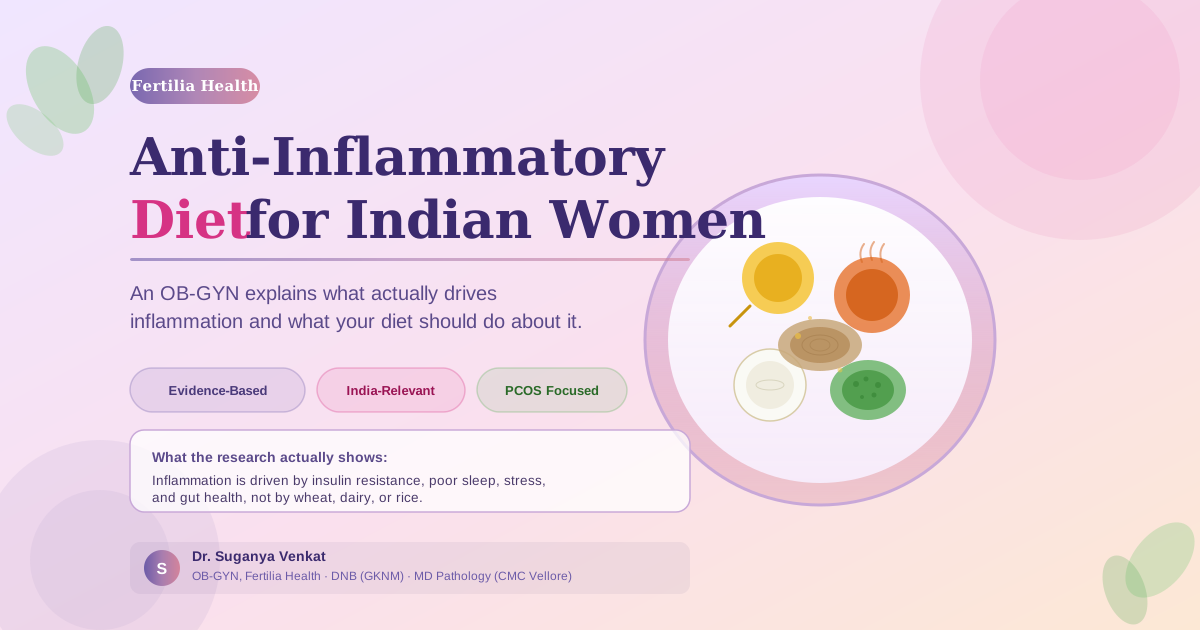
The idea that inflammation drives women’s health problems is not wrong. Chronic low-grade inflammation is genuinely implicated in PCOS, endometriosis, irregular cycles, and impaired fertility. The problem is the leap that follows: the belief that inflammation can be fixed by removing specific foods from your diet.
This post is my attempt to correct that leap, using the actual science.
What this post covers
- What inflammation is and what drives it
- Why the “inflammatory foods” framing is scientifically misleading
- What IgG food sensitivity tests actually show (not what labs claim)
- Which Indian foods are genuinely anti-inflammatory and why
- The five real levers that reduce chronic inflammation
What inflammation is
Inflammation is your immune system’s response to a perceived threat. When you cut your finger, get an infection, or experience a sudden spike in blood sugar, immune cells release signalling molecules called cytokines (including interleukins and TNF-alpha) to coordinate repair.
Acute inflammation is protective and necessary. It is how your body heals.
Chronic low-grade inflammation is different. It is a sustained, low-intensity activation of the same system, without a clear threat that resolves. Blood markers like CRP (C-reactive protein), IL-6, and TNF-alpha remain mildly elevated over months or years. This state is genuinely associated with PCOS, endometriosis, thyroid dysfunction, and impaired ovarian reserve.
But here is the critical distinction: chronic inflammation is driven primarily by your body’s systemic environment, not by individual foods you eat.
The largest drivers are:
- Visceral fat accumulation (adipocytes release pro-inflammatory cytokines in proportion to fat cell size)
- Insulin resistance and chronic hyperglycaemia (sustained high insulin directly promotes IL-6 and CRP production)
- Sleep deprivation (sustained short sleep raises CRP measurably; Meier-Ewert et al. 2004, Journal of the American College of Cardiology)
- Chronic psychological stress (HPA axis activation elevates cortisol, which disrupts immune regulation when sustained over time)
- Gut dysbiosis (an imbalanced gut microbiome, which influences immune signalling and metabolic regulation; Sonnenburg & Bäckhed’s 2016 Nature review sets out how diet and gut bacteria interact to moderate human metabolism)
- Sedentary behaviour (physical inactivity reduces anti-inflammatory signalling from skeletal muscle)
No single food causes sustained elevation of inflammatory markers in a well-nourished person.
Why the “inflammatory foods” idea is scientifically misleading
The concept of inflammatory versus anti-inflammatory foods comes partly from laboratory studies where isolated compounds (refined sugar, saturated fat, certain food antigens) were shown to activate inflammatory pathways in cell cultures or animal models.
The problem is that real food is not an isolated compound. When you eat rajma, you are getting fibre, plant protein, polyphenols, iron, and folate together. When you eat whole wheat roti, you are getting fibre (which directly feeds anti-inflammatory short-chain fatty acid production in your gut), protein, B vitamins, and slow-digesting carbohydrate. The net effect on your systemic inflammatory state depends on the totality of your eating pattern, your gut microbiome, your metabolic health, and your lifestyle, not on any single ingredient.
A 2014 study (David et al., Nature) showed that drastic short-term dietary shifts alter the gut microbiome rapidly, and that eliminating plant fibre specifically reduces the bacteria that produce butyrate, an anti-inflammatory short-chain fatty acid. In other words, when you eliminate foods aggressively, you often remove the fibre your gut needs to keep inflammation low.
Misselwitz et al. (2019, Gut) reviewed the pathogenesis, diagnosis and management of lactose malabsorption and intolerance. The distinction that matters for this discussion is that lactose intolerance is a digestive problem, and it is not the same thing as dairy driving systemic inflammation. Many people who get some discomfort from lactose still tolerate moderate dahi and chhena perfectly well. Avoiding all dairy because of “inflammation” removes calcium, protein, and probiotic bacteria without addressing the actual concern.
Research on oral tolerance (Pabst & Mowat, Mucosal Immunology 2012) establishes that the gut-associated immune system is specifically designed to generate tolerance to dietary antigens, meaning the foods you eat regularly are actively down-regulated by your immune system, not treated as threats. A well-functioning gut immune system suppresses inflammatory responses to food, not the reverse.
The summary: the foods most commonly targeted in elimination diets (wheat, dairy, legumes, nightshades) are, in the context of an overall balanced Indian diet, not the problem. Restricting them without clinical indication removes key nutrients and often worsens gut microbiome diversity, which is itself a driver of chronic inflammation.
The IgG food sensitivity test: what it measures
I want to address this directly because it influences food decisions in my patients regularly.
IgG food sensitivity panels are sold by several Indian labs, typically for somewhere between Rs 6,000 and Rs 16,000 depending on the lab and how many foods the panel covers (prices checked August 2026; the larger 200-plus food panels sit at the upper end). They measure immunoglobulin G antibodies against specific foods. When the test comes back positive for wheat, dahi, or eggs, many women interpret this as confirmation that these foods are causing inflammation or harm.
For more on this, read our guide on IgG Food Sensitivity Test in India. Professional allergy bodies have taken a clear position on this. A European Academy of Allergy and Clinical Immunology task force concluded that testing for food-specific IgG4 is not recommended as a diagnostic tool, because these antibodies reflect exposure and the development of normal oral tolerance rather than disease (Stapel et al., 2008, Allergy). The American Academy of Allergy, Asthma and Immunology formally endorsed that position (Bock, 2010, Journal of Allergy and Clinical Immunology). Foods you eat frequently will generate IgG responses because your immune system is recognising familiar dietary antigens. A positive IgG result for dahi means you eat dahi regularly. It does not mean dahi is causing inflammation, an allergy, or intolerance.
True food allergy is mediated by IgE antibodies and produces rapid, often severe reactions (urticaria, angioedema, anaphylaxis) within minutes of eating. This is distinctly different from IgG-mediated sensitivity.
True food intolerance (such as lactase deficiency causing lactose intolerance) produces digestive symptoms that are real and manageable. They do not produce systemic inflammation.
Using IgG panels to guide food elimination is not evidence-based practice. If you have already taken one and received a long positive list, please discuss it with your doctor before acting on it. In almost every case, the foods flagged are not the cause of your symptoms.
Talk to Dr. Suganya on WhatsApp
What is genuinely anti-inflammatory: the Indian eating pattern advantage
Here is the good news: the traditional South Indian and North Indian diet, when eaten in its whole-food form, is already among the best dietary patterns for reducing chronic inflammation. Not because it avoids specific villains, but because it provides:
Turmeric (haldi): Curcumin, the active compound in haldi, does have measurable anti-inflammatory effects. Pooled analysis of 32 randomised controlled trials found that oral curcumin lowered CRP, IL-6 and TNF-alpha (Ferguson et al. 2021, Nutrition Reviews). One caveat matters here, and it is the same caveat this post asks of everyone else: those trials used concentrated supplements at doses well above anything cooking provides, and curcumin from food is poorly absorbed. Cooking haldi with oil or ghee and a little kali mirch improves absorption. Daily haldi in your cooking is a sound habit worth keeping, but it is a habit rather than a therapeutic dose.
Fermented foods (dahi, idli, dosa, kanji): Fermented foods introduce Lactobacillus strains that support gut barrier integrity and reduce cytokine production from gut-associated immune cells. Dahi, which most Indian households eat daily, is a meaningful and accessible source.
Pulses and legumes (rajma, chana, moong dal, toor dal): These provide prebiotic fibre (which feeds bacteria that produce short-chain fatty acids such as butyrate and propionate) alongside polyphenols. Rotating between different dals across the week varies the types of fibre reaching your colon, which is a sensible way to support a more diverse gut microbiome. Worth being straight about the strength of the evidence here: the fibre-to-short-chain-fatty-acid pathway is well established, but rotating dals specifically has not been tested against inflammatory markers. Treat it as a reasonable principle rather than a proven intervention.
Amla (Indian gooseberry): One of the richest food sources of vitamin C available in India, alongside tannins and ellagitannins. Published figures for how much vitamin C amla actually contains vary widely between sources, so treat any single number you see quoted as approximate. Both vitamin C and these polyphenols reduce oxidative stress, which is a direct upstream driver of inflammatory signalling.
Methi (fenugreek): Contains galactomannan, a soluble fibre that slows glucose absorption, reducing postprandial insulin spikes. Sustained insulin elevation is one of the most direct dietary drivers of IL-6 and CRP production, particularly in women with PCOS.
Adrak (ginger): Shogaols and gingerols in ginger have documented prostaglandin-modulating properties at culinary doses. Adding adrak to daily cooking or chai is relevant nourishment, not ceremonial habit.
Ragi (finger millet): Complex carbohydrate with a lower glycaemic response than polished white rice. The fibre supports short-chain fatty acid production in the gut. Iron content supports adequate haemoglobin, reducing the tissue-level oxidative stress associated with iron deficiency anaemia.
The pattern matters more than any single ingredient. A meal of rajma with brown rice or jowar roti, a bowl of dahi, a palak sabzi with haldi and adrak, and a small serving of amla pickle provides a genuinely anti-inflammatory nutrient matrix, and it is affordable, practical, and already familiar to most Indian families.
The five real levers for chronic inflammation
Given what the evidence shows, here is where your attention is more productively directed:
1. Stabilise blood sugar. The single most impactful dietary lever is replacing high-glycaemic refined carbohydrates (maida, polished white rice at every meal, sugar-sweetened drinks) with fibre-rich alternatives (ragi, jowar, whole wheat, dal-heavy meals). This directly reduces postprandial insulin surges and the downstream IL-6 response. You do not need to eliminate rice. You need to pair it with dal, sabzi, and dahi to reduce the combined glycaemic load.
2. Move your body consistently. Exercise is one of the better-evidenced anti-inflammatory interventions available, and contracting skeletal muscle releases myokines that influence inflammatory signalling. Fedewa et al. (2017, British Journal of Sports Medicine) pooled 83 controlled trials and found that exercise training lowers CRP. The reduction was larger when it came alongside a fall in BMI or body fat, and it was still present in people whose weight did not change. Thirty minutes of brisk walking on most days of the week is a reasonable target. This matters more than eliminating any individual food.
3. Protect your sleep. Meier-Ewert et al. (2004, Journal of the American College of Cardiology) restricted healthy adults to about four hours of sleep a night for ten days and measured a rise in CRP across that period. Sleep is a biological requirement for immune regulation, not a lifestyle luxury. For women with PCOS, poor sleep amplifies insulin resistance, directly worsening the inflammatory environment.
4. Address visceral fat. Adipose tissue around the abdomen produces a continuous stream of inflammatory cytokines in proportion to fat cell size. Weight management targeted at visceral fat (which responds to consistent movement, blood sugar stabilisation, and adequate sleep) reduces inflammatory burden more durably than any dietary restriction.
5. Support your gut microbiome. Eat varied plant foods across the week, include daily fermented foods, and avoid unnecessary antibiotic use. A diverse, fibre-fed microbiome produces short-chain fatty acids that directly reduce intestinal permeability and systemic inflammation. Restricting plant-rich foods without clinical indication does the opposite of this.
A note on when elimination diets are indicated
Sometimes, food elimination is genuinely appropriate. If you have confirmed coeliac disease, wheat must be avoided. If you have an IgE-mediated food allergy, that food must be avoided. If your symptoms (digestive, skin, joint) consistently and reproducibly worsen within two hours of a specific food, that is a clinical pattern worth investigating with your doctor.
But elimination should never start with a generalised “inflammatory foods” list from the internet or an IgG panel result. It should start with a clinical assessment: history, symptoms, and if warranted, specific diagnostic testing (IgE testing for true allergy, hydrogen breath test for lactose or fructose malabsorption, colonoscopy for suspected IBD).
Unnecessary food restriction in women with PCOS or fertility concerns is not harmless. Removing dairy drops calcium intake at a time when bone density matters. Removing legumes removes the primary plant protein and prebiotic fibre source in Indian diets. Removing whole grains removes B vitamins, fibre, and iron co-factors. The nutritional gaps this creates can worsen the hormonal environment and gut microbiome exactly when stability is most needed.
What a genuinely anti-inflammatory day of eating looks like
Morning: Ragi kanji or two ragi rotis with a small bowl of dahi and a piece of amla pickle. Chai with a pinch of haldi and fresh adrak grated in.
Lunch: Two ladles of rajma, chana, or toor dal with brown rice or jowar roti, a methi or palak sabzi prepared with haldi and jeera, a small bowl of plain dahi on the side.
Afternoon: A handful of aakhrot (walnuts), or a small piece of jaggery with til seeds, or a fresh fruit (guava, anar, or seasonal choice).
Evening: Moong dal soup with adrak and jeera, or a mixed vegetable sabzi with whole-wheat chapati.
This is not a special protocol. It is close to what a traditionally cooked South or North Indian household produces on a moderate budget. The anti-inflammatory value comes from its consistency and variety across the week, not from eliminating anything.
If you would like a structured guide to this approach, including a practical 7-day plan and an evidence-based reference for each food category, our resource guide covers it in detail.
Download the Anti-Inflammatory Diet Guide for Women
When inflammation sits on top of PCOS, eating is one layer of several. Dr. Suganya brings the food, movement, and hormonal-marker pieces together in her 90-day PCOS Symptom Reversal program.
Book a personalised consultation on WhatsApp
Frequently asked questions
Is wheat inflammatory for women with PCOS?
No, in the absence of coeliac disease or wheat allergy. Whole wheat provides B vitamins, iron, and dietary fibre that support hormone metabolism. The concern with many wheat-based Indian foods (like maida paratha or packaged white bread) is the refining that removes fibre and nutrients, not the wheat itself. Whole wheat roti is a nutritionally appropriate part of a PCOS-supportive diet.
Is dairy inflammatory?
For the majority of Indian women, dahi and chhena are not inflammatory. Lactose intolerance (which is common in India) can cause digestive discomfort but does not produce systemic inflammation. IgG antibodies to dairy, often reported in food sensitivity panels, reflect normal dietary exposure and oral tolerance, not pathology. If you genuinely have digestive symptoms with dairy, a lactase supplement or switching to fermented dairy (where lactose is partially pre-digested) often resolves them without eliminating dairy entirely.
Is rice inflammatory?
No. The concern about rice relates to its glycaemic index, but glycaemic impact depends on portion size, preparation method, and what you eat alongside it. Dal, sabzi, and dahi eaten with rice significantly reduce the combined glycaemic response of the meal. Replacing white rice with ragi or jowar at some meals is a useful strategy for blood sugar management in PCOS, but this is about glycaemic balance, not inflammation from rice.
What are the most effective anti-inflammatory foods to eat more of?
Focus on adding rather than eliminating. Daily haldi in cooking, a bowl of dahi or other fermented food, varied dals across the week (rajma, chana, moong, toor), amla when available, aakhrot, palak, methi, and fresh adrak in cooking or chai. The combination of plant diversity, fermented foods, and slow-release carbohydrate is what produces measurable anti-inflammatory effects. Read our companion post on anti-inflammatory Indian foods and daily thali ideas for practical meal examples.
Should I take an IgG food sensitivity test?
Based on current evidence, IgG food panels are not a validated diagnostic tool for food intolerance, allergy, or inflammation. The position of the European and American allergy academies is that food-specific IgG positivity reflects exposure to foods you eat regularly and normal oral tolerance, not a pathological immune response (Stapel et al., 2008, Allergy; endorsed by Bock, 2010, Journal of Allergy and Clinical Immunology). A long positive list from an IgG panel should not be used to guide food elimination. If you have specific, reproducible symptoms after eating particular foods, discuss them with your doctor and pursue specific, validated testing for that concern.
Does stress cause inflammation?
Yes, significantly. Chronic psychological stress activates the HPA axis, which elevates cortisol. Short-term cortisol is actually anti-inflammatory, but chronically elevated cortisol disrupts immune regulation and eventually promotes sustained CRP and IL-6 elevation. Managing stress through adequate sleep, regular movement, pranayama (Anulom Vilom, Bhramari), and social support is a legitimate and evidence-supported anti-inflammatory strategy.
How does inflammation relate specifically to PCOS?
Research consistently shows elevated CRP and TNF-alpha in women with PCOS compared to controls. In PCOS, the primary drivers of this inflammatory state are insulin resistance, visceral adiposity, and hormonal imbalance, not specific foods. Addressing these through lifestyle changes (blood sugar stabilisation, consistent movement, adequate sleep) reduces both PCOS severity and inflammatory markers. Understand the insulin resistance connection in detail in our post on insulin resistance and PCOS.
The key takeaway
Chronic low-grade inflammation is real and does affect conditions like PCOS, endometriosis, and fertility. But its primary drivers are insulin resistance, poor sleep, chronic stress, visceral adiposity, and gut dysbiosis, not specific foods.
The traditional Indian diet, when eaten in its whole-food form, is already among the best dietary patterns for anti-inflammatory benefit: varied legumes, fermented dahi, haldi, amla, methi, and fibre-rich grains. The goal is to eat these consistently and with variety, not to eliminate wheat, dairy, rice, or legumes based on internet lists or IgG panel results.
Related reading from Fertilia: