She joined the call holding three pages of lab results, printed and highlighted in yellow.
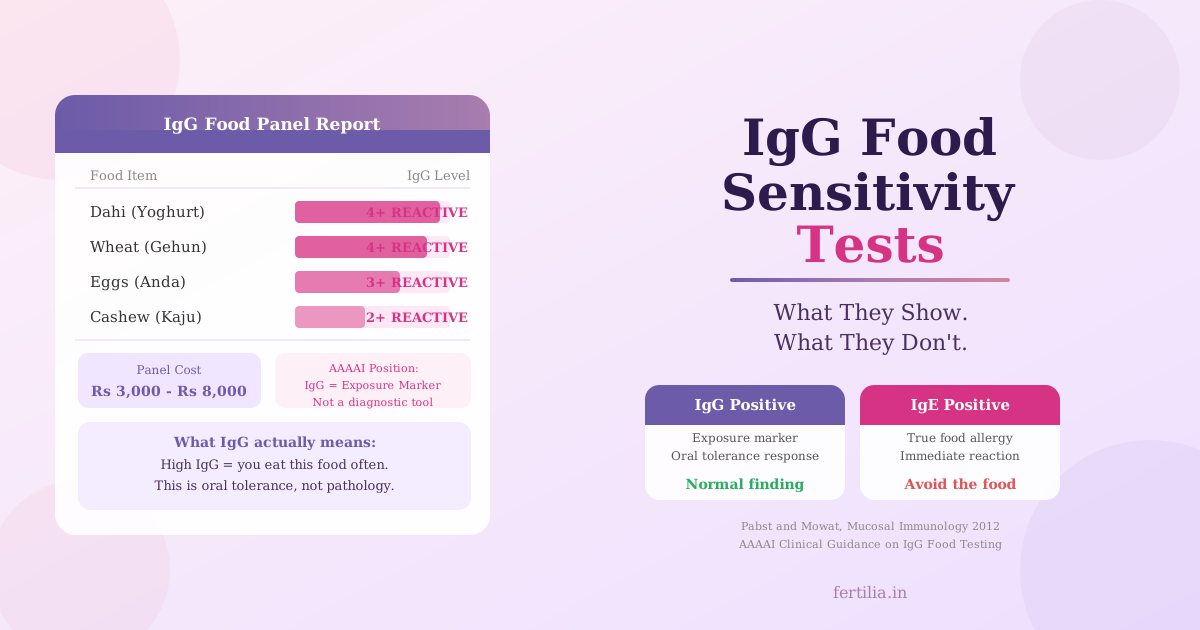
The header said: “IgG Food Sensitivity Panel, 96 Foods.”
She had done the test six weeks earlier at a private lab in Chennai, after a wellness influencer she followed online recommended it as “the first step to understanding your body.” The results flagged wheat (4+), dahi (4+), eggs (3+), and cashews (2+) as reactive. She eliminated all four immediately. She was now three weeks into eating plain rice with dal and boiled vegetables: no dahi, no eggs, nothing with wheat. Her nutritional variety had shrunk to a handful of foods.
Her periods had not improved. Her PCOS symptoms were unchanged. And she was genuinely confused, because she had done exactly what the report seemed to tell her to do.
“The doctor at the lab said to avoid my reactive foods for at least three months,” she told me. “But nothing has changed.”
This conversation, in some version, happens in my consultations at least once a week now. IgG food sensitivity panels are widely available across Indian diagnostic centres, marketed as tools for identifying hidden food triggers behind PCOS, fatigue, skin problems, period irregularities, and fertility challenges. The tests cost between Rs 3,000 and Rs 8,000. And when their results are misunderstood, they lead women to systematically remove the foods that are most nourishing for them.
This post explains what IgG actually measures, how to interpret your results correctly, and where your attention is more productively placed.
What this post covers
- What IgG food sensitivity tests actually measure (and what they do not)
- Why IgG antibodies appear in response to food: the science of oral tolerance
- The difference between IgG positivity, true food allergy, and food intolerance
- Why your most commonly eaten foods almost always top the reactive list
- What to do if you have already taken the test and have results in hand
- Which investigations are actually validated for PCOS and fertility concerns
What an IgG food sensitivity test measures
An IgG food sensitivity panel measures the concentration of immunoglobulin G (IgG) antibodies in your blood against a panel of food antigens. Most panels test between 90 and 220 foods. Results are typically reported as reactive (1+ to 4+) or non-reactive.
What the test does not measure:
- Whether you are allergic to a food
- Whether a food is causing inflammation in your body
- Whether a food is driving your PCOS, irregular cycles, or fertility challenges
The IgG antibodies being measured are a marker of one thing only: how often you have eaten a given food.
Foods you eat every day generate higher IgG concentrations because your immune system has encountered those food proteins more frequently. Foods you never eat show low or absent IgG because there has been no exposure. This is the mechanism of oral tolerance, and it is well established in immunological research.
Pabst and Mowat (Mucosal Immunology, 2012) described oral tolerance as the gut immune system’s normal response to regularly consumed dietary antigens. The gut-associated immune tissue actively generates tolerance to foods that enter the digestive tract repeatedly, producing IgG antibodies as part of this tolerance response, not as a sign of pathology.
What this means in practice: when your IgG panel shows 4+ for dahi, it is telling you that you eat dahi frequently and your immune system has mounted a normal tolerance response to it. It is not telling you that dahi is causing harm.
The American Academy of Allergy, Asthma and Immunology (AAAAI) has a clear position on this. Their clinical guidance states that IgG antibodies to food antigens are found commonly in healthy adults and children. Their presence reflects previous dietary exposure and normal immune function, not food allergy or disease. The AAAAI does not recommend IgG food sensitivity testing as a diagnostic tool for any condition.
The critical distinction: IgG versus IgE
Two immunoglobulin types are often confused in food-related discussions.
IgE (immunoglobulin E) mediates true food allergy. When someone with a peanut allergy eats peanuts, IgE antibodies on mast cells bind to peanut antigens and trigger rapid release of histamine and other inflammatory mediators. Symptoms appear within minutes: urticaria (hives), angioedema (swelling of the lips, face, or throat), wheezing, vomiting, and in severe cases, anaphylaxis. True food allergies, diagnosed via IgE testing (specific IgE RAST or skin prick test), require strict avoidance because reactions are immediate and can be life-threatening.
IgG (immunoglobulin G) is the antibody class involved in long-term immune memory and, specifically, oral tolerance. IgG antibodies to food do not cause urticaria, angioedema, or anaphylaxis. They do not mediate inflammatory cascades. They are markers of exposure and familiarity.
A completely separate category is food intolerance: for example, lactose intolerance caused by insufficient lactase enzyme in the small intestine. Lactose intolerance causes bloating, gas, and loose stools because undigested lactose is fermented by colonic bacteria. It is not immune-mediated. No IgG or IgE antibody is involved. A hydrogen breath test is the appropriate investigation for suspected lactose intolerance, not a food sensitivity panel.
When you see these three categories clearly, the design of an IgG food sensitivity panel starts to look less like a diagnostic tool and more like a catalogue of the foods you already eat.
Why your most commonly eaten foods always test positive
This is the clearest way to evaluate an IgG panel on its own terms. Look at the list of foods that came back reactive. Now ask yourself: which of these do I eat most often?
In almost every case, the overlap is complete. Indian women who eat dahi daily show high IgG to dairy proteins. Women who eat two rotis at every meal show high IgG to wheat gliadins. Women who eat eggs three mornings a week show high IgG to egg albumin. The result is not surprising or clinically meaningful. It reflects their diet.
The technical reason: each time you eat a food, dietary proteins cross the gut epithelium and come into contact with gut-associated immune cells, specifically dendritic cells and regulatory T cells in the lamina propria. These cells generate IgG antibodies as part of the normal oral tolerance cascade. The more you eat a food, the higher the IgG titer, because your immune system has more experience recognising and suppressing the immune response to it.
IgG4 antibodies (a subtype of IgG) are particularly telling. IgG4 is specifically considered a marker of successful tolerance induction. When allergists conduct oral food immunotherapy (deliberately exposing an allergic patient to increasing amounts of a food to build tolerance), they monitor rising IgG4 levels as evidence that tolerance is developing. High IgG4 to a food = successful tolerance = the direct opposite of allergy.
So a 4+ result on your IgG panel for wheat does not mean wheat is harming you. It means your immune system has learned to tolerate wheat at scale. This is the desired state.
For deeper context on what actually drives chronic inflammation in women with PCOS, this is covered in detail in our OB-GYN guide to anti-inflammatory eating, including why the Indian traditional diet is already among the most protective dietary patterns.
Talk to Dr. Suganya on WhatsApp
What happens when women act on IgG panel results
This clinical pattern appears regularly. A patient acts on her IgG results, eliminates wheat, dahi, and eggs (often the three most nutritionally complete foods in her daily diet), and within six to eight weeks:
Protein intake drops significantly. Dahi and eggs together were providing a substantial share of her daily protein. She compensates with extra rice or maida-based snacks, which have the opposite effect on blood sugar and insulin.
Calcium intake falls. Dahi was her primary calcium source. This has implications for bone health and muscle function, both relevant to fertility and long-term wellbeing.
Gut microbiome diversity declines. The fermented bacteria in dahi, the prebiotic fibre in whole wheat, and the nutrients in eggs each support different aspects of gut health. Removing them without clinical reason narrows microbial diversity, which is one of the drivers of chronic low-grade inflammation. High-fibre Indian foods for PCOS covers this in detail, including the specific foods that support anti-inflammatory short-chain fatty acid production.
Food anxiety increases. Many women report becoming fearful of food after receiving a long reactive list. This leads to avoidance of social meals, stress around eating out, and a general erosion of one of the most reliable sources of cultural nourishment.
The underlying condition remains unchanged. Because the IgG panel result was not connected to her symptoms in the first place. PCOS is not caused by dahi. Irregular cycles are not caused by eggs. Eliminating these foods does not address insulin resistance, androgenic excess, sleep disruption, or gut dysbiosis, which are the actual mechanisms driving her presentation.
What to do if you have already taken the test
You have the report. You spent Rs 5,000 on it. Here is how to think through the results practically.
Step 1: Check whether your reactive foods are the ones you eat most often. If they are, the result is the expected finding. It does not require action. Your diet is producing a normal immune tolerance response.
Step 2: Note any foods flagged as highly reactive that you rarely or never eat. These are worth discussing with your physician. A high IgG to a food you have minimal exposure to is unusual (though still not diagnostic for allergy) and may prompt follow-up questions.
Step 3: Do not eliminate any food based solely on IgG results. Discuss the panel with your OB-GYN or treating physician before removing anything. If you have a specific, reproducible symptom after eating a particular food (digestive discomfort, skin reactions, respiratory symptoms), the appropriate next step is a targeted, validated investigation: hydrogen breath test for suspected lactose intolerance, specific IgE testing for suspected true allergy. Not IgG-guided elimination.
Step 4: Address the actual drivers of your symptoms. For PCOS and irregular cycles, the evidence points to insulin resistance, sleep quality, chronic stress, and gut dysbiosis as the primary systemic drivers. Our complete guide to insulin resistance and PCOS covers what the evidence says on each of these and what changes actually move the markers. None of those changes require avoiding dahi.
Which investigations are actually useful
If you are managing PCOS, irregular cycles, or fertility concerns and want investigations that will generate actionable information, these are clinically validated:
Fasting glucose and fasting insulin (HOMA-IR): These directly measure insulin resistance, the central metabolic driver in most PCOS presentations. Your HOMA-IR value tells you whether insulin management is a clinical priority.
HbA1c: A three-month average of blood glucose. Relevant for understanding glucose regulation over time, particularly if you have risk factors for gestational diabetes or type 2 diabetes.
Thyroid panel (TSH, free T3, free T4): Thyroid dysfunction can present similarly to PCOS, including irregular cycles, fatigue, weight changes, and fertility challenges. Ruling it in or out is standard practice.
AMH (anti-Müllerian hormone) and Day 2 to Day 3 hormonal panel (FSH, LH, oestradiol): Standard workup for ovarian function and fertility assessment.
Hydrogen breath test: If you genuinely have bloating or digestive discomfort specifically after consuming dairy, this is the appropriate test for lactose intolerance.
None of these tests will flag dahi as a problem. Because in a well-nourished Indian woman who eats dahi daily, dahi is not the problem.
FAQ
Q: What does an IgG food sensitivity test actually measure?
IgG antibody concentrations in your blood against specific food proteins. Higher IgG for a food means you eat that food often. The American Academy of Allergy, Asthma and Immunology does not recommend IgG testing as a diagnostic tool for any food-related condition, because IgG positivity reflects normal dietary exposure and immune tolerance, not allergy or intolerance.
Q: Is a high IgG result the same as a food allergy?
No. Food allergy is mediated by IgE antibodies and causes rapid, often severe reactions (urticaria, angioedema, anaphylaxis) within minutes of eating. IgG antibodies are part of oral tolerance: the immune system’s mechanism for recognising and suppressing inflammatory responses to regularly eaten foods. High IgG to a food means your immune system has learned to tolerate it. This is the opposite of allergy.
Q: My IgG panel shows dahi as 4+ reactive and I eat it every day. Should I stop?
No. 4+ for dahi in a woman who eats dahi daily is the expected result. It reflects how frequently you eat it, not that it is harming you. Dahi provides protein, calcium, probiotics, and B vitamins. Eliminating it without a clinical reason removes a nutrient-dense food with no measurable health benefit and several measurable costs.
Q: Can IgG food testing help diagnose the cause of PCOS or irregular periods?
No. PCOS is a hormonal and metabolic syndrome. Its primary drivers include insulin resistance, elevated androgens, ovarian dysfunction, sleep disruption, and chronic stress. None of these are diagnosed or addressed by an IgG food panel. The clinically validated investigations for PCOS include fasting glucose, fasting insulin, HbA1c, thyroid panel, and a Day 2 to Day 3 hormonal assessment.
Q: I already paid Rs 5,000 for the panel. What should I do with the results?
Look at whether your reactive foods are the ones you eat most often. If they are, the panel is reflecting your diet, not a disease process. Do not eliminate foods based on IgG alone. Bring the results to your OB-GYN or treating physician and discuss whether any follow-up is warranted. In most cases, the appropriate next step is to continue eating your regular balanced Indian diet and investigate the actual cause of your symptoms through validated testing.
Q: What is the difference between food allergy, food intolerance, and food sensitivity?
Food allergy (IgE-mediated): rapid onset, potentially severe reactions (urticaria, angioedema, anaphylaxis), requires strict food avoidance. Food intolerance (enzyme deficiency, e.g. lactase deficiency): digestive symptoms (bloating, gas, loose stools) without immune involvement, typically dose-dependent and manageable. Food sensitivity (IgG-based commercial term): no consistent clinical definition, not recognised as a medical diagnosis by major allergy organisations. Most symptoms attributed to food sensitivity have other, identifiable causes.
Q: My IgG panel also flagged some vegetables and spices. Does this mean my diet is making me sick?
Only if you eat those vegetables and spices regularly, which would explain the IgG response. The same oral tolerance mechanism applies: frequent exposure generates IgG. If your report flagged haldi, it means you cook with haldi often, which is a desirable outcome. Haldi has documented anti-inflammatory properties. The IgG response to haldi is confirmation of exposure, not a reason to stop using it.