Many women who come to my clinic describe the same experience. They are tired despite sleeping eight hours a night. Their muscles ache after a short walk. They have been getting sick more often than usual, and their mood has been flat for months. Every blood test comes back “normal.” Until we add one more test: serum 25(OH)D, which measures vitamin D.
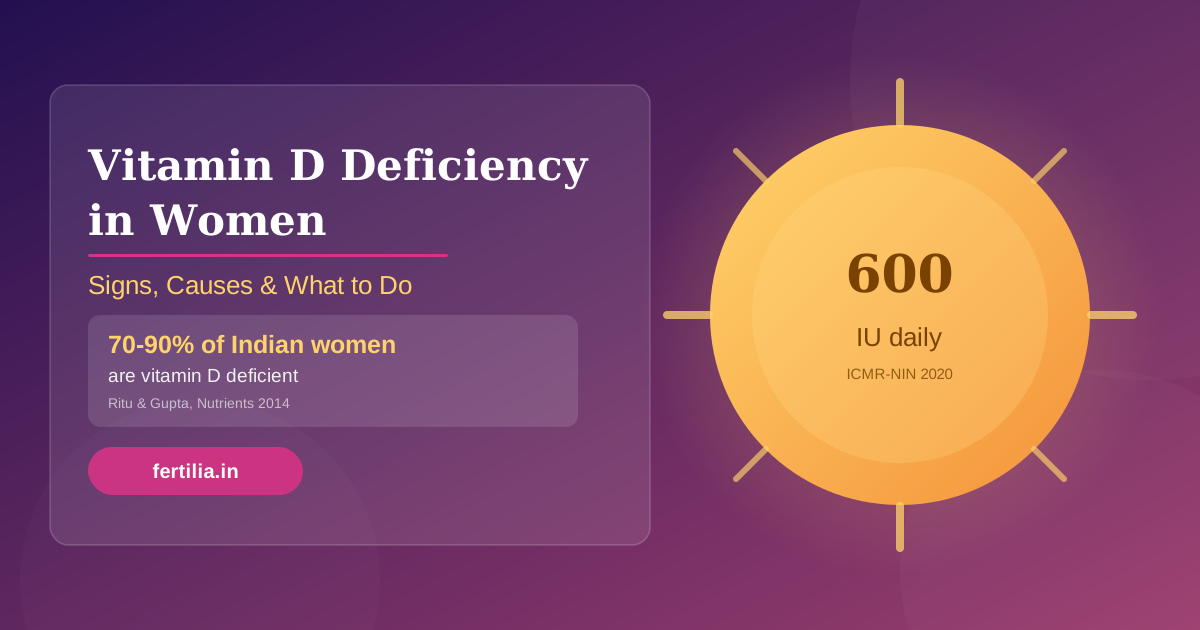
Living in a sunny country does not guarantee adequate vitamin D. A review by Ritu and Gupta documented widespread deficiency in Indian studies across different ages, sexes, and urban and rural settings (Nutrients, 2014, PMID 24566435). The review described limited skin exposure to sunlight and low dietary intake as contributing factors; it does not tell you your own vitamin D level.
This post covers:
- What vitamin D does in your body and why deficiency is so common in India
- Seven signs that your levels may be low
- Why Indian women are specifically at higher risk
- How vitamin D affects PCOS, fertility, and pregnancy
- Testing, food sources, safe sun exposure, and when to supplement
What Vitamin D Actually Does
Vitamin D is not quite like the other vitamins. It behaves more like a hormone. When UVB rays from the sun hit your skin, your body converts cholesterol into vitamin D3, which is then activated by your liver and kidneys. The active form, called calcitriol, attaches to vitamin D receptors found in virtually every organ system, including your ovaries, uterus, thyroid, muscle cells, immune cells, and brain.
Its most well-known role is helping calcium get absorbed from your gut into your bloodstream. Without adequate vitamin D, even a calcium-rich Indian diet (ragi, dahi, til, paneer) cannot fully deliver on its promise. Your bones stay calcium-hungry regardless of what you eat.
Beyond bone health, vitamin D has documented roles in insulin sensitivity, immune regulation, mood, muscle function, and reproductive hormone signaling. Holick reviewed the full scope of evidence in the New England Journal of Medicine in 2007 (PMID 17634462), and the body of research has only grown since.
Seven Signs That Your Vitamin D May Be Low
These signs are not unique to vitamin D deficiency. Many conditions produce similar symptoms, which is exactly why testing matters more than guessing based on how you feel.
For more on this, read our guide on Vitamin B12 Deficiency in Women. That said, these are the signals I look for when I suspect low vitamin D in a patient:
- Bone and muscle pain: Diffuse aching, especially in the shins, lower back, and hips, that worsens with pressure on the bone. This is different from workout soreness.
- Fatigue that does not improve with rest: Sleep feels unrepairing. Afternoon crashes are pronounced.
- Frequent infections: Recurrent upper respiratory infections, colds, or a sense that “my immunity is weak” compared to a few years ago.
- Low mood: Vitamin D receptors are found in the brain regions involved in mood regulation. Deficiency has been associated with depressive symptoms in several studies, though the causation is not fully established.
- Hair thinning: Vitamin D receptors are involved in the hair follicle cycle. Diffuse thinning (across the scalp, not a receding hairline pattern) can be a sign worth investigating alongside ferritin and thyroid.
- Muscle weakness: Difficulty rising from a low chair, climbing stairs, or carrying groceries. Weakness without obvious exertion is a classic sign in older women but can appear at any age with significant deficiency.
- Slow wound healing: Vitamin D plays a role in the later stages of skin repair. Minor cuts or rashes that take longer than expected to resolve are sometimes traced back to low levels.
If you recognize three or more of these, getting a simple blood test is worth your time.
If you would like to understand your test results alongside your full hormonal picture, book a consultation with me. I review your panel together and create a plan specific to what your body needs.
Why Indian Women Are at Higher Risk
The paradox of vitamin D deficiency in India comes down to several factors that work against us even in a sun-rich country.
Skin tone and sun exposure time: Melanin (the pigment that gives Indian skin its color) is a natural sunscreen. Darker skin requires three to five times longer sun exposure to produce the same amount of vitamin D as lighter skin, as documented by Holick (2007). This is not a flaw in our biology; it evolved as protection against intense UV in equatorial regions. The problem is that modern urban life has removed the extended outdoor time our ancestors had.
Indoor work and lifestyle: Office jobs, extended commutes in air-conditioned vehicles, and WFH routines mean that many women in their 20s and 30s spend the entire UVB window (10 AM to 2 PM) behind glass. Glass blocks UVB completely. Sitting by a sunny window does not produce vitamin D.
Cultural clothing and heat avoidance: Covered arms, dupattas, headscarves, and full-length clothing all reduce the skin surface exposed to UVB. Combined with avoiding midday sun to prevent tanning, the effective exposure time drops sharply.
Air pollution: In metro cities, particulate matter scatters and absorbs UVB before it reaches the skin. This partially explains why deficiency rates are higher in urban populations than rural ones, even within India.
Vegetarian diet: India has one of the world’s largest vegetarian populations. The natural food sources of vitamin D are almost entirely animal-based. A vegetarian diet with no fortified foods provides fewer than 100 IU of vitamin D per day, far below the 600 IU recommended by ICMR-NIN 2020.
How Vitamin D Deficiency Affects Women Specifically
PCOS and Hormones
Women with PCOS are significantly more likely to be vitamin D deficient than women without it. Wehr and colleagues documented this in a study published in Clinical Endocrinology (2011), finding that PCOS patients had meaningfully lower 25(OH)D levels than healthy controls. Vitamin D receptors are present in ovarian tissue, and some research has linked deficiency to higher androgen levels and impaired insulin signaling in women with PCOS.
This matters clinically. Insulin resistance is one of the central PCOS drivers, and vitamin D plays a supporting role in insulin sensitivity at the cellular level. Correcting a documented deficiency is a reasonable step in a PCOS management plan, alongside lifestyle intervention and any medications your gynaecologist has prescribed.
For a deeper look at hair thinning linked to PCOS, which often co-occurs with low vitamin D, read the PCOS hair loss guide.
Fertility
A systematic review by Lerchbaum and Obermayer-Pietsch in the European Journal of Endocrinology (2012, PMID 22275473) found that vitamin D levels were positively associated with IVF outcomes across several studies. Women with higher 25(OH)D levels showed better fertilization rates and pregnancy rates in some cohorts. The evidence is strongest for correcting deficiency rather than megadosing, and the researchers noted the relationship was associative rather than definitively causal.
If you are trying to conceive and optimising your overall health, checking vitamin D alongside AMH, thyroid, and ferritin gives a more complete picture. The egg quality guide covers the full supplement and lifestyle protocol including the role of vitamin D.
Pregnancy
Vitamin D deficiency during pregnancy has been associated with increased risk of gestational diabetes, pre-eclampsia, and lower birth weight. Bodnar and colleagues (The Journal of Clinical Endocrinology and Metabolism, 2007, PMID 17535985) found that severe deficiency in early pregnancy was associated with a significantly higher risk of pre-eclampsia. ICMR-NIN 2020 recommends maintaining adequate vitamin D levels throughout pregnancy.
Vitamin D is also essential for fetal bone development, as it drives calcium absorption in the mother’s gut. Calcium and vitamin D work together. For the full calcium protocol in pregnancy, including ICMR-NIN recommended doses and food sources, see the calcium in pregnancy guide.
Bone Health
Vitamin D is the gateway nutrient for calcium entering bones. Without adequate levels, even generous dietary calcium (ragi at 364 mg per 100g, black til, dahi, moringa) is incompletely absorbed. Ritu and Gupta’s review discusses the bone-health consequences of chronic deficiency, but it does not establish that post-menopausal women have the highest risk compared with every other group. Read more about osteopenia and osteoporosis after menopause. Indian women tend to reach menopause at 46 to 48 years of age, earlier than the global average, which means the bone protection window is shorter and deficiency during the reproductive years carries long-term consequences. If you or your mother is approaching menopause, Menolia’s calcium and Vitamin D guide covers the specific dosing and food sources for women over 45.
Getting Tested: What to Ask
The test you want is: Serum 25(OH)D (also written as 25-hydroxyvitamin D or 25-hydroxycholecalciferol).
How to interpret the results:
| Level | Category | What it means |
|---|---|---|
| Below 12 ng/mL (30 nmol/L) | Deficient | Clinically significant; needs correction |
| 12 to 20 ng/mL (30-50 nmol/L) | Insufficient | Below recommended levels; supplementation warranted |
| 20 to 50 ng/mL (50-125 nmol/L) | Adequate | Sufficient for most women |
| Above 50 ng/mL (125 nmol/L) | High-normal | Do not supplement to reach this without medical supervision |
This test does not require fasting. Any time of day works. Cost at most accredited path labs in India: approximately Rs. 500 to Rs. 1,000.
Vitamin D is one of the three tests I include in my standard fatigue panel (alongside serum ferritin and full thyroid function). If you have unexplained fatigue and have never checked these three together, read the OB-GYN 3-test fatigue guide for the full reasoning.
Indian Food Sources (and Why They Are Rarely Enough)
The challenge with vitamin D in an Indian diet is that food sources are limited:
| Food | Approximate Vitamin D Content |
|---|---|
| Bangda (Indian mackerel), 100g | 360-600 IU |
| Mathi (sardines), 100g | 200-300 IU |
| Tuna, 100g | 150-200 IU |
| Egg yolk (one egg) | 35-40 IU |
| Sun-dried mushrooms, 100g | 200-400 IU (variable) |
| Fortified milk, 200 ml | 80-100 IU (check label) |
| Dahi (plain) | Negligible (unless fortified) |
A typical Indian vegetarian diet provides fewer than 200 IU per day. The ICMR-NIN 2020 recommended dietary intake for adult women is 600 IU per day. The gap has to come from sun exposure or supplements.
If you eat fish regularly, bangda and mathi (the oily fish most commonly used in South Indian coastal cooking) are by far the best natural sources. If you follow a vegetarian diet, food alone is unlikely to close the gap.
Making Sun Exposure Work in India
UVB radiation, the wavelength that triggers vitamin D synthesis in skin, is available in India between approximately 10 AM and 2 PM. Outside that window, the sun’s angle is too low and UVB is filtered out by the atmosphere.
Practical guidelines:
- Expose your arms and legs (not just your face and hands) for 15 to 20 minutes for lighter skin, and 30 to 45 minutes for darker skin
- Aim for 3 to 4 sessions per week during summer; daily in winter, especially in North India
- Glass windows block UVB entirely; step outside rather than sit by a window
- Apply sunscreen after your sun window, not before, if your primary goal is vitamin D synthesis
- In highly polluted cities (Delhi, Mumbai, Bengaluru), pollution particles scatter UVB and reduce effective synthesis even outdoors; supplementation becomes more important
This is not a recommendation to bake in the midday sun without protection. A 20-minute window, three times a week, focused on arms and legs, is a reasonable balance between synthesis and skin safety.
Supplementation: What the Evidence Supports
If your 25(OH)D is confirmed as deficient or insufficient, supplementation is the most reliable path to correction, especially in urban India.
Form: Vitamin D3 (cholecalciferol) is preferred over D2 (ergocalciferol). A meta-analysis by Tripkovic and colleagues in the American Journal of Clinical Nutrition (2012) confirmed that D3 is more potent at raising and sustaining serum 25(OH)D levels.
Dose for insufficiency (12-20 ng/mL): 1,000 to 2,000 IU per day is commonly used in clinical practice, with a follow-up 25(OH)D test at three months to confirm correction.
Dose for maintenance (adequate levels, ongoing): 600 to 1,000 IU per day alongside some sun exposure.
How to take it: With your largest meal of the day. Vitamin D is fat-soluble and absorbs better with dietary fat. Taking it with dal and rice rather than on an empty stomach makes a practical difference.
What to avoid: Do not take 5,000 IU or above without a doctor’s supervision and regular testing. Vitamin D toxicity (hypercalcemia) is rare but possible at doses above 10,000 IU per day sustained over months.
Combined supplements: If your gynaecologist prescribes a calcium-and-vitamin-D combination tablet, the dose is already calibrated. Do not add a separate vitamin D supplement on top without checking with her first.
You can find practical guidance on calcium and vitamin D food sources alongside supplementation at our iron and calcium resource guide.
If your test shows a deficiency and you want to understand how it fits into your broader health picture, whether that involves PCOS, irregular periods, fatigue, or fertility, I am happy to review it with you.
Frequently Asked Questions
What is a normal vitamin D level for Indian women?
Ritu and Gupta’s 2014 review used below 20 ng/mL for deficiency, 20 to 29 ng/mL for insufficiency, and 30 ng/mL or above for sufficiency (Nutrients, PMID 24566435). Those are the review’s definitions, not an individual treatment prescription. Discuss your result with your doctor rather than assuming that a population statistic tells you your own level.
Can I get enough vitamin D from the Indian diet alone?
Rarely, especially on a vegetarian diet. Fatty fish (bangda, mathi) are the best natural sources, providing 200 to 600 IU per 100g. A typical Indian vegetarian diet provides fewer than 200 IU per day against a recommended 600 IU. Unless you eat oily fish several times a week and get regular midday sun exposure, supplementation is almost always needed to maintain adequate levels in urban India.
How long does it take to correct a vitamin D deficiency?
With consistent supplementation at 1,000 to 2,000 IU per day, most women see their 25(OH)D levels normalize within 8 to 12 weeks. Severe deficiency (below 12 ng/mL) may take longer. A follow-up blood test at three months is the most reliable way to confirm correction, rather than going by symptoms alone.
Does low vitamin D cause hair loss?
Low vitamin D has been associated with diffuse hair thinning in observational studies, as vitamin D receptors are involved in hair follicle cycling. However, hair thinning in women almost always has multiple contributing factors: ferritin levels, thyroid function, androgen levels (especially in PCOS), and nutritional deficiencies often overlap. Testing all of these together, rather than treating one and assuming the others are fine, gives a more accurate picture.
Can vitamin D deficiency affect my chances of conceiving?
Possibly. Lerchbaum and Obermayer-Pietsch’s systematic review (2012) found that women with higher vitamin D levels showed better IVF outcomes in several cohorts. For women with PCOS, Wehr et al. (2011) found that deficiency was associated with higher androgen levels and poorer insulin sensitivity. Ensuring you are at least sufficient (above 20 ng/mL) is a reasonable and achievable part of a fertility programme. It does not replace other fertility assessments but is one piece of the preparation.
Should I take vitamin D during pregnancy?
If testing confirms deficiency or insufficiency, yes. Bodnar et al. (2007) found that severe deficiency in early pregnancy was associated with a significantly higher risk of pre-eclampsia. For women who are already adequate, maintaining levels through diet, sun, and a standard prenatal supplement is usually sufficient. Always check with your obstetrician before starting or adjusting doses during pregnancy, as the correct intervention depends on your actual level.
Does the time of day I get my blood drawn affect the vitamin D result?
No. Serum 25(OH)D is a stable metabolite that does not fluctuate meaningfully over the course of the day. Fasting is not required. It can be added to any routine blood draw at any time, which makes it easy to include in your next check-up panel.