Many women who come to see me describe the same cluster of symptoms. They are exhausted, even after a full night of sleep. Their hands and feet tingle for no clear reason. They forget words mid-sentence and feel a flatness in their mood that they cannot explain. Blood counts come back “normal.” Thyroid is “normal.” And yet something is clearly not right.
In my clinical experience, one test is consistently missing from this picture: serum vitamin B12.
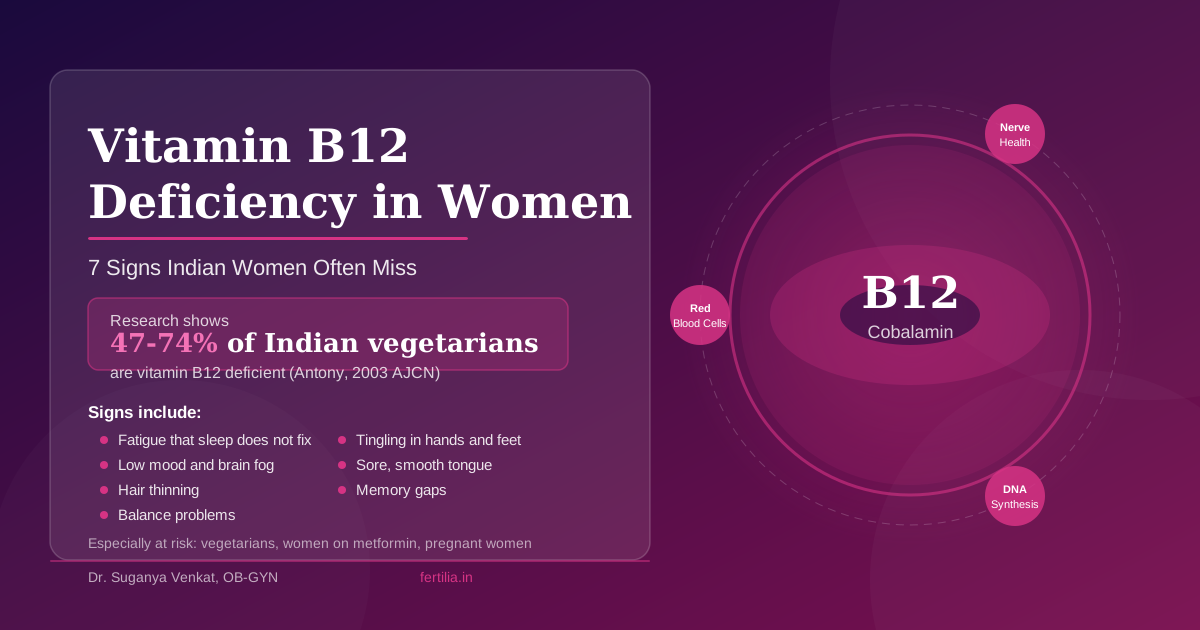
India has one of the highest rates of vegetarianism in the world, and B12 is found almost exclusively in animal-derived foods. Research by Antony (2003, American Journal of Clinical Nutrition) documented B12 deficiency in 47 to 74 percent of Indian vegetarians. For women of reproductive age who may also be on metformin for PCOS, or who are pregnant or breastfeeding, the risk compounds further.
This post covers:
- What vitamin B12 does in your body and why it matters for women specifically
- Seven signs that your levels may be low
- Why Indian women are at particular risk
- The right tests to ask for
- Indian food sources and how to get enough
- Supplementation, and what changes during pregnancy and breastfeeding
What Vitamin B12 Does in Your Body
Vitamin B12 (cobalamin) performs three functions that, when disrupted, produce a very recognisable set of symptoms.
Myelin sheath formation. Your nerve fibres are wrapped in a protective coating called myelin. B12 is essential for producing and maintaining this sheath. When B12 falls, myelin integrity is affected, and the result is tingling, numbness, or a pins-and-needles sensation, typically starting in the hands and feet.
Red blood cell production. B12 is needed for DNA synthesis in dividing cells. Without it, red blood cells cannot divide properly. They grow large but immature, a condition called megaloblastic anaemia. These oversized cells carry less oxygen per unit, which explains the fatigue that feels disproportionate to activity level.
Homocysteine metabolism. B12 converts homocysteine, an inflammatory amino acid, into methionine. When B12 is low, homocysteine accumulates in the blood. Elevated homocysteine has been associated with cardiovascular risk and, importantly for women trying to conceive, with early pregnancy loss (Refsum et al., 2001, American Journal of Clinical Nutrition).
Why Indian Women Are at Particular Risk
Vitamin B12 is found in meaningful quantities only in animal products: meat, fish, eggs, and dairy. There are no plant foods that provide reliable, bioavailable B12. Fermented foods and certain algae contain trace amounts, but these are not consistently bioavailable in the human gut.
In India, a large proportion of women follow vegetarian diets, either by tradition or choice. Even women who consume dairy, the most accessible vegetarian B12 source, often do not get enough from food alone. Smaller portion sizes of milk and dahi compared to traditional habits, alongside reduced egg consumption in many communities, create consistent shortfalls.
Beyond diet, researchers have identified a pattern of elevated plasma homocysteine levels in South Asians, even when reported B12 intake appears adequate. This suggests that absorption or metabolic utilisation of B12 may differ in some South Asian individuals (Refsum et al., 2001, AJCN).
The result: B12 deficiency is not a rare or unusual finding in Indian women. It is one of the more common micronutrient gaps I identify in my clinic, particularly in women presenting with unexplained fatigue, mood changes, or tingling sensations.
Seven Signs That Suggest Low B12
These signs do not appear all at once. Early deficiency is often subtle, and some women feel nothing until stores are substantially depleted. You do not need all seven to warrant testing.
1. Fatigue that sleep does not fix. When red blood cells are underperforming, tissues receive less oxygen. The resulting tiredness persists despite adequate rest and does not respond to early bedtimes or caffeine. If you are also iron deficient, both contribute to the same picture, which is why testing them together makes sense. Our guide on why unexplained fatigue in Indian women often has a nutritional cause covers this in detail.
2. Tingling or numbness in hands and feet. This is the most specific neurological symptom of B12 deficiency. It can be intermittent at first, often noticed on waking. As deficiency deepens, it becomes more persistent.
3. A sore or smooth tongue. Glossitis, inflammation of the tongue, is a classic finding. The tongue may look unusually smooth, losing its normal textured surface, and may feel raw or burning. Many women attribute this to acid or dehydration and never connect it to B12.
4. Low mood or emotional flatness. B12 is involved in the synthesis of serotonin and dopamine, the neurotransmitters that regulate mood. Deficiency does not cause clinical depression by itself, but it contributes to a flatness or low-grade sadness that does not respond well to lifestyle changes alone.
5. Brain fog and memory gaps. Women with low B12 often describe forgetting words, losing their train of thought, or feeling mentally slower than usual. This is particularly distressing for younger women, who understandably worry it signals something more serious.
6. Hair thinning. B12 is required for rapid cell division, and hair follicles are among the fastest-dividing cells in the body. Deficiency disrupts the growth cycle, leading to increased shedding. This often appears alongside iron deficiency in Indian women, as both tend to be low at the same time. Our post on PCOS and hair thinning discusses how to distinguish nutritional causes from hormonal ones.
7. Problems with balance or coordination. This is a later sign, appearing when B12 deficiency has persisted for a long time. It reflects involvement of the posterior columns of the spinal cord. If you are experiencing this alongside other symptoms on this list, it warrants prompt attention.
Who Is at Highest Risk?
Vegetarian and vegan women. If your diet includes no meat or fish, and minimal dairy, your B12 is almost certainly falling short. This applies even if you currently feel well, because the body stores B12 in the liver for two to five years. You may notice symptoms only once those stores are substantially depleted.
Women on metformin for PCOS. Metformin is a well-established and effective medication for insulin resistance in PCOS, and it does important work. It also reduces B12 absorption in the small intestine by interfering with a calcium-dependent mechanism that helps the B12-intrinsic factor complex attach to the gut wall. Research by Reinstatler and colleagues (2012, Diabetes Care) found that among people taking metformin at doses of 1,000 mg per day or more, the prevalence of B12 deficiency was 5.8 percent. This is not a reason to stop metformin. It is a reason to add an annual B12 blood test to your routine panel while taking it. Most doctors are glad to add this when you mention the concern. For more on how PCOS and insulin resistance connect to nutritional status, see our guide on insulin resistance and PCOS.
Women who are pregnant or breastfeeding. B12 requirements increase during both stages. While the standard adult RDA is approximately 2.4 mcg per day (ICMR-NIN, 2024), the demands of pregnancy and breastfeeding raise this further, as the baby draws on maternal stores directly via the placenta and then through breast milk. Critically, B12 passes through breast milk. If a vegetarian mother has low or borderline B12, her exclusively breastfed infant may become deficient within the first few months of life, with consequences for the baby’s developing nervous system.
Women with digestive issues. Conditions that affect the stomach lining, such as atrophic gastritis, reduce intrinsic factor production. Intrinsic factor is the protein that binds B12 and allows it to be absorbed. Reduced intrinsic factor means reduced B12 absorption, regardless of dietary intake.
If you have any of the risk factors above and any of the seven signs, getting tested is straightforward. I am happy to guide you through interpreting your results and planning next steps.
How to Test: The Right Investigations
Most routine blood panels measure serum B12, which gives a useful starting point. However, serum B12 has a limitation: it can appear within the reference range even when cellular-level deficiency exists, because it captures both active and inactive forms of the vitamin.
The following three-test approach, described by Carmel (2008, Annual Review of Nutrition), gives a more complete picture:
Serum B12. The standard first test. Levels below 200 pg/mL suggest deficiency. Levels between 200 and 300 pg/mL are borderline, and the additional tests below add clarity.
For more on this, read our guide on Iron Deficiency Anaemia. Methylmalonic acid (MMA). MMA accumulates in the blood when B12-dependent metabolic reactions stall. An elevated MMA strongly suggests functional B12 deficiency, even when serum B12 appears adequate. This is the more sensitive marker for early deficiency.
Holotranscobalamin (holoTC). This measures only the biologically active fraction of B12, making it the earliest indicator of depleting stores. It is available at most large diagnostic labs in India.
Ask your doctor for all three if your serum B12 is borderline, or if you have symptoms despite a level in the normal range. The combination gives far more actionable information than serum B12 alone.
Indian Food Sources of Vitamin B12
No plant food provides reliable, bioavailable B12. The following are the main sources in an Indian context, with approximate values from the ICMR-NIN food composition database:
| Food | Approx. B12 | Serving |
|---|---|---|
| Bangda (Indian mackerel) | 13 mcg | 100 g |
| Mathi (sardine) | 8-10 mcg | 100 g |
| Egg (whole) | 0.9-1.0 mcg | 1 egg (50 g) |
| Milk (cow’s, full fat) | 0.4 mcg | 100 ml |
| Dahi (curd) | 0.3-0.4 mcg | 100 g |
| Paneer | 0.5 mcg | 100 g |
| Fortified breakfast cereal | Varies | Per label |
For a lacto-vegetarian woman to reach 2 mcg per day from food alone, she would need roughly 300 ml of milk, 200 g of dahi, and one serving of paneer daily. That is possible but requires deliberate planning, not casual consumption.
If you are vegetarian and not regularly having three or more dairy servings per day, food alone is unlikely to meet your B12 needs consistently, particularly during pregnancy or breastfeeding.
For a broader look at nutrients women commonly fall short on, see our guide to iron and calcium-rich Indian foods.
Supplementation: What to Take and How Much
Two forms of B12 supplement are widely available in India:
Cyanocobalamin is the most commonly prescribed form and has the strongest evidence base. It is stable, cost-effective, and the body converts it to its active forms efficiently. This is the standard form in most generic B-complex and multivitamin supplements.
Methylcobalamin is one of the active forms of B12 and requires no conversion in the body. A review by Paul and Brady (2017, Integrative Medicine) noted that methylcobalamin may produce faster improvement in neurological symptoms for some individuals. It is available as a standalone supplement in most pharmacies across India.
Dosing for confirmed deficiency: 500 to 1,000 mcg per day orally. At these high doses, a small but consistent percentage of B12 is absorbed by passive diffusion, bypassing the intrinsic factor mechanism. This means oral supplementation works even in women who have absorption difficulties, making injections necessary only in very severe or specific cases.
Dosing for maintenance in vegetarians (without confirmed deficiency): 250 mcg per day, or 2,500 mcg once weekly.
During pregnancy: If you are vegetarian and pregnant or planning to conceive, a B12 supplement is not optional. Discuss the specific dose with your doctor. Levels typically need to be checked before and during pregnancy to guide dosing.
B12 is water-soluble and excess is excreted in the urine. It has no established upper limit for toxicity in the ranges described above.
B12 in Pregnancy and Breastfeeding
B12 deficiency in pregnancy carries specific risks that are worth understanding clearly.
During pregnancy, B12 works alongside folate in neural tube formation and rapid cell division. If both are low, risk increases. Folate supplementation without adequate B12 can also partially mask B12-related anaemia in routine blood tests, making deficiency harder to detect through a standard CBC alone (Cikot et al., 2001, British Journal of Nutrition). For the full picture of folate and related pregnancy nutrition, see our post on folate vs folic acid in pregnancy.
Serum B12 naturally declines somewhat during pregnancy as the baby draws on maternal stores. This is why pre-pregnancy testing matters for vegetarian women who want to know their actual baseline before they begin supplementing.
After delivery, breast milk is the primary B12 source for an exclusively breastfed infant. Infants of B12-deficient mothers can develop deficiency within the first two to three months of life, presenting with poor feeding, irritability, and developmental slowness. This is entirely preventable when the mother’s B12 status is identified and managed.
What to Do Next
If any part of this post describes your experience, here is a practical starting point:
Get tested. Ask for serum B12 at your next blood draw. Add methylmalonic acid if your result comes back borderline.
For vegetarian women: Aim for at least two to three dairy servings per day (milk, dahi, paneer) as a dietary floor. Use this as a consistent habit, not an occasional one.
If you are on metformin: Ask your doctor to add B12 to your annual blood panel. It is a single additional test that prevents a fixable problem from going unnoticed.
If you are planning a pregnancy: Start a B12 supplement before conception if you are vegetarian. Do not wait until deficiency develops.
If your levels come back deficient: Work with your doctor on a supplementation protocol. Serum B12 levels generally improve within eight to twelve weeks of consistent supplementation. Neurological symptoms take longer, often three to six months.
Vitamin B12 sits alongside vitamin D and iron as one of the three deficiencies I check most consistently in Indian women presenting with unexplained fatigue, mood changes, or tingling. All three are straightforward to test, fixable with guidance, and consistently under-checked.
If you have questions about your B12 test results, or want to understand how this fits into your broader health picture, whether that involves PCOS, fertility, or pregnancy, I am happy to review it with you.
Frequently Asked Questions
What is the normal B12 level for women in India?
Most Indian laboratories report deficiency below 200 pg/mL and insufficiency between 200 and 300 pg/mL. However, functional deficiency can exist at levels up to 350 pg/mL, particularly when methylmalonic acid is also elevated. If your result is below 300 and you have symptoms, it is worth discussing further testing with your doctor rather than assuming the reference range covers you completely.
Can B12 deficiency cause hair loss?
Yes. B12 is essential for the rapid cell division that keeps hair follicles active. Deficiency disrupts the hair growth cycle, leading to increased shedding over weeks to months. In Indian women, hair thinning due to B12 deficiency often occurs alongside iron deficiency, as both are common with vegetarian diets. Our post on PCOS and hair thinning discusses how to identify which cause is contributing.
How much B12 is in dahi?
Approximately 0.3 to 0.4 mcg per 100 g. A standard 200 g serving (one small bowl) provides around 0.6 to 0.8 mcg, roughly one-third of the adult daily requirement of 2 mcg. Dahi is a valuable source, but not sufficient on its own for a woman who consumes minimal other dairy products or no animal foods.
Is it safe to take a B12 supplement during pregnancy?
Yes. B12 is water-soluble and excess is excreted in urine. It has no established upper limit for toxicity at supplementation doses used in clinical practice (500 to 1,000 mcg per day). For vegetarian pregnant women, supplementation is strongly recommended. The specific dose should be discussed with your doctor based on your blood levels.
Does metformin cause B12 deficiency?
Metformin reduces B12 absorption in the small intestine. Studies show higher rates of B12 deficiency in people taking metformin at doses of 1,000 mg per day or more. Metformin is an effective and appropriate medication for insulin resistance in PCOS. If you are taking it, adding an annual B12 test to your routine monitoring is the simple solution. This is a well-recognised interaction and your doctor will be familiar with it.
How long does it take for B12 levels to improve with supplements?
Serum B12 typically rises within six to twelve weeks of consistent daily supplementation. Fatigue and mood changes often improve within six to eight weeks. Neurological symptoms (tingling, balance issues) take longer, typically three to six months, and in some cases longer if deficiency was long-standing before supplementation began. Retest at three months to confirm your levels are responding.
Can vegetarians get enough B12 from food alone?
Possible for lacto-vegetarians who consistently consume three or more dairy servings per day (for example, 300 ml milk plus 200 g dahi plus 100 g paneer). For vegans, it is essentially impossible without a reliable supplement. Even for lacto-vegetarians, food sources alone often fall short of the higher requirements during pregnancy and breastfeeding, making supplementation the safer approach during these stages.