“I don’t want to be on the pill for the rest of my life. Can’t I just fix this naturally?”
I hear some version of this from a woman almost every week. She has been handed a strip of birth control pills or a prescription for metformin, and somewhere inside she feels there must be another way. She is not against medicine. She just wants to understand whether her own choices, her food, her movement, her sleep, can do the work instead, and whether it is safe to want that.
It is a fair question, and it deserves an honest answer rather than a slogan. So let me give you the real picture: what “cure” actually means for PCOS, who can genuinely manage it without medication, who is better served by keeping medicine in the plan for a while, and how to tell which group you are in.
This guide covers:
- The honest difference between cure, remission, and management
- What “natural” really means (and the myths worth dropping)
- A clear profile of who can manage PCOS with lifestyle alone
- Who genuinely benefits from medication, and why that is not a failure
- A realistic timeline for the no-medication path, and how to come off the pill or metformin safely
Cure, remission, or management: getting the words right
Here is the short, honest answer. PCOS is not “cured” the way a throat infection is cured by a course of antibiotics, where the problem is gone and never returns. PCOS has a genetic and constitutional basis, so the underlying tendency stays with you. But, and this is the part that matters, the symptoms can very often be pushed into what we call remission: regular periods, quiet skin, stable weight, and normal blood markers. Many women live for years in this state, some of them entirely without medication.
So when you ask “can PCOS be cured naturally”, the truthful translation is: can PCOS be managed so well, through lifestyle, that it stops affecting your life? For a great many women, yes. The label may stay on paper while the condition stops running the show.
I have kept this section deliberately short, because the full biology of what “reversal” means is already explained in detail in our main guide. If you want the deeper version, read the Can PCOS Be Reversed section in our complete PCOS guide. This article stays focused on the question that follows it: the medication decision.
What “natural” really means (and the myths to drop)
Before we talk about who can go medication-free, we need to clear away what “natural treatment” is not. A lot of the confusion, and a lot of disappointment, comes from chasing the wrong version of natural.
Natural management of PCOS does not mean:
- A detox tea, a single magic seed, or a 21-day cleanse that resets your hormones
- Refusing all medical care and managing entirely on your own from the internet
- A quick fix that works in two weeks
Natural management of PCOS does mean addressing the actual driver behind your symptoms with the everyday foundations: the way you eat, how you move, how you sleep, and how you handle stress. For roughly 70% of women with PCOS, the central driver is insulin resistance (Dunaif, 1997), and these foundations work precisely because they improve insulin sensitivity at the root. The 2023 International Evidence-Based Guideline for PCOS, the most current global consensus, places lifestyle as the first-line approach for exactly this reason (Teede et al., 2023).
PCOS is one syndrome with several possible drivers (insulin resistance, inflammation, adrenal androgen excess, and post-pill rebound), not several different “types”. I will not re-explain the drivers here. The complete PCOS guide walks through each one and how to tell which is dominant for you, and our insulin resistance and PCOS guide covers the science behind the most common one. For the practical food side, the PCOS diet chart gives you a meal-by-meal Indian plan, and why PCOS makes weight loss hard explains the approach that actually works. The point of this article is to help you decide whether you can lean on those foundations alone.
Who can realistically manage PCOS without medication
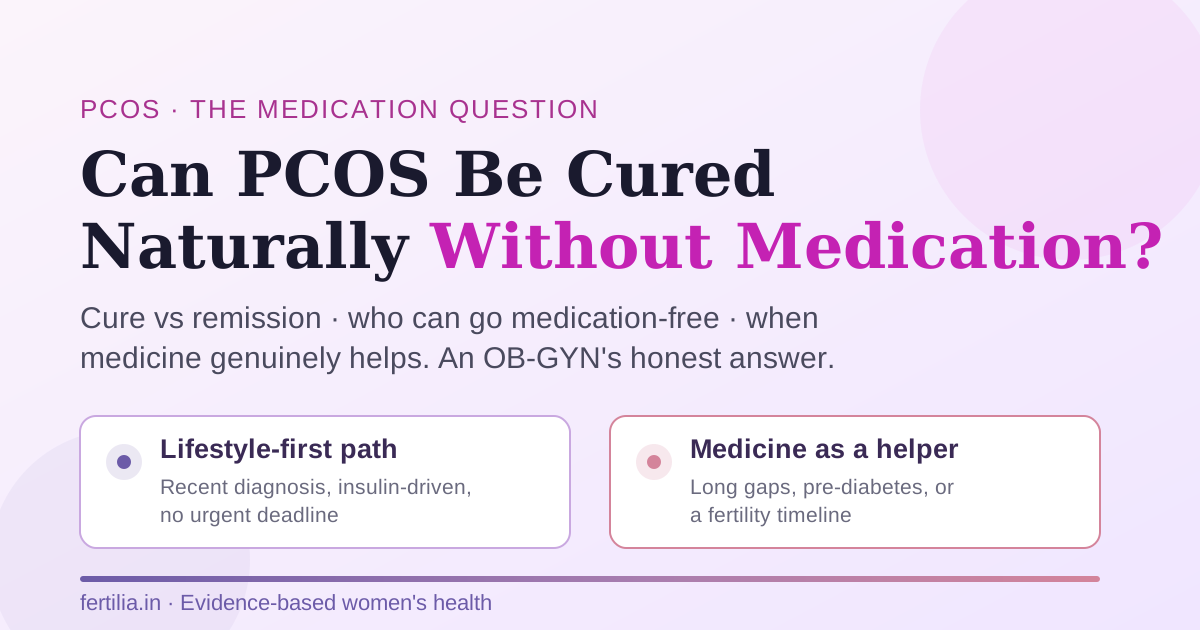
Lifestyle-alone is a genuine, evidence-based path, but it is not equally suited to everyone at every moment. In clinic, these are the women for whom going medication-free is most realistic:
- You were diagnosed recently and your symptoms are mild to moderate. The earlier you start addressing the driver, the more responsive your body tends to be.
- Insulin resistance is your main driver and you have room to improve it. This is the driver most reachable through food, movement, and sleep. Research shows that even modest weight loss (around 5% of body weight, for those carrying excess weight) is linked to meaningful improvements in cycle regularity and androgen levels in systematic reviews of randomised trials.
- Your periods respond when you make changes. If a few months of consistent eating and walking start nudging your cycle back, that is your body telling you it answers to lifestyle.
- You are not racing a fertility deadline. Lifestyle change takes months, not weeks. If you are not under time pressure to conceive, you have the runway it needs.
- Your metabolic markers are not in the danger zone. No diabetes, no severe deranged bloods, no months-long gaps between periods that leave the uterine lining unprotected.
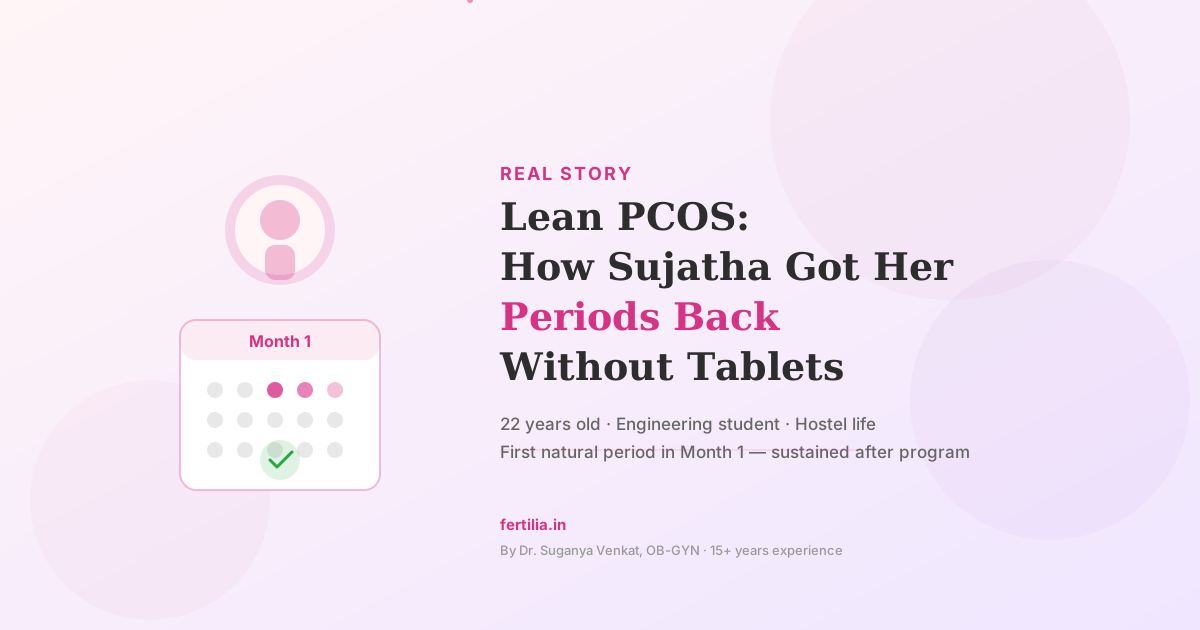
A real example of this path: in our clinic, a young woman with lean PCOS had her periods restored within a month without tablets through targeted nutrition and lifestyle changes. It is not a promise that it happens that fast for everyone, but it is proof that the medication-free route is real when the situation fits.
If you are not sure which driver is yours or whether your markers are reassuring, that is worth a proper conversation rather than a guess. A gynaecologist can read your reports and tell you honestly whether lifestyle-alone is a reasonable plan for you. (Unsure who to see? Here is which doctor to consult for PCOS.)
Who genuinely benefits from medication (and why it isn’t failure)
Now the other side, said just as plainly. For some women, medication is not a sign that lifestyle “failed”. It is the right tool for their specific situation, often a temporary one that buys time and protection while the lifestyle work does its slower job underneath.
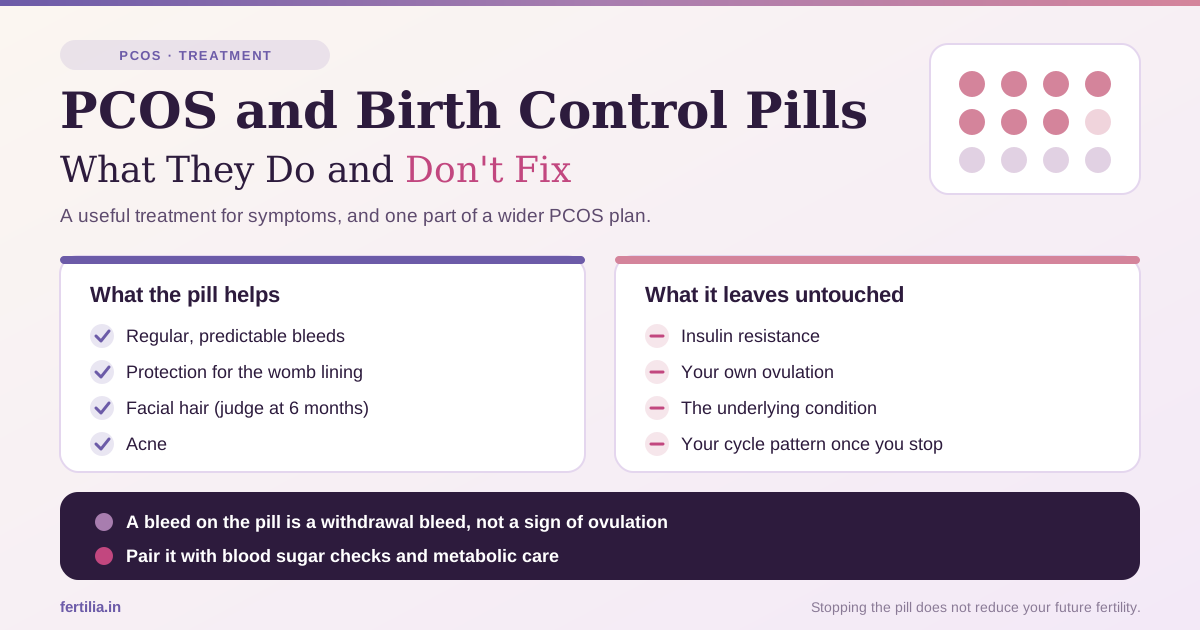
Birth control pills and metformin are valid, well-studied medicines, prescribed by good doctors for good reasons. Your gynaecologist is on your side. The goal is never “medicine bad, natural good”. The goal is the right plan for your body, and sometimes that plan includes medicine for a defined purpose:
- Long gaps between periods. If you go several months without a period, the uterine lining keeps building up without shedding. A doctor may use medication to bring on a protective bleed and safeguard the endometrium while lifestyle changes take hold. This is protection, not surrender.
- Significant insulin resistance or pre-diabetes. When insulin resistance is marked, metformin can give your metabolism a helping hand alongside food and movement. It works best with lifestyle, never instead of it.
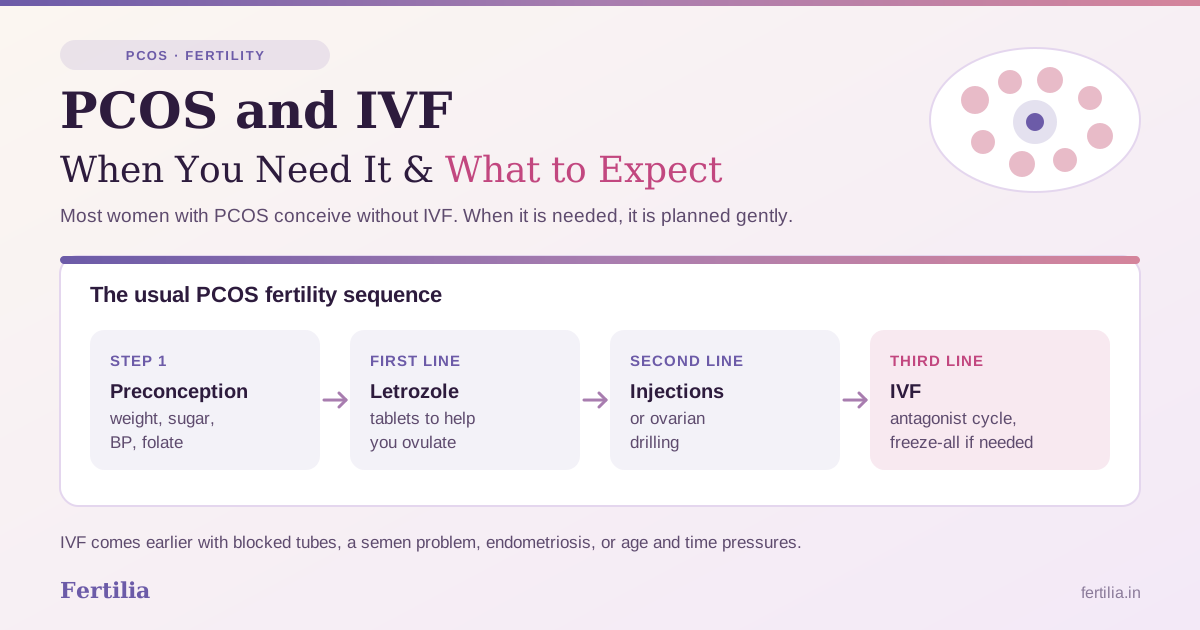
- Trying to conceive on a timeline. If you are actively trying and time matters, ovulation-support medication can restore ovulation far faster than waiting on lifestyle alone. Many women combine both. (PCOS and pregnancy, step by step.)
- Symptoms that are genuinely affecting your life right now. Severe acne, distressing hair growth, or heavy unpredictable bleeding deserve relief while the slower root-cause work continues.
The healthiest way to think about it: lifestyle treats the root, and medicine, when needed, treats the urgency. They are teammates, not rivals. Choosing medication for a season does not cancel your natural progress, and choosing lifestyle does not mean rejecting your doctor.
Not sure if you can manage PCOS without medication?
The honest answer depends on your driver, your reports, and your goals, which is exactly what a proper review can sort out. Dr. Suganya Venkat is an OB-GYN with 15+ years of experience helping women find the root cause and decide where, if at all, medicine fits.
₹399 online consultation · Over video from anywhere in India · Evidence-based and personalised
A realistic timeline for the no-medication path
If you and your doctor decide lifestyle-alone is reasonable for you, here is what realistic progress tends to look like, so you can recognise it rather than give up too soon.
- First 4 to 6 weeks: energy and cravings often settle first. You may not see a period change yet. This is normal and not a sign it isn’t working.
- 2 to 3 months: many women with insulin-driven PCOS start to see cycles return or become more predictable. Skin and bloating often begin to improve in this window too.
- 3 to 6 months: with consistency, periods become more regular, weight (where relevant) starts shifting steadily, and repeat blood markers usually move in the right direction.
- Beyond 6 months: this is maintenance, the point where the new pattern becomes simply how you live rather than a “plan” you are following.
Two honest caveats, said without alarm. First, lifestyle change is gradual by nature, so patience is part of the treatment. Second, if you have given a consistent effort a fair trial of around three to six months and your periods still have not budged, that is not your fault and it is not the end of the road. It is simply useful information that your situation may benefit from adding medical support, and a reason to go back to your doctor for a fresh look, not a reason to feel you have failed.
“Can I come off the pill or metformin and manage it myself?”
This is the version of the question I am asked most, and it has a careful answer: often yes, but never abruptly and never alone.
If you are currently on the pill or metformin and want to move toward managing PCOS through lifestyle, the safe path is to do it with your gynaecologist, not in spite of her. A few principles:
- Build the lifestyle foundation first, then taper, with your doctor’s guidance. Coming off medication works best when the food, movement, and sleep changes are already in place to catch you, not started afterwards.
- Know that symptoms can return when medicine stops, and that is information, not defeat. An observational study of women stopping metformin found that the benefits (steadier cycles, stable weight) tended to fade after withdrawal (2021). That does not mean you are stuck on it forever. It means the lifestyle layer needs to be doing the work the medicine was doing, which is exactly why we build it first.
⚠️ A note on coming off the pill: for some women, the irregular periods, acne, or hair changes that appear after stopping the pill are a temporary post-pill rebound rather than true PCOS. The hypothalamic-pituitary-ovarian axis needs time to find its rhythm again, often 3 to 12 months. These symptoms may not be true PCOS and are often transient. If your cycles settle on their own within that window, you most likely did not have underlying PCOS. It is worth re-evaluating with your doctor before assuming this is permanent. The complete PCOS guide explains the post-pill driver in full.
The simplest rule: changing or stopping any PCOS medication is a decision to make with the doctor who prescribed it, with a lifestyle plan already running underneath. That is how you give the natural route its best possible chance.
When not to refuse medication (the empowering version)
I want to frame this part carefully, because the goal here is to keep you safe, not to frighten you. There are a few situations where keeping medicine in the plan, at least for now, is simply the wiser, kinder choice for your body. Reaching for it in these moments is a strong, informed decision:
- You have gone many months with no period at all. Protecting the uterine lining matters, and medication can do that while lifestyle catches up.
- You have been told you have diabetes or pre-diabetes. This is a metabolic priority that deserves proper medical management alongside your lifestyle work.
- You are trying to conceive and time is a real factor for you. Ovulation support can open a door that lifestyle alone may take much longer to open, and the two work beautifully together.
- Your symptoms are severe enough to affect your daily wellbeing. You do not have to white-knuckle through distress to prove a point. Relief now and root-cause work in parallel is a perfectly good plan.
None of these mean “natural” is off the table. They mean medicine holds the line while your lifestyle changes build the lasting result underneath. You can absolutely aim to need less medication over time. The wisest version of “natural” knows when to accept a helping hand.
Your starting checklist
If you want to give the medication-free route a genuine, well-supported try, here is where to begin:
- Get a proper diagnosis and know your driver. Lifestyle works best when it targets the right thing. A gynaecologist can confirm PCOS by the Rotterdam criteria and identify your dominant driver.
- Check your “non-negotiable” markers. Ask about your blood sugar, your period gaps, and whether anything needs medical attention now rather than later.
- Build the foundation, not a crash plan. Steady changes to food, movement, sleep, and stress beat any extreme detox. The PCOS diet chart and insulin resistance guide are your practical starting points.
- Give it a fair, consistent trial. Three to six months of real consistency tells you far more than three weeks of perfection.
- Keep your doctor in the loop. Especially if you want to reduce or stop medication, do it as a shared decision.
Frequently asked questions
Can PCOS go away on its own without treatment? PCOS does not usually resolve completely on its own, because the underlying tendency is constitutional. However, the symptoms can quieten significantly with the right lifestyle changes, and in some cases (such as a temporary post-pill rebound) the picture settles on its own within several months. The honest goal is lasting remission, where symptoms stop affecting your life, rather than a one-time disappearance.
Can I treat PCOS without any medication at all? Many women can, especially when insulin resistance is the main driver, the diagnosis is recent, symptoms are mild to moderate, and there is no urgent metabolic or fertility deadline. Lifestyle is the recognised first-line approach (Teede et al., 2023). Whether it is right for you specifically depends on your driver, your reports, and your goals, which is worth confirming with a gynaecologist.
Can I stop metformin once my periods become regular? Sometimes, but only as a planned decision with your doctor, and only with your lifestyle foundation firmly in place. An observational study found that the benefits of metformin tended to fade after stopping, with cycles becoming less regular again (2021). That is why the food, movement, and sleep changes need to be doing the work before you taper, so the gains hold without the tablet.
How long does it take to manage PCOS naturally? Expect a gradual arc. Energy and cravings often improve within 4 to 6 weeks, cycles may begin returning around 2 to 3 months, and steadier regularity usually shows by 3 to 6 months with consistency. It is a slower path than medication, which is exactly why it suits women who are not under immediate time pressure.
Is it safe to come off the pill and manage PCOS with diet and lifestyle? For many women it is, provided it is done with your gynaecologist rather than stopped suddenly, and provided your lifestyle plan is already running. Be aware that some post-pill symptoms are a transient rebound that settles within 3 to 12 months and may not be true PCOS. A quick re-evaluation with your doctor clarifies what you are actually dealing with.
Will PCOS come back if I stop my lifestyle changes? Because the underlying tendency stays with you, symptoms can gradually return if the supportive habits drop away entirely. The encouraging part is that the changes that create remission are the same ones that maintain it, and over time they tend to become your normal routine rather than effort. Think of it as a long-term way of living rather than a temporary course.
Can PCOS be cured naturally at home? You can manage PCOS very effectively at home through everyday habits, and many women reach remission this way. What you cannot safely do at home is diagnose yourself, identify your driver, or judge whether your markers need medical attention. The strongest “at home” plan starts with one proper assessment, then runs the lifestyle work day to day.
Decide your PCOS plan with a doctor on your side
You do not have to choose between “natural” and “medical” alone. The right plan is the one that fits your driver, your reports, and your goals, and Dr. Suganya helps you find it without judgement, whether that means lifestyle alone or a temporary helping hand.
Her 90-day PCOS Symptom Reversal Program addresses the full picture together: nutrition, movement, insulin resistance, and the markers worth tracking. You can download the free PCOS Reversal Guide to see the approach before deciding anything.
₹399 online consultation · Personalised to your PCOS driver · Evidence-based
Related reading
- PCOS: Symptoms, Root Causes & Treatment, the complete picture of what PCOS is and what drives it
- Insulin Resistance & PCOS: Signs, Diet & What to Do, the most common driver behind PCOS symptoms
- Metformin for PCOS: Who Needs It, Dose & Side Effects, where medication fits alongside lifestyle change
- Why PCOS Makes Weight Loss So Hard (And What Helps), the insulin-driven approach that works
- PCOS/PCOD Diet Chart: Indian Meal Plan, what to eat at each meal
- Which Doctor Should You See for PCOS or Irregular Periods?, where to start in India
- When PCOS Starts at 15: Harini’s Journey Back to Balance, a real teenager whose periods returned within a month of diet and movement changes, no birth control
Dr. Suganya Venkat, OB-GYN with 15+ years of clinical experience. DNB OB-GYN (GKNM, Coimbatore) · MD Pathology (CMC Vellore) · MBBS with 5 Gold Medals (SRMC).