The first time you try to breastfeed, it can feel like you need three hands and a manual. Your baby is small, your body is still recovering, and everyone around you has a different opinion about how you should be sitting or lying.
Here is what I tell every new mother in my lactation sessions: breastfeeding is a learned skill for both you and your baby. Position is one of the most important parts of that skill, and getting it right makes a significant difference to comfort, milk transfer, and how long you are able to breastfeed.
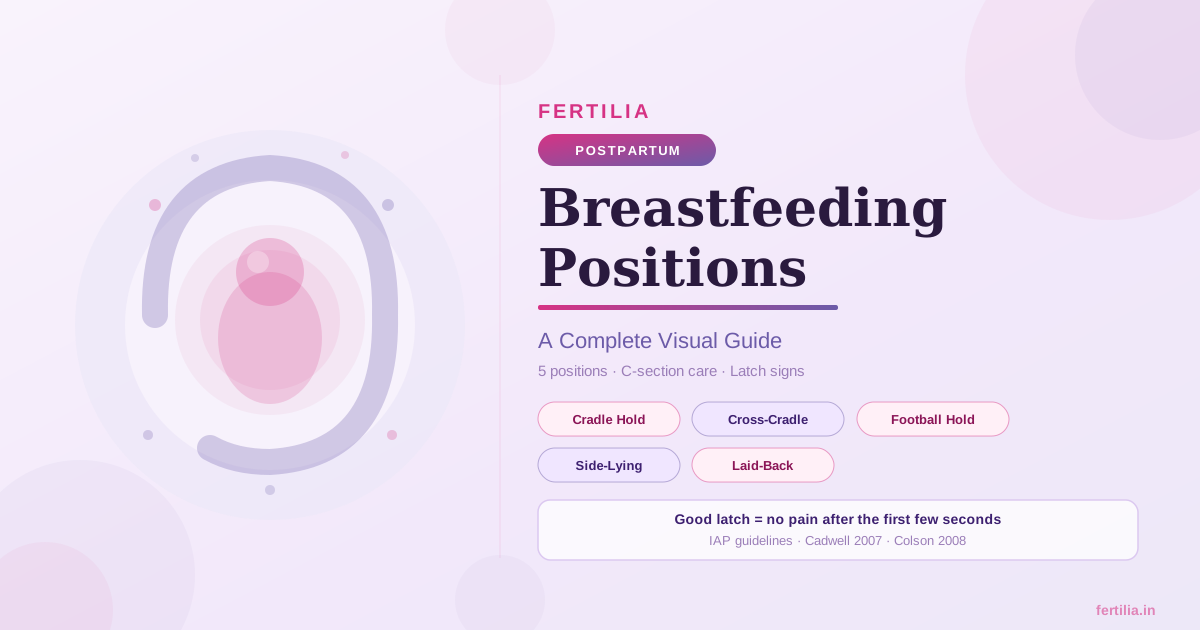
This guide covers the five core breastfeeding positions, step-by-step guidance for each, and specific advice for mothers who have had a C-section. It also addresses twin feeding and the kind of pillow support you can set up at home without any special equipment.
The most important thing to know: A good position creates a deep, comfortable latch. No position is universally correct. The right one is the one where your baby latches deeply, your breast is comfortable, and neither of you is straining.
Why Position Matters
Every breastfeeding difficulty I see in lactation sessions, from nipple pain to low milk transfer to engorgement, has some connection to position and latch. When a baby is well-positioned, they take a large mouthful of breast (not just the nipple), their tongue moves effectively, and milk flows. When the position is off, even slightly, the latch suffers.
For more on this, read our guide on Breastfeeding Latch. The Indian Academy of Pediatrics (IAP) breastfeeding guidelines emphasise that correct positioning and attachment are the foundation of successful breastfeeding. This matches what anyone working with new mothers sees: most early nipple pain and damage traces back to how the baby is attached, not to anything wrong with the mother’s skin or milk.
If you are experiencing pain or a sense that feeding is not going smoothly, position is the first thing to review. For a full guide to breastfeeding pain and its causes, see our post on breastfeeding pain and nipple soreness.
Signs a Breastfeeding Position Is Working
Before going through the five positions, it helps to know what you are aiming for. These four signs tell you a latch is good, regardless of which position you are using:
1. Wide-open mouth: Your baby’s mouth should open as wide as possible before latching, like a yawn. A small-mouth latch means they are likely only getting the nipple tip.
2. More areola visible above the top lip than below: This asymmetric latch means your baby has taken a large enough mouthful of breast tissue. The nipple is pointing toward the roof of the mouth, where it belongs.
3. Rounded, full cheeks during sucking: This indicates the tongue is working correctly and creating good suction. Dimpling or hollow cheeks suggest a shallow latch.
4. No pain after the first few seconds: Some sensitivity in the first few days is common as your nipples adjust. But a correctly latched baby should not cause ongoing pain. If feeding hurts throughout, the latch needs adjusting.
You should also hear swallowing after the first 2 to 3 minutes of feeding, and your baby should seem satisfied and relaxed after a full feed.
The Five Core Breastfeeding Positions
1. Cradle Hold
What it is: The most widely used position. Your baby lies horizontally across your body, their head resting in the crook of your elbow on the same side as the breast you are feeding from.
Step by step:
- Sit upright in a chair or on your bed with back support. A straight-backed chair works well.
- Hold your baby horizontally, tummy to tummy with you, so their ear, shoulder, and hip are in a straight line.
- Rest their head in the crook of your elbow. Your forearm supports their back and your hand cups their bottom.
- Bring your baby to your breast, not your breast to your baby. Leaning forward strains your back.
- Ensure their nose is level with your nipple before latching. As they open wide, bring them in close.
Best for: Mothers who have recovered from delivery, babies who have established feeding, and daytime feeds where you are sitting upright.
When it is harder: In the first few days after delivery, especially if you have stitches or abdominal discomfort. Very small or premature babies can be harder to support in this position.
2. Cross-Cradle Hold
What it is: Similar to the cradle hold but gives you more control over your baby’s head. The baby lies across your body, but you support their head with the hand opposite the feeding breast.
Step by step:
- Sit upright with back support.
- Hold your baby with the hand and arm on the opposite side from the feeding breast. For example, if feeding from the right breast, your left hand supports their head and your left forearm supports their back.
- Place your thumb behind one ear, your fingers behind the other, and your palm at the base of the skull. Do not push on the back of the head.
- With your free hand, shape or support the breast if needed.
- Hold your baby tummy-to-tummy, bring them to breast level, and wait for a wide-open mouth before latching.
Best for: Newborns and young babies who are still learning to latch. The extra head control lets you guide the latch precisely. Also useful if your baby tends to pull off the breast.
When it is harder: Once your baby is older and feeds efficiently, the cradle hold tends to feel more natural.
3. Football Hold (Clutch Hold)
What it is: Your baby is tucked under your arm like a football or clutch bag, with their legs pointing behind you and their body along your side.
Step by step:
- Sit in a chair or on the edge of your bed with a pillow beside you at waist level.
- Tuck your baby under your arm on the same side as the feeding breast. Their body rests along your forearm, legs pointing toward the back of the chair.
- Support their head with your hand, fingers spread just below and behind the ears.
- The baby’s body should be at roughly the height of your breast. Use a pillow to raise them if needed.
- Direct their nose toward your nipple, wait for them to open wide, and latch.
Best for: Mothers who have had a C-section (no weight on the abdomen), mothers with large breasts (easier to see and guide the latch), babies with difficulty latching on one side, and twins (you can feed both simultaneously using a football hold on each side).
The value of this hold is practical rather than research-backed: it gives you a clear view of the latch and firm control of the baby’s head, which is exactly what you want in the early days when both of you are still learning.
4. Side-Lying Position
What it is: Both you and your baby lie on your sides, facing each other. Your baby latches from the breast closest to the bed.
Step by step:
- Lie on your side with a pillow under your head and, if comfortable, a pillow between your knees for back support.
- Place your baby on their side facing you, tummy to tummy. Their mouth should be at the level of your nipple.
- You can use your lower arm to support your baby’s back, or rest it comfortably above your head.
- Guide your nipple toward their nose. Wait for them to open wide and latch.
- Keep their ear, shoulder, and hip aligned.
Best for: Night feeds where both of you can rest, mothers recovering from C-section or episiotomy, and mothers who have difficulty sitting upright for extended periods.
Safety note: Side-lying feeding is safe. If you feel yourself becoming sleepy, plan to move your baby back to their own sleep surface once the feed is complete.
5. Laid-Back Position (Biological Nurturing)
What it is: You recline at a comfortable angle (roughly 30 to 45 degrees) and your baby lies face-down on your chest, their body draped over you. Gravity helps keep them in contact with your breast.
Step by step:
- Recline against pillows on a bed or sofa at roughly the angle you would use to watch television comfortably.
- Place your baby face-down on your chest so their body rests along your torso.
- Guide their head gently toward the breast, but allow them to lead the latch. Their primitive feeding reflexes (rooting, stepping, grasping) work well in this position.
- Support your baby with your hands. You do not need to hold them firmly as gravity does most of the work.
Best for: Mothers with a fast let-down (forceful milk flow), where this position slows the flow and reduces gulping. Also excellent for engorgement and in the first skin-to-skin hours after delivery. Colson and colleagues (2008, Early Human Development) described this as “biological nurturing” and found that reclined maternal positions released a range of primitive neonatal reflexes that help the baby find the breast.
Indian context: This position works well on a firm bed or a cotton mat on the floor. You do not need a specialised nursing chair.
Breastfeeding Positions After a C-Section
If you have had a C-section, the first few days of breastfeeding need a small adaptation because your abdominal incision is tender. For a full picture of what to expect, see our guide on C-section delivery and the week-by-week C-section recovery timeline.
The two most comfortable positions after a C-section:
Football hold: The baby stays to the side of your body with no weight on the abdomen. This is the most commonly recommended position in the first week after a C-section.
Side-lying: You lie on your side and the baby feeds without any pressure on your incision. This is especially practical for night feeds and rest periods during the day.
What to adapt in the first week: The standard cradle hold places the baby across the abdomen. You can make it more comfortable by placing a thin folded blanket over the incision as a buffer before positioning the baby. Most mothers find the football hold easier until the incision is less tender, usually by Week 2 to 3.
Breastfeeding itself is not affected by a C-section. Your milk will come in on the same timeline as after a vaginal birth. Skin-to-skin contact in the operating theatre or recovery room, when available, is encouraged and supports early feeding.
Feeding Twins
If you have twins, you can feed both babies simultaneously or alternately. Simultaneous feeding saves time and helps maintain milk supply for two.
Double football hold: One baby under each arm in the football hold, with your hands supporting their heads and their bodies resting on pillows placed on each side. This is the most practical simultaneous position for newborns.
Cradle-cradle combination: Both babies cradled across your body, one over the other. This works better as babies grow and have more head control, usually from 6 to 8 weeks onwards.
For twins, a firm U-shaped or V-shaped pillow does make simultaneous feeding easier to manage. If you do not have one, two firm sofa cushions placed end to end work well in the early days.
WhatsApp us if you are preparing for twin feeding. A single lactation session before or just after delivery can make a significant practical difference.
Pillow Support in the Indian Home
Many resources recommend dedicated nursing pillows, which can be expensive and are not widely available everywhere in India. Regular bed pillows work just as well.
A practical three-pillow setup:
- One pillow behind your lower back for lumbar support
- One on your lap to raise the baby to breast height (so your back stays straight and you are not leaning forward)
- One beside your arm if you need elbow support
Traditional Indian beds and cotton mattresses on the floor also support breastfeeding well. In the side-lying position, a firm surface is an advantage. The laid-back position works comfortably on any well-supported reclining surface.
For guidance on your overall nutrition during breastfeeding, see our detailed breastfeeding diet guide for Indian mothers and after-delivery food guide for the first six weeks.
If breastfeeding feels painful or difficult, a single lactation session can usually resolve most position and latch issues in 30 to 45 minutes. WhatsApp us to book a session with Dr. Manjari directly.
Those lactation sessions are part of Dr. Suganya’s Postpartum Recovery program.
FAQ
What is the best breastfeeding position for a newborn?
The cross-cradle hold is particularly useful for newborns because it gives you the most control over the baby’s head while they are still learning to latch. The laid-back (biological nurturing) position is also excellent in the first hours and days because it activates the baby’s primitive feeding reflexes with less effort on your part.
Which position is best for breastfeeding after a C-section?
The football hold and side-lying position are the most comfortable in the first week after a C-section. Both keep the baby’s weight away from the abdominal incision. As the incision heals (typically by Week 2 to 3), most mothers can transition comfortably to the cradle hold.
How do I know if my baby has a good latch?
Four signs: their mouth is open wide, more areola is visible above their top lip than below, their cheeks are rounded and full during sucking, and you have no pain after the first few seconds of feeding. You should also hear swallowing once your milk has let down, and your baby should seem settled and satisfied after a full feed.
Do I need a nursing pillow?
No. Two to three regular bed pillows work just as well. Place one behind your back, one on your lap to raise the baby to breast height, and one beside your arm if needed. A dedicated nursing pillow may add convenience for twin feeding, but it is not required.
My baby keeps unlatching during feeds. What should I try?
Try the cross-cradle hold for more head control, and check that your baby’s nose and chin are both in contact with the breast (not just the chin). If the problem continues, it is worth checking for tongue restriction (tongue-tie). For detailed guidance on common breastfeeding difficulties, see our post on breastfeeding pain and nipple soreness.
How long should I feed in each position before switching?
There is no set time. Feed on one breast until your baby finishes or pauses, then offer the other side. Changing positions mid-feed is perfectly fine if you need to reposition for comfort. What matters is the quality of the latch, not which position you started with.
Can I use the laid-back position throughout the breastfeeding period?
Yes. Many mothers and babies feed well in the laid-back position throughout. It is particularly helpful if you have a fast let-down, a baby who gulps or gets gassy, or if you simply find it comfortable. It is not just for the newborn stage.
For full postpartum recovery guidance, download our free Normal Delivery Postpartum Care resource.