A few weeks ago a woman joined a video consultation and held up a referral letter from another doctor to the camera. The letter said, simply: “Thin endometrium, 5.2mm. Advised IVF.”
She had one question: “Is there anything I can do first?”
The answer, in most cases, is yes. There is quite a lot you can do. Whether or not IVF is ultimately the right path for you depends on your full clinical picture, not on one ultrasound reading. This guide explains what a thin endometrium actually means, what causes it, and what the evidence shows about improving uterine lining thickness before and during a treatment cycle.
What the Endometrium Does and Why Thickness Matters
The endometrium is the inner lining of the uterus. It thickens each month under the influence of estrogen during the first half of your cycle (the follicular phase). After ovulation, progesterone transforms it into a receptive surface where an embryo can implant and grow.
When a fertility doctor measures endometrial thickness on ultrasound, they are checking two things:
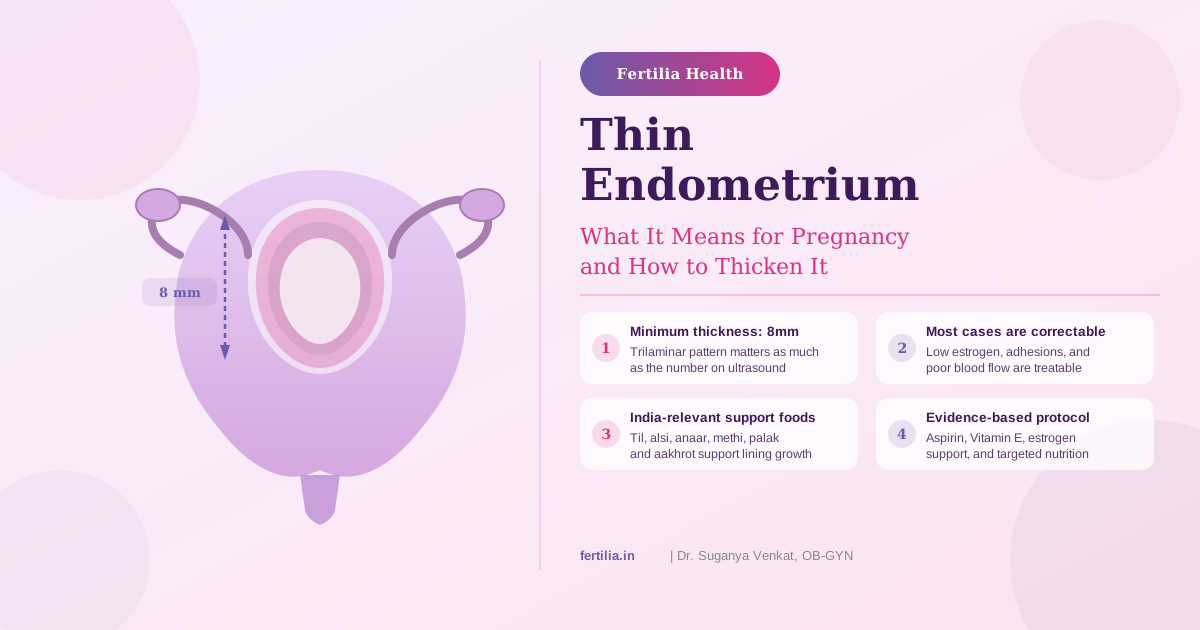
Thickness in millimetres. Research consistently shows that implantation rates fall significantly when the endometrium measures below 7 to 8mm. A landmark study by Levi et al. (2000, Fertility and Sterility) found that in IVF cycles, women with an endometrium thinner than 7mm had significantly lower pregnancy rates compared to those with a lining above 9mm. The effect was not absolute (pregnancies do occur below this threshold) but the probability drops considerably.
The trilaminar pattern. An endometrium that shows three distinct layers on ultrasound (what doctors call “triple line” or trilaminar appearance) is associated with better implantation rates than a thin, homogeneous lining, even when the numbers look similar. The pattern reflects how well the tissue has responded to estrogen. Thickness alone does not tell the whole story.
Most clinics use 8mm as their working threshold for proceeding with embryo transfer in IVF or with IUI. This is a practical guideline, not a hard biological law.
What Causes a Thin Endometrium
The majority of cases fall into one of four categories.
Low estrogen. Estrogen is the primary driver of endometrial growth. If your body is not producing enough, the lining does not thicken adequately. This is common in women with premature ovarian insufficiency, in those approaching perimenopause, and in women with very low body fat (where estrogen production is suppressed). Some women have normal FSH and AMH but still have a suboptimal estrogen response in the lining itself, which shows up as a thin endometrium despite otherwise normal hormone levels.
Previous uterine procedures. Any procedure that enters the uterine cavity carries some risk of causing scar tissue or adhesions. This includes D&C (dilatation and curettage), hysteroscopy, manual vacuum aspiration, and any surgical management of a miscarriage or termination. The scar tissue (called intrauterine adhesions or Asherman’s syndrome in severe cases) replaces the responsive endometrial cells with fibrous tissue that does not respond to estrogen. Even mild adhesions can thin the lining.
For more on this, read our guide on Asherman’s Syndrome. Fibroids and adenomyosis. Submucosal fibroids (those that grow into the uterine cavity) can distort the cavity and affect the quality of the lining in the region around them. Adenomyosis, where uterine muscle tissue invades the endometrial layer, can similarly affect lining quality and receptivity.
Long-term hormonal contraception. The endometrium in most women recovers within 1 to 3 months of stopping the OCP, the ring, or the patch. In a minority of women, particularly those who used hormonal contraception for more than 5 years beginning in their teens, recovery can take longer. If you stopped contraception 3 or more months ago and are still seeing a thin lining, this is worth investigating with bloodwork rather than assuming it will resolve on its own.
Reduced uterine blood flow. Poor circulation to the uterus limits the delivery of estrogen and nutrients to the endometrial cells, even when hormone levels in the bloodstream are adequate. This is one of the mechanisms behind thin endometrium in women with thyroid disease and in women with high inflammatory load.
If the cause has not been identified, the most important first step is a baseline hormonal workup: estradiol, FSH, LH, progesterone (day 21), TSH, and a 3D pelvic ultrasound or sonohysterogram (saline infusion ultrasound) to check the uterine cavity for adhesions or structural abnormalities.
If you have received a thin endometrium diagnosis and are not sure what to do next, Dr. Suganya Venkat can review your ultrasound and hormone reports in a consultation and build a step-by-step plan for your next cycle. Message us on WhatsApp to book.
How to Improve Endometrium Thickness: The Evidence
Once the underlying cause is identified, improving the lining is usually achievable over 2 to 3 months. Here is what the research supports.
Estrogen supplementation
If your lining is thin because estrogen levels are low, this is the most direct intervention. Estrogen can be given orally, as a patch, or as a vaginal gel, and it is routinely prescribed for women doing frozen embryo transfer cycles. Your doctor will check estradiol levels and may adjust the dose across a 10 to 14-day priming period before a transfer or before your next timed cycle.
This is a medical intervention that requires a prescription and monitoring. Do not attempt to self-supplement with estrogen.
Low-dose aspirin for uterine blood flow
Low-dose aspirin (75 to 100mg daily) is a commonly used, low-cost intervention that many gynaecologists prescribe alongside other treatments, on the reasoning that it reduces clotting and improves microcirculation. The evidence is more modest than the popularity suggests. In the trial that tested it directly in this group (Hsieh et al., 2000, Journal of Assisted Reproduction and Genetics), women with a thin endometrium undergoing IUI had a higher pregnancy rate on aspirin (18.4% versus 9.0%) and more trilaminar linings, but aspirin did not significantly change endometrial thickness itself or the artery resistance indices. So it may help outcomes without moving the number you are watching on the scan. Discuss it with your doctor before starting, as aspirin has contraindications in some women.
Vitamin E
Takasaki et al. (2010, Fertility and Sterility) ran a pilot study in 61 women with a thin lining (under 8mm) and high blood-flow impedance, testing oral Vitamin E (600mg daily), L-arginine and sildenafil. In the Vitamin E arm, 52% reached a lining of 8mm or more. The proposed mechanism is improved uterine blood flow and antioxidant protection of the endometrial cells. Worth keeping the size of that study in mind: it is a pilot, not a large randomised trial. Food sources of Vitamin E include aakhrot (walnuts), sunflower seeds, and palak.
L-arginine
L-arginine is an amino acid that the body converts to nitric oxide, a molecule that dilates blood vessels and improves circulation. In the same Takasaki pilot study, 67% of the women in the L-arginine arm reached a lining of 8mm or more, though that arm had only nine women in it, so the finding is preliminary. Natural food sources include rajma, chana, and whole eggs.
Addressing adhesions
If a hysteroscopy has confirmed intrauterine adhesions, surgical removal followed by postoperative estrogen priming is the standard approach. After adhesion removal, most women see significant improvement in lining thickness and receptivity. This is a specialist procedure and the outcome depends on the extent and location of adhesions.
PRP (platelet-rich plasma)
Intrauterine instillation of platelet-rich plasma, where a small volume of your own centrifuged blood is placed into the uterine cavity, is a newer intervention that has shown promise in women with Asherman’s syndrome and chronic thin endometrium that has not responded to other treatments. The evidence is still emerging, and it is not yet a standard first-line treatment, but it is available at specialist fertility centres.
What to Eat: India-Relevant Foods That Support Your Lining
Diet cannot replace medical treatment for a severely thin endometrium, but the right foods support the hormonal and vascular environment that the lining needs to grow.
Til (sesame seeds). Rich in lignans, a type of phytoestrogen that has a mild estrogen-like activity in the body. One tablespoon of til daily, added to rotis, curd, or as chutney, is an easy way to include these. Phytoestrogens from food are not the same as pharmaceutical estrogen, but they contribute to the overall hormonal environment.
Alsi (flaxseeds). Another excellent source of lignans. Ground alsi is better absorbed than whole seeds. Add a teaspoon to your morning poha or dal.
Anaar (pomegranate). Pomegranate has been studied for its effect on uterine blood flow. Animal studies and preliminary human data suggest that pomegranate seed extract improves endometrial receptivity by increasing vascular endothelial growth factor (VEGF) expression. One glass of fresh anaar juice daily is an easy inclusion, particularly in the first half of your cycle.
Methi (fenugreek seeds). Fenugreek contains phytoestrogen compounds and has been used traditionally in Indian medicine for hormonal support. Including methi water (soak one teaspoon overnight, drink in the morning) or adding methi to sabzi is a practical step.
Palak (spinach). High in Vitamin E, folate, and iron, all of which support uterine health. Iron is particularly important because anaemia reduces oxygen delivery to uterine tissue and impairs endometrial growth. NFHS-5 data shows that 57% of Indian women between 15 and 49 are anaemic, and many do not know it. If you have not had a serum ferritin test recently, ask for one alongside your endometrial workup.
Aakhrot (walnuts). The best plant source of DHA (omega-3 fatty acid), which reduces inflammation and supports healthy blood vessel function throughout the body, including uterine vessels. A small handful (4 to 6 halves) daily is sufficient.
Amla (Indian gooseberry). One of the richest food sources of Vitamin C, which works alongside Vitamin E as an antioxidant and supports iron absorption from plant foods. Fresh amla or one teaspoon of amla powder in warm water is a practical daily habit.
Combine these with adequate protein (dal, eggs, dahi, paneer), sufficient water intake (at least 2.5 litres daily), and consistent sleep. All three support estrogen production, circulation, and cellular health in the endometrium.
Movement, Stress, and the Uterine Lining
Uterine blood flow is not just a vascular issue; it is also responsive to your autonomic nervous system. High cortisol (the stress hormone) causes vasoconstriction, which reduces blood flow to the uterus. Over time, chronic stress can measurably affect endometrial perfusion, which is one reason women undergoing repeat IVF cycles sometimes see declining lining quality despite unchanged protocols.
Moderate exercise, particularly walking, swimming, and yoga, improves uterine artery blood flow and reduces systemic inflammation. A 2019 review in the International Journal of Yoga confirmed that yoga practice reduces cortisol and improves reproductive outcomes in women with fertility challenges. Our complete guide to yoga for conception includes a 4-week routine you can follow at home.
When to See a Specialist
A thin endometrium on one scan does not mean your lining is permanently inadequate. Endometrial thickness varies across the cycle and from month to month. A single reading, particularly if taken on the wrong day or with a suboptimal scan, should always be confirmed.
For more on this, read our guide on Endometrial Thickness. Seek a specialist evaluation if:
- Your endometrium is consistently below 7mm across multiple cycles at the expected time (Day 12 to 14 in a 28-day cycle)
- You have a history of uterine surgery, D&C, or repeated miscarriage
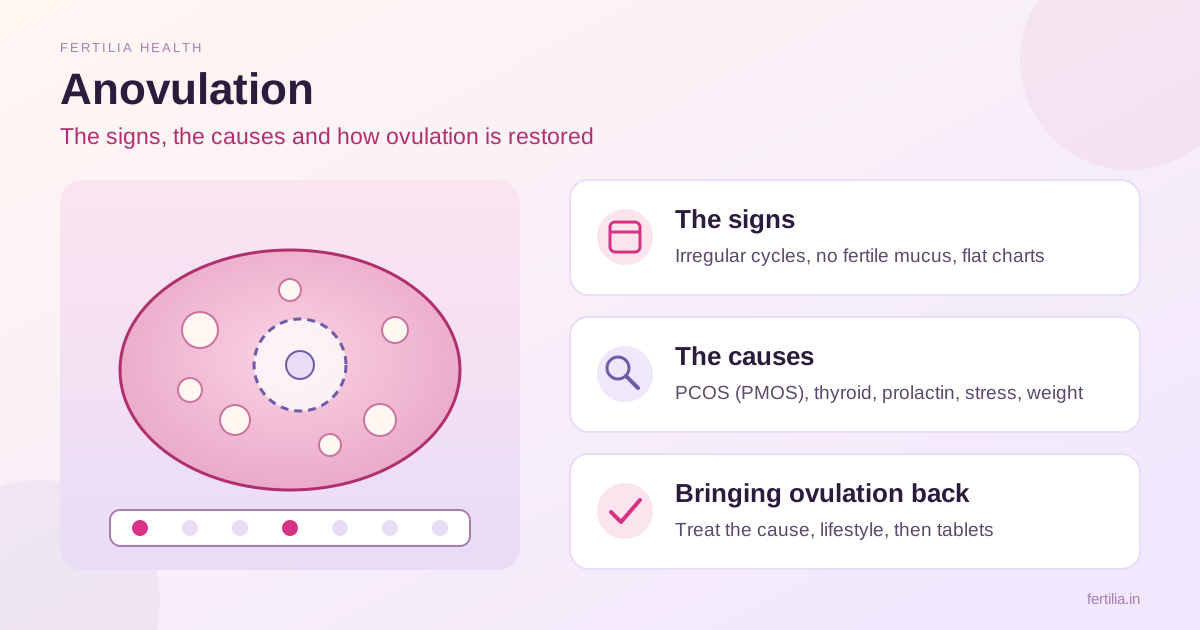
- You have PCOS with anovulatory cycles, where the lining may not develop normally due to absent or irregular estrogen cycling (for more on the PCOS-conception connection, read our guide on PCOS and pregnancy)
- You are preparing for frozen embryo transfer and your lining is not responding to standard estrogen priming
- You have been trying to conceive for more than 12 months (or 6 months if you are over 35) without success
A full evaluation includes: baseline ultrasound with 3D assessment, hormonal bloodwork, and in some cases a diagnostic hysteroscopy to visualise the cavity directly.
For evidence-based guidance on preparing your body for IVF or IUI, see our 90-day fertility prep guide.
Our free Endometrium Health Tips guide covers the self-monitoring steps, food list, and lifestyle protocol you can start this week while your medical workup is underway.
Message Dr. Suganya on WhatsApp to discuss your endometrium report, understand what your scans mean, and get a personalised plan for your next cycle. That cycle-by-cycle planning is part of Dr. Suganya’s Fertility program.
Frequently Asked Questions
What is the minimum endometrium thickness for pregnancy?
Most fertility specialists use 7 to 8mm as the practical minimum, with 8mm preferred for IVF embryo transfer. Below 7mm, implantation rates drop significantly, though pregnancy can occasionally occur. The pattern of the lining (trilaminar appearance on ultrasound) is equally important to the raw number.
Can a thin endometrium be cured naturally without IVF?
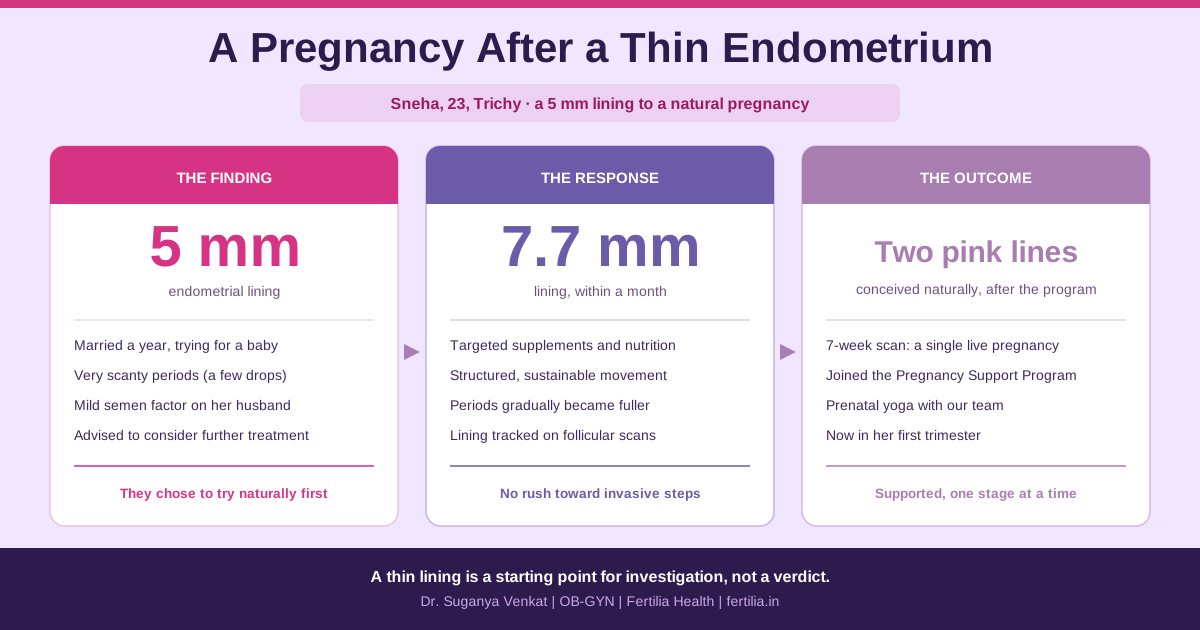
For more on this, read our guide on Can I Conceive Naturally with Thin Endometrium?. In many cases, yes. The outcome depends on the cause. If the lining is thin due to low estrogen, the cause is correctable with hormonal support. If it is due to intrauterine adhesions, those can be treated with hysteroscopy. Nutritional and lifestyle changes support but do not replace medical treatment for a clinical thin endometrium diagnosis.
Does the OCP cause a permanently thin endometrium?
For most women, the endometrium recovers within 1 to 3 months of stopping the OCP. A small percentage of women take longer, particularly after many years of use starting in adolescence. If your lining has not recovered after 3 months off contraception, a hormonal workup is the next step rather than continued waiting.
Can thin endometrium cause miscarriage?
A thin endometrium that is not adequately receptive can reduce implantation rates and may contribute to early pregnancy loss if the embryo implants in a poorly prepared lining. This is one reason why treating thin endometrium before a transfer (not during, or after a failed cycle) gives the best results.
Is pomegranate juice good for uterine lining?
Preliminary evidence suggests that pomegranate improves uterine blood flow and VEGF expression in the endometrium. It is a useful food-level support, not a medical treatment. Fresh anaar juice (without added sugar) is the most practical form.
How long does it take to improve a thin endometrium?
Most interventions work over one to two full cycles, which means 4 to 8 weeks. If you are using dietary and lifestyle changes alongside medical support, expect to see a measurable difference on ultrasound in the second or third month. Do not assess the response after just two to three weeks.
Does thin endometrium always need IVF?
No. IVF is not the primary treatment for thin endometrium; addressing the underlying cause is. For women with low estrogen, estrogen supplementation often produces a normal lining within one to two cycles. For women with adhesions, hysteroscopy is the treatment. IVF is appropriate when the thin endometrium is one component of a broader fertility picture that also includes other factors.