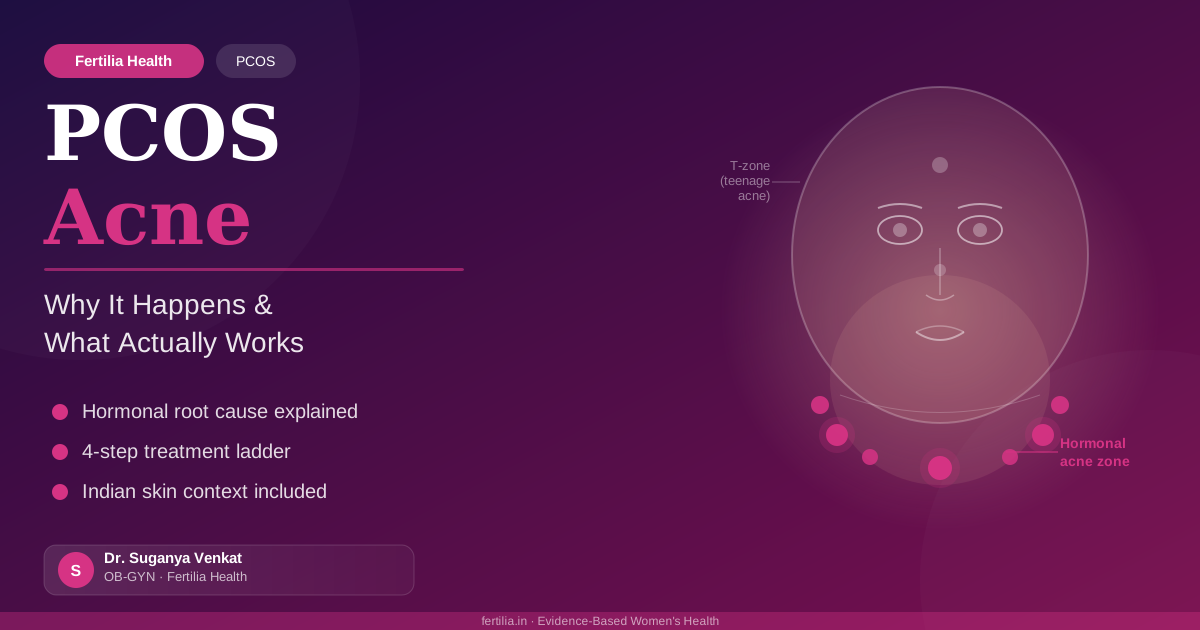
Many women I see in clinic have spent years fighting acne that should have been over by their twenties. They have tried every face wash, every benzoyl peroxide gel, every home remedy their mother suggested. The breakouts keep returning, always in the same places: the chin, the jawline, sometimes spreading along the lower cheeks. And underneath many of these cases is a hormonal story that a face wash was never going to fix.
If your acne clusters along the lower half of your face and you have irregular periods, unexplained weight gain, or excess hair on your body, there is a reasonable chance that polycystic ovary syndrome (PCOS) is the underlying driver. Understanding that connection changes how treatment needs to work.
This post covers:
- Why PCOS causes acne at the hormonal level
- What PCOS acne looks like and how to tell it apart from teenage skin
- Which tests to ask for
- A four-step treatment ladder that actually addresses the root cause
- What Indian foods support clearer skin from the inside
Why PCOS Causes Acne
PCOS is a hormonal and metabolic syndrome, not simply an ovarian condition. One of its defining features is androgen excess: elevated levels of testosterone, dihydrotestosterone (DHT), or DHEAS in the blood. Even levels that fall within the “normal range” can cause symptoms if the skin is particularly sensitive to these hormones.
Androgens stimulate the sebaceous glands in the skin to produce more sebum (oil). When sebum production is excessive, pores become blocked, and a common skin bacterium called Cutibacterium acnes (formerly Propionibacterium acnes) multiplies in the blocked follicle and triggers inflammation. The result is the deep, painful, inflamed cysts that characterise hormonal acne. Dermatologist research by Lucky (1997, Journal of the American Academy of Dermatology) established the direct relationship between androgen activity and sebaceous gland hyperactivity in acne-prone women.
A second driver matters here: insulin resistance. Research by Dunaif (1997, Endocrine Reviews) showed that insulin resistance is present in 60 to 80 percent of women with PCOS, including women of normal weight. When insulin levels are chronically elevated, they stimulate the ovaries to produce more androgens and reduce the liver’s production of sex hormone-binding globulin (SHBG). SHBG is the protein that keeps testosterone inactive in the bloodstream. Less SHBG means more free, biologically active testosterone circulating to the skin. This is why addressing insulin resistance is not optional in PCOS acne treatment: it strikes at one of the core drivers. See our detailed guide on insulin resistance in PCOS for the full picture.
PCOS is diagnosed using the Rotterdam Criteria, which requires two of the following three features: irregular or absent periods, clinical or biochemical signs of androgen excess, and polycystic ovaries on ultrasound. You can read more about how PCOS is assessed in our overview of PCOS symptoms and causes.
What PCOS Acne Actually Looks Like
The location is the first tell. Hormonal acne driven by androgen excess concentrates on the lower third of the face: the chin, jawline, and lower cheeks. This is because sebaceous follicles in this region carry more androgen receptors and are more sensitive to circulating hormones. Compare this with the classic teenage acne pattern, which tends to involve the forehead, nose, and central cheeks (the T-zone) and is driven more by puberty-related sebum surges rather than sustained hormonal elevation.
The type of lesion is different too. PCOS acne is often deep, cystic, and painful rather than surface-level. These nodules sit beneath the skin surface, take longer to resolve, and are more prone to leaving marks.
That brings us to an important point for Indian skin. Fitzpatrick skin types IV, V, and VI (common across South Asian populations) are significantly more prone to post-inflammatory hyperpigmentation (PIH): the dark, flat marks that remain after an inflamed lesion heals. Research by Davis (2010, Journal of Clinical and Aesthetic Dermatology) documented this increased PIH risk in darker skin types. In clinical practice, many Indian women find these lingering marks as distressing as the active acne itself, because they can persist for weeks to months after the pimple has gone. This is an important reason to treat PCOS acne at the root and not simply suppress it temporarily.
The timing also gives clues. PCOS acne often flares cyclically, coinciding with the luteal phase of the cycle or worsening around ovulation. In women whose periods are absent or very irregular because of PCOS, the flare pattern may be less obvious but the chronic low-level breakouts rarely fully clear without hormonal intervention.
Acne is not the only skin-related sign of androgen excess in PCOS. Excess facial and body hair (hirsutism) and scalp hair thinning are driven by the same mechanism and often appear together. If you are experiencing two or more of these, a comprehensive hormonal and metabolic assessment is worth requesting from your gynaecologist.
Is your skin telling you something deeper? A 30-minute consultation with Dr. Suganya can help you understand your hormone picture and build a plan that works for your skin and your overall health.
Chat with Dr. Suganya on WhatsApp
Tests to Ask For
Effective treatment of PCOS acne requires knowing which hormonal and metabolic drivers are actually elevated in your case. A test panel worth discussing with your doctor includes the following:
Hormonal panel
- Free testosterone and total testosterone
- SHBG (sex hormone-binding globulin)
- DHEAS (dehydroepiandrosterone sulfate): this identifies whether adrenal androgen production is contributing
Metabolic panel
- Fasting insulin
- HOMA-IR (calculated from fasting insulin and fasting glucose)
- Fasting glucose
- HbA1c if there is concern about prediabetes
A note on “normal” results: some women with PCOS acne have hormone values within the laboratory reference range but still respond clinically to anti-androgen treatment. This is because the reference range is broad and includes women across a wide spectrum of sensitivity. Free testosterone and SHBG together give a better picture of bioavailable androgen activity than total testosterone alone.
Combining this panel with your cycle history and an ultrasound (if not already done) gives the full picture needed for an individualized treatment approach.
The Treatment Ladder
PCOS acne responds best to a layered approach. Each step addresses a different part of the problem. Moving to higher steps is appropriate if lower steps have not provided sufficient control, always with guidance from your dermatologist or gynaecologist.
Step 1: Dispel the myth first
The most common thing I hear from women with PCOS acne: “I wash my face three times a day but nothing works.” Over-washing is not only ineffective for hormonal acne, it can strip the skin barrier, trigger more sebum production as a compensatory response, and worsen PIH through physical irritation.
Hormonal acne originates inside the body. A cleanser addresses what is on the surface of the skin. It cannot change what testosterone and insulin are doing to your sebaceous glands. A gentle, non-stripping cleanser used twice a day is appropriate. Beyond that, the real work happens in the steps below.
Step 2: Topical prescription treatment
Topical retinoids (tretinoin, adapalene) are first-line prescription treatment for acne. The American Academy of Dermatology acne management guidelines (Zaenglein et al. 2016, Journal of the American Academy of Dermatology, PMID 26897386) classify topical retinoids as first-line therapy for both comedonal and inflammatory acne. They work by normalizing the rate at which skin cells turn over, preventing the buildup inside follicles that leads to clogged pores. Adapalene 0.1% gel is available at some pharmacies in India and is generally well tolerated; tretinoin requires a dermatologist’s prescription.
Benzoyl peroxide gel (2.5% is usually sufficient) works by reducing the bacterial load on the skin and as an adjunct reduces surface inflammation. For Indian skin specifically, 2.5% is preferable to the higher concentrations (5% or 10%) because stronger concentrations increase irritation risk and the subsequent risk of PIH.
Important: topical treatments alone will suppress PCOS acne but rarely clear it completely, because the hormonal drive continues. This is why step 3 and step 4 are not optional extras for women with PCOS.
Step 3: Address insulin resistance through diet
For women with PCOS and elevated fasting insulin or HOMA-IR, dietary modification directed at lowering insulin levels has a measurable effect on androgen activity. A randomized controlled trial by Marsh and colleagues (2010, American Journal of Clinical Nutrition) demonstrated that a low-glycaemic index diet reduced free androgen index by 6.4 percent in women with PCOS compared to a healthy diet control. This translated into clinical improvements in acne and hirsutism.
The good news for Indian women is that the low-GI approach maps cleanly onto traditional Indian foods. Ragi (finger millet) has a glycaemic index of approximately 52 to 55, significantly lower than polished white rice. Chana dal (split Bengal gram) and rajma (kidney beans) are both in the low-to-moderate GI range. Moong dal khichdi, dal with millet rotis, and dahi as a daily staple all support blood sugar stability without requiring you to abandon the food patterns your household is built around. Our guide to low-GI Indian foods for PCOS has a complete reference list.
Metformin is the pharmaceutical option for insulin resistance in PCOS. Research by Tomova and colleagues (2015, Journal of Pediatric Endocrinology and Metabolism) found that metformin treatment in adolescents and young women with PCOS and hyperandrogenism reduced testosterone levels and improved acne scores. For the full picture on when metformin is appropriate and what monitoring it requires, see our post on metformin for PCOS. Metformin requires a prescription and regular follow-up; it should not be self-administered.
Step 4: Anti-androgen therapy
For women with moderate to severe acne, or for those whose acne has not responded adequately to steps 2 and 3, hormonal anti-androgen therapy addresses the root of the problem more directly.
Spironolactone is an aldosterone antagonist that also blocks androgen receptors in the skin. At doses of 50 to 200 mg per day, it reduces sebum production and has a well-documented effect on acne in women with hyperandrogenism. Carmina and Lobo (2003, Fertility and Sterility) demonstrated its effectiveness in this population. It is generally well tolerated, though it requires blood pressure and potassium monitoring, and is prescribed by a gynaecologist or endocrinologist.
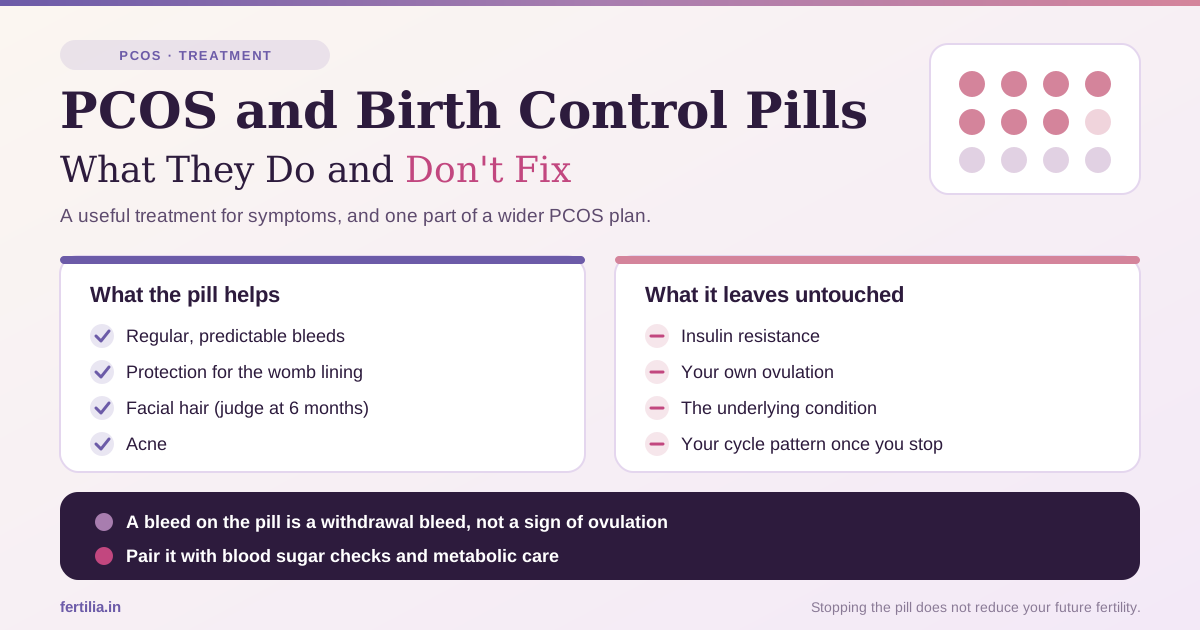
Combined oral contraceptive pills (OCPs) with anti-androgenic progestin components (such as drospirenone or cyproterone acetate) reduce free testosterone by increasing SHBG production and suppressing ovarian androgen production. Halpern and colleagues (2018, Contraception) reviewed the evidence supporting combined OCPs for acne in women with PCOS. This option is appropriate for women who are not planning pregnancy in the near term.
A note on collaborative care: dermatologists, gynaecologists, and general physicians each bring a different angle to PCOS acne. Your dermatologist manages the skin directly. Your gynaecologist assesses the hormonal and metabolic picture and can prescribe anti-androgen therapy. The most effective outcomes come from both working together rather than in isolation. We work alongside other clinicians, not as a replacement for them.
For more on this, read our guide on PCOS and Thyroid. Step 5: Isotretinoin (for severe, scarring acne)
Isotretinoin (oral vitamin A) is reserved for severe nodular or cystic acne that has not responded to the above steps, where there is active scarring, or where the emotional burden is significant. It is highly effective at reducing sebum production across the entire face.
One critical point: isotretinoin is teratogenic. It causes severe birth defects and must never be taken during pregnancy. Women taking isotretinoin must use reliable contraception (typically a combined OCP) for the entire treatment course and for one month after stopping. This is not a concern to dismiss lightly: it is a strict requirement, and any dermatologist prescribing isotretinoin should discuss it at length. If you are trying to conceive or pregnant, isotretinoin is not an option.
Isotretinoin also addresses only the skin; it does not correct the underlying hormonal picture. Acne may return after a course of isotretinoin if the PCOS hormonal drivers remain unaddressed.
Struggling with stubborn acne that keeps coming back? Dr. Suganya’s PCOS Symptom Reversal Program addresses the hormonal and metabolic drivers behind your skin, not just the surface.
Start a conversation on WhatsApp
Practical Takeaways for Your Plate
Diet alone is unlikely to clear severe PCOS acne, but it makes a measurable difference to the hormonal environment that drives it. A few evidence-aligned starting points:
Include more of these at each meal:
- Ragi roti, bajra bhakri, or jowar roti instead of maida rotis
- Chana dal, rajma, moong dal as the protein anchor
- A small portion of dahi (curd): its probiotic content and low GI both contribute
- Cooked methi (fenugreek) as a sabzi or added to rotis
- Amla (Indian gooseberry) or any fresh seasonal fruit with high vitamin C content to support collagen repair after acne lesions heal
Reduce (not eliminate, but reduce):
- Foods with high glycaemic load: packaged biscuits and namkeen, white bread, sweetened juices, and deep-fried snacks eaten regularly
- Large portions of white rice at every meal (smaller portions with more dal and sabzi is more useful than total avoidance)
Hydration also matters for skin barrier function. Coconut water and diluted chaas (buttermilk) are good options in warm weather.
Frequently Asked Questions
Is PCOS acne different from teenage acne? Yes, in meaningful ways. Teenage acne tends to affect the forehead and nose zone and is driven primarily by a temporary puberty-related surge in sebum. PCOS acne concentrates on the chin and jawline, persists into the twenties, thirties, and beyond, and is driven by sustained androgen excess and often insulin resistance. It rarely responds well to the same cleansers and topical products that work for teenage acne.
Can diet alone clear PCOS acne? For mild cases with a significant insulin-resistance component, dietary changes produce measurable improvement in androgen levels and sometimes clear acne without pharmaceutical intervention. For moderate to severe PCOS acne, diet is a necessary foundation but rarely sufficient on its own. It works best in combination with topical treatment and, where needed, anti-androgen therapy.
How long before I see results from PCOS acne treatment? Topical retinoids typically take 8 to 12 weeks to show meaningful improvement and should be used for at least 3 months before assessing whether to continue or escalate. Dietary and insulin-resistance interventions produce hormonal changes over a similar timeframe. Anti-androgen medications (spironolactone, OCPs) generally take 3 to 6 months to show their full effect on acne. Patience is required, and it is worth staying consistent.
Can I use over-the-counter acne products for PCOS acne? Over-the-counter products such as salicylic acid cleansers and benzoyl peroxide gels can be part of the skin-care routine, and benzoyl peroxide 2.5% specifically is useful for reducing surface bacterial load. However, OTC products alone do not address the hormonal driver. They can be used as a supporting step while working with your doctor on the underlying PCOS management.
Will PCOS acne improve if I get pregnant? Pregnancy raises progesterone significantly, and for some women this temporarily improves PCOS acne. For others, the hormonal shifts of early pregnancy can temporarily worsen it. After delivery, PCOS-related hormonal fluctuations often return. The underlying PCOS picture does not resolve with pregnancy; managing PCOS postpartum is a separate consideration.
I have all the signs of PCOS but my testosterone came back “normal.” Why do I still have acne? Total serum testosterone can fall within the laboratory reference range even when free testosterone (the biologically active fraction) is elevated, especially when SHBG is low. Ask for both free testosterone and SHBG together. Additionally, some women with PCOS have elevated skin androgen sensitivity even with hormone levels in the normal range, a phenomenon documented in dermatology literature. Clinical presentation matters alongside the numbers.
Is isotretinoin safe if I want to get pregnant soon? No. Isotretinoin is absolutely contraindicated in pregnancy because it causes serious birth defects. It requires reliable contraception throughout the treatment course and for at least one month after completing treatment. If you are planning a pregnancy in the near future, discuss this explicitly with your dermatologist so that alternative options can be considered. There are effective treatments for severe PCOS acne that do not involve isotretinoin.
PCOS acne is not a skin problem with a skin solution. It is a hormonal and metabolic signal that the body is asking for a more complete response. When treatment addresses both the surface and the root, results are consistently better and more durable.
If you have been managing this for years without a clear plan, a conversation with a gynaecologist who understands PCOS can reframe the whole picture. The skin you want is connected to the hormonal health you deserve.
Ready to understand your PCOS picture and what is driving your skin? Dr. Suganya’s PCOS Symptom Reversal program is a 90-day holistic plan that addresses insulin resistance, androgen excess, nutrition, and lifestyle together. Download the free PCOS Reversal Guide or message Dr. Suganya on WhatsApp to start the conversation.