Your mother-in-law says the baby looks hungry and needs water. Your neighbour says gripe water helped her baby sleep. The nurse at the clinic said breastfeeding is best, but did not explain what to do when your nipples hurt so much you dread the next feed.
This is the reality for millions of new mothers in India. Breastfeeding guidance is everywhere. Genuinely useful, evidence-based support is rarer. This post covers what exclusive breastfeeding actually means, what it does for your baby and for you, what to do when it is hard, and when it is completely okay to take a different path.
What Is Exclusive Breastfeeding?
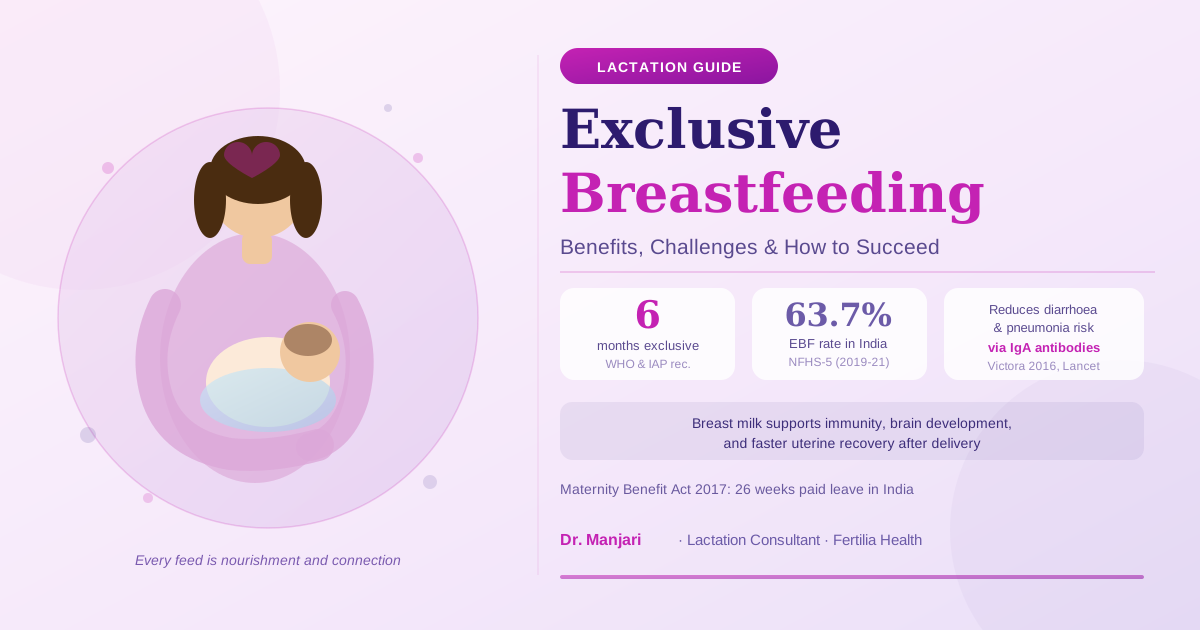
Exclusive breastfeeding means giving your baby only breast milk for the first six months of life. No water, no formula, no juice, no gripe water, no cow’s milk. The only exceptions are oral rehydration salts, vitamins, or medications if your baby needs them for a specific medical reason.
The World Health Organization (WHO) and the Indian Academy of Pediatrics (IAP) both recommend exclusive breastfeeding for the first six months, followed by continued breastfeeding alongside appropriate complementary foods up to two years of age and beyond.
This is not a vague recommendation. It is based on decades of research, most comprehensively reviewed by Kramer and Kakuma in a 2012 Cochrane systematic review that found babies exclusively breastfed for six months had fewer gastrointestinal infections and no deficits in growth or development compared to those introduced to foods or other liquids earlier.
India in Numbers: Where We Are and What Gets in the Way
According to the National Family Health Survey 5 (NFHS-5, 2019-21), 63.7% of children under six months in India are exclusively breastfed. That means more than one in three babies is not receiving exclusive breastfeeding, and many are given water, formula, or prelacteal feeds from the first days of life.
Prelacteal Feeds: What the Evidence Shows
A prelacteal feed is anything given to the baby before breastfeeding is established, often in the first one to three days after birth. In India, this commonly includes honey, ghee, cow’s milk, or sugar water offered by family members with the best intentions.
Prelacteal feeds create real problems for breastfeeding:
- They reduce the baby’s appetite for colostrum, the first milk that is dense with antibodies and exactly calibrated for a newborn
- They increase the risk of infection (honey in newborns can cause botulism, a serious condition caused by the bacterium Clostridium botulinum)
- They interfere with the supply-demand rhythm that establishes milk production
Colostrum is not “too thin” or insufficient. The small volume is intentional: a healthy newborn’s stomach holds approximately 5 to 7 ml in the first 24 hours. Colostrum fills that stomach precisely, while delivering concentrated immune protection the baby cannot get anywhere else.
What Exclusive Breastfeeding Does for Your Baby
Protection Against Infection
A landmark 2016 review in The Lancet by Victora and colleagues, drawing on data from 28 countries, found that breastfeeding substantially reduces infant mortality from diarrhoea and pneumonia, two of the leading causes of death in children under five globally.
Breast milk contains secretory IgA (sIgA), the primary antibody in mucosal tissue, which coats your baby’s gut lining and respiratory tract and blocks pathogens before they can cause illness. This protection is particularly critical in the first months of life, before your baby’s own immune system has matured.
Gut Microbiome Development
Breast milk contains human milk oligosaccharides (HMOs) that selectively nourish beneficial bacteria, particularly Bifidobacterium species, which come to dominate the gut of exclusively breastfed infants. This early microbial colonisation shapes immune development, reduces allergy risk, and has lasting effects on metabolic health in later childhood.
Brain Development
The same 2016 Lancet review found an association between breastfeeding and higher IQ scores, with an average 3.4-point advantage in breastfed individuals. Researchers attribute this partly to the long-chain polyunsaturated fatty acids in breast milk (particularly DHA) that support neural development in the first year.
Reduced Risk of Chronic Disease
Breastfed children show lower rates of obesity and type 2 diabetes in later childhood.
What Exclusive Breastfeeding Does for You
The benefits run in both directions.
Faster Uterine Recovery
Breastfeeding triggers the release of oxytocin, which causes the uterus to contract. This uterine involution (the uterus returning to its pre-pregnancy size) is faster in breastfeeding mothers. You may notice more cramping in the early days when you feed, especially with a second or third baby. That is the process working.
Lactational Amenorrhea
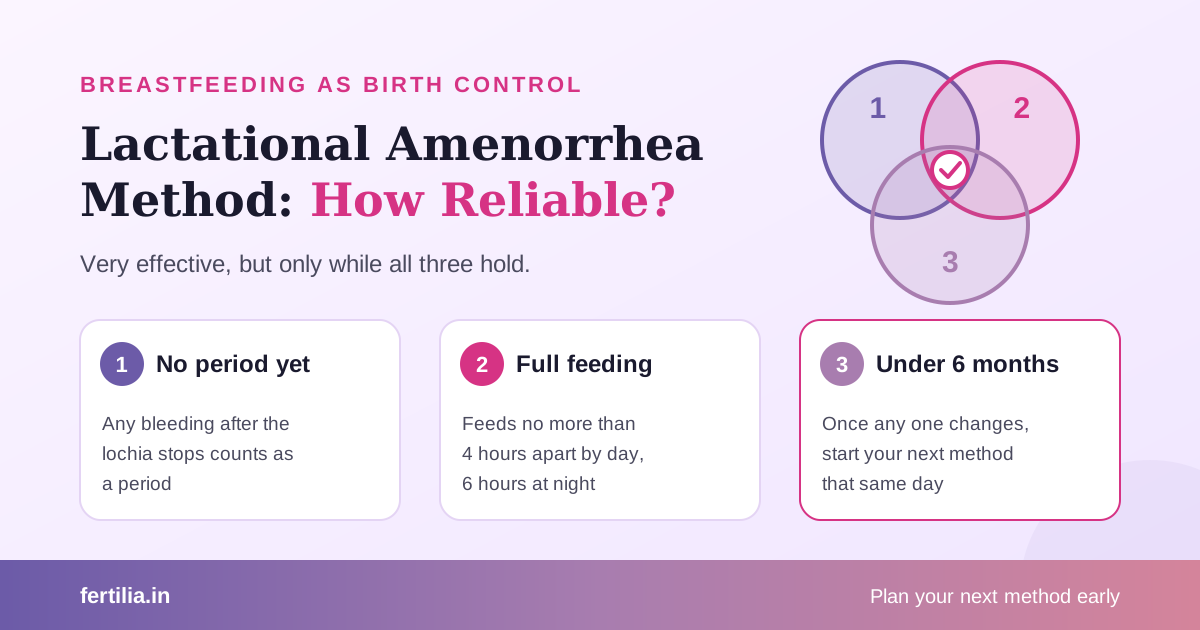
When you breastfeed exclusively and frequently, elevated prolactin levels suppress ovulation. This is lactational amenorrhea, and it provides approximately 98% contraceptive protection when three conditions are all met: your baby is under six months old, your periods have not returned, and you are breastfeeding exclusively with no long gaps between feeds, including at night. When any of these conditions change, speak with your doctor about contraception.
Reduced Cancer Risk
Research shows that breastfeeding for 12 months or more is associated with a reduced risk of both breast cancer and ovarian cancer. A 2002 Lancet Collaborative Group analysis found that for each year of breastfeeding, a mother’s breast cancer risk decreases by approximately 4.3%. The protection accumulates across the lifetime, whether across one long breastfeeding journey or several shorter ones.
Practical Benefits
Breast milk requires no preparation, no sterilisation, no expense. At 3 am, this matters.
Questions about milk supply, latch, or returning to work?
WhatsApp us to speak with Dr. Manjari, our lactation professional. A 15-minute conversation can resolve most breastfeeding concerns before they become reasons to stop.
Common Challenges and What Actually Helps
Perceived Low Supply
This is the most common reason mothers in India stop breastfeeding early, and in the majority of cases it is not a supply problem but a perception problem. Signs your baby is getting enough: eight or more feeds in 24 hours, six or more wet nappies per day by day five, and consistent weight gain on their growth curve after the normal 7 to 10% loss in the first week.
For more on this, read our guide on Cluster Feeding. Milk supply works entirely on a supply-and-demand cycle. The more the breast is emptied, the more milk the body produces. Introducing formula or water means the baby feeds less at the breast, which signals your body to make less milk, making the perceived shortage real over time.
The most effective thing you can do for supply is to feed on demand, every two to three hours, including through the night. If you are genuinely worried about your baby’s weight gain or feeding, consult a lactation consultant before starting supplemental feeds. Many cases resolve with a latch correction or increased feeding frequency rather than formula.
For foods that support milk production: Indian foods to increase breast milk
Family Pressure: “Give the Baby Water”
The belief that babies need water in hot weather is one of the most persistent myths in Indian households. It comes from an era before we understood the composition of breast milk, and it is well-intentioned but inaccurate.
Breast milk is approximately 87% water and provides all the hydration a breastfed baby needs, even in Indian summers. Giving water in the first six months fills the stomach, reduces milk intake, lowers calorie intake, and adds no nutritional value.
Gripe water, honey water, cow’s milk, and sugar water are all unnecessary before six months and carry specific risks: some gripe water formulations contain alcohol; honey in infants under 12 months carries a risk of botulism; cow’s milk is too high in protein and sodium for an immature infant kidney.
A practical approach with well-meaning family: acknowledge the worry about the baby being hot and thirsty, then explain that breast milk contains all the water the baby needs. “She is getting water through the milk” usually lands better than a direct contradiction.
Returning to Work
India’s Maternity Benefit Act 2017 provides 26 weeks of paid maternity leave for employees in establishments with 10 or more workers. Workplaces with 50 or more employees are required to provide a creche facility, and breastfeeding breaks are mandated during working hours.
If you are returning to work before your baby turns six months and want to continue exclusive breastfeeding:
- Begin expressing and storing milk two to three weeks before your return, so your body and your caregiver both adjust
- Learn safe storage: expressed breast milk keeps for up to four hours at room temperature, up to three days in the refrigerator (below 4 degrees C), and up to six months in a freezer
- Express at work at the times you would normally feed, to maintain supply
- A caregiver can give stored milk by cup or spoon rather than a bottle, to reduce nipple confusion in younger babies
Our guide to pumping and storing breast milk walks through pump choice, building an expressing routine, and the storage rules in full detail.
Nipple Pain and Latch
Many women stop breastfeeding in the first two weeks because of nipple pain. In most cases, pain beyond the first few seconds of latching is caused by a poor latch, not by breastfeeding itself. A correctly latched baby takes in a wide mouthful of breast tissue, not just the nipple, with the chin against the breast and the nose free.
For causes, relief, and when to seek help: Breastfeeding pain and nipple soreness
For positioning guidance: Breastfeeding positions for newborns
If you are experiencing breast hardness, a blocked duct, or engorgement: Breast engorgement: causes, prevention, and relief
Nourishing Yourself While Breastfeeding
Breastfeeding uses approximately 400 to 500 calories per day from your body’s stores. Eating well is not optional during this period. You need adequate protein, calcium, iron, and fluids to support both your recovery and your milk production.
Traditional Indian postpartum foods are genuinely well-suited to this: methi ladoos provide iron and galactagogue compounds, ragi kanji delivers calcium and slow-release energy, urad dal is rich in protein, dahi provides calcium and probiotics, and warm dal with rice gives complete protein and carbohydrate. These foods have been used in Indian households for generations because they work.
For a complete food guide: Breastfeeding diet: 30+ Indian foods rated
For overall postpartum nutrition: After delivery food for Indian mothers
Download the Postpartum Diet Guide for a week-by-week structured plan from our nutrition team.
When Exclusive Breastfeeding May Not Be Possible
For the large majority of mothers and babies, exclusive breastfeeding is achievable with the right support. However, there are situations where it is genuinely not recommended or where supplementing is the safer clinical choice.
Medical situations where breastfeeding is not advised:
- A mother receiving chemotherapy or certain other medications with known infant toxicity
- Specific metabolic conditions in the baby, such as galactosaemia (an inability to metabolise galactose, a sugar found in breast milk)
- Maternal HIV in settings with safe water and reliable formula access (this is a nuanced area; guidance should come from your treating doctor)
When supplementing is the right call:
- Your baby is losing more than 10% of birth weight and is not recovering with increased feeding frequency
- Your baby cannot latch due to a structural issue currently being worked on (such as significant tongue-tie awaiting division)
- You have given exclusive breastfeeding full support including a lactation consultant assessment and supply has not established
If you are supplementing for any of these reasons, this is not a reflection on your commitment. Many mothers breastfeed alongside formula, and the breast milk their baby receives still delivers IgA and immune protection. Formula, when genuinely needed, is the right choice.
After Six Months: Continuing Breastfeeding
At six months, complementary foods are introduced alongside continued breastfeeding. The WHO and IAP both recommend breastfeeding up to two years and beyond. Introducing solids does not mean weaning: breast milk continues to provide immune protection and comfort throughout the second year.
Ready to talk through your breastfeeding journey?
Whether you are struggling with supply, planning your return to work, or not sure whether what you are experiencing is normal, we are here. WhatsApp us and Dr. Manjari will respond. Lactation support like this runs right through our 90-day Postpartum program, so you are not working it out alone.
Frequently Asked Questions
Does my baby need water in the first six months?
No. Breast milk is approximately 87% water and provides all the hydration a breastfed baby needs, even in hot weather. Giving water before six months fills the stomach, reduces milk intake, and does not add any nutritional benefit. Water is introduced alongside complementary foods at six months.
How do I know if my baby is getting enough milk?
Look for these signs together: six or more wet nappies per day by day five; consistent weight gain on the growth curve after the normal 7 to 10% drop in the first week; a baby who is alert and settled after feeds; and at least eight feeds in 24 hours. If you are concerned, count feeds and wet nappies over 24 hours before concluding that supply is low. A lactation consultant can observe a feed and give you a much clearer picture.
Can I continue breastfeeding after I return to work?
Yes, many mothers do. Express milk at the times you would normally feed your baby, store it safely, and arrange for your caregiver to give it by cup or spoon. Under the Maternity Benefit Act 2017, eligible employers must allow breastfeeding breaks. Starting to express two to three weeks before your return helps your body and your routine adjust before the pressure of the first day back.
My family keeps insisting on giving gripe water. What do I do?
The concern is usually genuine: the baby seems unsettled and the family wants to help. Acknowledging that concern first tends to work better than a straight correction. You can explain that the baby is getting all the water and comfort she needs through the milk, and that gripe water is not recommended before six months. A word from your paediatrician or lactation consultant at a clinic visit often carries more weight with grandparents than advice from the new mother.
Does breastfeeding work as contraception?
Lactational amenorrhea provides approximately 98% protection against pregnancy when three conditions are all met at the same time: your baby is under six months old, your periods have not returned, and you are breastfeeding exclusively and frequently, including night feeds. As soon as any of these conditions change, speak with your doctor about contraception.
What if I cannot breastfeed exclusively for medical reasons?
Some mothers cannot breastfeed, or cannot breastfeed exclusively, due to genuine medical reasons in the mother or baby. Formula is safe and nutritionally complete. Any breast milk your baby receives, even a small amount alongside formula, still provides immune protection. The priority is a well-nourished baby and a mother who is supported rather than overwhelmed. If you are navigating this decision, our team can help you think it through.
My nipples are so sore I dread every feed. Is this normal?
Mild sensitivity in the first few days is common as your body adjusts. Pain that persists beyond the first few seconds of a feed, or that makes you dread feeding, is almost always a latch issue rather than an inevitable part of breastfeeding. A lactation consultant can observe one feed, identify the problem, and usually resolve it in a single session. Many mothers who were ready to stop because of pain found that one latch correction changed everything.