✅ Safe throughout pregnancy · 1 tbsp (10g) roasted daily · Zinc, magnesium and iron in one seed
| Guidance | |
|---|---|
| Safe in pregnancy? | Yes. 1 tablespoon (10g) of roasted pumpkin seeds daily is safe throughout pregnancy. |
| Daily amount | 1–2 tablespoons (10–20g) of hulled seeds. Pregnant women: 1 tbsp is the practical daily amount. |
| If gestational diabetes | No blood sugar concern at standard portions; pair with a meal rather than eating alone. |
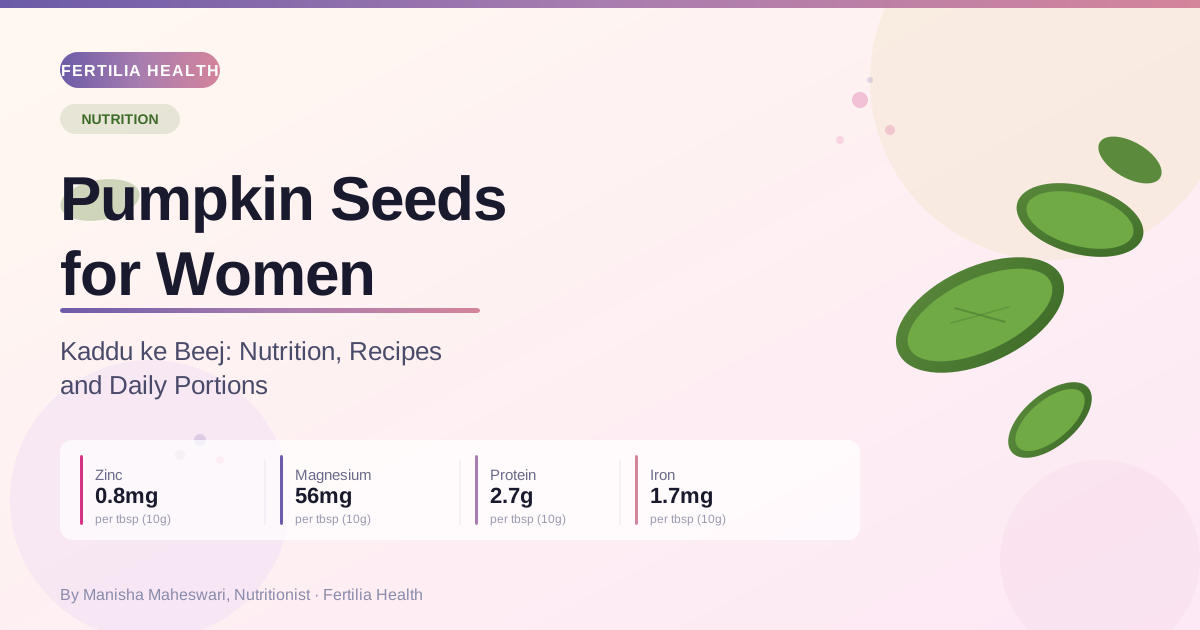
| Key nutrients | Zinc 0.8mg · Magnesium 59mg · Iron 0.9mg · Protein 3.0g per 1 tbsp (10g), per USDA FoodData Central |
| Best time | Afternoon snack, or as a topping on dahi, khichdi, or dal at any meal |
| Skip if | Large amounts of raw seeds on an empty stomach if you have digestive sensitivity in the first trimester |
Jump to: What Are Pumpkin Seeds? · Nutritional Profile · How Much to Eat · 5 Recipes · Buy & Store · FAQs
You have probably scooped out the seeds from a kaddu (pumpkin or bottlegourd) and thrown them away without a second thought. Most Indian kitchens do. But kaddu ke beej, as these flat, oval seeds are called in Hindi, are one of the most nutritionally dense seeds you can add to your daily meals.
Unlike chia or flaxseeds, which need to be imported or bought online, pumpkin seeds are widely available at kirana stores and supermarkets across India. They are easy to roast at home, have a pleasant, mild, nutty flavour, and slot into Indian cooking far more easily than most people expect.
This guide covers exactly what pumpkin seeds contain per serving, how much to eat each day, and five practical Indian recipes you can try this week.
What Are Pumpkin Seeds? (And Which Type to Buy)
Pumpkin seeds come from the Cucurbita family, which includes the common orange pumpkin, ash gourd, and various gourds grown across India. The seeds sold at stores are usually hull-less (the outer white shell is already removed), leaving behind the flat green kernel you see in most recipes. These hulled seeds are what nutritionists mean when they say “pumpkin seeds.”
In India, you will find them labelled as:
- Kaddu ke beej (Hindi)
- Parangi kai vithaigal (Tamil)
- Kambala beeja (Kannada)
- Pumpkin seeds (most supermarket labels)
Raw vs roasted: Both are nutritionally similar. Raw seeds have a slightly chewy texture and mild flavour. Roasted seeds are crunchier and easier to eat as a snack. You can roast them at home in a dry pan for 3 to 4 minutes on medium heat with a pinch of salt and jeera. Store-bought roasted seeds often have added oil and salt, so check the label if you are watching sodium intake.
Cost: Expect to pay Rs 80 to Rs 150 per 100g at Indian supermarkets or online grocery platforms. A 100g bag lasts roughly two to three weeks if you eat 1 tablespoon daily.
Nutritional Profile: What Is in One Tablespoon?
A standard serving of pumpkin seeds in Indian meals is 1 tablespoon, which weighs approximately 10g for hulled seeds. Here is what that tablespoon contains, based on USDA nutritional data:
| Nutrient | Per 1 tbsp (10g) | Per 2 tbsp (20g) |
|---|---|---|
| Calories | 56 kcal | 112 kcal |
| Protein | 3.0g | 6.0g |
| Total fat | 4.9g | 9.8g |
| Dietary fibre | 0.6g | 1.2g |
| Zinc | 0.8mg | 1.6mg |
| Magnesium | 59mg | 118mg |
| Iron | 0.9mg | 1.8mg |
| Phosphorus | 123mg | 246mg |
| Manganese | 0.4mg | 0.9mg |
A few things worth noting from this table:
Zinc is a notable mineral in pumpkin seeds. One tablespoon provides 0.8mg, making them a meaningful plant-based contributor to daily zinc intake alongside other zinc-rich foods like dal, paneer, and til.
Magnesium is the second highlight. Women in India are commonly low on magnesium, partly because refined rice and maida-based meals are low in it. Pumpkin seeds are one of the richest plant-based sources of magnesium available in Indian kitchens.
The fat in pumpkin seeds is predominantly unsaturated (oleic and linoleic acids), which is the type found in nuts, seeds, and vegetable oils. It is not the saturated fat you find in coconut oil or ghee.
The protein (3.0g per tablespoon) makes pumpkin seeds useful as a topping for dals, sabzis, and curd, adding a small but real protein boost to each meal.
How Much to Eat Per Day
The practical daily portion is 1 to 2 tablespoons (10 to 20g) of hulled pumpkin seeds. This is a modest amount that fits easily into most Indian meals without dramatically changing calories or macros.
Eating more than 3 tablespoons at a time is not harmful for most people, but seeds are calorie-dense, and larger amounts can add up quickly if you are also eating other nuts and seeds through the day.
General guidance by segment:
For women with PCOS: 1 tablespoon daily, ideally with a meal rather than on an empty stomach. Pumpkin seeds fit well as a topping on dahi, khichdi, or any cooked grain. For the clinical side of PCOS management, read our complete guide to PCOS nutrition and root causes.
For pregnancy: 1 tablespoon daily from the second trimester onward is a practical addition. Roasted pumpkin seeds work well as an afternoon snack. Avoid raw seeds in large amounts if you have any digestive sensitivity, which is common in the first trimester. For full pregnancy nutrition guidance, see our Indian pregnancy diet chart.
For breastfeeding: 1 to 2 tablespoons daily works well. They pair nicely with warm dishes like khichdi, dalia, or a light soup. For a full guide to foods that support milk production, see our breastfeeding food guide.
For general wellbeing (no specific health goal): 1 tablespoon three to four times a week is enough to get the nutritional benefits without overthinking it.
5 Easy Indian Recipes Using Pumpkin Seeds
Recipe 1: Roasted Jeera Pumpkin Seeds (Everyday Snack)
This is the simplest starting point. It takes under 10 minutes and produces a snack you can keep at your desk or in your bag.
Ingredients:
- 50g (5 tbsp) raw pumpkin seeds
- 1 tsp ghee or cold-pressed sesame oil
- 1/2 tsp jeera (cumin seeds)
- 1/4 tsp rock salt or sendha namak
- Pinch of hing (asafoetida), optional
Method:
- Heat a dry kadai on medium flame. Add the pumpkin seeds and dry-roast for 2 minutes, stirring continuously, until they begin to pop gently and turn light golden. Remove and set aside.
- In the same kadai, heat the ghee. Add jeera and let it splutter. Add hing if using.
- Return the seeds to the kadai, add salt, and toss well for 30 seconds.
- Cool completely before storing in an airtight jar.
Shelf life: Up to 10 days at room temperature. Serving: 1 tablespoon as a snack, or 1 to 2 teaspoons as a topping on dahi, salad, or khichdi.
Recipe 2: Pumpkin Seed Chutney
This is a protein-rich chutney that works with idli, dosa, or as a spread on roti. It is particularly useful for women who find it hard to include seeds in any other way.
Ingredients:
- 50g (5 tbsp) roasted pumpkin seeds
- 1/2 cup fresh coconut (scraped) or 2 tbsp dry coconut
- 1 green chilli
- Small piece of ginger (half thumb size)
- 1 tsp jeera
- 2 tbsp dahi (curd)
- Salt to taste
- Tempering: 1 tsp oil, mustard seeds, curry leaves, 1 dry red chilli
Method:
- Blend roasted pumpkin seeds, coconut, green chilli, ginger, jeera, dahi, and salt with 3 to 4 tablespoons of water to a smooth chutney.
- Heat oil in a small pan, add mustard seeds, let them splutter. Add curry leaves and dry red chilli.
- Pour the tempering over the chutney and stir.
Serving: 2 tablespoons with each meal. This chutney has a mild, nutty flavour with a slightly earthy base that most children also eat without objection.
Storage: Refrigerate and use within 2 days.
Want a personalised meal plan that includes pumpkin seeds and other nutrient-rich Indian foods for your specific health goal? Dr. Suganya's 90-day PCOS Symptom Reversal program builds them into a full plan around your own PCOS drivers.
Chat with our nutritionist on WhatsAppRecipe 3: Coconut and Pumpkin Seed Laddoo
These are soft, naturally sweet laddoos made without refined sugar. They work well as a midday snack or a pre-workout bite.
Ingredients (makes 10 to 12 small laddoos):
- 50g (5 tbsp) roasted pumpkin seeds, coarsely ground
- 100g fresh or dry coconut, grated
- 3 to 4 tbsp jaggery powder (adjust to taste)
- 2 tbsp sesame seeds (til), dry-roasted
- 1 tbsp ghee
- 1/4 tsp cardamom powder
Method:
- In a pan, heat ghee on medium flame. Add coconut and stir for 2 minutes until slightly fragrant (do not brown).
- Add jaggery powder and stir until it melts and combines with the coconut. Add cardamom.
- Remove from heat. Add coarsely ground pumpkin seeds and roasted sesame. Mix well.
- When the mixture is cool enough to handle, roll into small laddoos (about 1 tablespoon each).
Storage: Store in an airtight container in the fridge for up to 5 days. Serving: 1 to 2 laddoos per day.
Why jaggery over sugar: Jaggery has a lower glycaemic load than refined white sugar and retains trace minerals from sugarcane processing. For Indian sweets, it is always a better swap.
Recipe 4: Pumpkin Seed and Dahi Raita
This raita takes 5 minutes and adds a satisfying crunch to any dal-rice or roti-sabzi meal.
Ingredients:
- 200g dahi (curd), beaten smooth
- 1 tbsp roasted pumpkin seeds
- 1/4 tsp roasted jeera powder
- 1/4 tsp chaat masala
- Small handful of coriander leaves, chopped
- Salt to taste
- Optional: 1/2 small cucumber, grated and squeezed
Method:
- Beat dahi until smooth. Add cucumber if using.
- Stir in jeera powder, chaat masala, and salt.
- Top with roasted pumpkin seeds just before serving (to keep the crunch).
- Garnish with coriander.
Serving: As a side dish with any Indian meal. One serving (about half the bowl above) gives you 1 tablespoon of pumpkin seeds.
Recipe 5: Pumpkin Seed Nimbu Pani
A cooling summer drink that adds nutrition to an everyday staple.
Ingredients (1 glass):
- 1 tsp pumpkin seeds, soaked in water for 2 hours, then drained
- Juice of half a lemon
- 1/2 tsp roasted jeera powder
- Pinch of black salt (kala namak)
- 1/2 tsp jaggery powder or honey
- 200ml chilled water
Method:
- Add soaked pumpkin seeds to a glass.
- Squeeze in lemon juice. Add jeera powder, black salt, and jaggery.
- Pour in chilled water and stir.
Note: Soaking softens the seeds slightly and makes them easier to chew. The seeds settle at the bottom, so stir before each sip.
Serving: One glass as a mid-morning or afternoon drink.
How to Buy and Store Pumpkin Seeds
Where to buy:
- Wet markets and kirana stores in most Indian cities stock pumpkin seeds, usually in the dry fruits and nuts section.
- Online platforms (BigBasket, Amazon) have a wide range of brands. Look for “hulled pumpkin seeds” without added oil or flavouring for the most versatile option.
- Health food stores and organic shops carry cold-pressed or certified organic varieties at a higher price point.
What to look for on the label:
- Ingredients should list only: pumpkin seeds. No added oil, salt, or preservatives for the raw variety.
- For roasted seeds: some brands add sunflower oil, which is fine in small amounts. Avoid seeds roasted in palm oil if you are eating them daily.
Storage at home:
- At room temperature: In an airtight glass or metal container, raw pumpkin seeds keep for 2 to 3 months. Keep away from direct sunlight.
- In the refrigerator: Up to 6 months. The fat in seeds can turn rancid in warm, humid conditions (especially in South India during summer), so fridge storage is worth it.
- Roasted seeds: Keep for up to 2 weeks at room temperature in an airtight container.
How to tell if they have gone bad: Rancid seeds smell sour or sharp, not pleasantly nutty. If in doubt, taste one seed. Bad seeds have an unpleasantly bitter, sharp flavour. Throw the batch out and buy fresh.
Fitting Pumpkin Seeds Into a Weekly Meal Plan
Here is a simple week’s worth of ideas to give you a starting structure. These are suggestions, not a strict plan.
| Day | How to use pumpkin seeds |
|---|---|
| Monday | 1 tbsp roasted seeds as a topping on morning dahi |
| Tuesday | 2 tbsp pumpkin seed chutney with idli at breakfast |
| Wednesday | 1 coconut pumpkin seed laddoo as afternoon snack |
| Thursday | 1 tbsp seeds in lunch raita |
| Friday | Pumpkin seed nimbu pani in the afternoon |
| Saturday | 1 tbsp mixed into khichdi before serving |
| Sunday | Small handful of plain roasted seeds as an evening snack |
The goal is not to eat pumpkin seeds every single day in large amounts. Small, regular portions spread through the week are more practical and equally effective nutritionally.
Frequently Asked Questions
How much protein and fibre are in a teaspoon of pumpkin seeds? A level teaspoon of pumpkin seeds is roughly 5 grams and gives you about 1.5 grams of protein and a little under half a gram of fibre. A tablespoon (around 10 grams) gives about 3 grams of protein and close to 1 gram of fibre. For context, 100 grams of pumpkin seeds carries roughly 30 grams of protein and about 6 grams of fibre, which is why even a small daily sprinkle adds up as a useful plant-protein boost on poha, curd or a salad.
What are the uses of pumpkin seeds? (pumpkin seeds ke fayde) Pumpkin seeds are easy to add to an everyday Indian diet. Roast them lightly and eat a tablespoon as a namkeen-style snack, sprinkle them over poha, upma, salads, curd or chaat, blend them into a smoothie or chutney, or stir them into ladoo and granola mixes. They are valued as a plant source of protein, iron, magnesium and zinc, so a small daily topping makes an ordinary meal more filling.
Are pumpkin seeds safe during pregnancy? Yes. 1 tablespoon (10g) of roasted pumpkin seeds daily is a safe, nutrient-dense snack throughout pregnancy. If you have any specific dietary restrictions or complications, check with your doctor or the Fertilia team for personalised guidance.
Can pumpkin seeds cause miscarriage? No. Pumpkin seeds do not cause miscarriage at normal dietary quantities. 1–2 tablespoons (10–20g) daily is a standard food amount eaten by women across India. There is no association between eating pumpkin seeds and any adverse pregnancy outcome.
Can I eat pumpkin seeds every day? Yes, 1 tablespoon (10g) daily is a practical and nutritionally safe amount for most adult women. There is no need to cycle them on and off unless you are eating a very large variety of seeds daily, in which case rotating between seeds like til, flaxseeds, and pumpkin seeds keeps your diet varied.
Should I eat pumpkin seeds raw or roasted? Either works. Roasted seeds are easier to digest and more pleasant to snack on. Raw seeds are fine as a topping for cooked foods, where the residual heat softens them slightly. Avoid eating large amounts of raw seeds on an empty stomach if you have a sensitive digestive system.
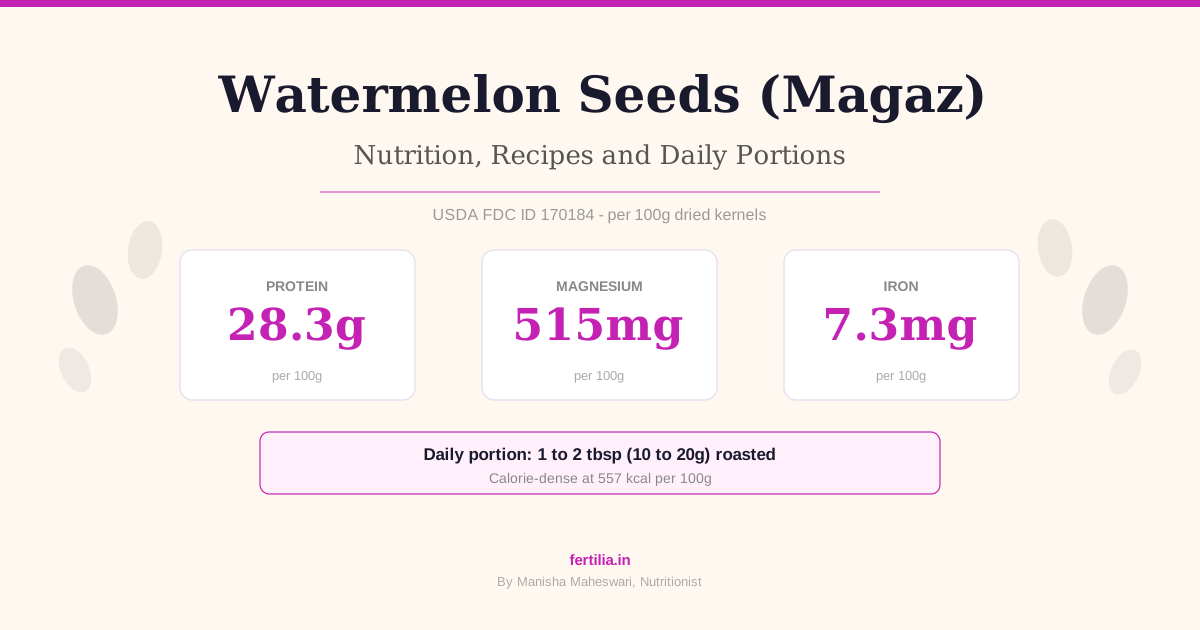
What is the difference between pumpkin seeds and melon seeds (magaz)? Magaz (melon seeds) come from muskmelon or watermelon. They are smaller and have a softer texture. Both are nutritious seeds used in Indian cooking, but their nutritional profiles differ. Pumpkin seeds have significantly more zinc and magnesium per serving than magaz.
How are pumpkin seeds different from sunflower seeds? Sunflower seeds are higher in vitamin E. Pumpkin seeds are higher in zinc and magnesium. Both are good additions to an Indian diet. If you are already eating sunflower seeds regularly, adding a small amount of pumpkin seeds covers the mineral gap.
Can pumpkin seeds replace a zinc supplement? A food-first approach is always preferable to supplements when possible. Two tablespoons of pumpkin seeds (20g) provide approximately 1.6mg of zinc, a meaningful contribution from a single plant-based food, especially when combined with other zinc-rich foods in the same day. Whether seeds alone are sufficient depends on the rest of your diet. If you have been advised to take a zinc supplement by a doctor or nutritionist, continue it alongside food sources.
Where can I buy good quality pumpkin seeds in India? Most large supermarkets (Reliance Fresh, More, Nilgiris, DMart) stock hulled pumpkin seeds in their dry fruits section. Online platforms including BigBasket and Amazon India carry multiple brands. Look for plain, hulled seeds without added oil for maximum versatility in cooking.
Have questions about which seeds and Indian foods work best for your specific goals, whether for PCOS, pregnancy, or postpartum recovery?
Message the Fertilia team on WhatsAppPumpkin seeds are not a superfood that will fix everything overnight. But they are a genuinely nutritious, widely available, affordable ingredient that fits naturally into Indian cooking once you know a few ways to use them. Start with the roasted jeera seeds this week. Once that becomes routine, try the chutney. By the time you have worked through the five recipes above, eating a tablespoon of pumpkin seeds most days will feel like the most natural thing in the world.