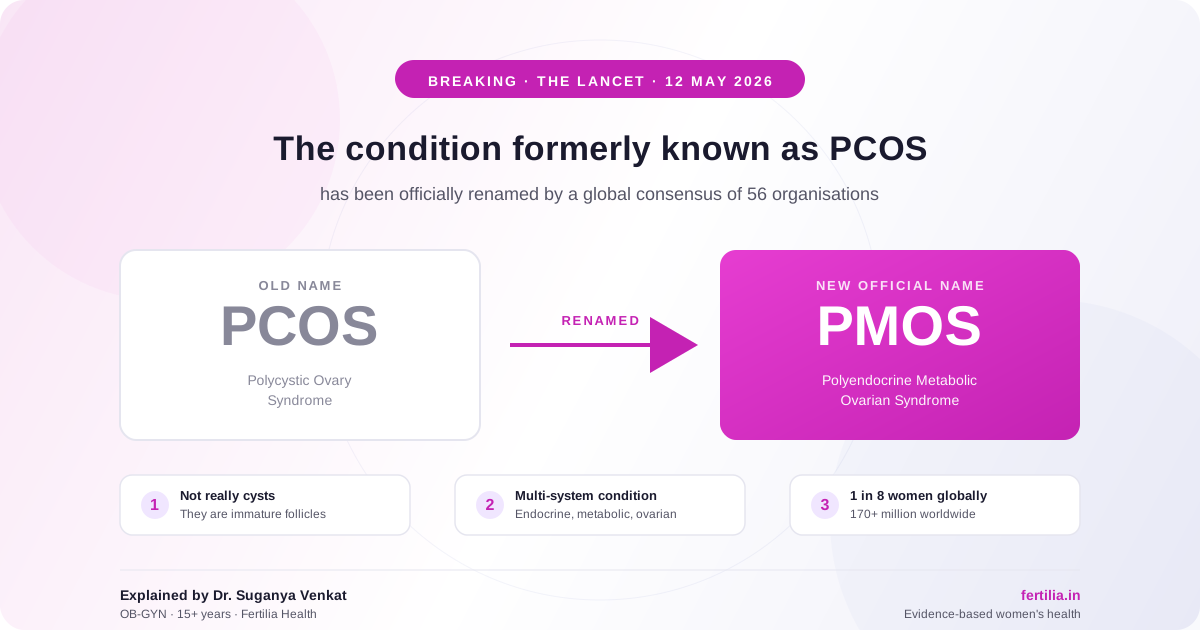
PCOS has been officially renamed to PMOS (Polyendocrine Metabolic Ovarian Syndrome). An international consensus process involving 56 organisations, more than 90 clinicians in formal workshops, and 14,360 survey responses (10,411 patients and 3,949 health professionals) culminated in a paper published in The Lancet on 12 May 2026. The diagnostic criteria (Rotterdam) and the treatment principles do not change. Only the name does, to reflect that this is a multi-system endocrine and metabolic condition, not a problem of the ovaries alone.
Here is what changed, and what did not.
This is not a fad, not a marketing exercise, and not Indian-specific guidance. It is the result of a multi-year global consensus process led by Prof Helena Teede at Monash University, the Androgen Excess and PCOS Society, and Verity (the UK patient charity), with input from patients and doctors in every world region, including India (Dr Madhuri Patil from Bengaluru is on the consortium).
Why the Name Had to Change
For decades, women have walked out of consulting rooms confused. “My ultrasound showed cysts, so my ovaries are full of cysts? Are they dangerous? Will they burst?”
The answer is reassuring: no, they are not cysts at all.
The point specialists have made for years is that women with this condition are not at higher risk of pathological ovarian cysts. The “polycystic appearance” on ultrasound is a crowd of immature follicles, each containing an egg that did not get the hormonal signal to grow and ovulate.
So the old name was wrong on three counts:
- There are no cysts. Those are follicles, and they are normal ovarian tissue stuck mid-development.
- It is not just about the ovaries. The condition involves the brain (hypothalamus), pancreas (insulin), adrenal glands, fat tissue, gut, and skin.
- The reproductive-only framing creates stigma. In cultures where fertility is tied to a woman’s worth, a name that signals “broken ovary” causes harm that goes beyond medicine.
Underdiagnosis is a serious problem worldwide, and the misleading name is thought to be one reason why. Doctors who do not see cysts on an ultrasound often miss the diagnosis. Women who do see “cysts” worry about the wrong thing.
What Does PMOS Stand For?
Each word in Polyendocrine Metabolic Ovarian Syndrome describes one part of what is happening in your body.
“Polyendocrine” → Multiple hormone-producing glands are involved
Your endocrine system is the network of glands that make hormones. In PMOS, several of them are out of sync at once:
- Hypothalamus (brain): releases GnRH in disordered pulses, which drives the pituitary to over-produce LH.
- Pituitary: high LH signals the ovary to make excess androgens (male-pattern hormones).
- Ovary: produces too much testosterone and androstenedione; follicle growth gets stuck.
- Adrenal glands: in some women, the adrenals also pump out excess androgens (raised DHEA-S).
- Pancreas: makes too much insulin to compensate for insulin resistance.
That is why the chosen prefix is poly (many) endocrine. Not one gland. Many.
“Metabolic” → Insulin, weight, blood sugar, cholesterol, liver
Insulin resistance affects roughly 85% of women with PMOS, including 75% of women with a healthy BMI (Cassar 2016, Stepto 2013). That is the key statistic the new name forces everyone to acknowledge.
Metabolic features documented in the Lancet paper include:
- Higher rates of impaired glucose tolerance and type 2 diabetes
- Higher cholesterol and triglycerides
- Higher blood pressure
- Higher risk of metabolic dysfunction-associated steatotic liver disease (MASLD, what used to be called fatty liver)
- Higher odds of cardiovascular disease (odds ratio 1.68), heart attack (2.50), and stroke (1.71) compared to women without the condition (Tay 2024)
This is why your gynaecologist should not be the only doctor in your care plan. An endocrinologist, a dietitian, and sometimes a cardiologist all have a role.
“Ovarian” → Yes, the ovaries are still part of the picture
The consortium debated dropping “ovarian” altogether. Some experts argued for “ovulatory” (since the real ovarian problem is ovulation, not cysts). In the end, the majority of workshop voters chose “ovarian” because it captures all the ovary-related changes:
- Disordered follicle development (the “crowd of immature eggs”)
- Ovulatory dysfunction (irregular or absent periods)
- Elevated Anti-Müllerian Hormone (AMH)
- Hyperandrogenism originating in the ovary
So “ovarian” stays, but now sits alongside polyendocrine and metabolic, which is closer to the truth.
PMOS Diagnostic Criteria (Rotterdam + 2026 Updates)
PMOS is diagnosed using the Rotterdam Criteria, unchanged in 2026. An adult woman needs at least 2 of 3 features: irregular or absent periods, clinical or biochemical signs of high androgens, and polycystic-appearing ovaries on ultrasound OR an elevated AMH. The 2023 International Guideline (still in force under the new name) formally accepts AMH as a substitute for the ultrasound criterion. Adolescents aged 10 to 19 need only the first two features.
The diagnostic criteria for PMOS are identical to the criteria for PCOS, because they apply to the same condition. The 2023 International Evidence-Based Guideline laid them out in detail, and the 2026 Lancet paper that renamed PCOS to PMOS made it explicit that nothing about diagnosis changes during the transition period.
The Rotterdam Criteria, item by item
For adults, you need at least 2 of these 3:
- Oligo-ovulation or anovulation (irregular or absent periods). Cycles longer than 35 days, fewer than 9 periods per year, or complete absence of periods for 3 or more months in a row.
- Clinical or biochemical hyperandrogenism. Clinical signs include hirsutism (the guideline recommends ethnicity-specific cut-offs; in South Asian women a lower Ferriman-Gallwey threshold, around 4 to 6, is often used rather than the 8 derived from White populations), persistent acne especially along the jawline, or androgenic hair thinning at the crown. Biochemical evidence comes from blood work showing elevated total or free testosterone, or an elevated free androgen index.
- Polycystic ovaries on ultrasound OR an elevated AMH. On ultrasound, the threshold is 20 or more follicles per ovary, or an ovarian volume above 10 mL. The 2023 update formally accepts an AMH above the population-specific threshold as a substitute for the ultrasound criterion. This matters in India, where transvaginal ultrasound is not always offered or appropriate, and where AMH is widely available through every major diagnostic lab.
Adolescent diagnostic criteria (10 to 19 years)
For adolescents, only the first two criteria are required. The ovarian morphology criterion is dropped because polyfollicular ovaries are a normal finding at this age. AMH is also not used for diagnosis under 18, since reference ranges are not yet stable.
This matters because PMOS is increasingly recognised in teenagers. If a 14-year-old has persistent acne plus periods that have not regularised by 2 years after menarche, that is enough to begin an evaluation. You do not need to wait for an ultrasound, and you do not need to wait for her cycles to “sort themselves out” any longer than the guideline allows.
What is the ICD code for PMOS / PCOS?
Through the 3-year transition period (2026 to 2028), the existing codes remain in force everywhere, including India:
- ICD-10: E28.2 (Polycystic ovarian syndrome). This is the code most Indian hospitals, labs, and insurance providers currently use on medical records and claims forms.
- ICD-11: 5A80.1 (Polycystic ovary syndrome). The WHO has adopted ICD-11 globally; rollout in Indian government health systems is gradual.
- PMOS-specific code: Not yet assigned. The World Health Organization is expected to introduce an updated PMOS code in the 2028 ICD revision cycle, alongside the next International Guideline update.
For everyday purposes (lab reports, prescriptions, insurance), continue using your existing PCOS or PCOD diagnosis. The clinical entity is the same; only the preferred name has changed.
Does My PCOS Diagnosis Change?
No. This is the most important reassurance to take from this update.
If you currently carry a PCOS diagnosis, you can update your understanding to PMOS, and that is all that changes administratively. Your reports, your prescriptions, your medical history, all of it remains valid. Health systems, insurance, and ICD coding will catch up over the next three years.
Your symptoms, your hormonal profile, your treatment plan, and your prognosis remain unchanged. You have not been misdiagnosed. You have the same condition, called by an older name.
Not Sure Whether You Have PMOS?
If you have irregular periods, unexplained weight gain, acne that does not respond to anything, or facial hair you cannot get on top of, you deserve a proper evaluation, not a five-minute conversation and a birth-control prescription.
Dr. Suganya Venkat has spent 15 years treating PCOS/PMOS across every driver pattern, and builds each plan around the driver rather than a generic chart.
₹399 consultation · 15+ years of OB-GYN experience · Evidence-based
Does My Treatment Change?
No, the treatment principles are unchanged. What does change is that the new name finally legitimises what good clinicians have been doing for years: treating PMOS as a multi-system condition, not just an ovary problem.
The 2023 International Evidence-Based Guideline (the current international standard, which India follows) recommends a tiered approach:
First-line: Lifestyle as the foundation
For every woman with PMOS, regardless of weight or fertility goals, the foundation is the same:
- Nutrition: low glycaemic index, adequate protein, anti-inflammatory whole foods. Indian women have an enormous advantage here: ragi, jowar, bajra, moong dal, methi, haldi, and ghee are all naturally aligned with what the evidence supports. See our low-GI Indian foods cheat sheet.
- Movement: a mix of strength training and aerobic activity. Strength training is especially important for insulin sensitivity. Read the best exercise for PCOS.
- Sleep and stress: cortisol drives androgen production. Seven to nine hours of sleep and 10 minutes of breathwork or yoga daily are not optional add-ons; they are part of the protocol.
Second-line: Targeted medication if needed
- Metformin for insulin resistance, especially when lifestyle alone has not normalised HbA1c. Read when you actually need metformin.
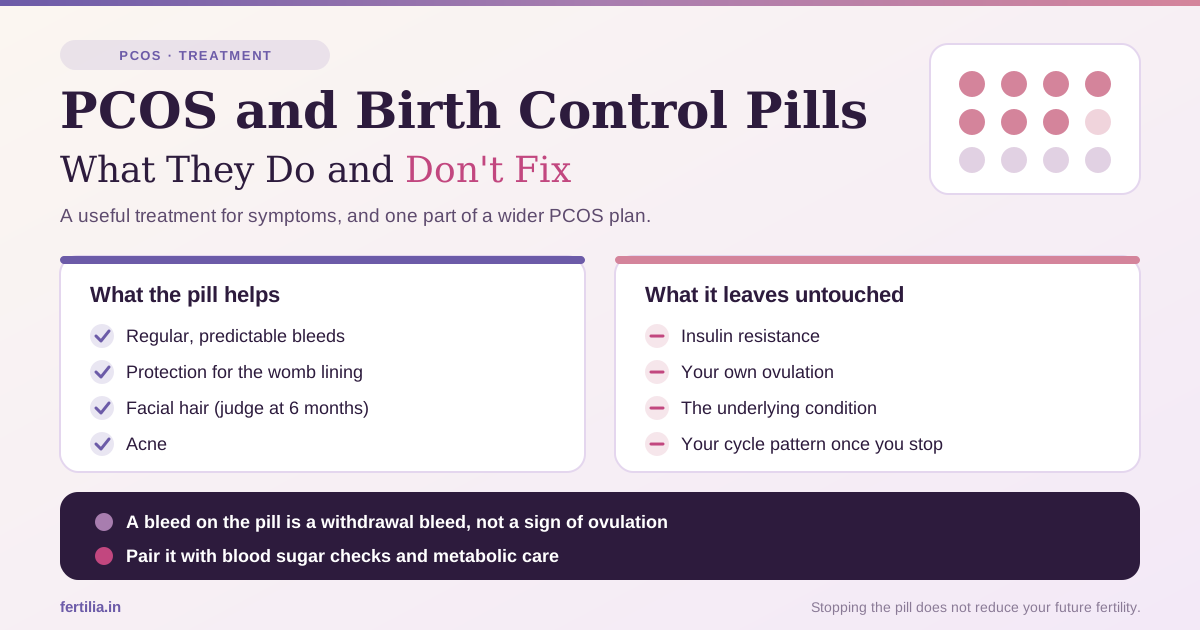
- Combined oral contraceptive pill for cycle regulation, acne, or excess hair, when the woman is not trying to conceive.
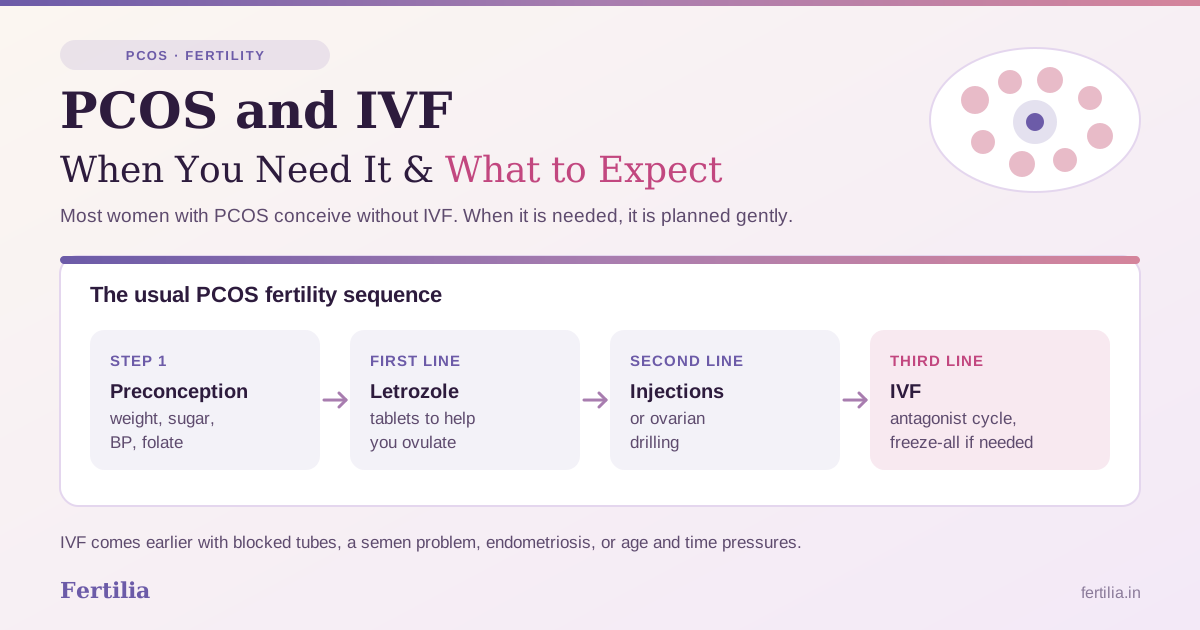
- Letrozole as first-line ovulation induction for those trying to conceive.
- Inositol (myo-inositol + d-chiro inositol in a 40:1 ratio) has good evidence for insulin sensitivity and ovulation.
- Anti-obesity medications (like GLP-1 agonists) are now formally included in the 2023 Guideline for selected patients.
Third-line: Assisted reproduction
IUI or IVF only when first- and second-line have not delivered a pregnancy, and only with a clinician you trust. Bariatric surgery is also now in the guideline for women with PMOS and a BMI above 35 (Samarasinghe 2024).
The point is: none of this is new. What is new is the name, which finally signals to every doctor that this is a metabolic-endocrine condition, not a cyst.
What This Means for Indian Women Specifically
A few thoughts on what to expect in the Indian context over the next 12 to 36 months:
- Indian gynaecologists will adopt the new name gradually. The Indian Society for Assisted Reproduction (ISAR) and FOGSI have not yet issued formal guidance, but they will, especially once the 2028 International Guideline update is published. Dr Madhuri Patil from Bengaluru is on the global consortium, which is encouraging.
- PCOS and PCOD are still used interchangeably in India. Now you can add PMOS to that list. All three refer to the same condition. The treatment is identical.
- Insurance and government documents will continue to use PCOS for at least the next 3 years. ICD-11 codes have not yet been updated.
- Lab reports (AMH, testosterone, insulin) and ultrasound reports continue to use “polycystic ovaries” as a descriptive finding. That terminology is independent of the syndrome name.
Two things I see in my own consulting room, week after week, explain why this rename matters more here than the news coverage suggested.
The first is the scan report. A woman brings me an ultrasound from a Coimbatore diagnostic centre with “bilateral polycystic ovaries” typed on it, and before I have said anything she asks whether the cysts will burst, whether she needs surgery, and whether she should stop lifting her toddler. She has usually spent the night reading about ovarian cyst rupture and torsion. What settles her is not reassurance but the picture: those little dark circles are her eggs, sitting in follicles that started to grow and then stalled because the hormonal signal to pick one and ovulate never arrived clearly enough. Nothing is going to burst. The ovary is not diseased, it is stuck. Women visibly relax when they hear that the scan is showing them a queue, not a threat, and the word “polycystic” is what put the threat in their head in the first place.
The second is the woman the old name hides completely. She is South Asian, her BMI is around 22, she does not look like the pictures in any PCOS pamphlet, and her cycles are irregular enough to annoy her but not irregular enough to alarm anyone. Her ultrasound may be unremarkable. On that basis she has been told for years that she is fine. Then we run a fasting insulin alongside the glucose, look at the ratio, add a lipid profile and an HbA1c, and the metabolic picture is sitting right there. This lean pattern is common in South Asian women, whose insulin resistance and central fat deposition often show up at a lower BMI than the thresholds developed in White populations assume. That is exactly why the “metabolic” in the new name earns its place here. It tells the next doctor to check the pancreas even when the ovaries and the weighing scale both look reassuring.
If you are confused about whether your existing diagnosis is still valid, the answer is yes. You have not been “misdiagnosed”. You had the same condition, called by an older name.
What Should You Do Now?
If you currently have a PCOS diagnosis, here is the only checklist that matters:
- Get your full panel done if you have not in the last 12 months: fasting insulin, HbA1c, lipid profile, vitamin D, TSH, free testosterone, DHEA-S, AMH.
- Identify your dominant driver. Most women have one of: insulin resistance (the most common driver by a wide margin), adrenal androgen excess, chronic inflammation, or hormonal rebound after stopping the pill. ⚠️ The hormonal rebound pattern is often transient and may not be true PMOS.
- Start with the lifestyle foundation, then layer in targeted support based on your driver.
- Track 3 things: cycle length, energy levels, and how your clothes fit. These three together tell you more than your weight does.
- Find a doctor who treats PMOS as a whole-body condition, not just a hormonal one.
We have a complete guide on this called PCOS: Symptoms, Root Causes & Treatment (now also a PMOS guide, the content is identical).
Frequently Asked Questions
Is PMOS the same as PCOS?
Yes. PMOS (Polyendocrine Metabolic Ovarian Syndrome) is the new official name for the condition formerly called PCOS (Polycystic Ovary Syndrome). The diagnosis, the symptoms, and the treatment are all the same. Only the name has changed, to better reflect that this is a whole-body endocrine and metabolic condition, not just an ovarian one.
How is PMOS diagnosed?
PMOS is diagnosed using the Rotterdam Criteria, unchanged in 2026. For adult women, at least 2 of 3 features must be present: irregular or absent ovulation (cycles longer than 35 days, or fewer than 9 periods per year), clinical or biochemical signs of hyperandrogenism (acne, hirsutism, hair loss, or elevated testosterone on blood work), and polycystic ovaries on ultrasound OR an elevated Anti-Müllerian Hormone (AMH). The AMH-as-substitute option was formally added in the 2023 International Evidence-Based Guideline and is particularly useful in India, where AMH is widely available through every major diagnostic lab.
What is the ICD code for PMOS or PCOS?
For now, the existing PCOS codes remain in force globally. ICD-10 uses E28.2 (Polycystic ovarian syndrome), which is the code most Indian hospitals, labs, and insurance providers currently use on records and claims. ICD-11 uses 5A80.1 (Polycystic ovary syndrome). A PMOS-specific ICD code has not yet been assigned and is expected with the 2028 WHO revision cycle, alongside the next International Guideline update. Through the 3-year transition, the clinical condition is identical regardless of the code used.
Who decided to rename PCOS to PMOS?
The change was led by a global consortium of 56 organisations, including the Androgen Excess and PCOS Society, Verity (UK patient charity), and Monash University, with Prof Helena Teede as lead investigator. It was based on 14,360 survey responses from patients and clinicians across all world regions, plus international workshops. The consensus paper was published in The Lancet on 12 May 2026.
Will my doctor in India use the new name?
Some specialists will adopt PMOS quickly, especially those active in international research and guideline work. Most gynaecologists will continue using PCOS or PCOD for the next 1 to 3 years, as the change rolls out through medical education, insurance coding, and government guidelines. Both terms refer to the same condition, so either is correct during this transition period.
Does PMOS change my treatment?
No. The 2023 International Guideline, which India follows, remains in force. Treatment continues to be based on your dominant driver: insulin resistance, adrenal androgen excess, chronic inflammation, or post-pill hormonal rebound. The lifestyle foundation (low GI nutrition, strength training, sleep, stress management) plus targeted medication or supplements where needed remains the gold standard.
Why was “polycystic” wrong in the first place?
“Polycystic” implies many pathological ovarian cysts. But the dark spots seen on ultrasound in women with this condition are not cysts at all. They are immature follicles, each containing an egg that did not receive the hormonal signal to mature and ovulate. Women with the condition are not at higher risk of true (pathological) ovarian cysts compared with women without it.
Can PMOS still be reversed or managed naturally?
Yes, the same approaches that work for PCOS work for PMOS, because it is the same condition. Many women restore regular periods, improve insulin sensitivity, conceive naturally, and feel like themselves again with a combination of nutrition, movement, sleep, stress management, and targeted medical support. The renaming actually strengthens this approach by formally recognising the metabolic and endocrine dimensions of the condition.
Does PMOS still cause infertility?
PMOS is a leading cause of ovulatory infertility, but it is also one of the most treatable. Most women with PMOS do conceive, with or without medication, which is why it is described as one of the most treatable causes of infertility. Many of our patients at Fertilia have conceived naturally once ovulation was restored. Read how to conceive naturally with PCOS/PMOS.
Will the PCOD term also change?
PCOD (Polycystic Ovarian Disease) has always been a colloquial Indian term for the same condition. It is not a separate clinical entity. Now that PCOS has officially become PMOS, you can think of PCOD as the older popular name and PMOS as the new clinical name. The condition, the diagnosis, and the treatment are unchanged.
Get a Personalised PMOS Plan
Generic advice has not worked for you because PMOS is not a generic condition. Your dominant driver, your insulin levels, your stress baseline, your sleep, and your nutrition together create a picture that is uniquely yours.
Dr. Suganya Venkat builds your plan around your driver, not a textbook, through her 90-day PCOS (PMOS) Symptom Reversal program.
₹399 consultation · DNB OB-GYN (GKNM Coimbatore) · 15+ years of experience
Related Reading
- PMOS vs PCOS: Same Condition, New Name in 2026, the side-by-side comparison answering the most common patient confusion
- Lancet 2026 PMOS Paper: 5 Clinical Takeaways, an OB-GYN’s deep-dive analysis of the actual paper
- PCOS: Symptoms, Root Causes & Treatment, the complete clinical guide (now a PMOS guide)
- Insulin Resistance & PCOS: Signs, Diet & What to Do, the metabolic side of PMOS
- Metformin for PCOS: When You Need It, an honest doctor’s take on the most prescribed PMOS drug
- PCOS and Periods: Why They Go Missing & How to Get Them Back
- PCOS & Pregnancy: How to Conceive Naturally
- Low-GI Indian Foods: A PCOS Eater’s Cheat Sheet
Sources
- Teede HJ, Bahri Khomami M, Morman R, et al. Polyendocrine metabolic ovarian syndrome, the new name for polycystic ovary syndrome: a multistep global consensus process. The Lancet. Published online 12 May 2026. DOI: 10.1016/S0140-6736(26)00717-8
- Teede HJ, Tay CT, Laven JJE, et al. Recommendations from the 2023 international evidence-based guideline for the assessment and management of polycystic ovary syndrome. European Journal of Endocrinology. 2023;189:G43-G64.
- Tay CT, Mousa A, Vyas A, et al. 2023 international evidence-based PCOS guideline update: cardiovascular disease meta-analysis. J Am Heart Assoc. 2024;13:e033572.
- Stepto NK, Cassar S, Joham AE, et al. Women with polycystic ovary syndrome have intrinsic insulin resistance on euglycaemic-hyperinsulaemic clamp. Hum Reprod. 2013;28(3):777-784. PMID 23315061.
- Cassar S, Misso ML, Hopkins WG, et al. Insulin resistance in polycystic ovary syndrome: a systematic review and meta-analysis of euglycaemic-hyperinsulinaemic clamp studies. Hum Reprod. 2016;31(11):2619-2631. PMID 27907900.
- Samarasinghe SNS, Leca B, Alabdulkader S, et al. Bariatric surgery for spontaneous ovulation in women living with polycystic ovary syndrome. Lancet. 2024;403(10434):1291-1303. PMID 38782004.