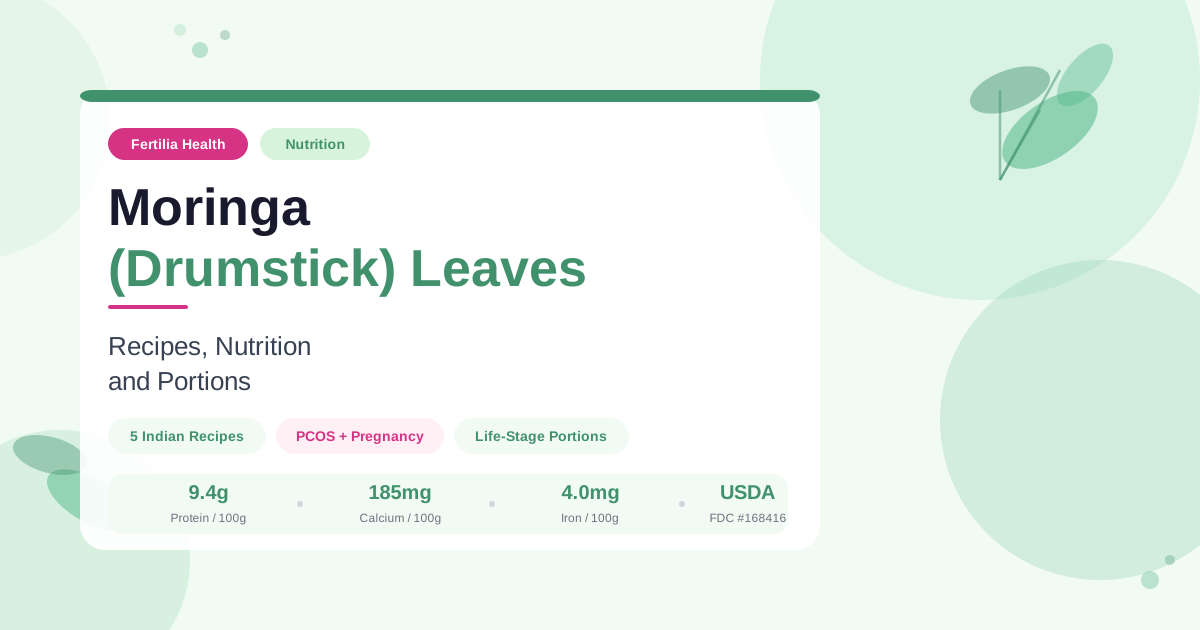
If you grew up in a South Indian household, murungai keerai was probably already on your plate without anyone making a fuss about it. Drumstick leaves sauteed with onion and coconut, stirred into sambar, added to a simple dal; this is everyday cooking in Tamil Nadu, Karnataka, and Kerala. The leaves from the Moringa oleifera tree have been part of Indian meals for generations, long before they appeared on wellness shelves as green powder.
This guide is about the food: what drumstick leaves contain, how much to eat, which form (fresh, dried, or powder) suits which purpose, and five practical Indian recipes you can make this week.
What Are Moringa Leaves Called Across India?
Before getting into nutrition, here is a quick reference for what moringa leaves are called in different parts of India. This matters when you are shopping at a local sabzi mandi or online grocery store.
| Language | Leaves (keerai/patta) | Tree/Pods |
|---|---|---|
| Tamil | Murungai keerai | Murungakkai |
| Telugu | Munagaku / Munaga akulu | Munagakaya |
| Kannada | Nugge soppu | Nuggekai |
| Malayalam | Muringakkeerai | Muringa |
| Hindi | Sajna patta / Sahjan patta | Sahjan / Munag |
| Marathi | Shevga paan | Shevga |
| Bengali | Sajne pata | Sajne |
| Odia | Sajana patra | Sajana |
In most South Indian vegetable markets, you will find fresh murungai keerai sold in small bunches. In North India, the leaves are less commonly used fresh, but moringa powder made from dried leaves is widely available online.
Nutritional Profile: What Is in 100g of Fresh Drumstick Leaves?
The table below uses data from USDA FoodData Central (FDC ID 168416) for raw drumstick leaves (Moringa oleifera).
| Nutrient | Per 100g fresh leaves |
|---|---|
| Energy | 64 kcal |
| Protein | 9.4g |
| Fat | 1.4g |
| Carbohydrates | 8.3g |
| Dietary fibre | 2.0g |
| Calcium | 185mg |
| Iron | 4.0mg |
| Magnesium | 42mg |
| Potassium | 337mg |
| Vitamin C | 51.7mg |
| Vitamin A | 7,564 IU |
A few things stand out from this table.
Protein: At 9.4g per 100g, fresh drumstick leaves have more protein than most cooked green vegetables (spinach has around 2.9g per 100g). This makes them a useful addition to vegetarian meals alongside dal and curd.
Calcium: 185mg per 100g is a meaningful amount. For reference, milk provides around 120mg per 100ml. A generous helping of murungai keerai poriyal (50 to 60g of cooked leaves) contributes about 90 to 110mg of calcium to a meal.
Iron: 4.0mg per 100g places drumstick leaves among the better plant-based iron sources in an Indian kitchen. For a fuller list of iron-rich Indian foods for pregnancy, see our complete iron-rich foods guide.
Vitamin C: The 51.7mg of vitamin C in fresh leaves is a bonus: vitamin C in the same meal helps the body absorb the plant-based (non-haem) iron more efficiently. This is why a murungai keerai poriyal with a squeeze of lemon, or a dal that includes both drumstick leaves and tomatoes, is a sensible combination.
Fresh Leaves vs Moringa Powder vs Drumstick Pods: What to Use When
Many people are confused about which form of moringa to use. This comparison table clears it up.
| Fresh leaves (per 100g) | Moringa powder (per 100g) | Drumstick pods (per 100g) | |
|---|---|---|---|
| Protein | 9.4g | 22.4g | 2.1g |
| Calcium | 185mg | 632mg | 30mg |
| Iron | 4.0mg | 24.3mg | 0.36mg |
| Fibre | 2.0g | 8.0g | 3.2g |
| Vitamin C | 51.7mg | Reduced (heat degrades) | 141mg |
Powder data: Deepa et al., International Journal of Current Microbiology and Applied Sciences, 2021. Pods: USDA FDC.
Fresh leaves are the best all-round option for everyday cooking. They are the most nutrient-complete form and retain vitamin C well if you do not overcook them. Use them in poriyal, sambar, dal, rice, and chapati.
Moringa powder is a concentrated form of dried leaves. Because the moisture is removed, the nutrients are much more concentrated per 100g. A teaspoon of powder (about 3g) added to a smoothie, lassi, or chapati dough is a practical way to include moringa if you cannot get fresh leaves. Store-bought moringa powder costs around Rs 200 to Rs 500 per 100g in India.
Drumstick pods (murungakkai) are higher in vitamin C and fibre than the leaves but lower in protein, calcium, and iron. Pods are what most people think of when they hear “drumstick” in sambar. They are a good vegetable, but nutritionally different from the leaves.
How Much to Eat Per Day
Daily Portion Reference
| Life stage | Fresh leaves | Moringa powder |
|---|---|---|
| General wellbeing | 30 to 40g (2 to 3 tbsp cooked) per meal, 3 to 4 times a week | 1 tsp (3g) a day mixed into a meal |
| PCOS | 30 to 50g per meal, as often as available | 1 tsp daily, sprinkled on dahi or into dal |
| Pregnancy (second and third trimester) | 30 to 40g per meal, up to daily | 1/2 tsp per day is sufficient given concentrated form |
| Postpartum / breastfeeding | 30 to 50g per meal, frequently | 1 tsp daily works well in warm dishes |
For women with PCOS: Murungai keerai is a fibre-rich, protein-packed addition to any PCOS-friendly meal. It fits well as a side in lunches and dinners. For a full list of what to eat and avoid with PCOS, see our PCOS diet chart.
For pregnancy: Fresh drumstick leaves are a good source of iron, calcium, and vitamin C during pregnancy. The second and third trimesters are when nutritional demands increase, and drumstick leaves fit well in daily cooking. For a complete guide on iron-rich foods in pregnancy, see our iron-rich foods guide for pregnancy.
For postpartum and breastfeeding: Moringa leaves are commonly included in postpartum diets across South India, particularly in traditional recipes. For a complete guide to what to eat after delivery, read our after-delivery food guide for Indian mothers. For foods that may support milk production, see our breastfeeding food guide.
For moringa powder: Start with half a teaspoon and see how your digestion responds before increasing to a full teaspoon. Some people find large amounts of concentrated powder cause loose stools initially.
Want a simple weekly meal plan that includes murungai keerai and other high-iron, high-calcium Indian foods?
Chat with our nutritionist on WhatsApp5 Indian Recipes Using Moringa
Recipe 1: Murungai Keerai Poriyal (Stir-Fried Drumstick Leaves)
This is the classic Tamil Nadu preparation. It is quick to make and works as a side dish for rice, sambar, or roti.
Ingredients (serves 2):
- 100g fresh murungai keerai, picked off the stalks
- 1 tbsp cold-pressed groundnut oil or sesame oil
- 1/2 tsp mustard seeds
- 1/2 tsp urad dal
- 1 small onion, finely chopped
- 1 green chilli, slit
- 2 tbsp freshly grated coconut
- Salt to taste
- Small piece of jaggery (optional, balances the slight bitterness)
Method:
- Heat oil in a kadai on medium flame. Add mustard seeds and let them splutter.
- Add urad dal, cook for 30 seconds until lightly golden.
- Add onion and green chilli, cook for 2 minutes until onion softens.
- Add the murungai keerai leaves, stir well, cover and cook for 4 to 5 minutes on low flame.
- Add grated coconut, salt, and jaggery if using. Mix and cook for 1 more minute.
- Serve hot as a side with rice and rasam or sambar.
Preparation time: 15 minutes
Recipe 2: Drumstick Sambar
This version uses both drumstick pods (murungakkai) and a handful of fresh leaves stirred in at the end, giving you the fibre of the pods alongside the protein and iron of the leaves.
Ingredients (serves 4):
- 2 drumstick pods, cut into 6cm pieces
- 3 tbsp toor dal, pressure-cooked until soft
- 1 medium tomato, chopped
- 1 tbsp tamarind pulp
- 1 tsp sambar powder
- 1/2 tsp turmeric (haldi)
- Small handful (about 20g) fresh murungai keerai, stalks removed
- Salt to taste
For tempering:
- 1 tsp groundnut oil
- 1/2 tsp mustard seeds
- 1/4 tsp hing
- 2 to 3 curry leaves
- 1 dried red chilli
Method:
- Pressure-cook the toor dal until completely soft. Mash well and set aside.
- In a pot, combine tamarind pulp, tomato, haldi, and drumstick pieces with 2 cups water. Boil until drumstick is tender (about 10 minutes).
- Add mashed dal, sambar powder, and salt. Simmer for 5 minutes.
- Stir in fresh murungai keerai leaves. Cook for 2 minutes only, to preserve nutrients.
- Prepare the tempering in a small pan, pour over the sambar, and mix.
- Serve with steamed rice or idli.
Preparation time: 25 minutes
Recipe 3: Moringa Dal (Sajna Dal)
This simple dal uses fresh moringa leaves stirred into cooked moong dal. It works well for lunch or dinner and pairs with roti or rice.
Ingredients (serves 3):
- 1/2 cup split yellow moong dal
- 50g fresh moringa leaves (or 1 tsp moringa powder as a substitute)
- 1 medium onion, chopped
- 2 garlic cloves, minced
- 1 medium tomato, chopped
- 1/2 tsp jeera (cumin seeds)
- 1/2 tsp haldi
- 1/2 tsp red chilli powder
- 1 tsp ghee
- Salt to taste
- Squeeze of lemon juice to finish
Method:
- Wash and pressure-cook moong dal with haldi and enough water (2 cups) for 2 whistles.
- Heat ghee in a pan, add jeera, let it sizzle. Add onion and garlic, cook until golden.
- Add tomato, chilli powder, and salt. Cook until tomato is mushy (about 5 minutes).
- Add moringa leaves, stir and cook for 2 to 3 minutes.
- Pour in cooked dal, mix well, and simmer for 5 minutes.
- Finish with a squeeze of lemon. Serve hot.
Preparation time: 25 minutes
Recipe 4: Moringa Chapati
Adding moringa powder to chapati dough is one of the easiest ways to include it in meals, especially for households where fresh leaves are not always available.
Ingredients (makes 6 chapatis):
- 2 cups whole wheat atta
- 2 tsp moringa powder (or 30g finely chopped fresh leaves blended with a little water)
- 1/2 tsp jeera or ajwain (optional)
- 1/2 tsp salt
- Water to knead (approximately 3/4 cup)
- 1 tsp oil
Method:
- Mix atta, moringa powder, jeera or ajwain, and salt in a bowl.
- Add water gradually and knead into a soft, pliable dough. Add oil and knead for 1 more minute.
- Rest for 10 minutes under a damp cloth.
- Divide into 6 equal portions. Roll each into a thin round.
- Cook on a hot tawa for 30 to 40 seconds per side until light brown spots appear. Apply a little ghee if desired.
- Serve with any sabzi, dahi, or pickle.
Notes: Using moringa powder turns the chapati a light olive-green colour, which children often find appealing. The taste is mild and does not overpower the chapati.
Preparation time: 20 minutes
Recipe 5: Murungai Keerai Rice (Drumstick Leaf Rice)
This one-pot dish is a quick weekday lunch option, particularly in Tamil Nadu homes.
Ingredients (serves 2):
- 1 cup cooked rice (preferably slightly cooled so grains stay separate)
- 60g fresh murungai keerai, picked and washed
- 1 tbsp sesame oil (til oil)
- 1/2 tsp mustard seeds
- 1/2 tsp urad dal
- 2 dried red chillies
- 5 to 6 curry leaves
- 1 tsp freshly grated coconut
- Salt to taste
- Pinch of haldi
Method:
- Heat sesame oil in a wide pan. Add mustard seeds and wait for them to splutter.
- Add urad dal, dried chillies, and curry leaves. Cook for 30 seconds.
- Add moringa leaves and haldi, stir and cook for 3 to 4 minutes on low heat.
- Add cooked rice and salt. Mix gently until every grain is coated with the leaves and tempering.
- Top with grated coconut. Serve with appalam or a simple curd.
Preparation time: 15 minutes (using pre-cooked rice)
Buying and Storing Moringa Leaves
Fresh leaves
Fresh murungai keerai bunches are widely available at South Indian vegetable markets. Expect to pay Rs 20 to Rs 40 per bunch, which typically yields about 80 to 100g of picked leaves after removing the stalks.
How to check freshness: Leaves should be bright green, firm, and not yellowed or wilted. Avoid bunches that have already begun to brown at the edges.
Storage: Wrap fresh leaves in a slightly damp cloth or paper towel, place in a container, and refrigerate. Use within 2 to 3 days. For longer storage, blanch briefly and freeze.
Moringa powder
Moringa powder is made by drying and milling the leaves. Quality varies significantly between brands.
What to look for:
- Colour should be a vibrant, deep green. Pale or khaki-coloured powder is a sign of degraded quality or improper drying.
- Minimal additives. The ingredient list should say nothing but “moringa leaf powder.”
- Airtight packaging with a manufacturing and best-before date.
Storage: Store in a cool, dry place away from direct sunlight. Once opened, use within 3 to 4 months for best quality. Refrigerating the container after opening extends shelf life.
Cost: Expect to pay Rs 200 to Rs 500 per 100g for quality moringa powder in India.
Have questions about adding moringa or other greens to your daily meals? Our nutritionist can help you plan it out. In the months after delivery, murungai keerai and other greens are part of the recovery meals our 90-day Postpartum program plans around.
Message the Fertilia team on WhatsAppFrequently Asked Questions
Q1. Can I eat moringa leaves every day?
Yes. Fresh murungai keerai can be part of daily meals without any issue for most people. A typical serving of 30 to 50g per meal is a practical everyday amount. If you are using moringa powder, start with half a teaspoon daily and increase gradually if your digestion is comfortable.
Q2. What is the difference between moringa leaves, moringa powder, and drumstick pods?
Moringa leaves (murungai keerai) are the fresh or dried leaves of the Moringa oleifera tree. Moringa powder is made by drying and grinding these leaves, which concentrates the nutrients significantly. Drumstick pods (murungakkai) are the long green seed pods of the same tree. Pods are higher in vitamin C and fibre but lower in protein, calcium, and iron compared to the leaves.
Q3. Is moringa safe during pregnancy?
Fresh moringa leaves are commonly used in South Indian cooking throughout pregnancy and are considered a standard part of the diet in many households. The portions described in this guide (30 to 40g of fresh leaves per meal) are consistent with normal cooking quantities. For personalised guidance based on your specific pregnancy and health history, speak with your obstetrician or a registered dietitian.
Q4. How do I remove moringa leaves from the stalks?
Hold the stalk at the bottom with one hand and run your fingers along the stalk from bottom to top. The leaves will detach easily. Thin, young stalks can be included in cooking; thick, fibrous stalks are usually discarded. This process takes about 5 minutes per bunch.
Q5. Can I use moringa powder instead of fresh leaves in recipes?
Yes, with adjustments. Moringa powder is more concentrated, so you need much less: roughly 1 teaspoon (3g) of powder is approximately equivalent in nutrients to a small handful of fresh leaves. Use it in chapati dough, dahi, rasam, or a glass of warm water with lemon. It does not work as a direct substitute in recipes like poriyal or sambar where the texture of leaves matters.
Q6. Does cooking destroy the nutrients in moringa leaves?
Heat does reduce some heat-sensitive vitamins, particularly vitamin C. Short cooking times on low heat preserve more nutrients than long, high-heat cooking. In South Indian recipes, moringa is typically cooked for 4 to 6 minutes, which is a reasonable balance between palatability and nutrient retention.
Q7. What does murungai keerai taste like?
Fresh drumstick leaves have a mild, slightly grassy flavour with a faint bitterness that disappears when cooked with onion, coconut, and spices. The texture becomes tender and soft after a few minutes of cooking. Moringa powder has a more concentrated, earthier taste, which is why it works better in small amounts mixed into other foods rather than used alone.
Elakiya Ravichandran is the Program Manager at Fertilia Health, with a background in nutrition and women’s wellness.